Table of Contents
- Why Dating Imbalances Happen in Polyamory
- Recognize What You’re Really Feeling
- Stop Keeping Score — and What to Do Instead
- Have a Constructive Conversation With Your Partner
- Build a Fulfilling Life Outside Dating
- When the Imbalance Signals a Deeper Issue
- A Self-Check for When You Feel Left Behind
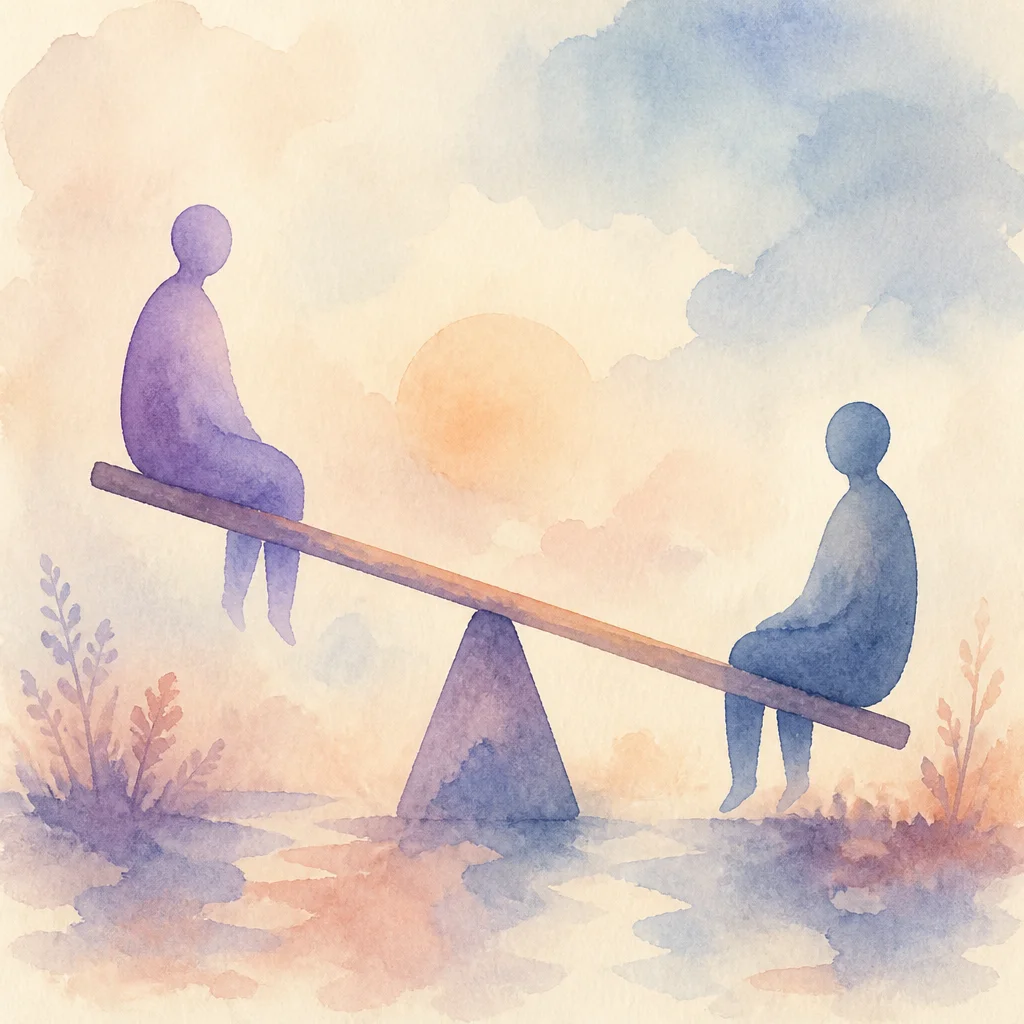
You’re sitting at home on a Friday night while your partner is out on their third date this week. You’ve been on one date in the past month. Your rational brain knows polyamory isn’t a competition. But your gut? Your gut feels left behind.
A dating imbalance in polyamory — where one partner consistently has more connections, more dates, or more romantic opportunities than the other — is one of the most common and least discussed challenges in non-monogamous relationships. It can trigger feelings you didn’t expect: envy, loneliness, self-doubt, and a creeping sense that maybe you’re doing polyamory wrong.
You’re not doing it wrong. Dating imbalances happen to nearly everyone in polyamory at some point. What matters is how you work with the feelings that come up and what you do to stay connected to your own life — and to your partner — when the numbers feel uneven.
Why Dating Imbalances Happen in Polyamory
Before you spiral into wondering what’s wrong with you, it helps to understand why dating imbalances are actually built into the structure of non-monogamous dating.
Demographics play a bigger role than most people admit. A man partnered with a woman in an open relationship may find that his female partner receives dramatically more attention on dating apps — sometimes fifty messages for every one he gets. The reverse can also be true depending on what someone is looking for, their location, and the specific communities they’re part of.
Timing matters too. One partner might be in a season of high social energy while the other is focused on career, health, or family. A person who just ended a relationship may need time before they’re ready to date again, while their partner continues seeing others.
And then there’s simple luck. Dating involves chance — who happens to be on the apps this week, whether a promising connection turns into something real, whether schedules align. Two people in the same relationship can have very different dating experiences purely because of timing and circumstance.
None of this means one person is more desirable or better at polyamory. It means they’re navigating different conditions. For a deeper look at the psychology behind these dynamics, Psychology Today’s overview of polyamory offers research-backed perspective on how non-monogamous relationships function.
Recognize What You’re Really Feeling
When your partner has more dates than you, the first feeling that surfaces is often labeled as jealousy. But jealousy is usually a cover story for something more specific — and naming what’s underneath it is the first step to working through it.
Ask yourself: What specifically bothers me right now?
Is it loneliness? You’re spending more evenings alone than you’d like, and the quiet feels heavier when you know your partner is out with someone.
Is it fear of being left? A part of you worries that if your partner keeps finding exciting new connections, they’ll eventually decide you’re not enough. This fear often has less to do with what your partner is actually doing and more to do with old attachment patterns.
Is it a hit to your self-worth? Watching your partner get attention while your own dating life stalls can feel like a referendum on your desirability. It isn’t — but the feeling is real.
Is it envy of the experience itself? You’re not upset your partner is dating. You’re upset that you want the same thing and can’t seem to find it right now.

Naming the specific feeling does two things. It shrinks the intensity of the emotion — unnamed feelings tend to feel bigger and more threatening. And it gives you a clear starting point for what to address. Loneliness calls for different solutions than a self-worth hit does.
Stop Keeping Score — and What to Do Instead
When you’re the one with fewer dates, it’s tempting to start tallying. Three dates for them, zero for me. They had two overnights this week, I had none. They’re texting three people, my inbox is quiet.
Scorekeeping feels like data collection, but it’s actually fuel for resentment. Every tally mark reinforces the story that something is unfair — and the more you focus on the score, the more every interaction with your partner becomes filtered through that lens.
What works better is shifting from a fairness mindset to a needs mindset.
Instead of asking “Is this equal?” ask “Am I getting what I need?”

This is a harder question because it requires you to get specific. What do you actually need more of right now? More quality time with your partner? More social connection in general? More physical intimacy? The chance to explore a new hobby that makes you feel interesting and alive independent of dating?
When you frame the problem around unmet needs rather than unfair numbers, you open up solutions that don’t depend on matching your partner’s dating volume. Maybe you don’t need more dates — maybe you need your partner to be more present when they’re with you. Maybe you need to invest in friendships that fill your social cup. Maybe you need to pause the dating apps for a week and do something that reminds you who you are outside of romance.
This reframe is central to maintaining your sense of self in polyamory — and it’s the same mindset shift we explore in our guide to fair scheduling in polyamory without keeping score. When your identity isn’t wrapped up in your dating activity, an imbalance becomes less threatening.
Have a Constructive Conversation With Your Partner
Talking about a dating imbalance is delicate. If you’re not careful, your partner can hear “You’re dating too much” instead of what you actually mean — which is closer to “I’m struggling and I need your support.”
Here’s a conversation framework that keeps the focus on your experience rather than on controlling their behavior:
Start with how you feel, not what they’re doing. “I’ve been feeling lonely on the nights you’re out, and I’ve noticed it’s been hard for me to shake that feeling even when you’re home” lands differently than “You’re going out too much.”

Be honest about what’s hard without asking them to fix it. Your partner doesn’t need to cancel their dates for you to feel better. Sometimes what you need is simply to be heard and to know your partner sees your struggle. “I don’t want you to change your plans. I just want you to know this has been hard for me” can be incredibly relieving to say — and for your partner to hear.
Ask for what would actually help. More check-ins after their dates? One dedicated night a week that’s just for the two of you? Help brainstorming ways you might meet new people? Polyamory time management is a skill, and problem-solving it together can strengthen your relationship rather than strain it.
If your partner is also navigating new relationship energy with someone, ask them to be mindful of how that energy shows up at home. NRE can make a partner seem distracted or less present, and that compounds feelings of being left behind.
Build a Fulfilling Life Outside Dating
The single most effective thing you can do when your partner is dating more than you has nothing to do with your partner — and nothing to do with dating.
It’s filling your own life with things that make you feel good, interesting, and connected, regardless of your relationship status.
When your evenings feel empty because your partner is out, fill them with something you genuinely look forward to. That could be a weekly dinner with friends, a class you’ve wanted to take, a creative project, or even just a solo ritual — a favorite restaurant, a book, a long walk — that you’ve come to treasure.
This isn’t about distracting yourself from difficult feelings. It’s about making sure your life is rich enough that your partner’s dating activity doesn’t define your emotional baseline. People who have strong friendships, engaging hobbies, and a solid sense of self outside their romantic relationships tend to weather dating imbalances with far less distress.

Building emotional resilience in non-monogamous relationships is partly a practice of making your own life interesting enough that you’re not waiting by the phone.
When the Imbalance Signals a Deeper Issue
Most dating imbalances are temporary and circumstantial. But sometimes they point to something that needs more attention.
Pay attention if the imbalance has been persistent for many months and is accompanied by your partner being consistently less available, less affectionate, or less invested in your relationship. A dating imbalance plus emotional distance is a different situation than a dating imbalance where your connection remains strong and loving.
Also pay attention if you’ve stopped trying to date at all — not because you’re content, but because you’ve become discouraged. Sometimes what looks like an “imbalance” is actually one partner quietly giving up on finding new connections while nursing unspoken hurt. If that’s you, supporting a partner through ENM struggles goes both ways — you deserve support too.
And if you find that no amount of self-work or communication makes the pain manageable, it’s worth considering whether the current structure of your polyamory is working for you. Some people discover that they need more intentional balance — a mutual agreement to pace new connections, for example — rather than a free-for-all where timing and luck determine who’s dating and who’s waiting.
The goal isn’t perfect equality. It’s a relationship where both people feel seen, valued, and secure — regardless of how many dates are on the calendar.
A Self-Check for When You Feel Left Behind
When the imbalance hits hard, working through a quick self-check can help you move from spiraling to problem-solving. Read through each question and answer it honestly — there’s no right answer, only useful information.
- Name the primary feeling. Is it loneliness, fear, a self-worth hit, or envy of the experience? Circle the one that fits most right now.
- What specific need feels unmet? More quality time with your partner? More social connection overall? More physical intimacy? Something else?
- What’s one thing you can do for yourself tonight while your partner is out that you’d genuinely enjoy — not just tolerate?
- Have you told your partner how you’re feeling without asking them to change their plans? If not, what’s stopping you?
- Is there an area of your own life — friendships, hobbies, personal projects — that you’ve been neglecting and would benefit from reinvesting in?
- On a scale of 1 to 10, how secure do you feel in your relationship right now independent of the dating imbalance? If the number is low, the imbalance may not be the root problem.
- What would need to change for you to feel okay even if the numbers never even out? This question often surfaces what you actually need versus what you think you need.
This kind of honest self-inventory, done regularly, can turn a dating imbalance from a source of suffering into an opportunity to understand yourself — and your relationship — more deeply.

Editor’s note: This article is part of 3Cupid’s ongoing series on navigating polyamory and ethical non-monogamy with clarity and care. You can find more resources on communication, emotional resilience, and relationship structures throughout our blog. Ready to connect with like-minded people? Join the community at 3Cupid.