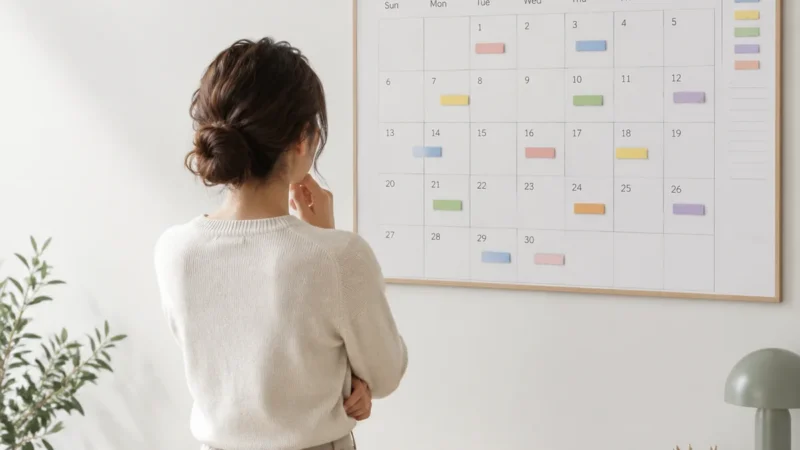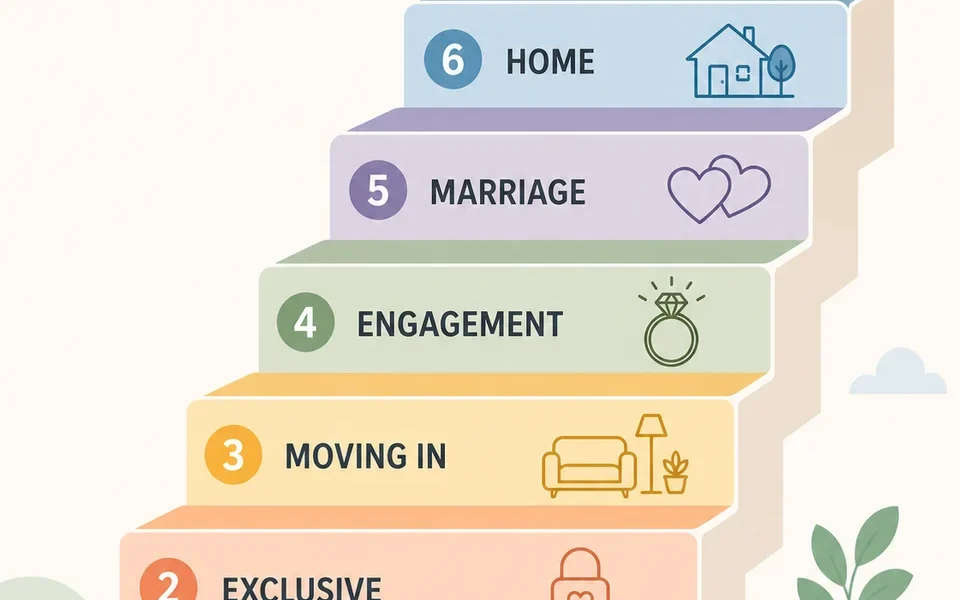
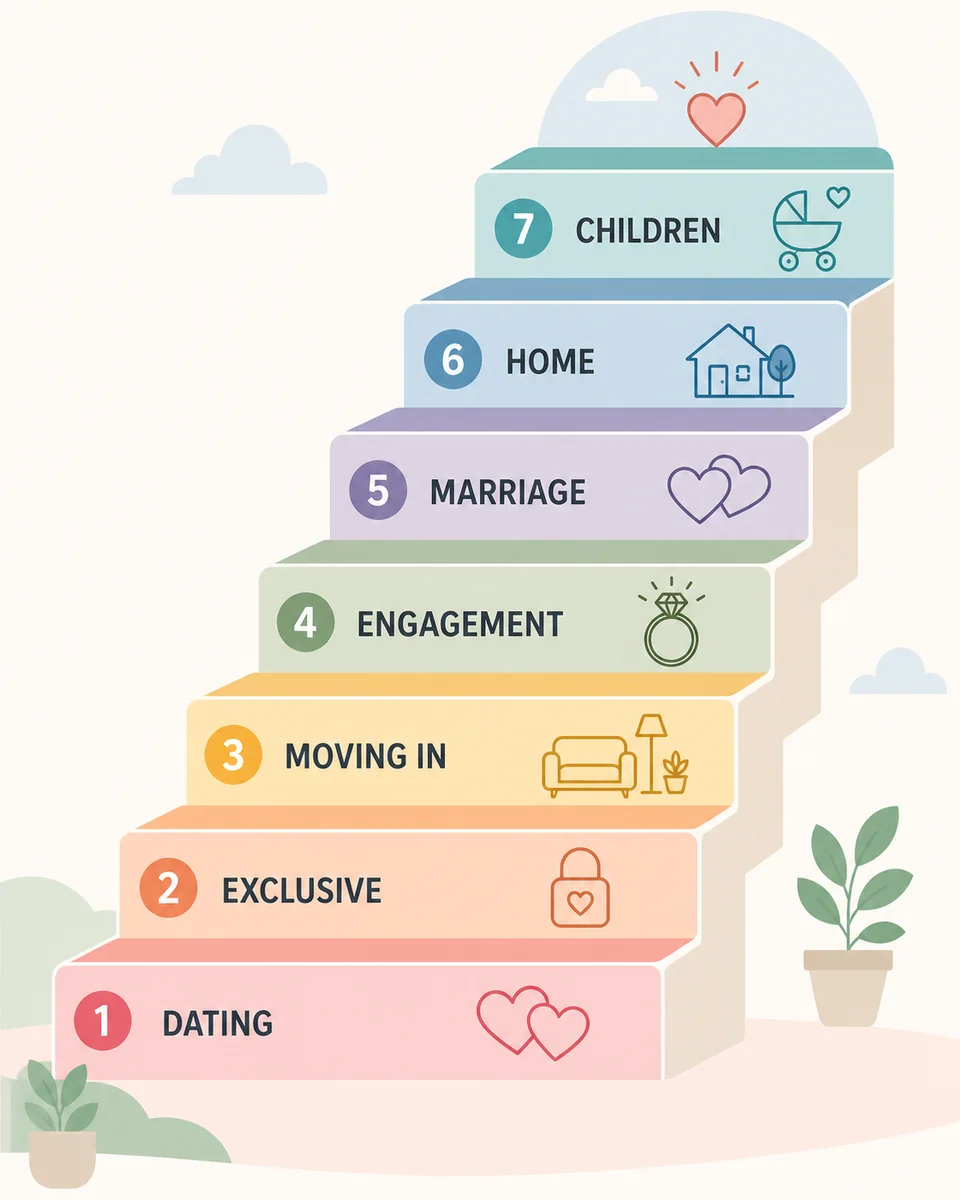
The decision to step off the relationship escalator isn’t about tearing up the rulebook or rejecting commitment. It is about stopping the autopilot long enough to ask a simple question: what do we actually want our relationship to be? From there, you and your partner can design something that fits, keeping the parts you love and leaving the rest behind.
In this guide, we’ll walk through how to step off the relationship escalator together, one practical step at a time, without letting it turn into a crisis.
Table of Contents
- Why People Step Off the Escalator
- Start With What You Actually Want
- Name the Rungs You’re Keeping (and Skipping)
- Write It Down Together
- Handling Judgment From Family and Friends
- Revisit and Renegotiate Over Time
- Final Thoughts
Why People Step Off the Escalator
People step off the escalator for all kinds of reasons. Some want non-monogamy, and the escalator simply has no room for it. Others are monogamous but don’t want marriage, or kids, or living together, and are tired of having their relationships judged as “less serious” because of it. For a deeper look at the philosophy behind designing your own relationships, resources like More Than Two are a good place to keep reading.
A few common motivations keep showing up: the rungs stopped fitting, the relationship outgrew its label, or someone realized they had been moving forward on momentum rather than desire. None of these are problems to fix. They are information about what you actually want.
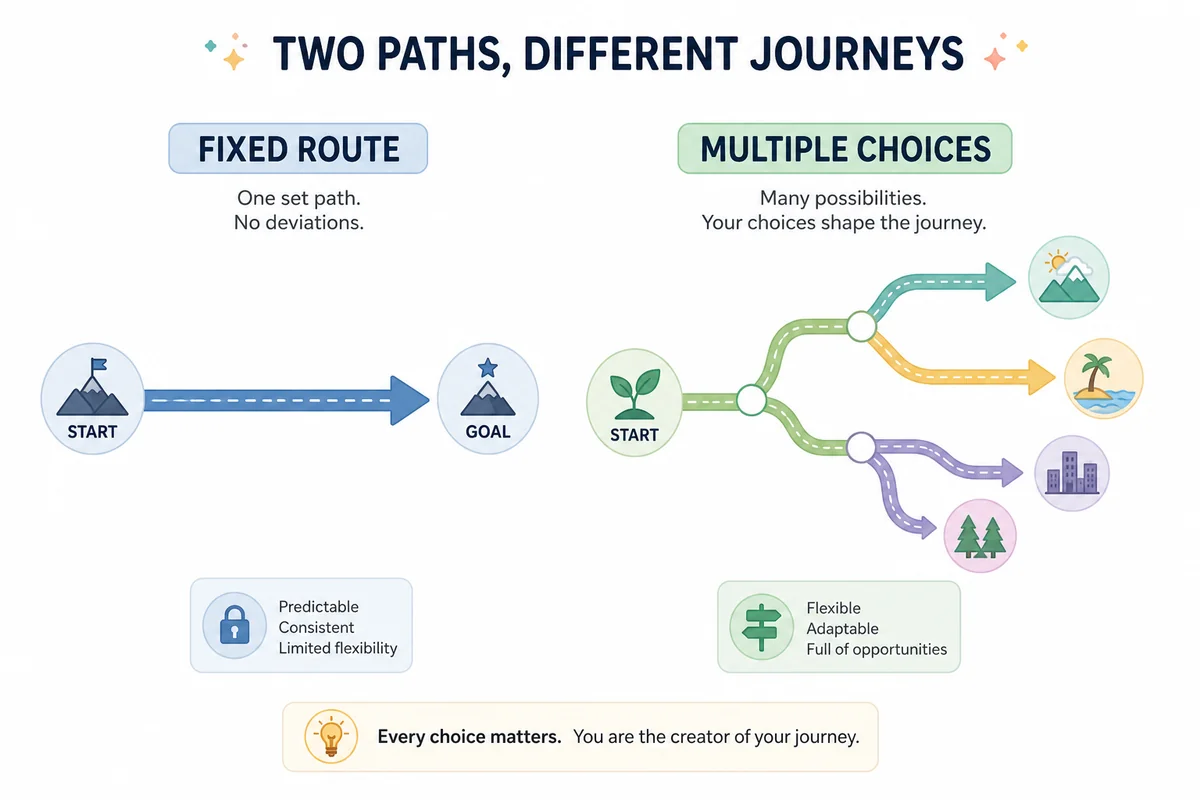
It is worth separating two things that often get tangled together: wanting commitment and wanting the escalator. You can want deep, lasting commitment without wanting the specific rungs the escalator prescribes. The commitment is yours to define; the escalator just tries to hand you a pre-filled version of it.
Start With What You Actually Want
Before you change anything together, get clear on your own answers. It is tempting to jump straight to logistics, “so are we monogamous or not?”, but that skips the part that matters. Spend some time alone first, asking questions like:
- What do I want my day-to-day life to look like in five years?
- Which parts of a “traditional” relationship do I genuinely want, and which do I only think I should want?
- What scares me about stepping off the escalator, and what excites me?
Write your answers down. You can’t design a relationship together until you each know where you stand on your own.
One useful exercise is the “blank page” test: if no one were watching and no rules applied, what would your ideal relationship actually look like? The gap between that picture and your current relationship is usually the clearest sign of which rungs you have been climbing out of habit rather than choice.
Name the Rungs You’re Keeping (and Skipping)
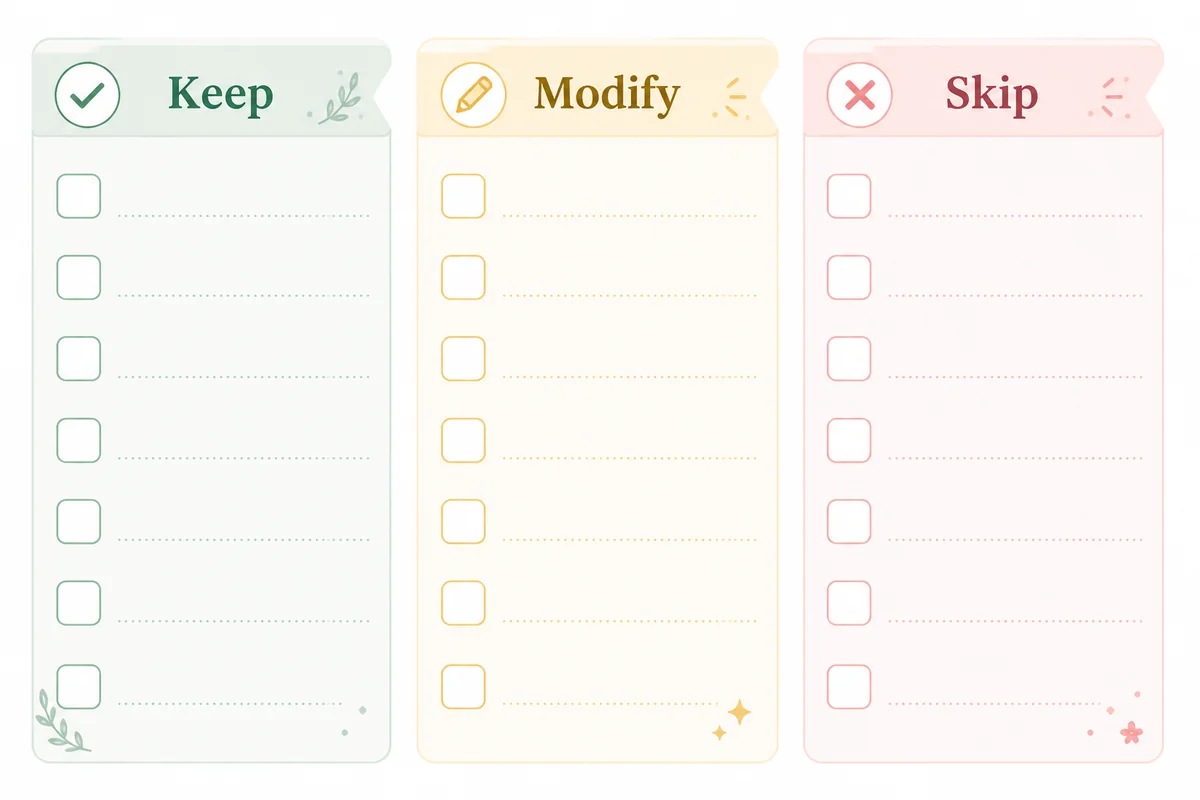
Now compare notes. Go through the classic rungs, exclusivity, labels, cohabitation, finances, marriage, kids, and decide, one by one, which ones you want to keep, which you want to modify, and which you are happy to leave behind. This is easier if you both arrive with your own lists already written, so no one is doing their thinking out loud under pressure.
A simple three-column list works well: “Keep,” “Modify,” and “Skip.” Don’t worry about getting it perfect on the first pass. The point is to make the implicit explicit, so you are both choosing rather than assuming.
When you hit a rung you disagree on, don’t rush to resolve it. Just flag it and keep going. The goal of this first pass is a complete map of where you align and where you differ, not a finished agreement. The disagreements themselves are the most useful information you will collect.
Write It Down Together
Once you have compared notes, put the result somewhere you can both see it. This doesn’t need to be a legal document; a shared note is plenty. The goal is a clear, revisitable record of what you have agreed on, so neither of you has to rely on memory later.
If you want a more structured version, our guide to creating a polyamory relationship agreement offers a framework you can adapt. The document itself matters less than the conversation it forces you to have.
Revisit the note whenever something shifts: a new job, a move, a change in how either of you feels. The whole point of writing it down is that it is a living document, not a contract you sign once and never touch again. If the note starts to feel stale, that is usually a sign it is time to talk.
Handling Judgment From Family and Friends
This is often the hardest part, not the internal redesign, but the outside reactions. When your relationship stops following the script, people notice. Expect questions like “when are you getting married?” or “is everything okay?”
You don’t owe anyone a full explanation, and you don’t need their approval. A calm, brief answer usually works best: “We’re really happy with how our relationship is structured, and we’ve put a lot of thought into it.” Then change the subject. The people who love you will adjust; the ones who don’t were never owed your private decisions.
When the questions keep coming, it helps to have a few responses ready:
- Do answer briefly and warmly, then redirect the conversation.
- Do remember that curiosity is not the same as criticism.
- Don’t feel obligated to defend or justify your private decisions.
- Don’t expect everyone to understand right away; give it time.
For a deeper look at how these dynamics play out in non-traditional relationships, our guide to relationship anarchy and our piece on non-hierarchical polyamory both touch on navigating outside expectations.
Revisit and Renegotiate Over Time
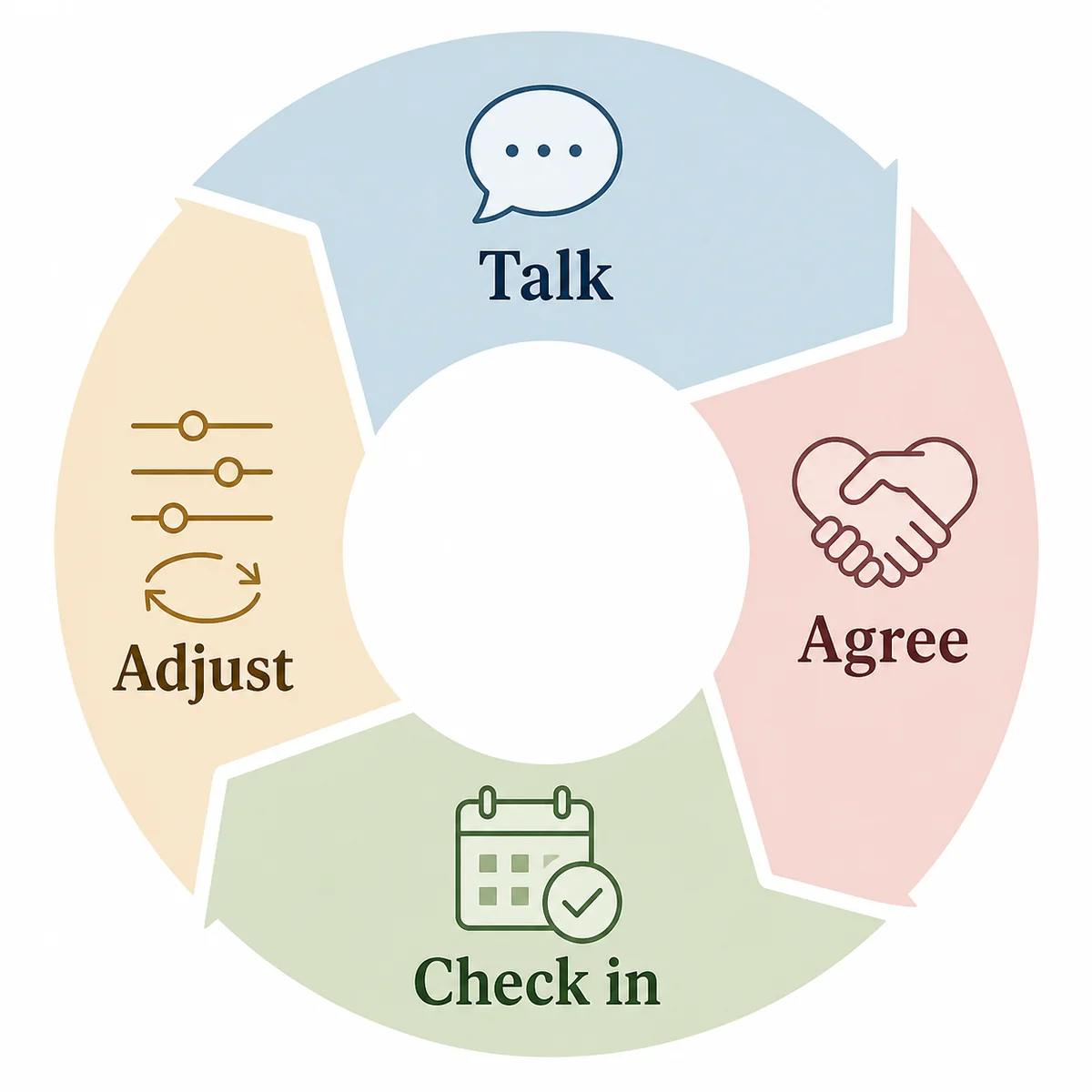
Stepping off the escalator is not a one-time event; it is an ongoing practice. What you want at 25 and what you want at 40 will almost certainly be different, and that is healthy. Set a low-pressure rhythm for checking in: a short conversation every few months, or whenever something feels off.
The goal is not to lock everything down forever. It is to build the habit of asking, “is this still working for us?”, and being willing to adjust the design when the answer is no.
A simple check-in prompt can carry the whole practice: “What’s working well, what feels off, and what should we change for next month?” You don’t need a formal agenda or a scheduled meeting. You just need to keep the conversation open, so small adjustments happen before they turn into big resentments.
Final Thoughts
Learning to step off the relationship escalator is less about rebellion and more about intention. It is the difference between a relationship that happens to you and one you build with open eyes. You don’t have to leave the escalator entirely; you just have to decide, together, which direction is genuinely yours.
If you are still wrapping your head around the concept itself, start with our beginner’s guide to what the relationship escalator is. And if you are ready to meet people who are designing their relationships the same way, you’re in the right place.

Editor’s note: This guide is written for adults (18+) exploring relationship structures. It reflects general educational information, not professional advice. Design your relationship with honesty, consent, and mutual care.