
You have read about non-hierarchical polyamory. Maybe you have heard the terms “egalitarian polyamory” or “relationship anarchy” and felt a spark of recognition. The idea of treating every partner as equally important — without primary and secondary labels — resonates with your values. But turning that vision into daily practice? That is where things get real.
Non-hierarchical polyamory is not just a label. It is a set of intentional practices that challenge deeply ingrained cultural assumptions about how relationships should work. Whether you are transitioning away from a hierarchical structure or starting from scratch, this guide walks through the practical side of making non-hierarchical polyamory work — the conversations, the systems, and the self-work that keep it grounded.
Before we dive in, it helps to understand the philosophical roots of this approach. For a deeper look at what relationship anarchy means — the broader framework that inspired much of non-hierarchical polyamory — that guide provides solid context for what follows here.

Table of Contents
- What Non-Hierarchical Polyamory Actually Means
- How to Start the Conversation with Existing Partners
- Daily Practices That Make Non-Hierarchy Work
- Navigating Jealousy Without Veto Power
- Decision-Making When Everyone Has Equal Say
- Common Pitfalls and How to Avoid Them
What Non-Hierarchical Polyamory Actually Means
In non-hierarchical polyamory, no partner automatically outranks another. There is no designated primary relationship that gets first claim on holidays, life decisions, or emotional bandwidth. Instead, each relationship is negotiated on its own terms, with all partners having a voice in the agreements that affect them.
This differs from how relationship hierarchy functions in practice. In a hierarchical setup, a nesting partner might get veto power over new connections, automatic priority on weekends, or the final say in major life decisions. Non-hierarchical polyamory removes these defaults. It does not mean all relationships look the same — it means no relationship is presumed more important than another from the start.
Some people practice non-hierarchical polyamory while living with one partner. Others live alone and see multiple partners. Some raise children together in configurations that do not map onto traditional couple-plus-others frameworks. The consistent thread is intention: every agreement is made consciously, not inherited from cultural norms.

How to Start the Conversation with Existing Partners
If you are already in a relationship and want to shift toward non-hierarchy, the first conversation matters enormously. Your partner may hear “you matter less to me now” when what you actually mean is “I want all of my relationships to be built on conscious choice rather than assumption.” How you frame this conversation shapes everything that follows.
Start by naming what you value about your existing relationship — the specific things you want to protect, not the abstract label you want to remove. Instead of “I want to de-escalate our relationship,” try: “I want us to keep our Tuesday dinners, our shared finances for the mortgage, and our commitment to honesty, but I want to remove the assumption that you automatically get final say over who else I spend time with.”
Expect this to be a series of conversations, not one talk. Your partner may need time to process what non-hierarchy means for their sense of security. Give them space to ask questions. Be ready to discuss practical details: what changes about holidays, about emergency contacts, about who gets introduced as your partner at work events. The concrete often matters more than the philosophical.
Daily Practices That Make Non-Hierarchy Work
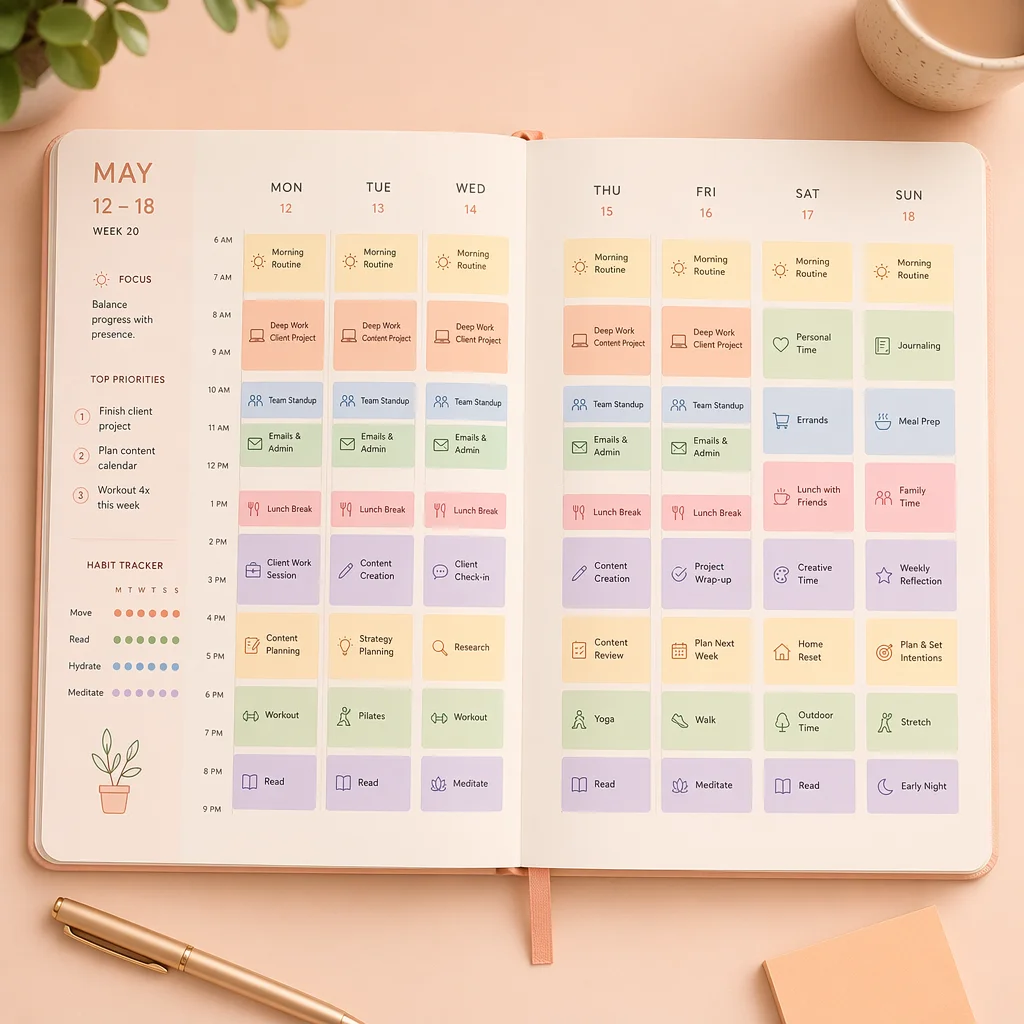
Non-hierarchical polyamory requires systems. Without them, people default to prioritizing whoever is most convenient, most demanding, or most present — and that often recreates hierarchy by accident. Here is what effective practitioners actually do:
- Shared calendars, not assumed priority. Use a calendar system where time is booked intentionally rather than assumed. No one gets automatic claim to Friday nights. If you want the time, you ask for it — same as everyone else.
- Regular relationship check-ins with every partner. Set a recurring time — weekly or biweekly — to ask: how is this feeling for you? Is anything missing? Have any assumptions crept in that we should name?
- Explicit agreements, revisited quarterly. Write down what you have agreed to — not as a contract, but as a living document you revisit. Things change. Agreements should too.
- Equal access to relationship milestones. If you take vacations with one partner, discuss what equivalent experiences look like with others — not necessarily identical, but equally considered.
These practices take work. But the alternative — letting unexamined hierarchy dictate who gets what — tends to create resentment over time, especially from partners who consistently come in second.

Navigating Jealousy Without Veto Power
One of the biggest adjustments in non-hierarchical polyamory is losing the safety net of veto power. In hierarchical structures, a primary partner can often say “I am uncomfortable — end this connection,” and expect compliance. Without hierarchy, that tool is off the table. So what replaces it?
The answer is a combination of emotional self-awareness and structured communication. When jealousy surfaces — and it will — the non-hierarchical approach is to treat it as information rather than a command. Ask: what is the fear underneath this feeling? Am I worried about losing time? About being replaced? About something specific that happened, or a general anxiety?
Here is a practical framework for handling jealousy without hierarchy:
| Step | What You Do | What You Avoid |
|---|---|---|
| 1. Name It | Sit with the feeling for an hour before bringing it up. Journal about it. Identify whether it is fear, sadness, envy, or something else. | Firing off an emotional text the moment jealousy hits. Reacting before you understand what you are actually feeling. |
| 2. Ask for Reassurance, Not Restriction | Tell your partner: “I am feeling insecure about X. Can we spend some focused time together this week?” | “I need you to stop seeing this person.” Requesting control instead of connection. |
| 3. Identify the Unmet Need | Jealousy often signals a gap. Do you need more quality time? More verbal affirmation? More clarity about where you stand? | Assuming the solution is always external — that someone else needs to change rather than examining what you actually need. |
| 4. Make a Request, Not a Demand | “Would you be open to a weekly check-in where we talk about how our connection is feeling?” | “You need to reassure me every day or I cannot handle this.” |
This approach does not make jealousy disappear. But it transforms it from a relationship-ending crisis into a navigable signal — one that often deepens intimacy when handled well.
Decision-Making When Everyone Has Equal Say
What happens when you need to relocate for work, and two partners have strong opinions about where you should go? Or when one partner wants children and another does not? In hierarchical polyamory, the primary partner often gets the deciding vote. Without hierarchy, these decisions require a different framework.
Effective non-hierarchical decision-making relies on a few principles:
- Stakeholder mapping. Before making a major decision, identify everyone it affects. Not every decision involves every partner — but everyone who is affected gets a voice proportional to how much the decision impacts them.
- Separate input from authority. Everyone gets heard. Not everyone gets a vote. The person whose life the decision most directly affects holds final authority — but they commit to genuinely considering input before exercising it.
- Transparency before action. Major decisions are communicated before they happen, not after. Surprises erode trust faster than almost anything else.
- Accept that some decisions create natural hierarchy. If you are having a child with one partner, that co-parenting relationship will have practical priority in ways that other relationships do not. Non-hierarchy is not about pretending life circumstances do not differ — it is about not letting differences become a blanket justification for treating some partners as less important.
This last point is crucial. Non-hierarchical polyamory is not about denying that some commitments are more entangled than others. It is about refusing to use entanglement as a reason to dismiss the needs of less-entangled partners. Your co-parent gets a say in parenting decisions that affect your shared child. Your newer partner still deserves to be heard, respected, and considered in decisions that affect their life with you.

Common Pitfalls and How to Avoid Them
Even with the best intentions, non-hierarchical polyamory has predictable failure modes. Knowing them in advance helps you sidestep the most common ones.
Sneaky hierarchy. You have removed the labels but the patterns remain. Your nesting partner still gets first refusal on your plans. Your long-term partner still expects to be your plus-one at every wedding. The fix: audit your actual behavior, not your stated philosophy. For a month, track who gets your time, your emotional energy, and your decision-making consideration. If the distribution does not match your values, something needs to change.
Overcorrection into distance. Some people respond to non-hierarchy by pulling back from all partners — afraid that any deep commitment will recreate hierarchy. This creates a different problem: a network of shallow connections where no one feels prioritized. The fix: non-hierarchy does not mean equal investment in every connection. It means no connection gets automatic priority. You can be deeply committed to one person while still leaving room for others to matter too.
Exhaustion from constant negotiation. When nothing is assumed, everything gets discussed. That can be draining — especially if you have multiple partners, each wanting regular check-ins. The fix: create standing agreements that reduce decision fatigue. “I spend Wednesday evenings and Saturday mornings with Partner B unless we agree otherwise” is a structure, not a hierarchy. Structure supports non-hierarchy by making expectations clear without ranking anyone.

Non-hierarchical polyamory is a practice, not a destination. You will make mistakes. Assumptions will creep back in. The measure of success is not perfection — it is whether you keep coming back to the table, keep asking what is fair, and keep treating the people you love as full human beings whose needs matter as much as your own.
For further reading on how different polyamory configurations work in daily life, our guides to kitchen table and parallel polyamory styles and the foundations of ethical non-monogamy both offer practical frameworks that complement the non-hierarchical approach. For a research-based perspective, research on ethical non-monogamy structures explores how different relationship models affect well-being.
If you are ready to connect with people who share your values — whether you are practicing non-hierarchical polyamory, exploring relationship anarchy, or simply curious about what ethical non-monogamy can look like — you can start meeting like-minded adults right here on 3Cupid.
This article is part of 3Cupid’s ongoing series on relationship structures and ethical non-monogamy. Our content is written for adults exploring threesome dating, polyamory, swinging, and ENM with curiosity and care.