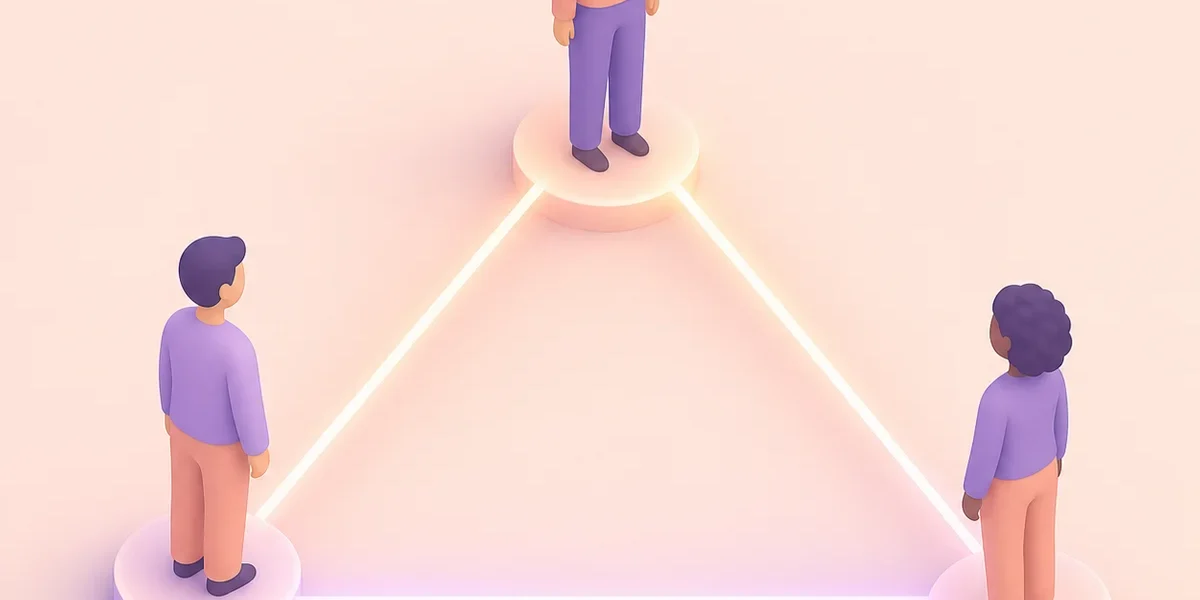
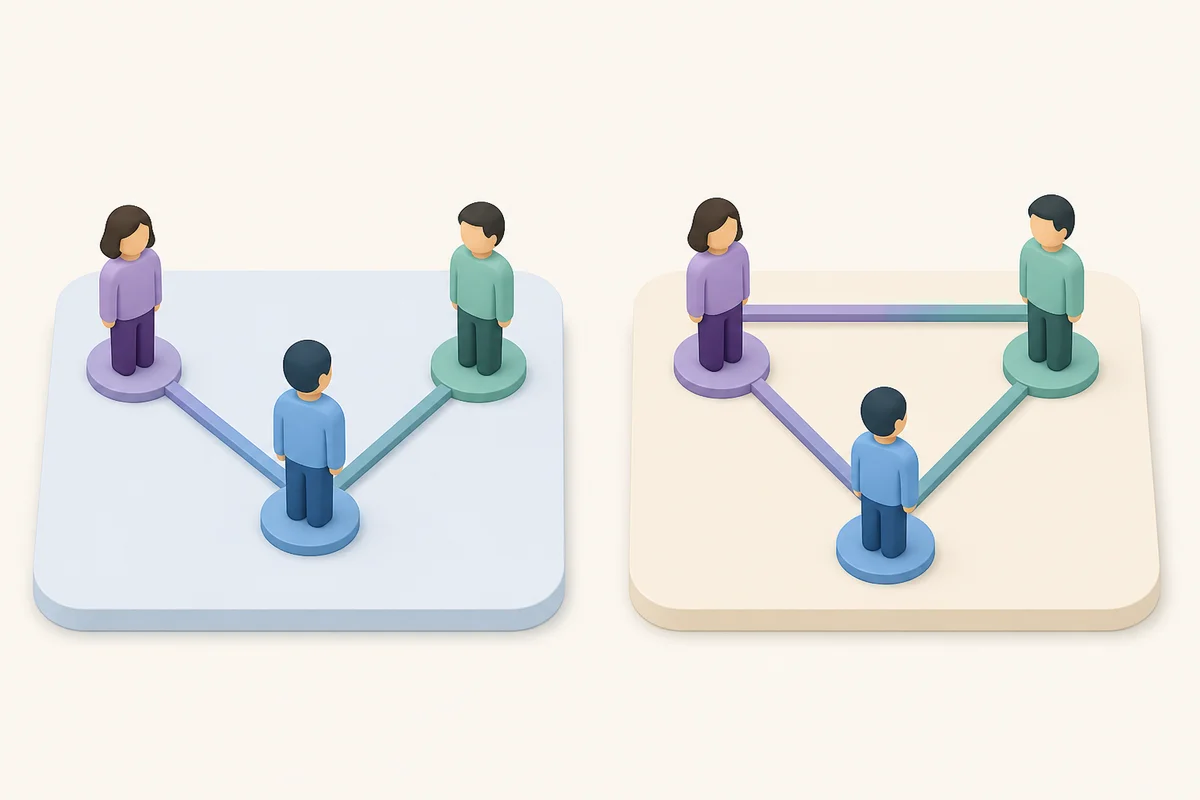
A polyamorous triad is a relationship structure in which three people are all romantically and, often, sexually involved with each other. Unlike a vee, where one person dates two partners who are not involved with one another, a triad means every pairing exists: A and B, B and C, and A and C. Some triads are closed, meaning the three only date each other. Others are open, meaning each person can also date outside the relationship.
If you have heard people toss around the word “throuple,” that is the more casual label for the same arrangement. A triad is not a threesome. A threesome is a single experience; a triad is an ongoing relationship that happens to have three people in it. That distinction matters more than most newcomers expect.
Table of Contents
- What Is a Triad? The Simple Definition
- Triad vs Throuple vs Vee vs Threesome
- Closed vs Open Triads
- How Triads Actually Form
- The Hard Parts of Triad Relationships
- Is a Triad Right for You? A Self-Check
- How to Build a Healthy Triad
- Frequently Asked Questions
What Is a Triad? The Simple Definition
At its core, a triad is three people who are all in relationship with each other. The defining feature is that every one of the three pairings is active. In a group of Alex, Bailey, and Cam, a triad means Alex dates Bailey, Bailey dates Cam, and Cam dates Alex. That web of connections is what makes a triad structurally different from almost every other non-monogamous shape.
There is no single “right” way to be a triad. Some triads live together and share finances. Others keep separate homes and simply date across all three pairings. Some are deeply romantic; others are warm and companionable with a lighter romantic charge. What they share is the same basic architecture: three people, three pairings, one interconnected unit.
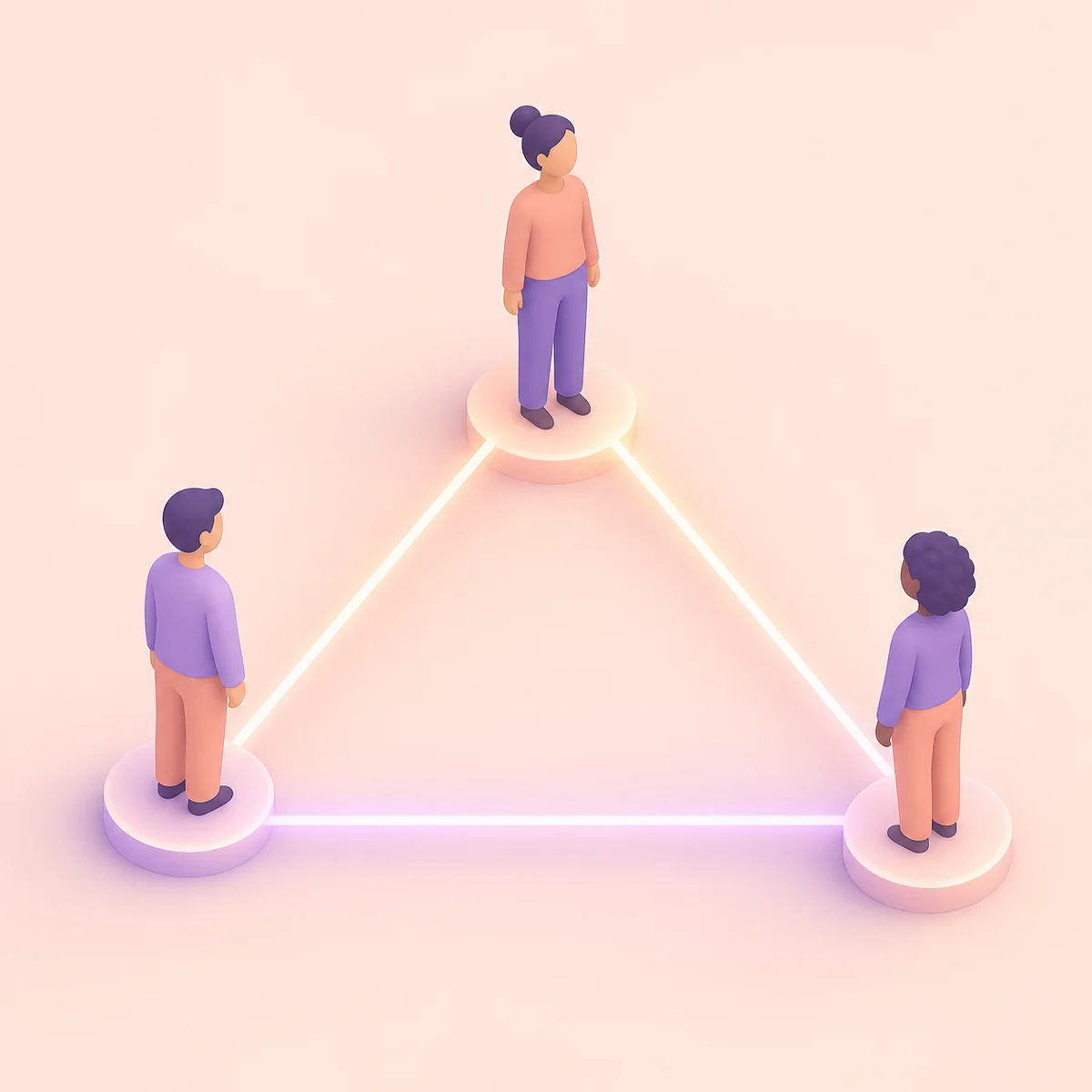
People often assume a triad is just “a couple plus one,” but that framing is where a lot of pain begins. A healthy triad treats all three people as full participants, not a primary pair with a guest. When the triad is built on the idea that two people are the “real” couple and the third is an addition, the third almost always ends up feeling expendable.
Triad vs Throuple vs Vee vs Threesome
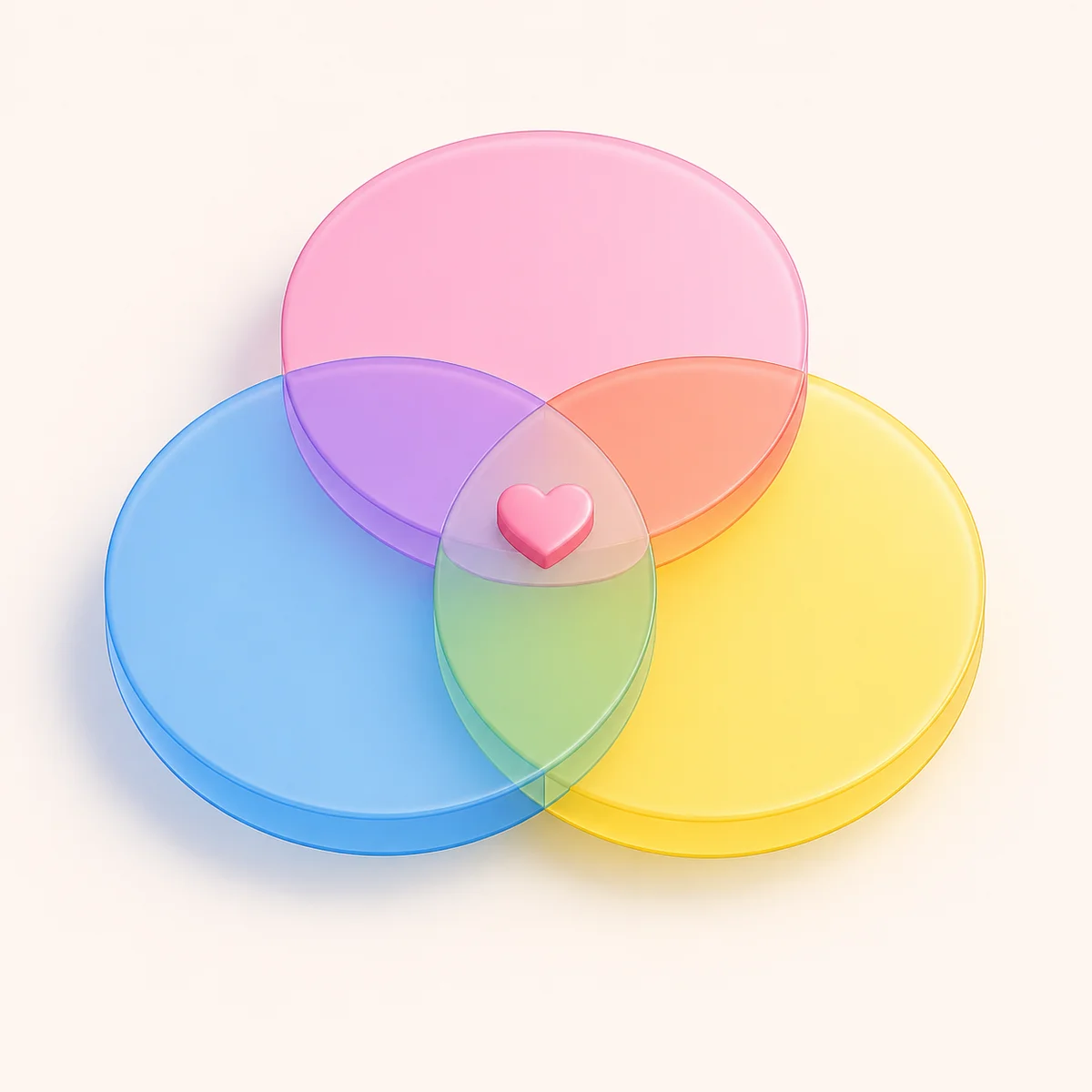
These four terms get mixed up constantly, so it is worth laying them side by side. The differences are about structure and duration, not about how serious or valid each one is.
| Term | What it means |
|---|---|
| Triad | Three people, all romantically involved with each other. All three pairings are active. |
| Throuple | The casual word for a triad. Same structure, friendlier label. |
| Vee | One person (the hinge) dates two partners who are not involved with each other. |
| Threesome | A single sexual experience involving three people, with no ongoing relationship required. |
The vee is the most common confusion point. In a vee, only two pairings are romantic. The hinge sits in the middle, and the two “ends” may be friendly, neutral, or strangers. A triad adds that third pairing, turning the shape from a V into a triangle. We have a dedicated explainer on what a vee relationship is if you want the full picture.
Closed vs Open Triads
A closed triad is one in which the three people agree to date only each other. This is a form of polyfidelity, and it can feel stable and contained for people who want the intimacy of three without the complexity of a wider network. You can read more in our guide to polyfidelity and closed polyamory.
An open triad keeps the three-person relationship but allows each member to date outside it as well. This is more common than many people realize, and it does not mean the triad is failing. It simply means the three people have agreed that their connection is not exclusive in either direction. The key is that “closed” or “open” is a decision made together, not a default.
Neither structure is more valid than the other. The question is which one actually fits the three people involved. A closed triad sounds romantic on paper, but if one member privately wants to date others, forced closure breeds resentment. An open triad works only when everyone genuinely wants openness, not when one person agrees to it to keep the peace.
How Triads Actually Form
Triads tend to form one of two ways, and the two paths feel very different in practice.
The first is organic: three people who already know each other gradually realize they all want more. This might be three friends, or two friends and a newcomer, or three people in an overlapping community. Because the connections develop at their own pace, organic triads often have a stronger foundation, though they still need deliberate care.

The second is a couple deciding to date a single person together. This is where things get delicate. When an established couple approaches a single person as a unit, there is a built-in power difference: they have history, shared routines, and often shared housing, while the single person is stepping into all of that alone. If the couple insists the newcomer date both of them equally from day one, they are asking for a shape that rarely forms naturally.
The ethical version of this path is slower. It means letting each new pairing grow on its own terms, acknowledging the imbalance out loud, and making sure the third person has a real voice. If you want to understand that imbalance better, our guide on what a quad relationship is explores how four-person structures raise many of the same questions about fairness and power.
The Hard Parts of Triad Relationships
Triads are not three times harder than a couple; they are harder in different ways. The most common friction points are predictable, which means they can be planned for.
Couple privilege. If a triad grows out of an existing couple, the original pair usually has an unspoken advantage. Their bond predates the third person, and without effort, they will default to making decisions as a pair. The third person may feel like an outsider in their own relationship. Naming this openly is the first step toward softening it.
Fairness. Three pairings will never develop at the same speed or to the same depth. One pairing might feel electric while another feels easy, and a third might feel uncertain. That is normal. The mistake is demanding identical intensity from every pairing, which only manufactures pressure.

Scheduling. Three calendars are harder than two, especially when the three people also have jobs, families, and other partners. Triads that last usually get explicit about time: who spends which evening with whom, and how the group makes space for all three pairings plus the triad as a whole.
Conflict triangles. When two people are upset, there is a pull to bring the third in as a referee or ally. This is a reliable way to make things worse. Each pairing needs to handle its own disagreements without drafting the third person to take a side.
Is a Triad Right for You? A Self-Check
Before chasing the triad label, run through this honest checklist. There is no pass or fail, only a clearer read on where you actually stand.
- You can name your actual reason for wanting a triad beyond “it sounds nice.”
- You are comfortable with the idea of your partner developing a bond that does not include you.
- You can sit with jealousy and talk about it without demanding someone change their behavior.
- You are willing to let each pairing grow at its own pace instead of forcing equal feelings.
- You have the time for three relationships, not just one plus an extra body.
- You can advocate for your own needs even when it risks disappointing someone.
- You are ready to treat a third person as a full partner, not an addition to your existing couple.
- You would still want this if the third person wanted to date others too.
If several of these make you hesitate, that is useful information. A triad is a real relationship with real stakes. It deserves to be entered with clear eyes rather than enthusiasm alone.
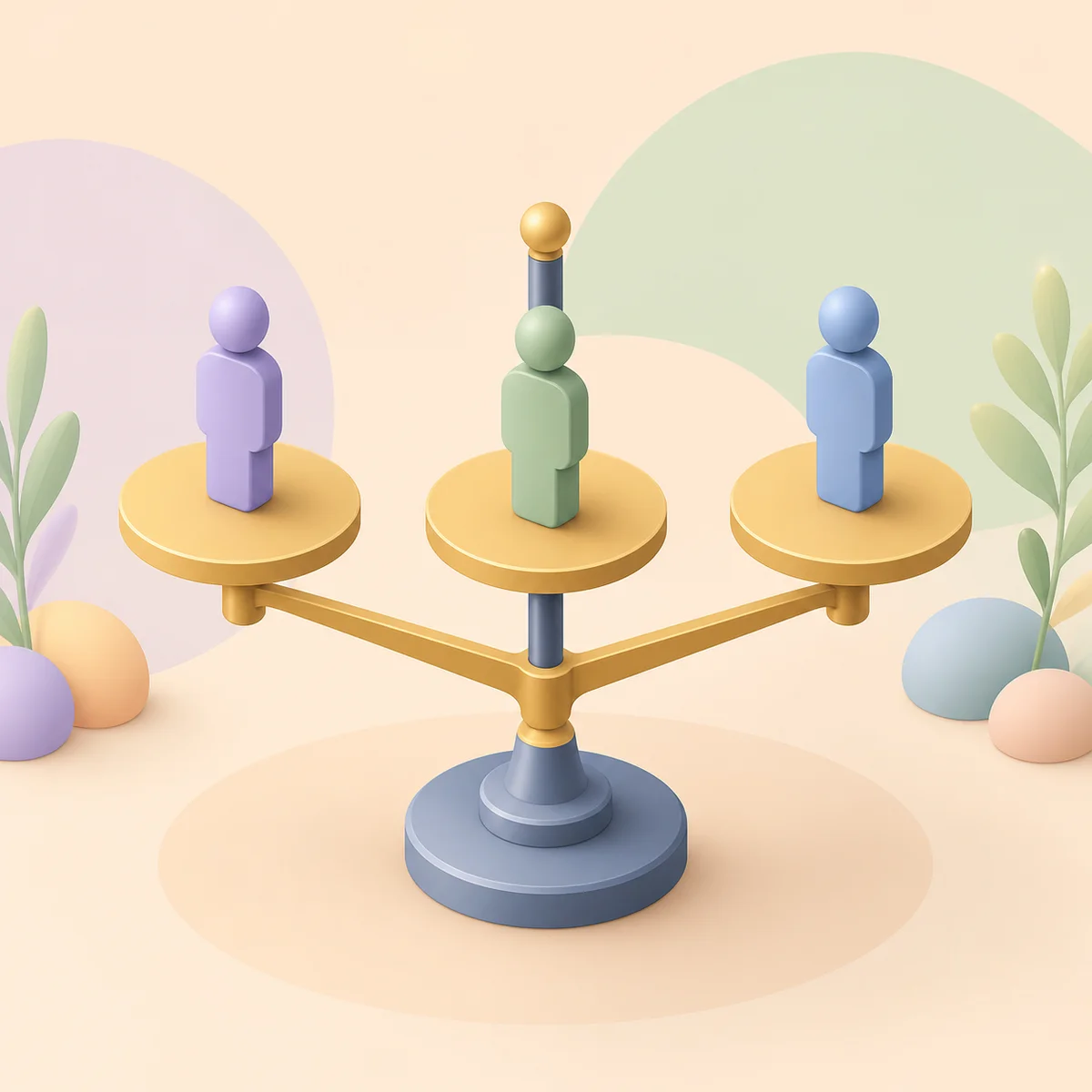
How to Build a Healthy Triad
Once you decide a triad is what you want, a few habits make the difference between one that endures and one that quietly unravels. If you want a grounding in the principles underneath these habits, Psychology Today’s overview of polyamory is a solid starting point.
First, talk about the couple-privilege question before anyone gets hurt. If there is an original pair, say out loud that the third person is not a guest and their needs carry equal weight. This is not a one-time conversation; it is a standing commitment you return to.
Second, protect one-on-one time. A triad lives or dies on the health of its three separate pairings. If the group only ever hangs out as a three, the individual bonds starve. Date each pairing intentionally.
Third, schedule regular check-ins across the whole triad. This is where you surface small irritations before they harden into resentments. The structure matters less than the consistency; a weekly half-hour with everyone present is enough to start.
Finally, accept that triads change shape. A triad might open, close, de-escalate, or dissolve into a vee over time, and none of those is a failure. The people matter more than the label. If you can hold the relationship lightly while still taking the people seriously, you have the right mindset.
Frequently Asked Questions
Is a triad the same as a throuple?
Yes. “Throuple” is simply the more casual, more widely used word for a triad. They describe the same three-person relationship structure.
Can a triad include a married couple?
Yes, and this is one of the most common configurations. The key is acknowledging the legal and practical advantages the married pair holds and working to keep the third person’s standing genuinely equal in the relationship.
Do all three people in a triad have to love each other equally?
No. Equal feelings are not a realistic goal. Each pairing will have its own texture and depth. What matters is that every person’s needs are respected, not that every feeling is identical.
A triad is one of the most rewarding structures in ethical non-monogamy, but it rewards patience, honesty, and a willingness to treat three people as three full human beings. For a broader look at the networks these relationships live inside, see our guide to what a polycule is. And if the word “metamour” keeps coming up in your conversations, our companion article on what a metamour is will clear that up too.
This guide is for adults exploring ethical non-monogamy. Every relationship structure works best when everyone involved gives informed, enthusiastic consent and communicates openly.