
You have probably heard the word “polycule” — maybe in a podcast, a Reddit thread, or a friend’s description of their relationships. It sounds like “molecule,” and that is not an accident. A polycule is a network of people connected through romantic or intimate relationships, visualized much like a molecular structure, with each person as a node and each relationship as a connecting line.
If you are new to ethical non-monogamy, the concept might feel abstract or even intimidating. Research on polyamory and non-monogamous relationship structures shows these networks are far more common than most people realize. But understanding what a polycule is — and how it works — can make your ENM experience clearer, healthier, and more intentional. This guide breaks it down from the basics.

Table of Contents
- What Is a Polycule? A Simple Definition
- Different Types of Polycule Structures
- The Difference Between a Polycule and a Throuple
- How to Map Your Own Polycule
- Managing Polycule Dynamics and Communication
- Common Polycule Challenges and How to Handle Them
What Is a Polycule? A Simple Definition
A polycule is the full network of people connected through consensual non-monogamous relationships. It includes you, your partners, your partners’ other partners (your metamours), their partners, and so on — extending outward like a web.
The term combines “poly” (from polyamory) with “molecule” — because when you draw out the connections on paper, the result often looks like a molecular structure diagram from chemistry class. Each person is a dot, and each relationship is a line connecting two dots.
Here is what matters: you do not have to be romantically or intimately involved with everyone in your polycule. In fact, you probably are not. Your polycule includes people you may never even meet — like your partner’s other partner’s girlfriend. What connects you is the chain of relationships, not direct involvement.
For example: You are dating Alex. Alex is also dating Jordan. Jordan has a partner named Sam. You, Alex, Jordan, and Sam are all part of the same polycule — even if you and Sam have never spoken.
Different Types of Polycule Structures
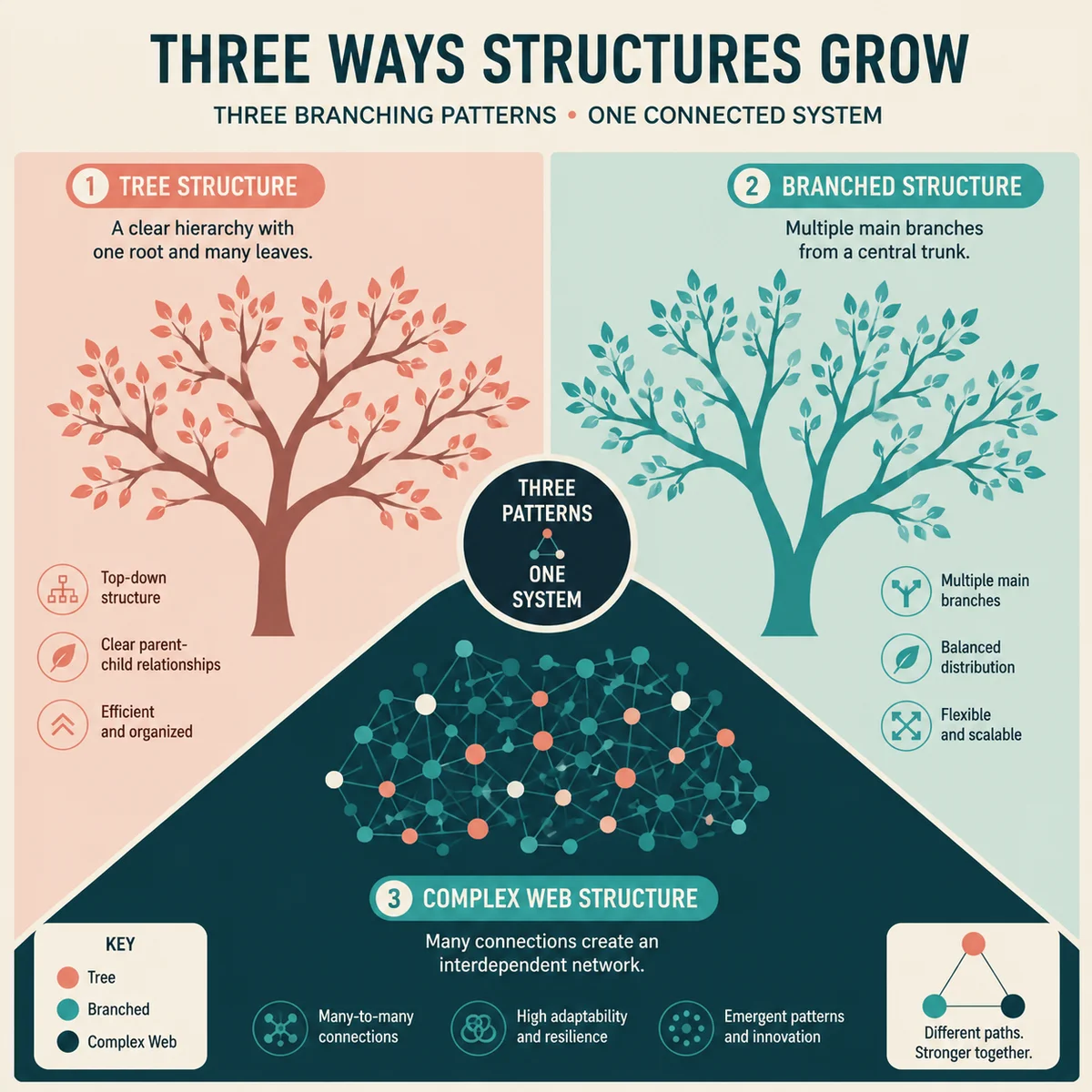
Polycules come in many shapes. While every network is unique, most fall into a few recognizable patterns:
The V (or “hinge”): One person (the “hinge”) is dating two people who are not romantically involved with each other — though they may be friends. This is one of the most common starting structures in ENM, and it appears frequently in threesome dating contexts as well.
The Triad: Three people are all romantically or intimately connected with each other. This is what many people picture when they think of a “throuple.” Triads can be “closed” (members only date within the triad) or “open” (members date outside the triad, extending the polycule further).
The N or Z: Two overlapping V-shaped relationships. Person A dates B and C. Person B also dates D. The connections form an N or Z shape when diagrammed.
The Complex Web: As more people and relationships are added, the polycule becomes a more intricate network. This is common in established ENM communities where people have been dating for years.
Kitchen Table vs. Parallel: These terms describe the culture of the polycule rather than its shape. In kitchen table polyamory, everyone in the polycule is comfortable enough to sit around a kitchen table together. In parallel polyamory, metamours may have little to no contact. Neither is better — it depends on what works for the people involved.
The Difference Between a Polycule and a Throuple
People often confuse these terms, but they describe different things:
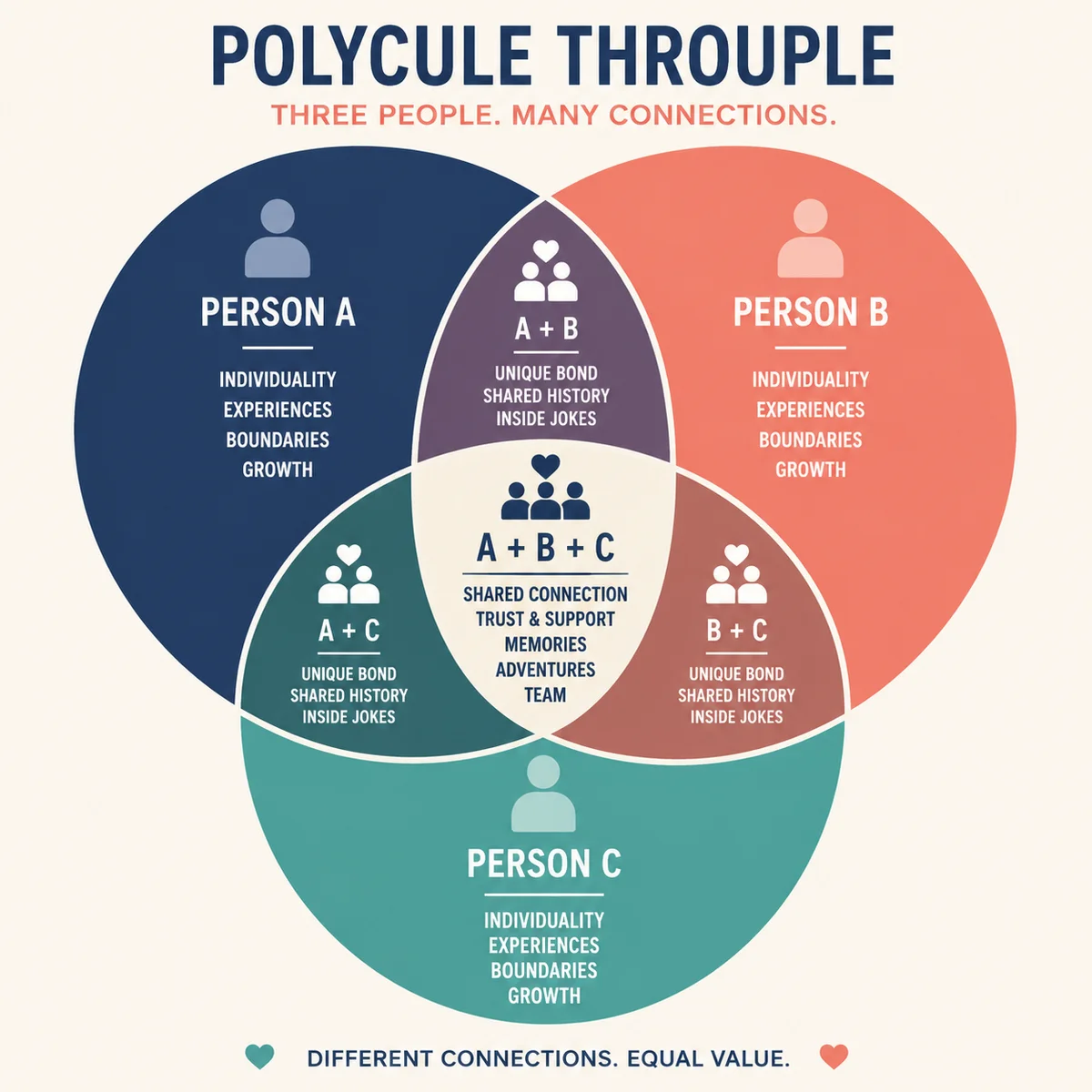
- A throuple is a specific type of relationship where three people are all romantically involved with each other. It is one possible configuration.
- A polycule is the broader network that contains all connected relationships, which may or may not include a throuple.
Every throuple is a small polycule (a triad specifically). But most polycules are larger than a throuple — and many do not contain a throuple at all.
Think of it this way: if ENM were a neighborhood, a throuple would be one specific type of household (three people living together), while a polycule would be the entire map of who knows whom across the block.
How to Map Your Own Polycule
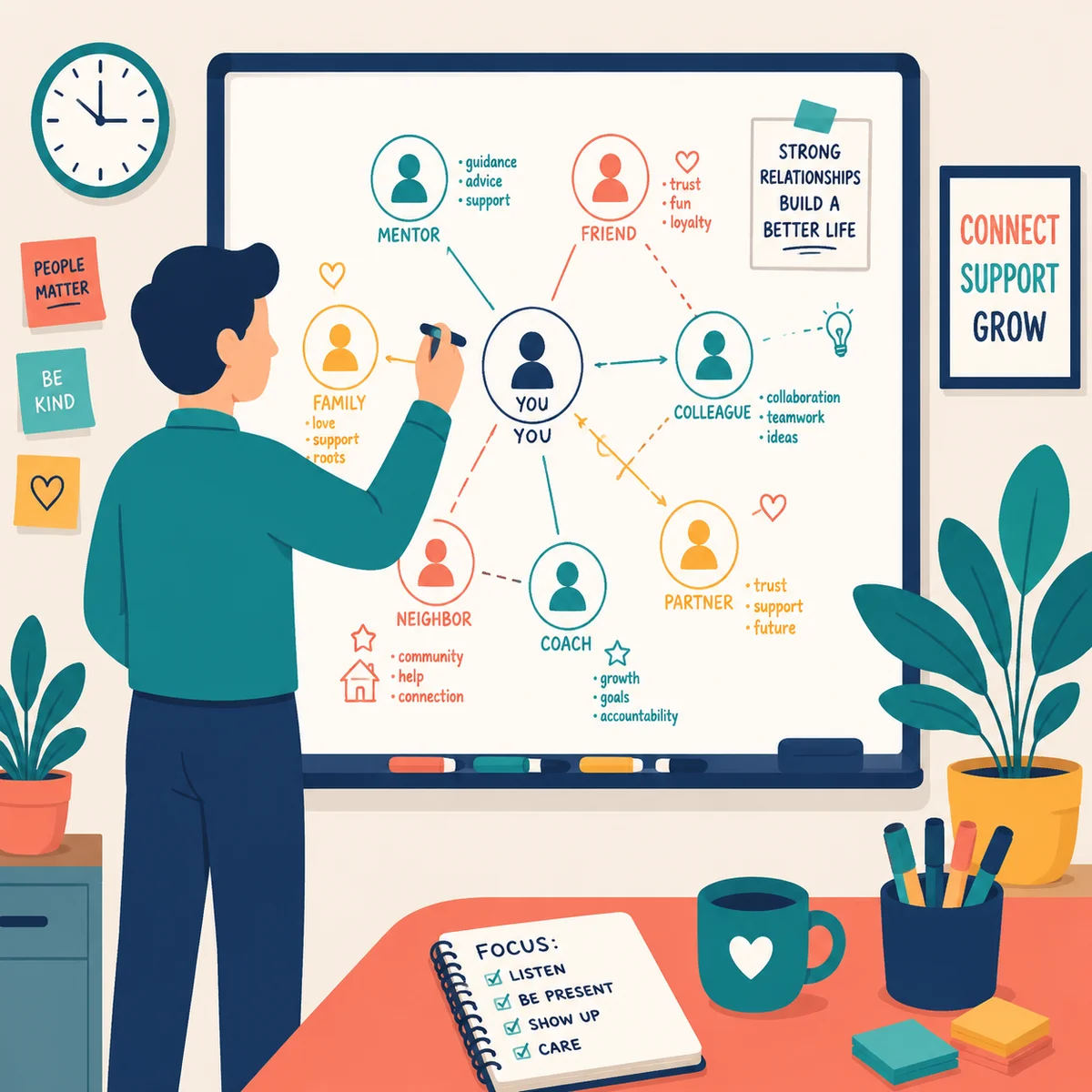
Mapping your polycule can be surprisingly useful — not just as an intellectual exercise, but as a tool for clarity and communication:
Step 1: Start with yourself. Put your name (or a symbol) in the center of a blank page or digital canvas.
Step 2: Add your direct partners. Draw lines from yourself to each person you are romantically or intimately involved with. Label the nature of each connection if that is helpful (for example: “dating,” “casual,” “long-term partner”).
Step 3: Add your metamours. For each of your partners, add the other people they are involved with. These are your metamours — they are part of your polycule even if you have never met them.
Step 4: Continue outward. Repeat the process for your metamours’ other partners, and so on, until you reach the edges of what feels relevant to your life.
Step 5: Use the map. A polycule map can help you understand metamour dynamics, identify communication pathways, and clarify relationship hierarchies. Some people find it helpful to update their map every few months as relationships evolve.
Managing Polycule Dynamics and Communication
A polycule is not just a diagram — it is a living social system. Here is how to keep it healthy:
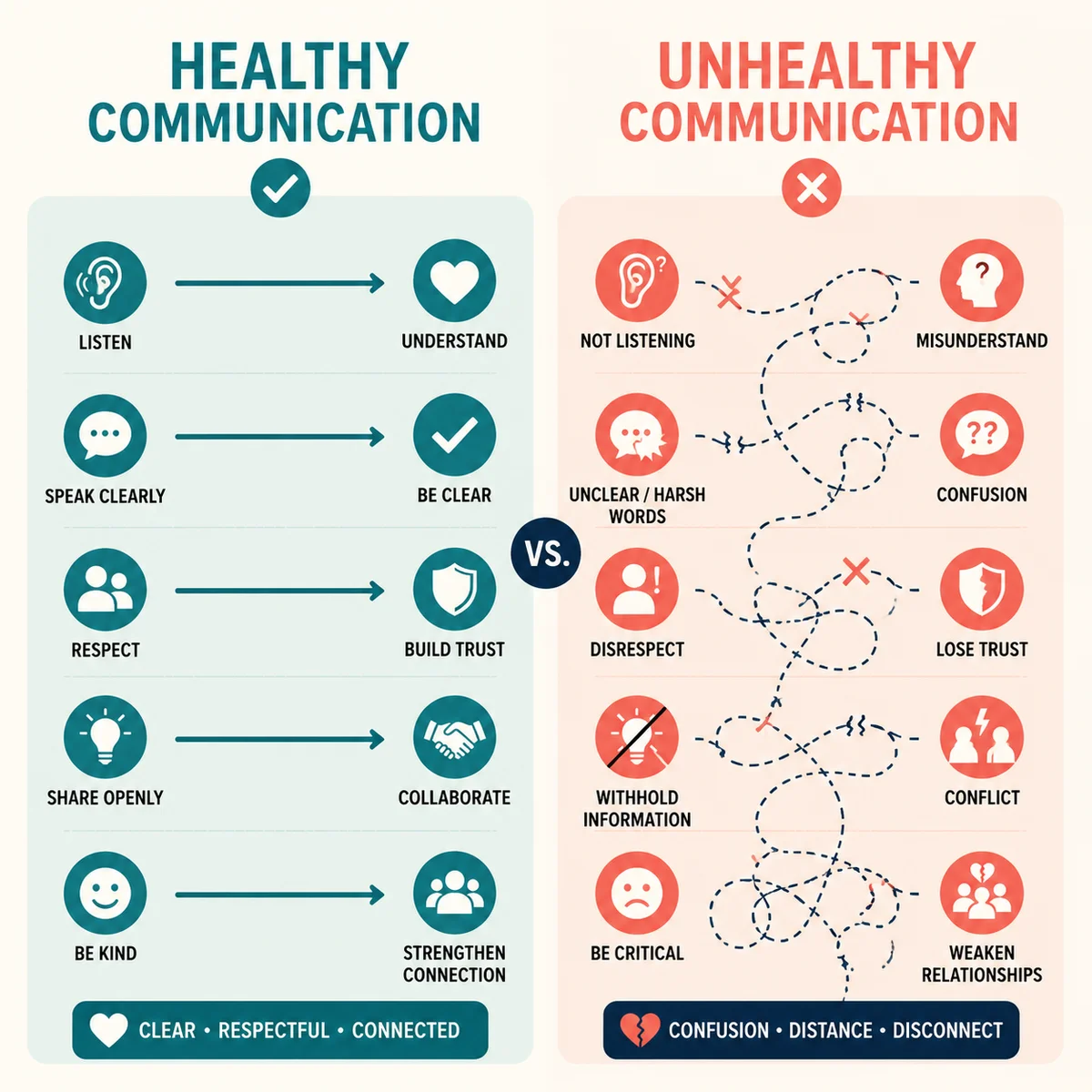
Clarify communication expectations. In a polycule, information flows through multiple channels. Some people want to hear about metamours; others prefer not to. Some want group chats; others want one-on-one communication only. There is no universal right answer — but there is a wrong one: assuming everyone has the same preferences without asking.
Respect privacy without creating secrecy. Your partner deserves to share some things with their other partners. That is not a violation of your privacy — it is their life too. At the same time, explicitly private information (trauma history, medical details, insecurities shared in confidence) should be treated with care. Agree on what is shareable and what is not.
Address conflict directly. In a polycule, conflict between two people can ripple through the entire network. If you have an issue with a metamour, address it with them — not through your shared partner as a messenger. Using someone as a go-between strains their relationships with both of you and almost always makes the original problem worse.
Be aware of relationship hierarchy. Some polycules have explicit hierarchies (primary, secondary partners with different levels of commitment and decision-making power). Others aim for non-hierarchical structures. Both can work, but unspoken hierarchy is where problems grow. Be honest with yourself and others about what your structure actually looks like.
Common Polycule Challenges and How to Handle Them
Every polycule faces growing pains. Here are the most common ones and how to navigate them:
The “telephone game” problem. Information gets distorted as it passes through multiple people. By the time a message travels from Sam to Jordan to Alex to you, it can look nothing like the original. The fix: whenever possible, communicate directly with the person the information is about, rather than through intermediaries.
Uneven emotional investment. It is normal for connections within a polycule to vary in intensity. You may be deeply in love with one partner and casually dating another. The challenge comes when people in the network have very different expectations about what the connections should look like. Regular check-ins about where things stand prevent assumptions from hardening into resentments.
Calendar chaos. More people in the network means more schedules to coordinate. This is a practical problem with practical solutions: shared calendars, standing date nights, and clear agreements about how far in advance plans should be made.
Breakup ripple effects. When two people in a polycule break up, it affects the whole network. Metamours may feel pressure to take sides. Shared social circles can become awkward. The key is to give everyone space to process in their own way, avoid involving uninvolved parties in the conflict, and remember that the end of one connection does not have to mean the end of your place in the community.

A polycule is ultimately a community — and like any community, it requires intention, communication, and care to thrive. When it works, it offers something remarkable: a network of people who support each other’s freedom to love in ways that feel true.
Understanding polycule dynamics is part of building healthy ENM relationships. For more guidance on ethical non-monogamy — from communication tools to working through internalized shame — explore the resources at 3Cupid.