
If you grew up surrounded by messages that romantic relationships should look one specific way — two people, forever, with clear roles — then exploring ethical non-monogamy (ENM) can stir up feelings you were not prepared for. Not just excitement and curiosity, but something heavier: internalized shame.
That tightness in your chest when you think about telling a friend. The voice in your head asking if something is wrong with you. The urge to hide this part of your life even from yourself.
You are not broken, and you are not alone. Internalized shame in ENM dating is common — and it is something you can work through. This article explains where it comes from, how to recognize it, and what you can actually do about it.
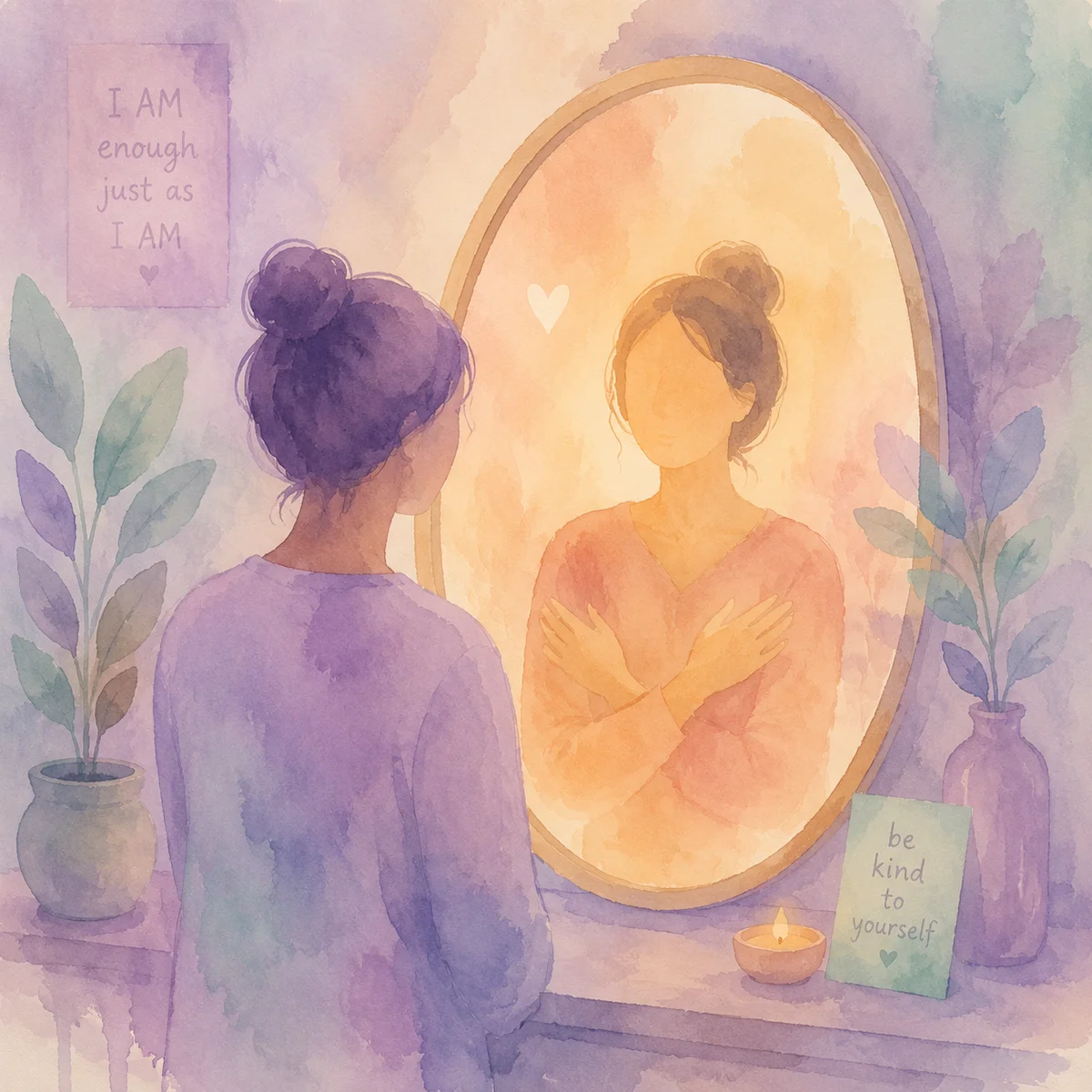
Table of Contents
- Where Internalized Shame in ENM Dating Comes From
- Signs You’re Carrying Internalized Shame
- How Shame Affects Your ENM Relationships
- Practical Steps to Work Through Internalized Shame
- How Partners Can Support Each Other
- Building Long-Term Self-Acceptance
Where Internalized Shame in ENM Dating Comes From
Shame does not appear out of nowhere. It is learned — absorbed over years from the culture around you.
Most of us were raised with what researchers call the monogamy mandate: the assumption that monogamy is not just the most common relationship structure, but the only healthy or moral one. Movies, family conversations, religious teachings, and even casual jokes all reinforce the idea that wanting more than one partner means something is wrong with you.
When you first realize you are interested in ENM — whether that means threesome dating, polyamory, or open relationships — that conditioning does not just disappear. You may intellectually believe ENM is valid, but emotionally, the old programming still runs in the background.
Other common sources include:
- Religious upbringing that framed non-monogamous desire as sinful or deviant
- Family expectations about marriage, grandchildren, and “settling down”
- Peer judgment — the fear of what friends or coworkers would think
- Past relationship experiences where desire for others was treated as betrayal
Recognizing where your shame comes from is powerful. It helps you separate your values from values that were handed to you without your consent.

Signs You’re Carrying Internalized Shame
Internalized shame is sneaky. It often disguises itself as something else — anxiety, avoidance, or even overcompensation. Here are some patterns to watch for:
- You hide your relationship structure from people you trust, not for safety reasons, but because you feel embarrassed
- You over-explain or justify your choices to partners, friends, or even strangers who did not ask
- You feel a need to prove that your relationships are “just as valid” as monogamous ones — constantly comparing
- You judge other ENM people more harshly than you judge monogamous people for similar behavior
- You experience guilt after positive experiences — a great date followed by a heavy, sinking feeling
- You struggle to advocate for your needs because deep down you feel you do not deserve to ask
- You avoid reading about or engaging with ENM communities even though you are curious
If several of these resonate, shame is likely operating beneath the surface. The good news: once you name it, you can start to address it.

How Shame Affects Your ENM Relationships
Shame does not stay contained in your own head. It leaks into your relationships in ways you might not immediately recognize.
It creates distance. When you are ashamed of your desires, you hold parts of yourself back from partners. You might avoid talking about what you really want or need, which makes authentic connection nearly impossible.
It fuels jealousy and insecurity. Shame often whispers: “You are not enough, and that is why your partner wants others.” When you believe that narrative, every text your partner receives from someone else feels like confirmation of your inadequacy.
It leads to secrecy. Some people respond to shame by compartmentalizing — keeping their ENM life entirely separate from the rest of their identity. While privacy is healthy, secrecy driven by shame creates a fractured sense of self that is exhausting to maintain.
It attracts unhealthy dynamics. When you do not believe you deserve ethical, respectful treatment, you are more likely to tolerate behavior that crosses your boundaries. Shame lowers your standards for how you allow others to treat you.
These patterns are not character flaws. They are coping mechanisms you developed to survive in a culture that told you your desires were wrong. The work is to recognize them and choose different responses.

Practical Steps to Work Through Internalized Shame
Working through shame is not about flipping a switch. It is a practice — something you return to again and again. Here are concrete steps that help:
1. Name it out loud. Shame thrives in silence. Telling a trusted partner, therapist, or friend “I am struggling with shame about being non-monogamous” takes away some of its power. As psychologist Brené Brown’s research shows, shame cannot survive being spoken and met with empathy.
2. Find your people. Isolation amplifies shame. Connecting with other ENM people — through local meetups, online communities, or even just following ENM voices on social media — normalizes your experience. You realize you are not the only one navigating these feelings.
3. Examine your beliefs. Write down the specific shame-based beliefs you hold (for example: “People who want multiple partners are selfish”). Then ask: Where did I learn this? Do I actually believe it? Would I apply this judgment to a friend I love?
4. Practice self-compassion. When shame surfaces, treat yourself the way you would treat a close friend who came to you with the same struggle. You would not tell them they are broken. You would listen, validate their feelings, and remind them they deserve happiness.
5. Take small risks. You do not have to come out to everyone at once. Start with one trusted person. See how it feels to be honest and accepted. Each positive experience builds evidence against the shame narrative.
6. Work with a professional. If shame is deeply rooted — especially if it connects to religious trauma or family dynamics — an ENM-affirming therapist can be transformative. Look for someone who explicitly states they work with non-monogamous clients.
How Partners Can Support Each Other
If your partner is struggling with shame — or if you are both navigating it together — here is what actually helps:
- Do not dismiss it. Saying “just get over it” or “there is nothing to be ashamed of” — while well-intentioned — invalidates their real emotional experience
- Do listen without fixing. Sometimes your partner just needs you to hear them, not solve the problem
- Do share your own struggles. Vulnerability is contagious in the best way. When you admit your own shame, it gives your partner permission to do the same
- Do celebrate small wins. If your partner tells a friend about your relationship structure for the first time, acknowledge the courage that took
- Do not compare your progress. People process shame at different speeds. Your partner is not “behind” — they are on their own timeline

Building Long-Term Self-Acceptance
Self-acceptance is not a finish line. It is a muscle you strengthen over time. Here is what long-term practice looks like:
Curate your media diet. Follow ENM creators, read books by non-monogamous authors, and listen to podcasts that normalize diverse relationship structures. What you consume shapes what feels normal. If every movie and show you watch depicts monogamy as the only happy ending, you are swimming against a strong current.
Rewrite your inner narrative. Pay attention to how you talk to yourself about your relationships. When you catch a shame-based thought (“I am so messed up for wanting this”), pause and consciously reframe it (“I am a person who values honesty, connection, and the freedom to love in ways that work for me”).
Find meaning in your choices. Connect your relationship structure to your values. Instead of framing ENM as “breaking rules,” frame it as “choosing honesty, autonomy, and intentional connection.” When you see your choices as expressions of your values rather than violations of norms, shame loses its grip.
Give it time. You spent years absorbing the idea that monogamy is the only valid path. It will take time to fully internalize that different paths exist — and that yours is one of them. Be patient with yourself.

Internalized shame does not mean you are doing ENM wrong. It means you are a human being who grew up in a culture with very narrow scripts about love. Unlearning those scripts is hard work — and worth doing.
This article is part of 3Cupid’s ongoing series on emotional wellness in non-monogamous dating. If you are interested in connecting with like-minded people who understand the ENM journey, you can explore the community at 3Cupid.