Table of Contents
- Sorting Unwanted Messages in ENM Dating by Kind
- The Messages You Can Simply Leave Unanswered
- When Someone Sends Something You Never Asked For
- Pressure Dressed Up as Enthusiasm
- Couple Accounts, One Keyboard, No Name
- Replies, Blocks, and Reports You Can Prepare in Advance
- Frequently Asked Questions
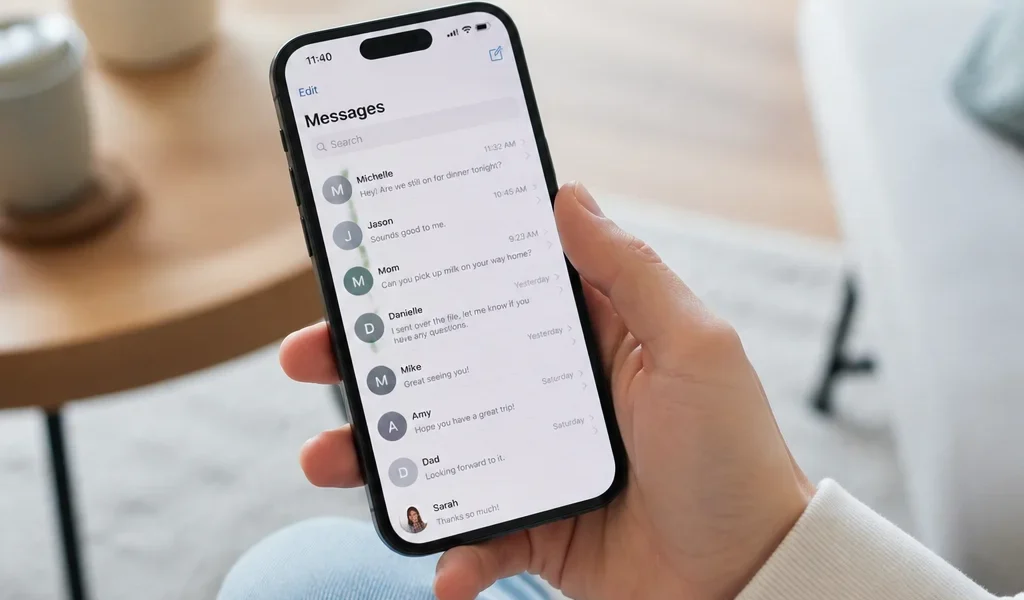
If you date non-monogamously for long enough, your inbox stops being neutral. Some messages are from people who read your profile. Some are from people who read your photos. And some arrive from somebody who has decided what you are for before saying hello. Sorting unwanted messages in ENM dating into kinds — rather than treating them all as one grey annoyance — is the difference between losing twenty minutes and losing an afternoon.
This one is written for the receiving side. It covers four rough categories, what each one actually deserves from you, the specific patterns that look harmless until they are not, and how to end things cleanly with the platform tools rather than a long argument. If you only take one thing away: not answering is a complete and legitimate response.
Sorting Unwanted Messages in ENM Dating by Kind
Almost everything that lands badly fits into one of four buckets. Wrong-fit — perfectly decent people looking for something you are not offering. Low-effort — one word, no profile read, no question. Pressuring — urgency, guilt, or negotiating with your stated boundary. And violating — content or requests you never agreed to receive, which is not a communication problem at all.
The buckets matter because the correct response to each is different, and because applying the wrong response wastes you. Explaining slowly to somebody in the wrong-fit bucket is kindness spent twice over. Arguing with somebody in the pressuring bucket just buys you more pressure. Only one of these buckets deserves your careful sentences, and even then it deserves one.
There is a structural reason the volume is higher here than in monogamous dating apps. Stating in public that you are open to more than one relationship makes you legible to people who read that as an invitation to skip the usual warm-up. That is their misreading, not your signal. If you want background on how communication changes once it moves onto a screen, APA on social media and the internet is a calm, short read, and so is EFF on privacy. Background reading on the social side of being legible is in threesome dating privacy and social media privacy in non-monogamy.
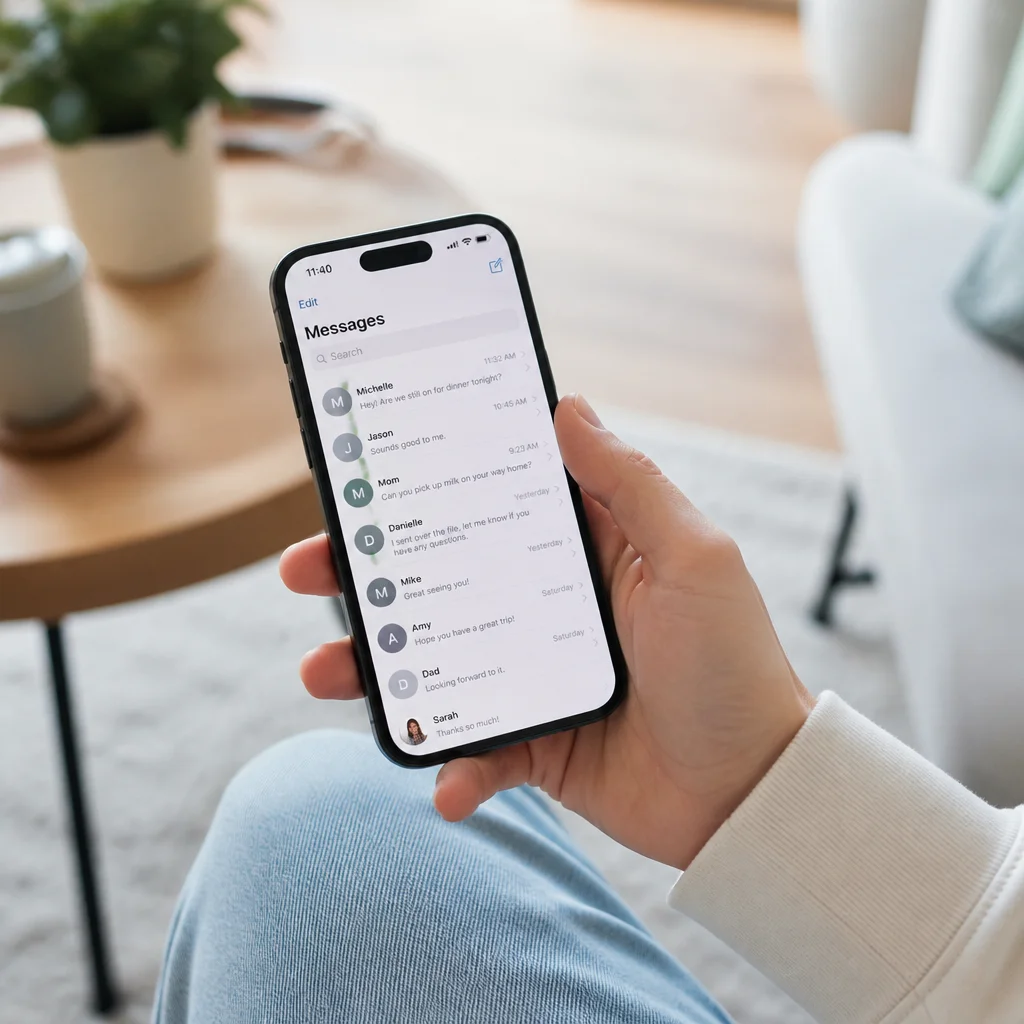
One note on tone, because it comes up: you are allowed to be blunt. Politeness has been taught as though it were an obligation rather than a choice, and a lot of people spend energy managing the feelings of strangers who put no energy into reading their profile. Being brief is not being unkind.
The Messages You Can Simply Leave Unanswered
Most unwanted mail falls into the first two buckets, and the correct handling for both is the same: nothing. No reply, no explanation, no apology. This is not rudeness. A dating platform is a filter, and declining to engage is how filters work.
| What arrives | A typical line | What you owe them |
|---|---|---|
| Nothing but a greeting | “hey” | Nothing. A single word is not an opening you have to rescue. |
| Someone who skipped the profile | “you into anything?” | Nothing. The question was already answered where they did not read. |
| A request you explicitly excluded | “I know you said no couples, but hear me out” | Nothing, or one restated sentence if you feel generous. |
| An assumption about your body | Commentary you did not invite | Nothing, and possibly a block. |
| Someone you already met once | “when are we doing that again?” | One honest sentence, then nothing further. |
The trap is the wish to be understood. Most of us want the other person to hear why their message did not land, so we write the careful paragraph explaining that we date solo, or that Tuesdays are taken, or that we never said hello in that tone. That paragraph is read by roughly nobody in the low-effort bucket, and by exactly the wrong person in the pressuring bucket, who hears engagement and replies twice.

If you want a middle setting — something between writing an essay and saying nothing — most people keep one stock sentence: “Thanks for reaching out, I don’t think we’re a match, wishing you well.” One line, no negotiation, sent once. Anything after that is a conversation you did not agree to. The short version of why a flat no can feel so hard to send is covered well in APA’s overview of healthy relationships.
When Someone Sends Something You Never Asked For
This is the bucket that stops being about manners. Content you did not agree to receive — whether that is explicit language, images, or a detailed proposal delivered before hello — is not flirting that missed. It is a boundary being walked through, and the response is not a snappy reply or a careful explanation of why you disliked it.
What helps, in order: stop reading, screenshot before you block if you might need it, use the platform’s report tool, and tell one person in real life. That last step matters more than it sounds. Telling a friend converts a private yuck into a shared fact, and it tends to settle your stomach faster than thinking about it alone. If images of you are involved anywhere, StopNCII has tools for getting non-consensual images removed across major platforms, and [[wh2|WomensHealth.gov on relationships and safety]] covers coercion and pressure plainly.

Also worth knowing: you can report someone without messaging them first, without warning them, and without collecting evidence beyond what you already have. You do not have to pass a threshold of severity before the report button becomes yours to use. And if you would rather not report at all, that is your call too — the block button is sufficient.
Pressure Dressed Up as Enthusiasm
This is the category people misjudge most often, because on the surface every message in it looks keen. Enthusiasm respects the answer. Pressure negotiates with it. Here are the shapes that tend to show up.
- Manufactured scarcity. “Only in town tonight” and “my partner’s away this week so now or never” are urgency devices, and urgency is how someone skips your thinking time.
- Your own words thrown back at you. “You said you were open-minded” after you have declined something is quotation used as leverage.
- Relaying consent you cannot verify. “My partner’s totally fine with it” is one person’s account of another person’s feelings. It is fine to ask to hear it directly.
- The escalating ask. Accepting one limit and immediately proposing the adjacent thing. This is sometimes simply clumsiness, so treat the second occurrence as the real data point.
- The guilt turn. Being told you have wasted their time, misled them, or owe them something for being polite.
- The identity lecture. “A real poly person would have said yes” — nobody gets to grade your practice.
Any one of these can be a one-off awkwardness. What makes it pressure is repetition after being asked to stop, and the aftermath: the sense that you are now managing someone’s disappointment rather than choosing anything. There is useful writing on this in responding to emotional manipulation and withdrawing consent, both of which treat it as a normal thing that happens rather than a personal failure.
If you have a history that makes any of this land harder, that is not an overreaction. People who want this to work will not mind you moving at your pace — see trauma-informed non-monogamy and supporting a partner with a trauma history for why ‘slow’ is not the same as ‘never’.

Couple Accounts, One Keyboard, No Name
Joint profiles produce a specific kind of confusion. You are writing to “us”, you cannot tell who typed the last line, you don’t know whether the person you’re talking to is the person you’d eventually meet, and sometimes you’re being courted by somebody whose partner has no idea any of this is happening. If you want the other side of this — writing as two people rather than receiving as one — the guide to first messages covers it in detail.
The practical checks are short. Ask who is writing. Ask whether everybody involved knows about this conversation. Ask what happens if one of them changes their mind. None of those questions is rude, and a pair who cannot answer them without irritation has saved you months. There is good grounding on why this asymmetry is structural rather than personal in couple privilege and dating as the third.
And the uncomfortable one: sometimes there is no second person at all. Accounts are easy to invent and hard to verify properly from a chat window. Verification steps worth doing before anything else are laid out in [[verify1|verifying a third partner online]] and [[verify2|screening before you meet]].

Replies, Blocks, and Reports You Can Prepare in Advance
Ten minutes now saves you improvising at midnight with somebody you did not choose to speak to, and it costs you less in the body too — APA’s stress topic is a decent place to read about why. Two things are worth fixing while you are calm: what your one warning looks like, and what gets a block with no warning at all.
| Do | Don’t |
|---|---|
| Use one clear sentence and stop there. | Write a second paragraph explaining why they should understand. |
| Screenshot first if you might report later. | Announce that you are collecting evidence mid-argument. |
| Use the platform’s own report tool. | Debate whether your experience met the bar for reporting. |
| Tell one real-life person. | Sit with it alone and decide it was your fault. |
| Block without commentary when it is done. | Leave the thread open in case they reply again. |
A small point about devices: if you keep evidence, keep it somewhere only you can open, and be aware that screenshots sync. phone privacy in non-monogamy and NCSC’s guidance on staying secure online both cover the mundane version of this that actually bites people. None of it needs to be a big operation.
Your limits do not need to be defended. If somebody wants a reason, “that doesn’t work for me” is a finished sentence, and the conversation’s job at that point is to end rather than to convince.
Lines you can keep saved
- “Thanks, I don’t think we’re a match.”
- “No thank you — please don’t ask again.”
- “I’m not discussing that with someone I’ve just met.”
- “Please don’t send me anything further.”
- “Take care.” — and then nothing else.

Frequently Asked Questions
Am I being rude if I never reply?
No. A dating inbox is a filter, and declining to engage is how filtering works. Ignoring a single word or a message that ignored your profile costs nobody anything.
What should I do about explicit content I never asked for?
Stop reading, screenshot before blocking if you might need it, use the platform’s report tool, and tell someone in real life. You do not owe the sender an explanation of why it was unwelcome.
How do I tell the difference between keen and pressuring?
Enthusiasm respects a limit the first time it hears one. Pressure treats your limit as the opening position in a negotiation, or uses urgency to shorten your thinking time.
Is it worth reporting someone I will never meet again?
It is worth it if it protects the next person and it costs you almost nothing. It is also perfectly fine to block and move on if reporting feels like more than you can carry that day.
None of this makes your inbox a pleasant place on its own, but sorting unwanted messages in ENM dating does take the weight out of it: once most of what arrives needs no answer at all, the remaining mail is smaller, and the people worth writing back to are easier to spot. There is more of that around here if you want it.
Editor’s note: this article is general information for adults, not legal advice. If you have been threatened, stalked, or had intimate images shared without your consent, contact your local police and the platform involved.