
Table of Contents
- Why Birth Control in Non-Monogamy Needs Its Own Agreements
- Who Handles Contraception, and Who Doesn’t
- What You Owe a New Partner, and What You Don’t
- When a Method Changes Mid-Agreement
- Pregnancy Risk and STI Risk Are Two Separate Files
- Cost, Access and the Boring Practical Bits
- Scripts You Can Reuse
- Checklist Before the Next Meet
Birth control in non-monogamy stops being a private matter the moment more than one person is involved, and the question people actually ask is simpler than they expect: nobody new gets a vote over your body. The method stays yours. What changes is the sharing. Each partner needs enough information to make their own choices, and everyone benefits from a clear agreement about what happens if something slips.
Everything below applies whether you are one half of a couple dating separately, part of a triad, or single and seeing three people who do not know each other. The pattern is the same. What differs is how many conversations you have to hold.

One framing note before the practical parts. Contraception and STI prevention are two different files, and collapsing them into one conversation is where most people lose track. This article is about preventing pregnancy. Screening belongs to its own discussion, and there is a separate piece on STI screening for non-monogamous dating if you need it.
Why Birth Control in Non-Monogamy Needs Its Own Agreements
In a closed pair, contraception is a standing arrangement that nobody revisits until it stops working. Add another partner and it becomes a moving target. The person using the method may change it for health reasons. A new partner may have their own expectations about what protection is used and when. Someone may assume a decision has been made that nobody actually made.
The classic version of that assumption involves fluid bonding. Two people agree to stop using barriers with each other, and a third person reasonably asks whether that changes what happens with them. It does, and it should be said out loud rather than discovered.
There is also a knowledge gap worth naming. Many adults learned everything they know about pregnancy prevention from a school lesson, a parent, or the internet, and none of those sources covered the multi-partner case. So people improvise, and improvised agreements tend to be vague in exactly the places you need precision.
Who Handles Contraception, and Who Doesn’t
Start from the body. Whoever can become pregnant selects the method, deals with the side effects, and decides when to stop it. That is not up for negotiation, and any partner who treats it as one is telling you something useful about themselves.
Everyone else’s role is smaller but real. You can ask what your partners use, you can state what protection you will personally use every single time, and you can be clear about what you would want to happen in the event of a failure. Those three things are entirely legitimate requests.

What is not legitimate is pressure. Nobody should push a partner toward or away from a method because it suits their preference, and nobody should be made to feel that declining is an inconvenience they are causing. This is the same principle that runs through touch boundaries in non-monogamy: the person whose body it is decides, and everyone else gets an honest answer either way.
| Role | What they decide | What they can ask for |
|---|---|---|
| The person who can become pregnant | Which method, when to start, when to stop, how to handle side effects | Honest answers about barriers, and help covering costs if that is how you split things |
| A partner who cannot become pregnant | Their own barrier use, their own boundaries, their own screening schedule | Clarity about what protection is expected, and a say in the shared plan |
| A partner not involved in this pairing at all | Their own body and agreements entirely | To be told if your barrier practice changes in a way that touches them |
What You Owe a New Partner, and What You Don’t
You owe a new partner accuracy. If you use a method, say which one and say plainly whether it has been reliable for you. If you are not using anything, say that too. Vague answers like “I am being careful” mean nothing and put the other person in the position of guessing.
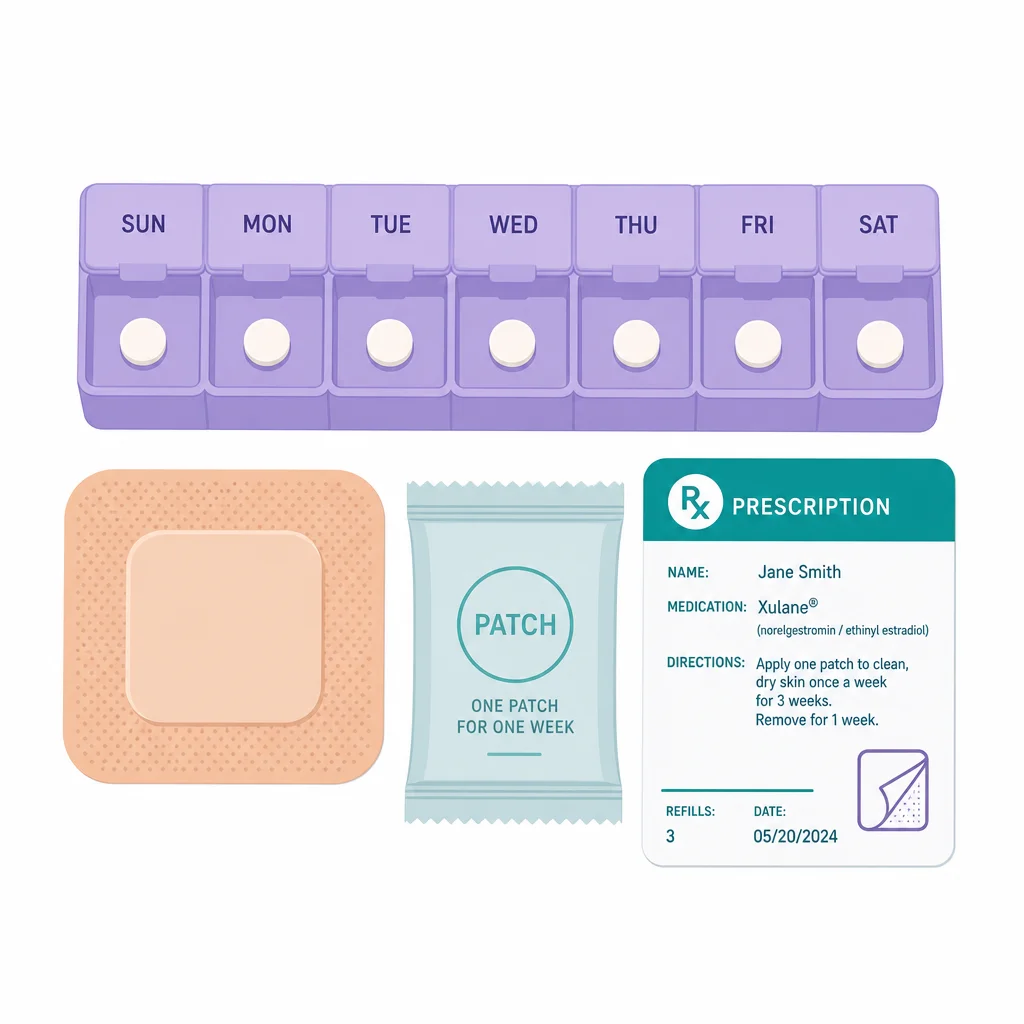
You do not owe details about your medical history, your reasons, or your prescriptions. A partner needs to know enough to choose their own protection. They do not need your chart. When someone keeps probing past a clear answer, that is a pressure pattern rather than curiosity, and it is fair to say so.
Timing matters less than honesty, though earlier is better. Raising it before the first meeting is easier for everyone than raising it in the moment, and it also tells you something about how this person handles practical conversations. If they cannot discuss contraception calmly, that is useful information before you are in a room together. There is a good parallel in how to open a conversation on an ENM dating app.
When a Method Changes Mid-Agreement
Methods change. Side effects, cost, access, a new prescription, a body that reacts differently at forty than it did at twenty-five. The problem is not the change, it is silence during it.
The rule that works: any change to what you use, or to whether you use anything, gets communicated before the next meeting with each affected partner. Not after. Before. Partners who were relying on the previous arrangement need the chance to adjust theirs.

Some people object that this feels like asking permission. It is not. You are not requesting approval for your body. You are giving people information they need to protect themselves, which is a different act with a different name. Keeping someone’s consent informed means keeping it current.
Pregnancy Risk and STI Risk Are Two Separate Files
Contraception prevents pregnancy. Barriers reduce the transmission of infections. Some methods do nothing about the second thing, and quite a lot of people quietly assume one covers both.
Hold two agreements instead of one. The practical side of STI screening has its own rhythm, its own waiting periods and its own paperwork, none of which line up neatly with your contraception calendar. Keeping the files apart also makes it easier to revisit one without renegotiating both.
The same logic applies to barriers. If barriers are part of your plan, decide who supplies them, what kind, and what happens when nobody has any. That last one causes more awkward pauses than people admit, and it is included in the checklist at the end.
Cost, Access and the Boring Practical Bits
Contraception costs money, time and appointments, and in a multi-partner setup those costs get larger without getting shared automatically. Prescriptions, clinic visits, appointments during working hours and travel to get there all add up.
Talk about it the way you would talk about any other shared cost. If you already handle who pays for what in threesome dating, fold this into that rather than inventing a new system. Offering to cover part of a partner’s costs is a kind thing to offer and an unkind thing to imply they cannot manage without you.
Access is uneven and worth planning around. Some people live nowhere near a clinic, work hours that make appointments impossible, or rely on a campus service that closes for the summer. If that is your situation, check the practical guidance for non-monogamy in rural areas or non-monogamy at college, where getting to an appointment is its own project.
For the methods themselves, talk to a clinician. A national health service overview of contraception lays out the categories and what each involves, and a pharmacist can often answer access questions without an appointment. Which method suits you depends on your health history, which is precisely why nobody else should be picking it. The psychology association’s sexual health topic page covers the communication side of the same decision, and it is worth two minutes if you find these talks awkward.
Scripts You Can Reuse
Most people fumble these conversations because they have never heard one done well. Here are four openers that leave room for a real answer. Adjust the wording; keep the shape.
- “I use a long-acting method and I pair it with barriers with everyone who is not fluid bonded. What does that look like on your side?”
- “I am not on anything hormonal right now, so I use barriers every time without exception. If that is not your preference, I would rather know today.”
- “My method is changing next month for health reasons. Nothing about you changes, but you should have the facts before we next meet.”
- “If a method failed us, my preference is to tell each other within a day and figure it out together. Can you live with that?”

Notice that none of these ask anyone to relax a standard. They describe what you do, ask what the other person does, and leave the decision visible. That is the entire skill.
Checklist Before the Next Meet
Run this once, then revisit it whenever anything shifts. It takes about ten minutes and it closes the gaps that people usually discover the hard way.
- You can state what method you use, or that you use none, without hedging.
- Every partner who touches this plan has said what they use.
- Barrier expectations are written down somewhere, including what happens if nobody has any.
- Everyone knows the notification rule if a method fails.
- Costs are either settled or consciously left to the person using the method.
- Nobody in the group believes one method covers both pregnancy and infection risk.
If any line is unclear, that is the conversation to have next. Not a big one usually. Just the one that needs having.
And when things do go sideways despite all of it, read what to do during a pregnancy scare in non-monogamy before you send any messages. The first two days go much better with a plan.
Does adding a partner mean I have to change my method?
No. Your method answers to your body and your clinician, not to your relationship count. What usually needs adjusting is the barrier practice around the edges, and how much you tell each partner so their own choices stay informed.
Is it fair to ask a new partner what they use?
Yes, and it is fair for them to ask you. “I use X and barriers with everyone else” is a normal answer. What crosses a line is pushing someone toward a specific method or punishing them for choosing differently.
Can my partner veto my decision to stop contraception?
They can set their own limits, including choosing to use barriers with you or to pause that part of the relationship. They cannot make the choice for you. Two adults can each hold a boundary without either controlling the other.
How often should we revisit this?
Whenever anything changes, and otherwise rarely. Annual check-ins catch the drift that accumulates when an arrangement has quietly stopped matching reality. Relationship basics research is a reasonable place to read about why periodic honest check-ins hold up better than crisis conversations.
Contraception in a multi-partner life is unglamorous logistics more than drama, and treating birth control in non-monogamy as a planning question rather than a test of trust is what makes it boring. Boring is the goal. If you are building that plan with more than one person, you can do it right here at 3Cupid, where plenty of people are working the same thing out.
This article is general information for adults, not medical advice. Contraception is personal, and the right method depends on your health history, your medication and your body. Speak to a doctor, nurse, pharmacist or sexual health clinic before starting, stopping or changing anything, and use the method that suits you rather than the one someone prefers. Nobody owes a partner a particular choice, and nobody owes a partner an explanation they are not comfortable giving.