Here is the short answer: non-monogamy in college is one of the easiest places in life to practise and one of the most exposed. You are surrounded by people who are still working out what they want, which makes openness far more common than it will be at any other point in your life. You are also living inside a few hundred metres where everyone shares a hallway, a seminar group and a group chat, which means almost nothing stays private by accident. Both of those things are true at the same time, and most advice only addresses one of them.
This guide is for undergraduates and postgraduates who are dating more than one person — or want to — while living on or near a campus. It covers the academic calendar as a scheduling tool, what to do about visibility when an ex is in your Tuesday seminar, how student housing changes the practical side, and what happens to all of it when term ends and half your partners move to another city. If you are still weighing whether to tell anyone at all, coming out at work as non-monogamous and disclosing your relationship status when you date cover the decision from angles that transfer well to campus.
One framing that helps: treat a campus as a temporary high-density environment rather than as your permanent dating market. It has a start date and an end date, the population turns over every autumn, and the social rules are more forgiving than they will be at thirty-five. That is a genuine advantage. Use it, and plan the exit from the beginning.
Table of Contents
- What Non-Monogamy in College Changes on Campus
- The Academic Calendar Is Your Relationship Calendar
- Visibility on a Campus Where Everyone Overlaps
- Dorms, Flatmates and Thin Walls
- Finding Your People Without a Recruitment Drive
- Exes, Seminars and the Same Twenty People
- What Survives Graduation
- FAQ: Non-Monogamy in College
What Non-Monogamy in College Changes on Campus
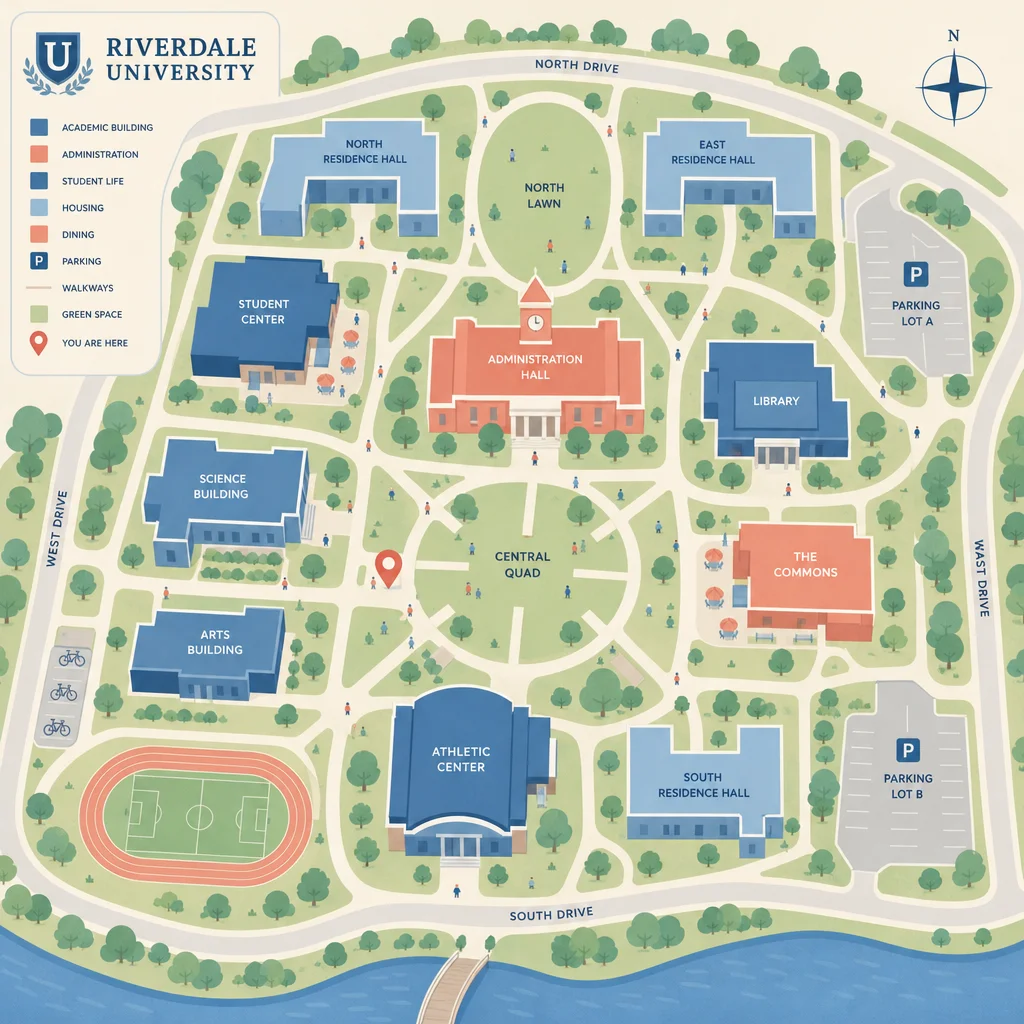
The biggest difference is density. On a medium-sized campus you are within walking distance of thousands of adults in the exact age band where people are most willing to question the default. Queer societies, feminist societies, philosophy reading circles, climbing clubs — the infrastructure for meeting people who have already thought about relationship structure is physically there, and most of it costs a few pounds a term.
The second difference is turnover, and it cuts in your favour. Unlike a workplace or a village, a campus replaces a large share of its population every autumn. A badly handled first year does not define you for a decade, because a third of the people who saw it are gone by the time you are in second year. That is the exact opposite of non-monogamy in a small town or non-monogamy in a rural area, where reputation compounds and nothing resets.
The third difference is the shape of the risk. Most universities will not care about your relationship structure, and most students will be curious for about a week. What actually causes damage is narrower and more specific: a partner who shares a class with you and turns it into a conflict of interest, a flatmate who feels pushed out of their own kitchen, or a group chat that decides your private life is common property. Nearly every real problem in campus non-monogamy is one of those three wearing a different hat.
One dynamic does not improve on campus, and it is worth saying plainly: power. A tutor, a teaching assistant, a lab supervisor, a society officer who allocates anything you want — these are not dating pools. A power difference does not dissolve because everyone is young, and the person with less power is the one who pays for it, usually in the marks or in the room afterwards. If someone has any say over your grade, your funding or your place in a group, the honest answer is not a clever boundary. It is waiting until they do not.
The Academic Calendar Is Your Relationship Calendar
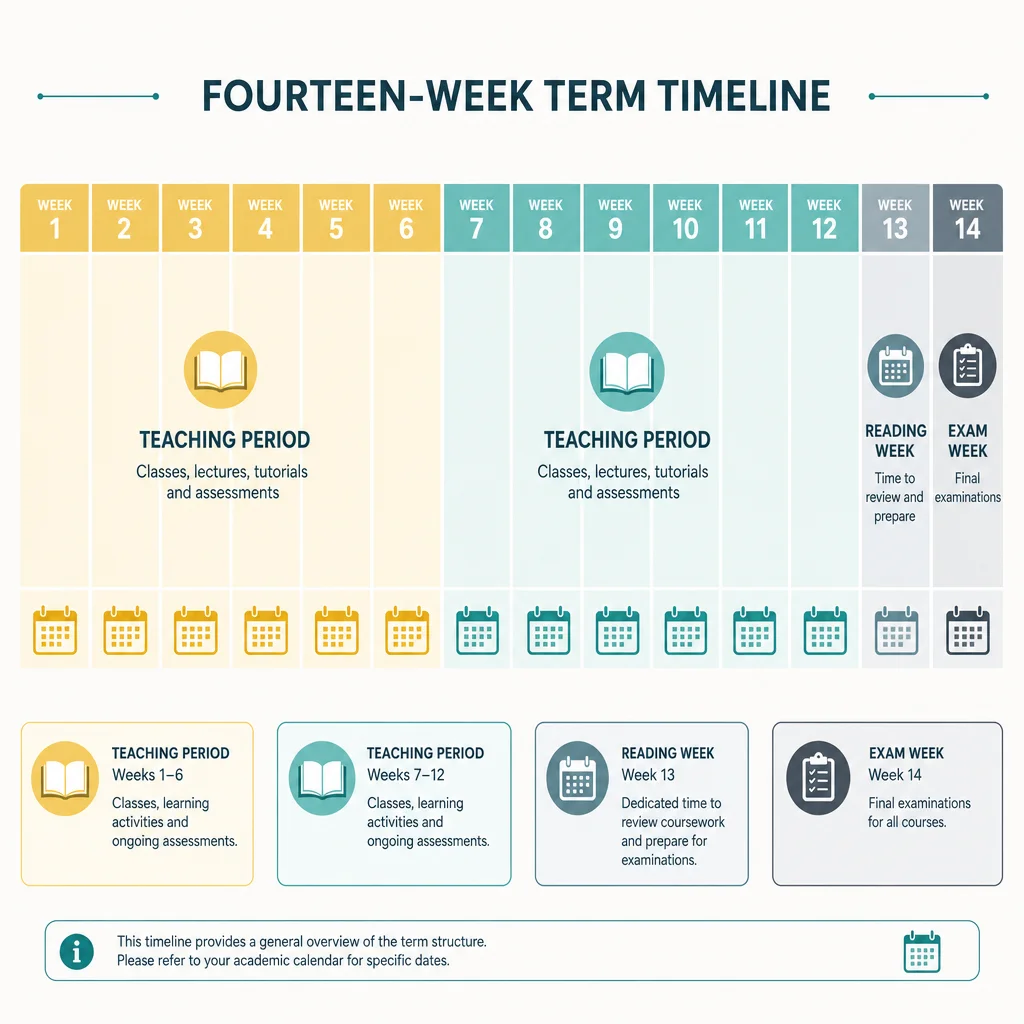
Most relationship advice assumes a working adult with a stable week. A campus runs on a completely different machine: a teaching block of ten to fourteen weeks, a reading week that everyone misuses, three or four weeks of exams where nobody is available, and then long stretches of holiday where half the people you know go home to another city or another country. Plan against the term, not against the week.
Two practical consequences follow. First, front-load. Weeks one to four are when societies recruit, when flatmates are still forming, and when everyone is open to new plans. Weeks nine to twelve are when coursework lands and social batteries die. If you want to start something, start it in the first month of term; if you want to repair something, do not try to repair it during finals.
Second, book the goodbyes. Everyone leaves at slightly different times, and the standard failure is a fortnight of half-planned last meetings that leave both people unsatisfied. Put a date in the calendar two weeks before the end of term and treat it as fixed. The same logic applies at the far end: if a year abroad or a placement is coming, long-distance polyamory across time zones is the honest preparation rather than an optimistic promise to message every day.
| Phase | What it does well | What it breaks |
|---|---|---|
| Weeks 1-4, recruitment | Highest openness, societies recruiting, everyone making plans | Unclear intentions and a lot of over-committing |
| Weeks 5-9, steady teaching | Routine, good for building something real | Timetable clashes and rising coursework pressure |
| Reading week | Space for a proper conversation or a short trip | Half your partners go home |
| Exam period | Almost nothing, and that is fine | Availability, sleep and bandwidth |
| Holidays | Long uninterrupted time with one person | Geographic separation and unequal free time |
| Year abroad or placement | Clarity about what the relationship actually is | Assumptions nobody said out loud |
If you take one thing from this section, say the number out loud. “I can do one evening a week until exams, then I disappear for three weeks” is a promise you can keep. “I will see you as much as possible” is a promise that collapses in week ten and gets read as a loss of interest. Campus relationships fail on scheduling far more often than they fail on feeling, and scheduling is the part you control.
Visibility on a Campus Where Everyone Overlaps
A campus is a small town with a higher population turnover, which means the privacy problems of a village arrive without the stability that normally makes them manageable. Your partners will know each other. An ex will be in your friend’s seminar. Your flatmate will see the same name on your phone for a month and draw conclusions, usually accurate ones.
Start by separating what people need from what people want. The people who need to know are: anyone you are dating, anyone whose physical or sexual health risk you are changing, and anyone sharing a room with you. That is a short list and it is not negotiable — what enthusiastic consent means in non-monogamy and building a sexual health agreement both start from exactly that list. Everyone else has a want, and a want is allowed to be refused without an explanation.
Then close the two leaks that catch students out. The first is apps. Set your radius deliberately rather than by default, use photos that do not appear on any other profile you own, and block the people you cannot afford to match with before you start swiping rather than after the awkward match: your flatmates, your coursemates, anyone in your department. app safety and privacy for non-monogamous dating is the detailed version, and meeting people without apps at all is worth reading when the radius is the actual problem.
The second leak is the phone. Campus social life runs on group chats, shared albums and location sharing that got switched on during freshers’ week and never got switched off. Check who can see your location, who has access to shared albums, and whether your lock screen shows message previews. Ten minutes of settings work prevents the most common way students get outed, which is not a confession — it is a screenshot. If it has already happened, what to do if you have been outed as non-monogamous walks through the sequence, and social media privacy for non-monogamous people covers the cleanup.

Dorms, Flatmates and Thin Walls
Student housing is the least-discussed and most consequential part of campus non-monogamy. You probably do not have a private place. You have a room with a lock, a shared kitchen, and a flatmate who did not agree to any of this. Whatever else you get right, do not make that person manage your dating life by accident.
Three rules hold up in practice. First, ask once, properly, instead of apologising repeatedly. A single calm sentence — I date more than one person, sometimes someone stays over, I will always tell you the night before and I will never leave a stranger in the kitchen at eight in the morning — buys more goodwill than a year of awkward hints. living with non-monogamous flatmates and talking to a flatmate about non-monogamy go deeper on the wording.
Second, decide the overnight policy before it matters. How many nights a week is reasonable, whether guests use the communal bathroom, whether a partner is ever left alone in the flat, and what happens when someone needs the room. Write it down if there are four of you. Third, keep the shared spaces genuinely shared. A pair or a triad that occupies the kitchen every evening will find their flatmates quietly hostile by February, and it will feel like prejudice when it is mostly about the dishes.
If your housing genuinely cannot accommodate overnight guests, that is a constraint rather than a failure. Book a room occasionally, take turns using someone else’s place, or accept that this term your relationships are daytime ones. It is a common shape for first-year life and it passes. If you are weighing whether to say anything to the people next door at all, coming out to neighbours is closer to this situation than you would expect.

Finding Your People Without a Recruitment Drive
Societies are the most underused resource in campus non-monogamy. Not as a place to recruit dates — that is how you get a reputation inside a fortnight — but as a place where you are known as a person first. Debating, climbing, improv, the film society, the LGBTQ+ society, a language exchange: these put you in repeated low-pressure contact with the same people, which is the only reliable way anyone decides they trust you.
The useful distinction is between spaces you attend to meet partners and spaces you attend for the thing itself. Go to the second kind for the thing. If someone becomes a partner, good; if not, you still have a climb partner and a standing invitation, which is worth more across three years. keeping hobbies of your own in polyamory makes the same argument for people who have already left university, and what a gym crush does to a non-monogamous life covers the specific case where the third space is also where you train.
If you want something explicitly non-monogamous, build it small and boring: a monthly coffee, a reading group, a Sunday walk. Public venue, fixed date, no pressure to disclose anything, one-line description that does not require anyone to out themselves to attend. organising an ENM meetup in your area is a full walkthrough and finding ENM community in a new city is the version you will want after you graduate. Make it shared-owned from day one — if it collapses the week you leave, it was a social circle rather than a group.

Exes, Seminars and the Same Twenty People
Every campus break-up has the same shape. It ends, and then you have a twelve-person seminar on Tuesday for eighteen more weeks. Cities let you avoid an ex. A course does not. The way through is an ex-protocol agreed while everyone is still calm, and it only needs three clauses: whether you acknowledge each other in public, what you say if someone asks, and what happens when one of you starts dating someone else in the same circle.
Two habits make this much easier. Do not let a break-up become a faction — resist the pull to recruit mutual friends, and do not post about it, because on a campus a post is a summons. And be careful what you tell a new partner about an ex: in a cohort of forty people that information travels back inside a fortnight, and it makes you look unsafe rather than honest. stopping the competitive feeling between metamours and mapping who is connected to whom both help once the network is bigger than two.
It is also worth deciding in advance how you handle being seen. If you and an ex are in the same society, someone attending both events is normal; someone leaving the moment the other arrives is a story. A short nod and an ordinary conversation is the least dramatic option available, and it is almost always the right one. If the ending is genuinely painful, dating again after a non-monogamous break-up is the sensible next read.
What Survives Graduation
Here is the part nobody warns first-years about: campus non-monogamy has an end date, and the end date is shared by everyone in your year but different for everyone you date. A second-year and a final-year have one year of overlap. A person on a three-year course and a person on a four-year course have a different clock again, and a postgraduate and an undergraduate may never have had the same one. Naming that in month two is far kinder than discovering it in May.
About six months before the end, have the honest conversation. Is this continuing at a distance, becoming a defined seasonal thing, or ending well? All three are legitimate outcomes. What is not workable is leaving it unsaid and discovering in September that one person had assumed you were moving to the same city. running a structured check-in with a partner gives you the format, and managing new relationship energy explains why the conversation is so much harder to have while everything still feels new.
Two external starting points worth bookmarking before you get here. The American Psychological Association’s topic page on young adults covers the developmental side of this decade in plain language, and their topic page on stress is the one to read during exam term rather than during the crisis. For the relationship mechanics themselves, Psychology Today’s overview of relationships is a reasonable plain-language reference, and the American College Health Association keeps resources on student health and wellbeing that are worth knowing about while you still have free access to them.
And keep the network. The most durable thing to come out of this period is usually not a relationship; it is three or four people who knew you at twenty and still know you at thirty. Maintain that deliberately. It is the part that appreciates.

The honest summary of non-monogamy in college is that it hands you density, turnover and a low cost of finding out who you are, in exchange for living inside a fishbowl for three or four years. Most people who do it well say the same thing afterwards: the dating was the easy part, and the flatmate and seminar conversations were the useful ones. If you want the beginner’s version of the basics, polyamory for beginners is still the clearest place to start.
FAQ: Non-Monogamy in College
Is non-monogamy in college realistic, or does everyone just break up at finals?
It is realistic, and the finals break-up is preventable. Relationships that fail in exam term usually fail because nobody said what the term would look like. Naming your availability in numbers — one evening a week until exams, then three weeks of silence — removes most of the misreading.
Should I tell my flatmates that I am non-monogamous?
Yes, if anyone is going to stay over or be in the flat when they are. They do not need your history; they need the operational facts. One calm conversation with a clear overnight policy buys far more goodwill than a year of hints and apologies.
What if my partner and I are on the same course?
It is common and workable, but agree three things early: whether you acknowledge the relationship in department settings, how you handle group work and marks, and what happens if it ends while you still share a module. How to date a classmate when you are non-monogamous covers this in detail.
Can I date someone who teaches or marks my work?
Not while they have any say over your grade, funding or standing. A power difference does not disappear because you are both adults, and the person with less power carries the cost. Wait until the marking relationship is genuinely over, and check whether your institution has a policy.
How do I meet non-monogamous people on campus without it getting around?
Go to societies for the activity, not for recruitment, and let relationships develop at normal speed. If you want something explicit, a small public monthly meetup with a one-line description lets people attend without outing themselves. On apps, set the radius deliberately and block the people you cannot afford to match with before you start.
Editorial note: this article offers general information for adults exploring ethical non-monogamy. It is not legal, medical or mental health advice, and it does not replace support from a qualified professional or your institution’s own policies and services.