Long-distance polyamory across time zones is not just regular long-distance with more people. A three-hour gap changes when you can talk. An eight-hour gap changes whether you talk at all on a weekday. A twelve-hour gap means one of you is always asleep when the other has news. This guide covers what actually changes when your partners live in different time zones, how to keep closeness without living on your phone, and how to write an agreement that survives a schedule you cannot control. Most of it comes down to one idea: stop trying to be synchronous and start building a rhythm that works when you are awake at different hours.
Table of Contents
- What Time Zones Actually Change
- The Two-Clock Problem: Whose Morning Is It?
- Async Communication That Feels Like Contact
- Visits, Re-entry, and the Days After
- When One Partner Is Local and Another Is Not
- A Starter Agreement for Cross-Time-Zone Relationships
- When the Distance Stops Working
- FAQ

What Time Zones Actually Change
Distance is measured in miles. Time zones are measured in overlap. Two people three hours apart on the same continent usually keep 12 to 14 usable waking hours in common. Two people nine hours apart might share two. That number, not the airfare, predicts how the relationship feels day to day.
The practical fallout is specific. Good morning texts land at 3 a.m. Video calls get scheduled into the one slot nobody actually wants, usually right before bed for one person and right after waking for the other. Arguments start at the wrong hour and get resolved badly because one of you is exhausted. And the small stuff, the boring mid-afternoon update about a dentist appointment, stops getting shared at all because the window for it does not exist. If you are already doing long-distance ENM, some of this will sound familiar from our long-distance threesome dating guide; a time zone gap takes those same pressures and compresses them.
There is also an emotional shift that people rarely name. When contact windows are short, every interaction carries more weight. A terse reply that would be nothing on a Tuesday afternoon in the same city becomes the entire day’s contact. That pressure is real and it is worth naming out loud before it turns into a conflict about tone. General relationship maintenance research, like the material the American Psychological Association puts out on healthy relationships, keeps coming back to the same boring fundamentals: predictability, repair, and feeling reachable. Time zones attack all three.
The Two-Clock Problem: Whose Morning Is It?
Every cross-zone relationship quietly picks a default clock, and it is usually the one belonging to the person with the more rigid job, the kids, or the louder calendar. Nobody decides this. It happens, and then the other person spends months feeling like they are always the one staying up.
Fix it by making the choice explicit. Say whose clock governs what. Scheduling, deadlines, and money conversations run on the clock of whoever has less flexibility. Emotional check-ins rotate, so the cost of the awkward hour is shared rather than absorbed by one person. If one partner is an anchor partner with a household to run, that does not automatically mean their clock wins everything; it means the rotation needs to be honest about who has slack.
- Name the default. Whose time zone does the shared calendar display in? Pick one and say why.
- Rotate the bad slots. If the only overlap is 6 a.m. for one person and 11 p.m. for the other, alternate who takes the 6 a.m. week.
- Separate urgent from everything else. Decide what genuinely justifies waking someone up. Keep that list short. A bad day is not an emergency, but a bad day is also allowed to be a bad day.
- Do not convert silently. Send times in your own zone with the other zone in parentheses, or use a shared scheduler that does it. Silent conversion errors cause more missed calls than anything else.
Async Communication That Feels Like Contact
Live conversation is a luxury when you share two waking hours. The relationships that hold up across big time gaps are the ones that get good at asynchronous contact: leaving something behind that the other person finds when they wake up.
Voice notes are the highest-value tool here. Thirty seconds of someone’s actual voice carries tone, humor, and tiredness in a way text cannot, and it costs nothing in scheduling. A shared photo album that both people add to, without any obligation to comment, does something similar. So does a running voice or video message thread that functions like a slow conversation: you reply when you are awake, they reply when they are awake, and it still feels like a dialogue.
The failure mode is turning every message into a task. If your async channel is also where you make decisions, plan visits, and resolve conflict, then opening it becomes work and both of you start avoiding it. Keep a light channel for presence and a separate one for logistics. And be realistic about response windows: agreeing that a same-day reply is the standard, rather than an instant one, removes a huge amount of ambient guilt. Couples who differ on pacing often find the frameworks in navigating different communication styles help here.
Visits, Re-entry, and the Days After
Visits are the good part and also the part nobody prepares for. Compressing a month of connection into four days puts a strange intensity on both ends. People often spend the first day decompressing from travel and the last day quietly grieving, which leaves two usable days in the middle.
Plan for the re-entry dip specifically. The three or four days after someone flies home are often harder than the weeks before they arrived. The house is quiet, the messages stop being immediate, and the contrast does the emotional damage. Agree in advance what contact looks like during that window, and agree that it will probably feel worse than expected for a few days. That single conversation prevents a lot of fights that are really just grief wearing a different hat.
- Do not schedule the whole visit. Leave real downtime. Two unscheduled afternoons do more for closeness than a packed itinerary.
- Talk about the return before the trip. What does day one back look like? A call, or space to land?
- Watch the money asymmetry. Who flies, who hosts, who loses income from time off. This compounds fast across repeat visits and deserves its own line in the agreement.
- Check in with local partners too. If you have someone at home, their re-entry matters as much as yours.

When One Partner Is Local and Another Is Not
The mixed case is common and under-discussed: you have a partner in your city and a partner eight hours away. The local relationship gets weeknight dinners and spontaneous contact. The distant one gets scheduled calls. Left alone, that asymmetry hardens into a hierarchy that nobody chose.
It is worth saying plainly that proximity will produce more contact. Pretending otherwise creates resentment on both sides. What you can control is whether the distant partner gets deliberate, protected time rather than leftovers. A standing weekly call that does not get bumped is worth more than four rescheduled ones. If the distant partner is in a secondary partner role, the distance can quietly stack on top of existing structural limits, so be extra explicit about what they can count on.
Metamour dynamics shift here too. When one partner is physically present in your daily life and the other is a voice in your headphones, the absent one can start to feel like an abstraction. Naming the person, sharing ordinary details about them, and keeping them real in conversation helps. If you are new to the term, metamour just means your partner’s partner.

A Starter Agreement for Cross-Time-Zone Relationships
Below is a starter set of clauses. Treat it as a draft to argue with, not a contract to sign. The point is to decide these things while you are calm, not at 1 a.m. after a missed call. If you want a broader structure for the conversation itself, regular ENM relationship check-ins gives you a format that works well over video. If your problem is less about feelings and more about the actual grid, time zone scheduling with multiple partners goes deeper on calendars, tiers of time, and a weekly template.
| Topic | What to decide |
|---|---|
| Contact rhythm | Which days have a live call, which are async only, and what counts as a missed connection |
| Response window | Same-day reply as the standard; what genuinely counts as urgent |
| Urgent channel | One channel reserved for real emergencies, with a definition of emergency |
| Visit cadence | Target interval, who travels, how costs split, how far ahead it is booked |
| Re-entry window | What contact looks like in the 72 hours after someone returns home |
| Local time protection | Hours that belong to sleep, work, or a nesting partner, and are not negotiable |
| Review date | A fixed date to revisit all of the above, not whenever it blows up |
When the Distance Stops Working
Sometimes the honest answer is that a specific gap, with a specific life, does not work right now. That is not a failure of commitment. It is information.
Signals worth paying attention to: every interaction is logistics, one person is chronically sleep-deprived to maintain contact, conflict only ever gets addressed in writing, or the relationship exists almost entirely in planning for the next visit. Also watch for the reverse, where distance becomes a comfortable way to keep a connection at an intensity that never has to be tested. Neither of those is sustainable forever, and both are worth saying out loud before they calcify.
If you want to work on it, structured support helps. Psychology Today’s relationship basics is a reasonable starting point, and finding someone who actually understands non-monogamy matters; finding an ENM-affirming therapist walks through how to vet for that. For community-written frameworks on agreements and boundaries, More Than Two has been a reference point for years.

FAQ
How many hours of time difference is too much for polyamory?
There is no threshold. What matters is how much waking overlap you have and whether both people have flexibility inside it. A nine-hour gap with flexible schedules can work better than a three-hour gap with two rigid jobs and small children. Measure overlap, not hours apart.
Should we move to one shared time zone on our phones?
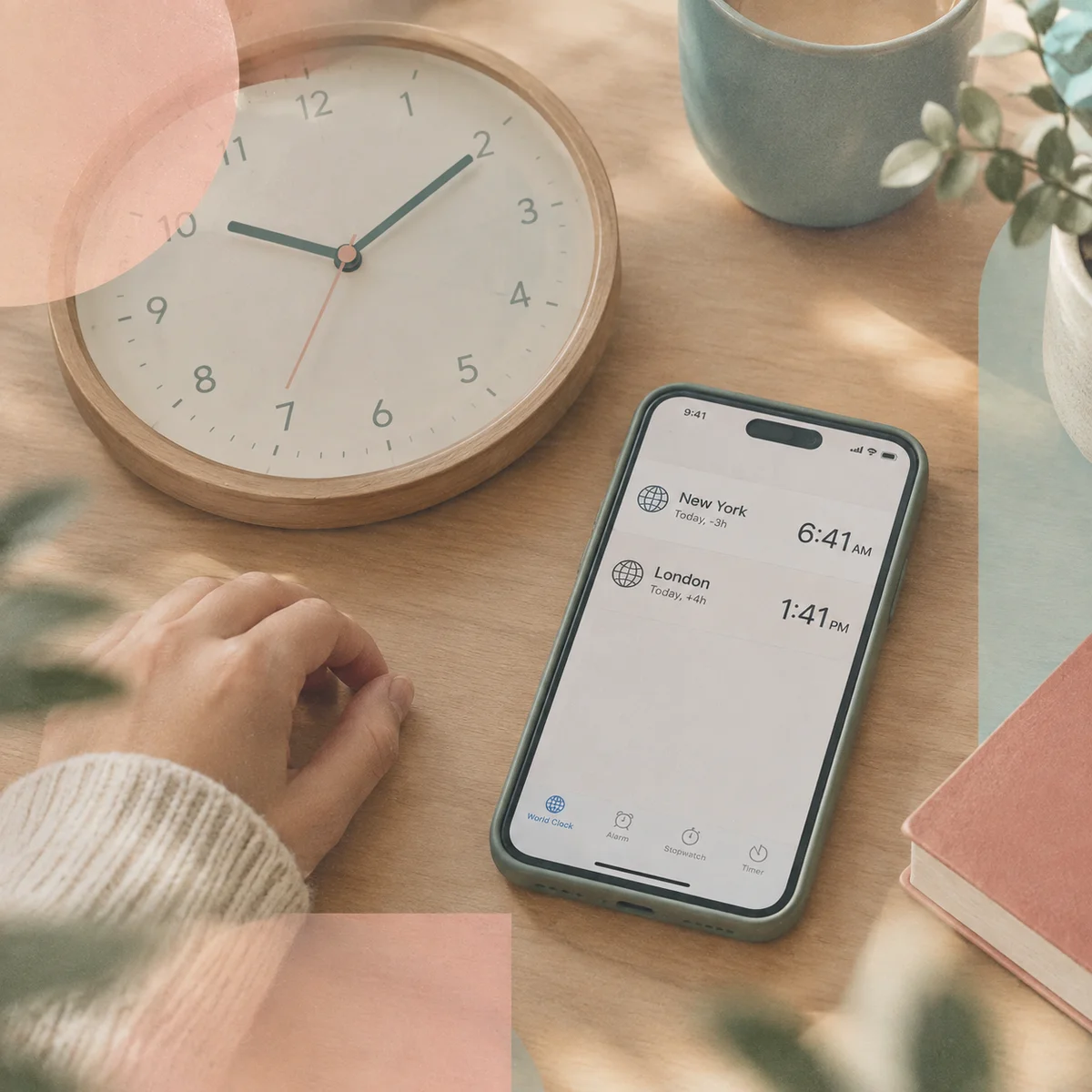
Displaying a second clock is genuinely useful and cheap. Fully switching your phone to another zone is usually a bad idea, because it makes your own local obligations harder to read. Keep your own zone primary and add theirs.
How do we handle jealousy when we cannot talk in real time?
Slow the timeline down rather than speeding it up. Agree that big emotional conversations wait for a live window, and use async only to say that you want one. Naming jealousy early is far easier than resolving it over text at midnight; understanding jealousy in non-monogamous relationships covers the mechanics.

None of this removes the hard part, which is that someone you love is asleep when you need them. What a good structure does is stop that from becoming a story about how much you matter to each other. If you are building a polycule that spans continents, the people doing the same thing are findable right here at 3Cupid, and you can start here.
Editor’s note: This article offers general information for adults and is not a substitute for professional advice. Every relationship is different; use what fits and leave the rest.