
Being a good hinge partner in polyamory isn’t about being a perfect middle manager of feelings. It’s about holding two relationships with care, clarity, and a clear sense of where you end and your partners begin.
If you’re the hinge — dating two people who don’t date each other — you already know the role comes with unique pressure. You’re the one who hears both sides, carries the scheduling, and sometimes gets blamed for things that aren’t your fault.
This guide walks through what the role actually asks of you: how to communicate, what to refuse, how to protect everyone’s autonomy, and how to take care of yourself in the process. Whether you’re new to the position or you’ve been a hinge for a while, these are the practices that make the role sustainable. For the foundational definition, start with What Is a Hinge Partner in Polyamory?.
Communicate Clearly With Both Partners
Clear communication is the foundation of being a good hinge partner. That means two distinct skills: talking to each partner about their relationship with you, and (sometimes) talking about the structure with both together.
With each partner individually, the work is:
• Naming your bandwidth honestly instead of overpromising
• Checking in about how the relationship is landing, not just how the schedule is working
• Sharing your own emotional state, not just managing theirs
• Asking for what you need before resentment builds
When you bring both partners together — for a shared meal, a group event, or a meta-conversation — the work shifts. You set the tone. You model the kind of communication you want to see. You don’t use the gathering to resolve something that should be handled one-on-one. Many hinges also lean on a written polyamory relationship agreement to spell out how group conversations and one-on-ones should each be handled.
A good rule of thumb: if you wouldn’t say it directly to the person, don’t say it about them to the other person.

Parallel doesn’t mean distant. It means each relationship has its own space to exist.
Don’t Be a Messenger (the “Flying Monkey” Trap)
One of the quickest ways to burn out as a hinge is to become a messenger. Polyamory communities sometimes call this the “flying monkey” role — passing notes between people who could (and probably should) talk to each other directly.
It usually starts small. Partner B says something critical about Partner C, and you feel obligated to “let Partner C know, gently.” Or Partner C asks you to “just check with Partner B whether they’re okay with X.” Each note feels manageable. The cumulative effect is exhausting — and it puts you in the middle of a conflict you didn’t sign up for.
A good hinge partner redirects instead of relaying:
• “That’s something you and they should discuss directly. I can help you figure out how to bring it up, but I won’t be the one to say it.”
• “If you want to know how Partner B feels about X, ask them. I’ll support you in having that conversation, but I’m not the channel.”
This isn’t about being cold. It’s about protecting yourself and your partners from a dynamic where you become the blamed messenger.
Hold Space Without Leaking
Hinges hear a lot. Partner B’s anxiety about the new person Partner C is dating. Partner C’s frustration that Partner B is “always” the one who initiates. The metamour’s concern that the hinge is “favoring” someone.
A good hinge partner holds that information without leaking it. That means:
• Not using one partner’s vulnerability as gossip for the other
• Not treating private conversations as material for shared decisions
• Not assuming you need to “fix” what one partner told you by telling the other
• Checking in with yourself: “Is this mine to share, or am I just relieved to pass it along?”
The test is simple: if you wouldn’t want Partner B to know you told Partner C something, don’t tell Partner C. That doesn’t mean you can never share — some things genuinely need to be communicated, like scheduling conflicts or boundary changes. The principle is to share intentionally, not by default.
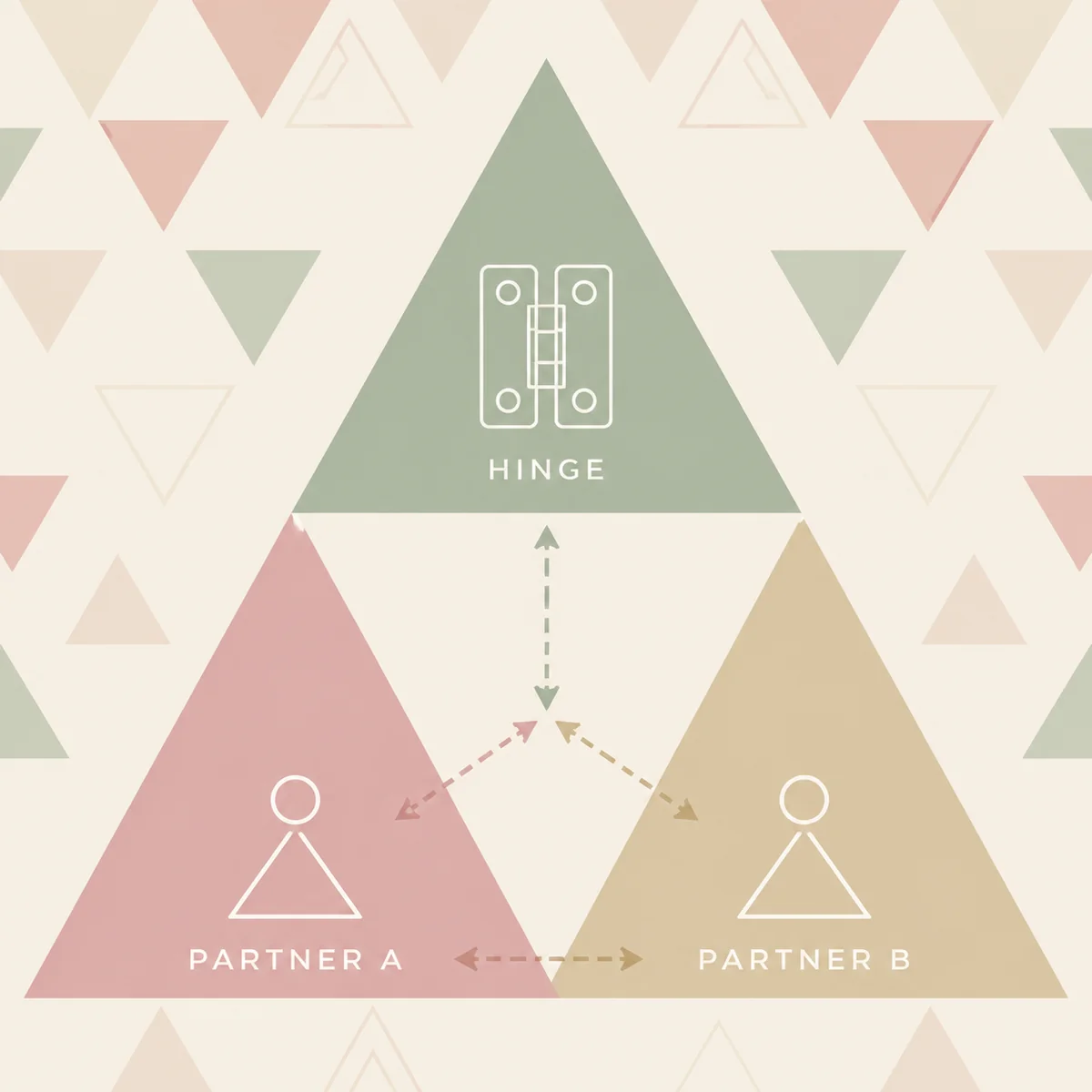
Communication in a hinge structure flows in three directions at once — toward each partner, and between the two of you. Holding that triangle well is most of the job.
Manage Time and Energy Realistically
Hinges are often pulled in two directions at once, and the calendar fills up fast. The risk isn’t just overcommitment — it’s the quiet resentment that builds when one partner always gets the spontaneous slot and the other always gets the planned one.
Practical moves that help:
• Block non-negotiable time for yourself first, then for each relationship
• Be honest about energy levels, not just availability
• Treat “I don’t have the bandwidth tonight” as a complete sentence
• Rotate who gets the more flexible schedule, instead of defaulting to the same person every week
• If you can’t give a partner what they need right now, say so — and name when you can
Time management in polyamory isn’t about being perfectly fair. It’s about being honest and adjusting when something isn’t working. If your partner feels consistently deprioritized, that conversation belongs with them — not with your other partner. Our primer on polyamory time management goes deeper on the calendar and bandwidth piece.

Time and energy are the hinge’s real resources. Protect them like a partner would protect a date night.
Protect Each Partner’s Autonomy
A good hinge partner doesn’t position themselves as the gatekeeper of either relationship. Each partner is a whole person with their own relationship to you — and that relationship doesn’t need your permission to exist or evolve.
Concretely, this looks like:
• Not speaking for your partners in conversations they’re part of
• Not withholding information one partner needs to make their own decisions
• Not treating “my partner feels X” as a substitute for your partner actually saying it
• Not asking your partners to defer to you on things that are between them and the world
If your two partners want to meet on their own, support that. If one partner wants to set a boundary with the other, stay out of it unless they ask for help. Your role is to be a partner to each of them, not the manager of their relationship with each other. When you’re working on cultivating compersion, this autonomy-first stance is what makes genuine joy for your partners’ happiness possible.
Handle Metamour Conflict Without Taking Sides
Sometimes your two partners will have a real conflict — about scheduling, about how you spend time, about something one said in front of the other. The hinge role is uniquely exposed here, because you’re the only one with full information from both sides.
A good hinge partner:
• Doesn’t immediately agree with whoever brought up the problem first
• Asks both partners what they need, instead of offering a solution
• Refuses to be the judge of who was “right”
• Names the dynamic: “I can see this is a conflict between you two, and I’m not the right person to resolve it”
• Offers to support a direct conversation if both want it
You can be empathetic to both without endorsing either. You can acknowledge that someone is hurt without treating the other as the villain. The hinge isn’t Switzerland — they have feelings, preferences, and their own stake. But the goal is to support both relationships, not arbitrate between them. Many hinges find that scheduling regular relationship check-ins with each partner — separately — is the cleanest way to surface conflict before it piles up.

Each relationship is a complete circle. The hinge is the dot where two circles overlap, not the circle that contains them.
Good Hinge Partner: Do & Don’t Checklist
A quick reference for the role:
Do
• Communicate your own bandwidth honestly, even when it’s disappointing
• Redirect messages that should go directly between your partners
• Treat each partner’s private conversations as private by default
• Schedule time for yourself before scheduling time for everyone else
• Support your partners in building a relationship with each other (if they want one)
• Ask for help when the load gets heavy
• Adjust the dynamic when something isn’t working, instead of normalizing it
Don’t
• Be the default channel for conflict your partners could handle directly
• Leak one partner’s vulnerability to the other
• Treat your partners’ relationship with each other as your project
• Position yourself as the gatekeeper of either relationship
• Take sides in a metamour conflict you didn’t cause
• Confuse being busy with being a good partner
• Skip your own check-ins because you’re too focused on theirs
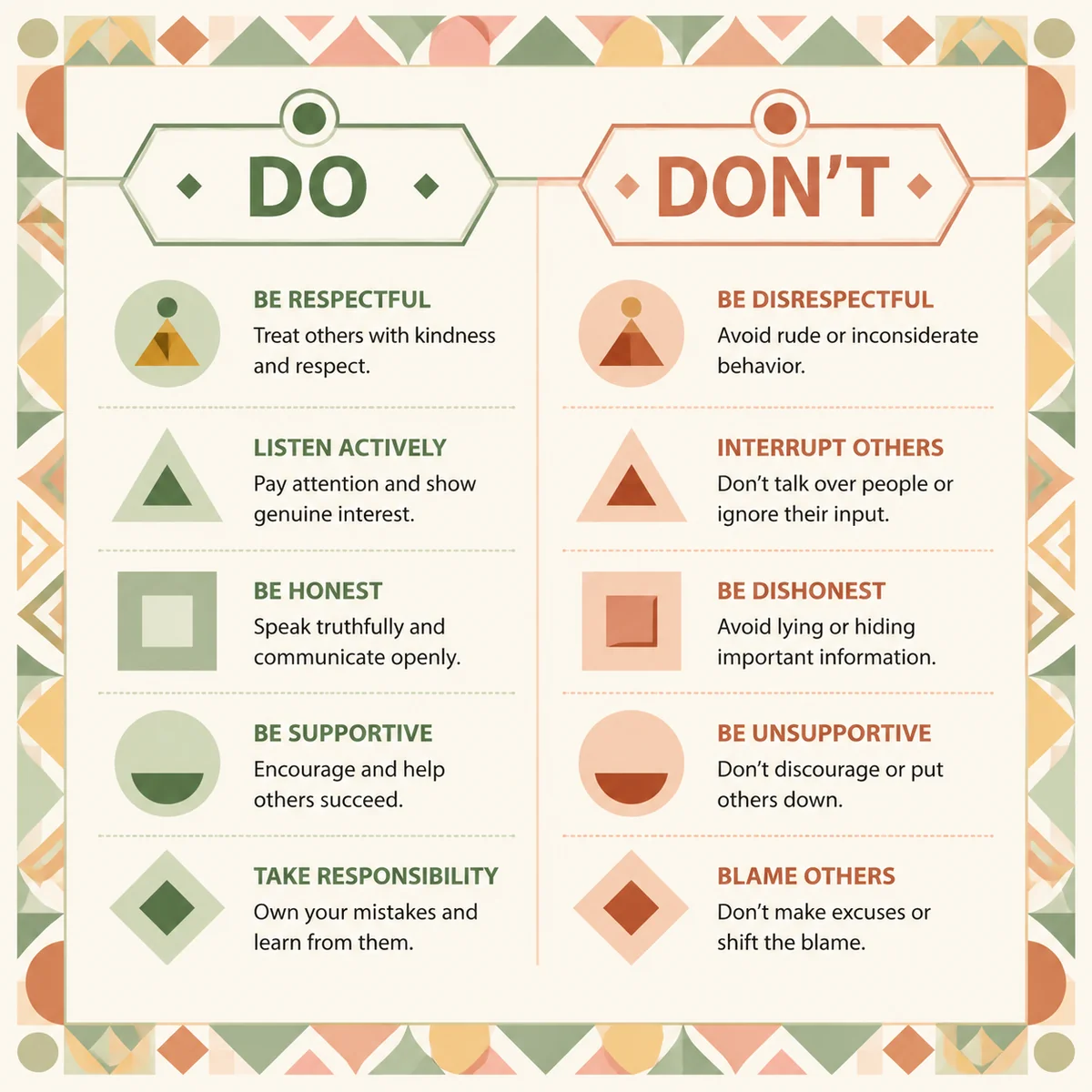
A do and don’t checklist isn’t a rulebook. It’s a mirror for the role you’re already playing — and a tool for naming what needs to change.
This guide is for adults 18+ navigating consensual non-monogamy. The hinge role is real, demanding, and worth getting right. If you want a deeper read on how polyamory structures work and why the role names matter, More Than Two’s polyamory guide is a foundational text on the philosophy and practice of ethical non-monogamy. You’ll find more beginner-to-advanced guides right here at 3Cupid.