Emotional labor is the invisible work of noticing, managing, and responding to feelings — your own, your partners’, and the feelings flowing between everyone involved. In a monogamous relationship there’s usually one connection to track. In non-monogamy there are several, and each one brings its own calendar, its own moods, its own needs. Emotional labor in non-monogamy is the sum of all that invisible effort: remembering who’s feeling what, checking in, scheduling, soothing, brokering between metamours, and quietly carrying the mental load of keeping multiple connections healthy.
The term started in the workplace — sociologist Arlie Hochschild coined it in 1983 to describe jobs that require you to perform emotions for a customer. It has since grown to mean the unpaid, often invisible work of keeping relationships running. In non-monogamy, that work doesn’t just double; it compounds, because every new connection adds a whole new set of feelings to notice and care for.
Table of Contents
- What Emotional Labor Actually Is
- Why Emotional Labor in Non-Monogamy Multiplies
- The Shapes Emotional Labor Takes in ENM
- Signs You’re Carrying Too Much of It
- The Cost of Uneven Emotional Labor
- Where the Labor Hides: A Checklist
- Naming It Is the First Repair
What Emotional Labor Actually Is
At its core, emotional labor is effort you spend on feelings that isn’t always recognized as work. It’s being the one who notices a partner’s mood shift before they say anything. It’s remembering birthdays, dates, and who needs extra reassurance this week. It’s initiating the hard conversations, repairing after arguments, and holding space for someone else’s big feelings even when you’re tapped out.
The key word is invisible. Physical chores — cooking, cleaning, running errands — are easy to see and easy to divide. Emotional labor disappears into the background, so the person doing it often can’t point to a single finished task. They just feel tired. That invisibility is exactly why it goes unshared for so long.
Why Emotional Labor in Non-Monogamy Multiplies
Open up a relationship and you don’t just add people — you add feelings, and feelings are work. Now there are multiple partners to check in with, multiple calendars to coordinate, and a whole web of relationships between metamours that has its own weather. If you’re the one who tends to notice feelings and smooth things over, that habit suddenly has three times as much ground to cover.
There’s also a specific kind of labor that only exists in ENM: the labor of navigating jealousy, compersion, scheduling fairness, and the constant small negotiations about time and attention. These aren’t one-time conversations; they’re ongoing maintenance. In a healthy non-monogamous setup, that maintenance is shared. When it isn’t, one person quietly becomes the relationship’s full-time emotional manager.

The Shapes Emotional Labor Takes in ENM
Emotional labor in non-monogamy wears a lot of different costumes. Sometimes it looks like scheduling — being the one who holds the shared calendar in your head and makes sure no one’s time is being shorted. Sometimes it looks like soothing — being the person everyone calls when a date goes badly or a jealousy spiral kicks in.
Sometimes it looks like translation — sitting between two partners who aren’t communicating well and gently relaying each side. Sometimes it’s the invisible work of initiating: raising the difficult topics, naming the pattern nobody wants to name, asking for the check-in that everyone else avoids. None of these are bad things to do. They become a problem only when they all land on the same person, every time, without anyone noticing.

Signs You’re Carrying Too Much of It
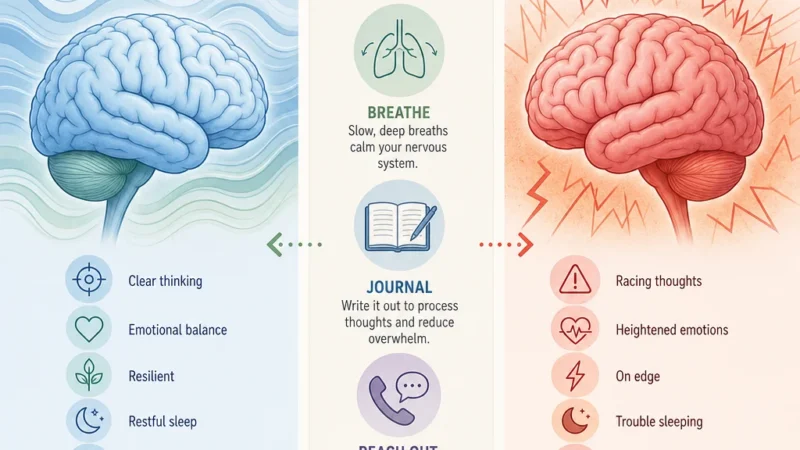
How do you know the load has tipped too far onto you? There’s a reliable set of signals. You feel resentful before anyone has actually asked you for anything. You’re the one who always brings up relationship health. You can predict your partners’ moods better than your own. You’re tired in a way that sleep doesn’t fix, because the work you’re doing isn’t physical — it’s cognitive and emotional.
Another sign: you’ve started managing other people’s relationships, not just your own. If you find yourself soothing a partner about their other partner, or brokering peace between two people who aren’t talking directly to each other, you’ve taken on labor that isn’t yours to carry. That’s the line worth watching. Supporting your partners is one thing; being the switchboard for everyone’s emotions is another.

The Cost of Uneven Emotional Labor
When emotional labor stays invisible and one-sided, it doesn’t just make one person tired — it erodes the relationships themselves. Resentment builds slowly, then suddenly. The person doing the work starts to feel like a manager or a parent instead of a partner, and that feeling is poison for intimacy. It’s hard to feel drawn to someone you’re constantly responsible for.
The person doing less also loses something, even if they don’t realize it. They stop developing the skill of noticing feelings and taking initiative. They stay comfortable while their partner quietly burns out. Over time, the gap widens, and the relationship drifts toward the same one-sided pattern that causes so many non-monogamous setups to strain. If any of this sounds familiar, our guide to recognizing emotional burnout in ENM relationships is a good place to look next.

Where the Labor Hides: A Checklist
The first step to sharing emotional labor is seeing it. Here’s a checklist of the places it hides. Go through it and ask who in your relationships is actually doing each one.
- Remembering schedules, dates, and who needs reassurance this week
- Initiating hard conversations about boundaries and time
- Repairing after arguments and checking in afterward
- Soothing partners through jealousy, rejection, or a bad date
- Brokering communication between metamours who aren’t talking directly
- Planning dates, trips, and the logistics of group time
- Tracking everyone’s moods and anticipating needs before they’re spoken
- Holding space for big feelings when you’re already running on empty
Look at that list and notice which items are yours by default. Some of them should be yours — you’re in these relationships too. But if most of them are, that’s information, not a moral failing. It tells you the labor is unevenly distributed, and it gives you something concrete to bring to a conversation. If the thought of raising it makes you anxious, our guide to managing anxiety in non-monogamous relationships has tools for exactly that.

Naming It Is the First Repair
Emotional labor in non-monogamy doesn’t get fixed by working harder or by waiting for someone else to notice. It gets fixed by naming it out loud. The moment you call the invisible work by its name, it becomes discussable — and discussable work can be shared.
The repair usually starts with a simple, specific statement: “I’ve been carrying most of the emotional load, and I’d like us to look at it together.” From there, the conversation becomes practical — who does what, what’s sustainable, and how you’ll check back in. That’s the heart of it, and it’s also the subject of our companion guide on sharing emotional labor fairly in non-monogamy, which turns these ideas into a step-by-step plan. Learning to notice and name emotional labor is the same emotional literacy that powers so much of ENM — and it’s a skill you can build, as our guide to building emotional resilience in non-monogamy describes. For a deeper look at how the concept plays out in close relationships, Psychology Today’s look at emotional labor in relationships is a helpful reference.

Editorial note: This article is for adults 18 and older and is offered as general relationship information, not medical or psychological advice. Every relationship should be built on enthusiastic consent, honest communication, and mutual respect.