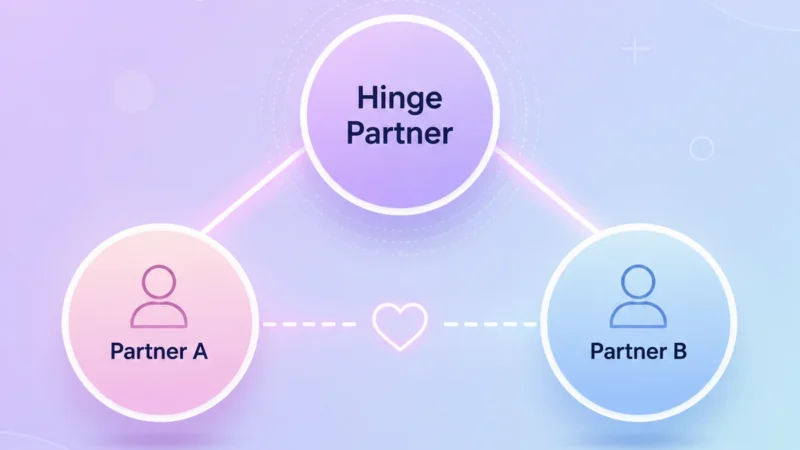
Dating apps are very good at matching and quite bad at belonging. You can swipe for a year in a city and still have nobody to call when a relationship blows up on a Tuesday. A small, well-run ENM meetup fixes a different problem than an app does: it gives people a room, a routine, and a reason to keep showing up even when they are not looking for anyone.
Here is the honest summary. You do not need a venue budget, a committee, or nonprofit status. You need a format, a public room with a predictable exit, one written rule set, and the willingness to send the second invitation. Most meetups that quietly die do so because the organizer tried to be everything to everyone in month one.
This guide is general community-organizing and relationship information for adults, not legal advice. Local rules on venues, liability and public events vary, so check what applies where you live.
Table of Contents
- Why Host an ENM Meetup When Apps Exist
- Choose a Format Before You Choose a Venue
- Pick a Venue That Protects Everyone’s Privacy
- Write a Code of Conduct People Will Actually Read
- Inviting People Without Making It Weird
- Running the Room on the Night Itself
- Follow-Up, Feedback, and Avoiding Burnout
- Frequently Asked Questions

Why Host an ENM Meetup When Apps Exist
Apps are optimised for selection. They show you a lot of people fast and ask you to filter. That is useful for dating and almost useless for the thing most non-monogamous people actually say they lack: a handful of locals who know their situation and can be texted without a preamble.
A meetup inverts the logic. Instead of filtering, people accumulate context. After three months of monthly coffee, the group knows who is newly opened, who is navigating a messy metamour situation, and who just wants to talk about board games. That context is what makes a community useful in a crisis, and no app replicates it.
There is also a practical upside for you as the organizer. Running a group is the single fastest way to meet the most grounded people in your local scene, because the ones who show up to a discussion night are usually the ones who have done some thinking. If you are new in town, pair this with finding your ENM community in a new city – the two approaches reinforce each other.
Choose a Format Before You Choose a Venue
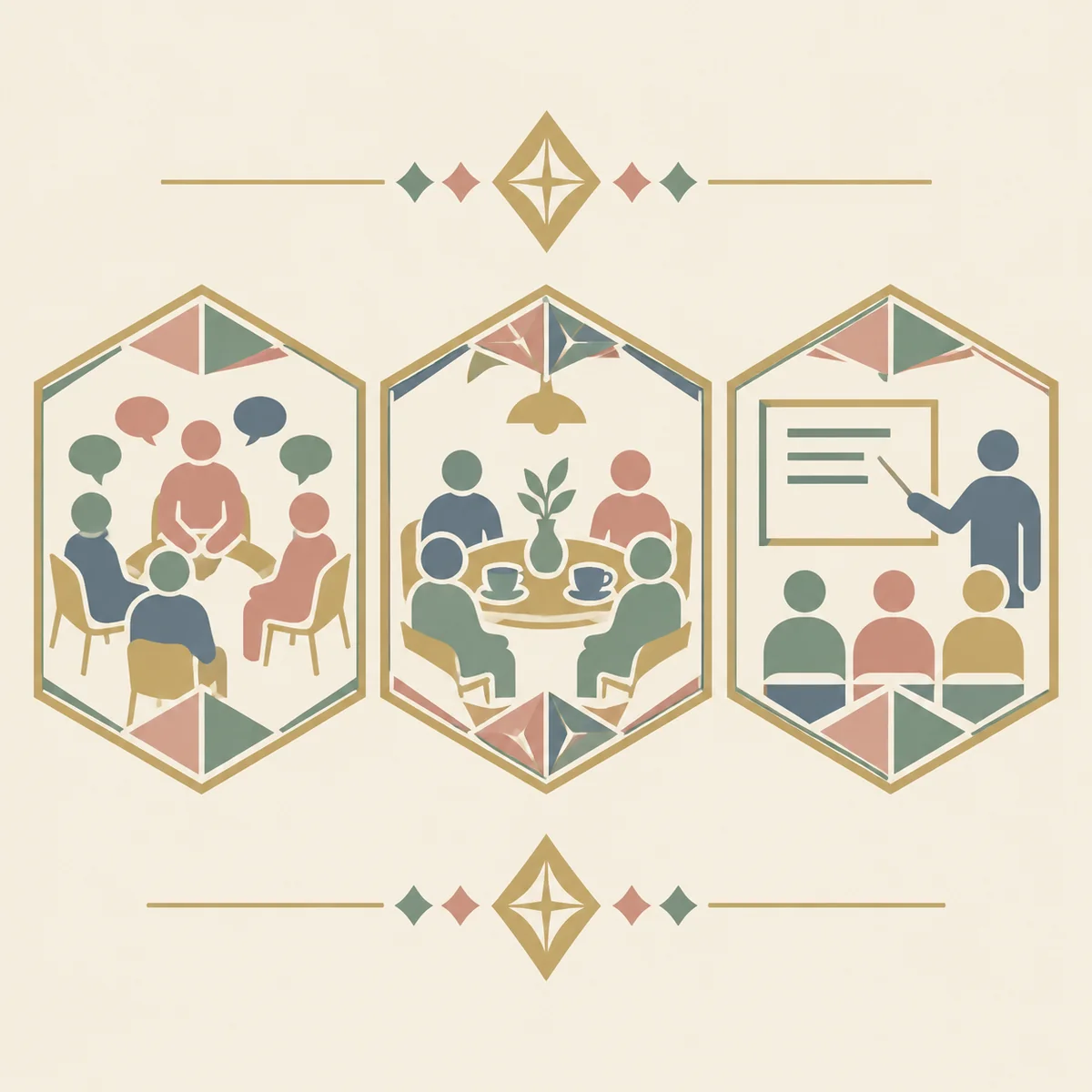
Format comes first because the format tells you what room you need, what time of day, and how much structure you are personally on the hook for. The three formats below cover most of what works, and all three scale down to six people without feeling like a failure.
- Discussion night. One question, one circle, ninety minutes. Lowest cost, highest repeat attendance, and it works with six people or thirty.
- Social hour. No agenda, just a reserved table at a venue. Easiest to start, hardest to keep interesting on its own after a few months.
- Skill swap. One member spends twenty minutes on something they know – agreements, safer sex logistics, conflict repair – then open discussion. Highest effort, strongest retention.
Whichever you pick, decide two things on day one: whether it is a recurring date (second Tuesday of the month beats “sometime soon” every time), and whether attendance is open or vetted. Open is friendlier and needs a stronger code of conduct. Vetted is calmer and puts more work on you. Neither is more ethical than the other; they solve different problems.
Also decide what the group is not. If it is not a dating event, say so in the first line of the description. If it is not a play space, say that too. If you want it to be explicitly social rather than educational, that is fine – but naming it removes the ambiguity that makes people uneasy. Our breakdown of rules versus boundaries versus agreements is a good reference for wording these lines.
Pick a Venue That Protects Everyone’s Privacy
Privacy is not a nice-to-have at an ENM meetup, it is the product. People are weighing a real risk when they walk into a room labelled “non-monogamy discussion group”, and the room you choose either lowers that risk or raises it. A semi-private back room at a quiet venue beats a roped-off corner of a busy bar every time.
Look for four things: a room you can close or semi-close, an entrance that does not force everyone past a crowd, a location reachable by public transport, and staff who have hosted discussion groups before. When you call ahead, describe it plainly as a private social or discussion group – you do not owe a venue the details, and you should not broadcast them either.
Set a photography rule before the first meeting and repeat it out loud at the start of every one. “No photos without asking everyone in frame, and no posting faces without consent” is a complete policy. Some groups go further and run a no-photos rule outright; that is a reasonable choice for a first event. The habits in our guide to social media privacy in non-monogamy are worth making explicit here too.
Finally, think about who cannot attend because of the venue. A second floor room with no lift, a venue that is loud enough to exclude anyone with hearing or sensory issues, or a start time that rules out parents with childcare limits all quietly narrow your group. Accessibility is not a separate workstream – it is the difference between a group of six and a group of twenty.
Write a Code of Conduct People Will Actually Read
Most codes of conduct fail because they are long, vague, and written to protect the organizer rather than the attendee. Yours should be short enough to fit on a phone screen and specific enough that you could point at a line when something happens. Six sentences is plenty.
- Ask before you touch anyone, including hugs, and take no for an answer without follow-up questions.
- No photographs or recordings without asking everyone who would appear in them.
- What is said in the room stays in the room – describe ideas freely, describe people only with their permission.
- This is not a dating or hookup event. Flirting is fine; pressuring anyone who says no is not and means you will be asked to leave.
- Nobody owes anyone their relationship status, their structure, or their history. Questions are invitations, and declining one is fine.
- If something makes you uncomfortable, tell an organizer. You will be believed and you will not be made to manage the other person’s reaction.
Publish it in the event description, not just at the door. People decide whether they feel safe long before they arrive, and a visible rule set is the single cheapest trust signal you have. It also filters for you: the people who object to a consent line in the description were going to be a problem in the room.
Enforcement is where most organizers stall, so plan it while you are calm. Decide in advance who does the asking-to-leave (you, or a co-organizer), what the first warning sounds like, and what the hard line is. A one-line script helps: “That is against the group rules, so I am going to ask you to head out tonight. Happy to talk another time.” Short, kind, final.

Inviting People Without Making It Weird
The first event is a numbers game with a floor of about four. Below four it feels like a strange dinner party; above six it starts to feel like a group. So your recruiting target is genuinely small – which means you can be personal rather than spammy.
Start with people you already know are non-monogamous and would be comfortable in a room like this. Then widen one ring: local community pages, existing lifestyle event listings, or a discussion thread rather than a cold mass message. If you are posting publicly, describe the event and the rules and let people self-select – never post an attendee list.
Expect a high flake rate and do not take it personally. First events routinely see half the RSVPs not show, and it says nothing about you. Send a reminder the day before with the exact room name and a phone number for the night. That single message reliably doubles attendance, because most no-shows are people who got nervous and could not find the room.
If someone declines, that is a complete answer. Do not follow up to talk them into it – and if you are on the receiving end of a decline as an organizer, it is worth remembering the same courtesy you would want. Our guide to handling rejection in ENM dating covers the emotional side of this well.
Running the Room on the Night Itself
Arrive thirty minutes early. Set out a sign, put chairs in a circle rather than rows, and decide where latecomers will sit so you do not have to improvise mid-sentence. Circles do more for a discussion than any facilitation trick: they remove the front of the room and make it obvious that this is a conversation, not a panel.
Open with ninety seconds of framing. Say the group’s name, remind people of the photography rule, note where the bathrooms are, and tell them when you will finish. Then start the actual thing. Long preamble makes people regret coming; a prompt first question gets them talking to each other instead of at you.
| Moment | Common failure | What to do instead |
|---|---|---|
| First five minutes | Organizer gives a ten-minute speech | Ninety seconds of logistics, then a question |
| First question | One person talks for eight minutes | Go around the circle with a one-minute cap first |
| Mid-session | Two people debate, everyone else checks out | Intervene kindly: park it, offer to continue after |
| Late arrival | Nobody acknowledges them, they hover | Pause, catch them up in one sentence, continue |
| Last ten minutes | Session dribbles out awkwardly | Close at the stated time, invite people to stay on informally |
Watch the quiet person at the forty-minute mark. If they have not spoken, invite them in by name with an easy question – not a spotlight, just an opening. The single strongest predictor of whether someone returns is whether they spoke in the first session, and you control that.
Follow-Up, Feedback, and Avoiding Burnout
Send one message the next day. Thank people, name the next date, and ask one question – usually “same format next time, or something different?”. That is enough. Long post-mortems in the group chat read as admin and people tune out.
Then protect yourself from the single most common reason meetups fold: the organizer gets tired. Running a group is invisible labour – booking, reminding, hosting, mediating – and it is easy to do for two months and impossible to do forever alone. Recruit a co-organizer by the third event, ideally someone with a different schedule from yours.
It is also fine to hand it over, change the format, or stop. A group that ran for six months and gave forty people a place to talk was a success, not an abandoned project. Say so out loud when you step back; it gives someone else permission to pick it up.
If your group outgrows a living room, the next step up is usually a larger local event rather than a conference. Attending your first non-monogamy conference is the natural companion to this guide, and finding lifestyle events and clubs covers the other end of the scale. For a low-key social model that has worked for decades, the garden party approach is worth borrowing from.
On why local belonging matters at all, Psychology Today’s overview of loneliness and connection is a solid outside read, and the APA’s healthy relationships resource covers the group-dynamics side.

Frequently Asked Questions
How many people do I need to start an ENM meetup?
Four is enough for the first one and six feels like a group. Do not wait for a crowd – small first events are normal, and the people who come to a six-person gathering are usually the ones who keep it alive.
Should the meetup be free or should I charge?
Free removes every barrier and is the right call for a first event. If you start covering venue costs later, be transparent about what the money is for and keep a free option available for anyone who cannot pay.
How do I keep it from turning into a dating event?
Say it in the first line of the description, repeat it in the opening ninety seconds, and enforce it once visibly. Groups drift toward dating only when the boundary is written but never actually held.
What if someone makes another attendee uncomfortable?
Follow the code of conduct you published: speak to them privately, state the specific rule, and ask them to leave if it continues. Do not facilitate a debate between the two people in front of the group.
Do I need to be an expert to organize one?
No. You need to be reliable. Showing up on the same date each month and sending one reminder message is a larger share of the job than any subject expertise.

Editorial note: this article offers general community and relationship information for adults. It is not legal advice. Check local rules on public gatherings, venue liability and safety before hosting an event.