Performance anxiety in swinging is more common than most people admit. If you’ve ever felt your body freeze up when the clothes come off, or found your mind racing instead of staying present during a group encounter, you’re not broken — and you’re definitely not alone. The good news is that performance anxiety swinging isn’t a permanent condition. It’s a physiological stress response that you can learn to manage with the right tools and a patient approach.
Table of Contents
- What Performance Anxiety Looks Like in Swinging
- Why It Happens More in Group Settings
- How to Talk to Your Partner About It
- Practical Strategies Before the Encounter
- What to Do When Anxiety Hits in the Moment
- Building Long-Term Confidence in the Lifestyle
What Performance Anxiety Looks Like in Swinging
Performance anxiety in swinging can show up in different ways. For men, it often manifests as difficulty getting or maintaining an erection — something that happens to roughly half of all men in group sex settings at some point, according to research published in the Journal of Sexual Medicine. For women and people of all genders, it can look like difficulty becoming aroused, feeling disconnected from your body, or a sudden urge to stop and leave.
The key thing to understand is that this isn’t a reflection of desire. Your brain wants to be there. Your nervous system just isn’t cooperating. Anxiety triggers your sympathetic nervous system — the same fight-or-flight response that kept your ancestors alive when facing predators. That response is deeply unhelpful when what you actually need is to relax into pleasure.
The physical signs include a racing heart, shallow breathing, tense muscles, and a mind that won’t stop narrating the experience instead of feeling it. You might catch yourself thinking things like “am I doing this right?” or “do they notice I’m nervous?” — and those thoughts become a self-fulfilling loop that pulls you further out of the moment.

Why It Happens More in Group Settings
Group dynamics add layers of pressure that one-on-one encounters simply don’t have. When you’re with one partner, the attention is shared between two people. In a swinging context with three or four people, you’re suddenly aware of multiple sets of eyes, multiple bodies to coordinate with, and multiple dynamics to navigate.
There’s also the comparison factor. If someone else in the room seems completely at ease, it’s easy to feel like there’s a standard you’re not meeting. That perception is usually wrong — people are often better at hiding their own nervousness than you realize — but the damage to your confidence happens anyway.
New environments play a role too. A lifestyle club, a hotel room, or someone else’s home are unfamiliar territory for your nervous system. Add unfamiliar people to an unfamiliar place, and your brain’s threat-detection system goes into overdrive. Even if you consciously feel safe, your body may be scanning for threats in ways you can’t control.
Research on performance anxiety suggests that the anticipation of judgment — whether real or imagined — is the single biggest trigger. In a swinging context, that anticipation gets amplified because you’re navigating not just your partner’s perceptions but those of the other person or people involved.

How to Talk to Your Partner About It
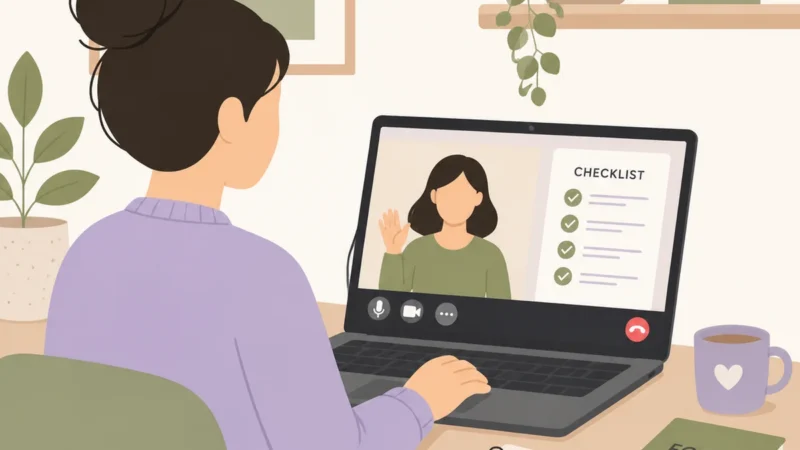
The most important thing you can do is talk about it before it happens. If you only bring up performance anxiety after an encounter goes sideways, the conversation carries an emotional charge that makes it harder to be productive.
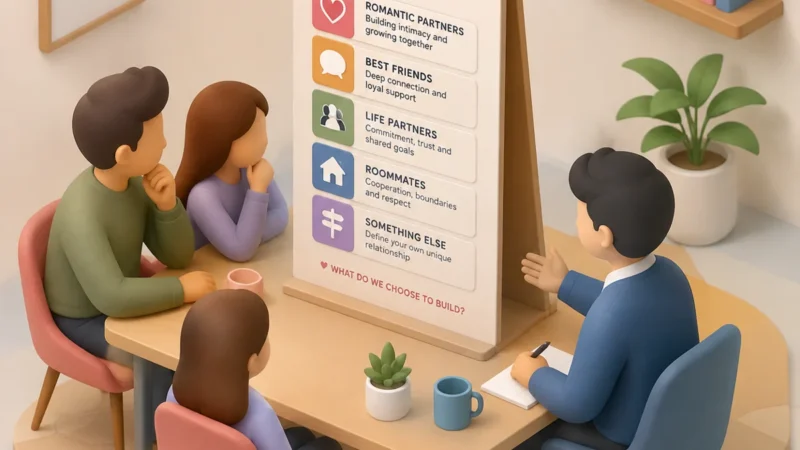
Start with something simple: “I want to talk about something that I know happens to a lot of people in the lifestyle, and I want us to have a plan for it before we’re in the moment.” Frame it as preparation, not confession. You’re not admitting a weakness — you’re being proactive.
Be specific about what helps you. Maybe you need your partner to stay physically connected to you even when interacting with others. Maybe you need a pre-arranged signal that means “I need a moment to reset.” Maybe you just need your partner to check in with eye contact periodically. Whatever it is, name it clearly.
Also ask your partner what they need. Performance anxiety isn’t just about erections or physical arousal. Your partner might have their own version of this — feeling self-conscious, worrying about whether they’re “doing enough,” or getting stuck in their head. Making this a shared conversation rather than a one-sided disclosure normalizes the experience for both of you.

Practical Strategies Before the Encounter
Preparation makes a measurable difference. Here are the strategies that therapists and experienced swingers consistently recommend.
Reframe the goal. The goal of a swinging encounter isn’t to perform flawlessly. It’s to connect, explore, and enjoy. If you define success as “everyone had a good time,” you take the pressure off any single physical response.
Masturbate beforehand — or don’t. This is personal. Some people find that masturbating a few hours before reduces performance pressure. Others find it makes arousal harder. Experiment and learn what works for you.
Limit alcohol and avoid performance-impacting substances. A drink to relax is one thing. Multiple drinks or substances that affect circulation and sensation will work against you. Many people in the lifestyle now prefer navigating encounters without relying on alcohol, which leads to more present and connected experiences.
Practice grounding techniques. Box breathing — inhale for four counts, hold for four, exhale for four, hold for four — activates your parasympathetic nervous system. Practice it in non-sexual contexts first so it becomes second nature.
Arrive early to the venue. If you’re meeting at a club or event, get there before things heat up. Give yourself time to settle in, walk around, and let the environment become familiar rather than threatening.

What to Do When Anxiety Hits in the Moment
Even with preparation, anxiety can still show up. What matters is how you respond to it.
Name it, don’t fight it. Internally acknowledging “I’m feeling anxious right now” is more effective than trying to push the feeling away. Resistance amplifies anxiety. Acceptance reduces its power.
Shift the focus outward. Anxiety lives in self-monitoring. Break the loop by redirecting your attention to sensory input — the texture of someone’s skin, the sound of breathing, the temperature of the room. Anything that gets you out of your head and into your body.
Take a tactical pause. You can always say “let’s slow down for a minute” or “I need some water.” This isn’t failure — it’s self-awareness. Most experienced swingers have been through this themselves and will respond with understanding rather than judgment.
Use touch to reconnect. If your partner is with you, pulling them close for a moment of grounding contact — a held hand, a kiss, forehead-to-forehead breathing — can reset your nervous system. Physical connection with someone you trust signals safety to your brain.
Have a backup plan. Agree beforehand that if things aren’t working for one of you, you can pivot — to watching, to focusing on one person, to just being present without the expectation of penetration. Having an exit from the pressure without having to leave the room entirely keeps the experience positive.

Building Long-Term Confidence in the Lifestyle
Performance anxiety tends to improve with exposure. The more positive experiences you accumulate, the more your brain learns that group settings aren’t actually threatening. But this only works if you process each experience constructively.
After an encounter where anxiety showed up, debrief with your partner. Not with blame or disappointment, but with curiosity. What worked? What didn’t? What would you do differently next time? This is the same approach that helps couples recover from difficult swinging experiences — treating each encounter as data, not judgment.
If body image is part of what fuels your anxiety, you’re in good company. Many swingers find that building body confidence in the lifestyle is a gradual process that pays dividends in every area of life, not just the bedroom.
For people who tend toward introversion, the social demands of swinging can compound performance anxiety. The strategies in our guide on swinging for introverts may help you manage the social energy alongside the physical.
It’s also worth connecting this conversation to the broader dynamic of how you and your partner handle differing desires — something we cover in depth in our companion article on navigating swinging with different libidos. Performance anxiety and mismatched desire often feed each other, and addressing both together creates more stability.
If anxiety persists despite consistent effort, consider working with a sex therapist who is knowledgeable about non-monogamy. Organizations like the American Association of Sexuality Educators, Counselors and Therapists (AASECT) maintain directories of qualified professionals. There’s no shame in getting expert support — it’s the same as hiring a trainer when you want to improve at the gym.

This article was reviewed for accuracy and reflects current understanding of sexual health and non-monogamous relationships. It is not a substitute for professional medical or psychological advice.