Table of Contents
- What Is an Open Relationship?
- What Is Polyamory?
- The Core Difference: Variety vs Connection
- How the Rules and Boundaries Differ
- Which One Is Right for You?
- Can You Blend the Two?
- Open Relationship vs Polyamory: Side by Side
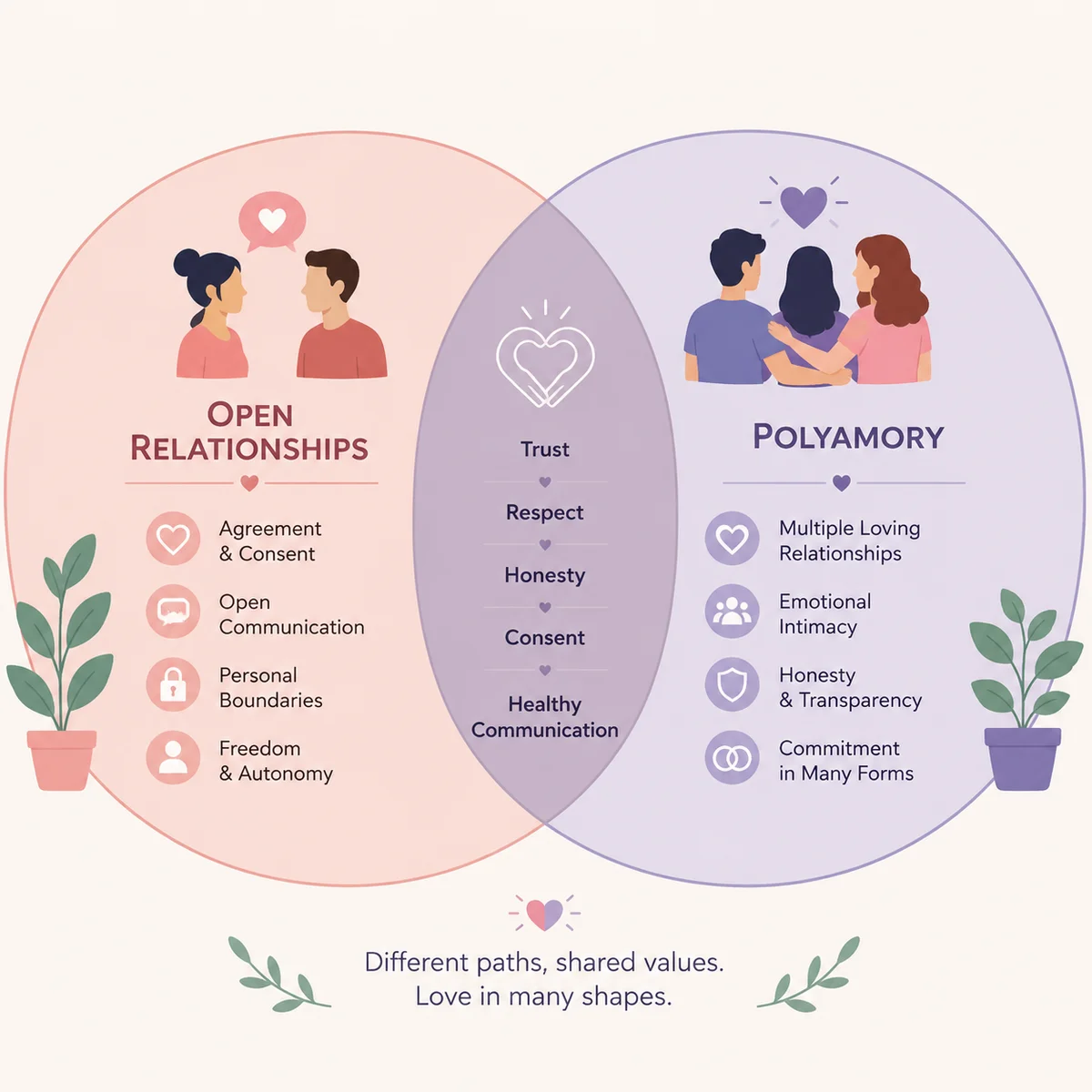
The difference between an open relationship and polyamory comes down to what is shared. An open relationship usually keeps the couple at the center and opens the door to outside sexual or casual connections. Polyamory opens the door to more than one loving, emotionally committed relationship at the same time. The two overlap, which is why people confuse them — but they are not the same thing.
In this guide we walk through what each term actually means, where the two structures differ, how their rules and boundaries look different in practice, and how to figure out which one — if either — fits you.
What Is an Open Relationship?
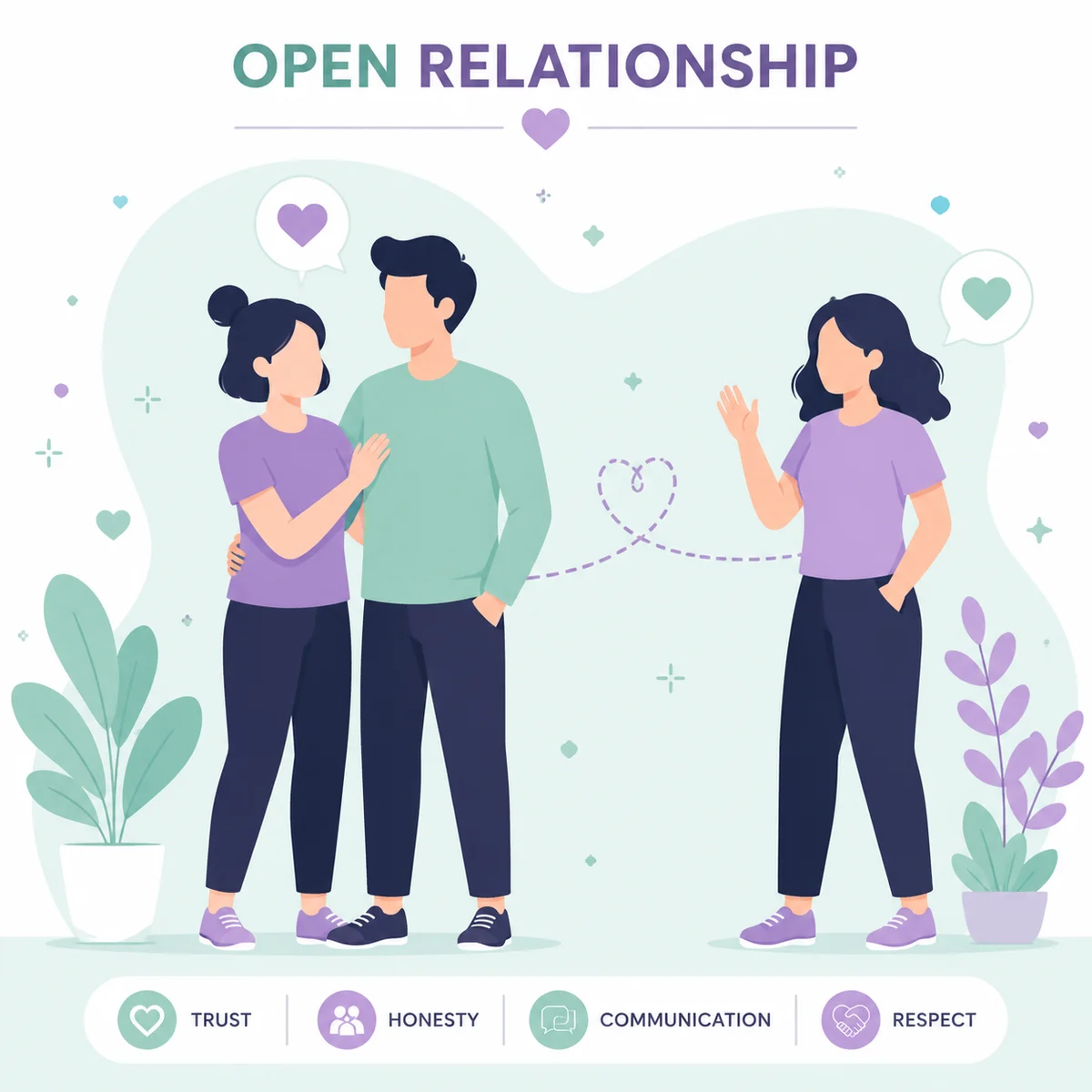
An open relationship is a primary partnership in which one or both partners are free to form outside connections, usually sexual or casual, with everyone’s informed consent. The original couple generally stays the emotional anchor. Many open couples describe themselves as “romantically monogamous but sexually open” — outside connections add variety, but they are not meant to become additional full relationships.
Because the couple stays central, open relationships tend to run on rules that protect that center: limits on time, limits on how much is shared, and limits on how deep outside feelings can go.
What Is Polyamory?
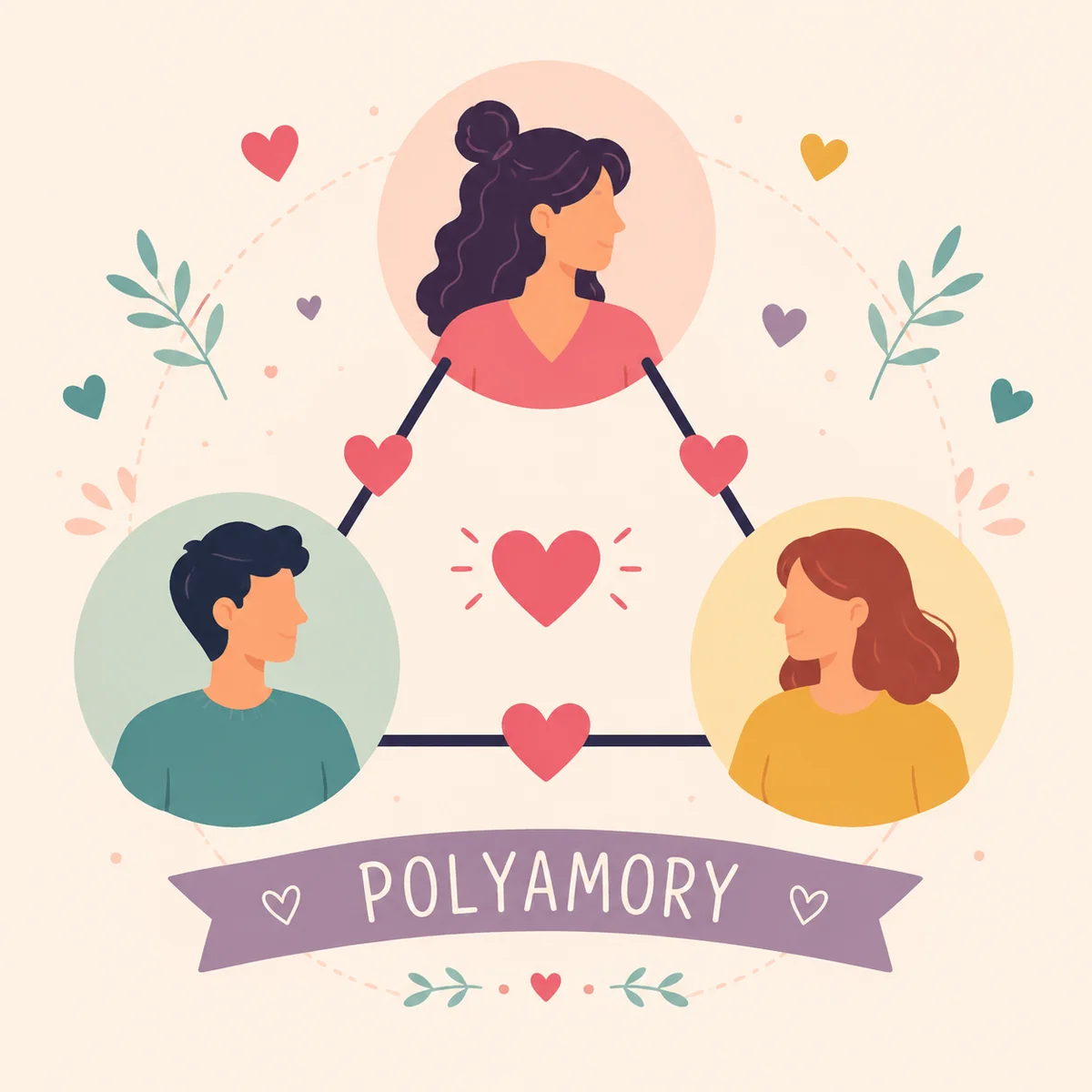
Polyamory means having, or being open to, more than one loving relationship at once, with everyone’s knowledge and consent. The key word is loving. Polyamory is not mainly about sex; it is about the possibility of multiple emotionally intimate, committed relationships. Some polyamorous relationships involve triads or quads where several people are all connected. Others involve a network of separate partners who may never meet.
Polyamory also contains its own spectrum — hierarchical and non-hierarchical, kitchen-table and parallel — which we explore in more depth in our guide to relationship hierarchy in non-monogamy.
The Core Difference: Variety vs Connection
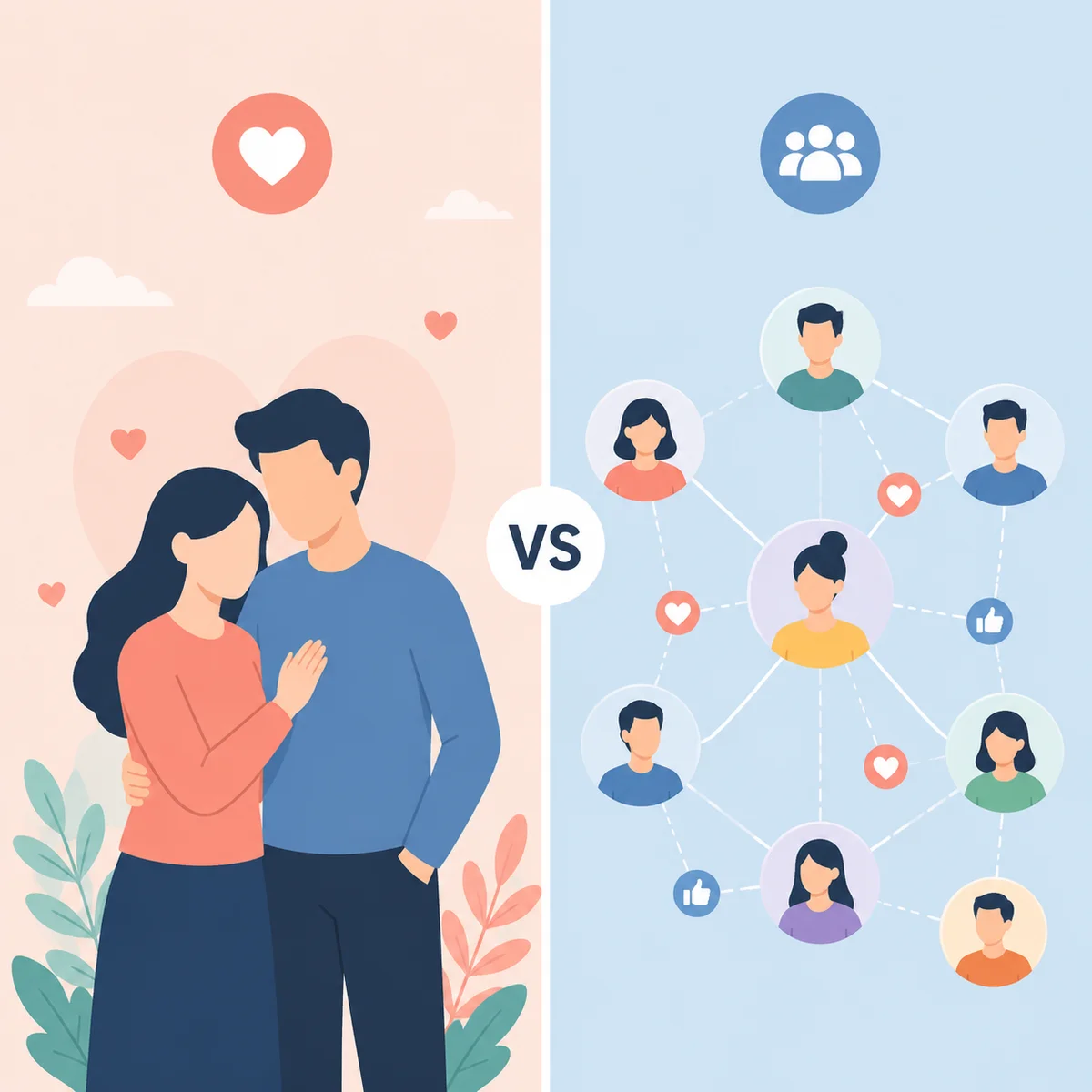
The cleanest way to separate the two is this: open relationships are usually about keeping a primary bond while allowing outside experiences; polyamory is about making room for more than one primary bond. In an open relationship, a second partner is often a “secondary” by design. In polyamory, a second partner can be just as significant as the first.
That is why the emotional skill sets differ. An open relationship asks you to manage jealousy and keep a clear center. Polyamory asks you to also manage the logistics of loving more than one person well — scheduling, fairness, and the feelings of everyone involved.
How the Rules and Boundaries Differ
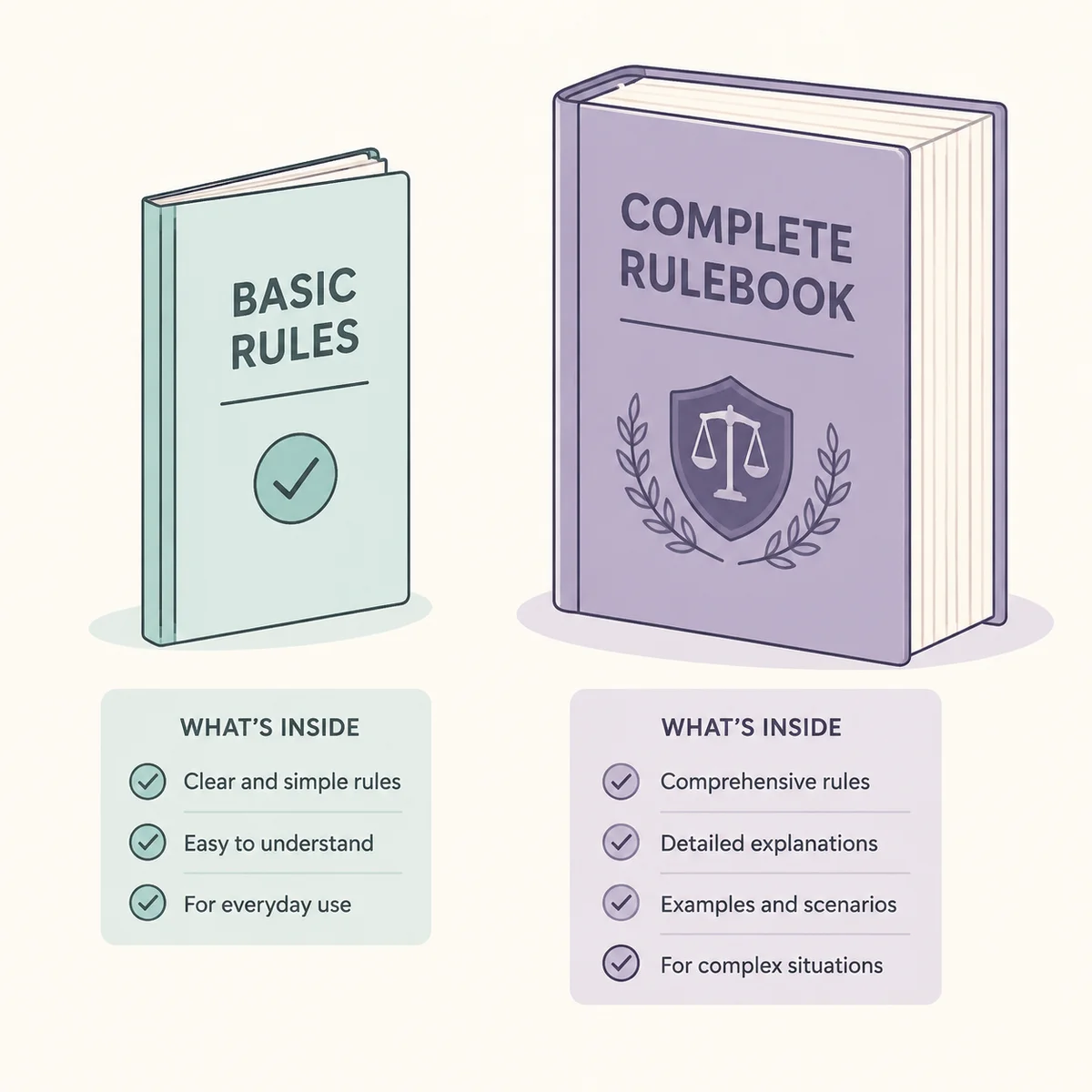
Open relationship rules tend to focus on what is off-limits in order to protect the couple: no sleepovers, no “I love you,” no dates in public, or a limit on how often you see the same person. Polyamory agreements, by contrast, tend to focus on how multiple relationships coexist: how much time each partner gets, how new partners are introduced, and how needs are prioritized.
Neither set of rules is better; they simply aim at different things. One protects a single center, the other manages a network. If you want a clearer picture of the swinging end of the spectrum, our piece on swinging vs polyamory rounds out the comparison.
Which One Is Right for You?
Ask yourself what you are actually looking for. If you want occasional outside experiences while keeping one clearly primary partner, an open relationship may fit better. If you want the freedom to fall in love with more than one person and build committed relationships with each, polyamory is probably the more honest fit.
Be honest about the harder questions too. Can you handle your partner developing real feelings for someone else, not just sleeping with them? If that thought feels unbearable, polyamory may not be for you — and that is completely okay. Structure should follow what you actually want, not what sounds adventurous.

Can You Blend the Two?
Yes — and many people do. A couple can start with an open relationship and later realize they want deeper connections, drifting toward polyamory. Or a polyamorous person can have one partner with whom they are sexually open but emotionally casual. The labels describe tendencies, not airtight boxes.
What matters more than the label is the agreement underneath it. Two people can use different words and still be doing roughly the same thing, or use the same word and mean very different things. That is why the conversation matters more than the vocabulary.
Open Relationship vs Polyamory: Side by Side
| Dimension | Open Relationship | Polyamory |
|---|---|---|
| Primary focus | Sexual or casual variety | Multiple loving connections |
| Center | The couple | No single required center |
| Outside feelings | Often limited | Embraced as part of the point |
| Common rules | Protect the couple | Manage multiple relationships |
| Time and energy | One primary plus lighter others | Spread across multiple partners |
Open relationship vs polyamory is not a contest with a winner. It is a fork in the road, and the right path is the one that matches how you actually want to love. If the distinction still feels blurry, this Psychology Today piece on open and poly arrangements is a useful deeper read.
Whether you land on open, poly, or somewhere in between, the agreements you make matter more than the label you choose. If you are ready to turn those agreements into something concrete, start with our practical guide to open relationship rules — and, when you are ready to meet people who are doing this work with intention, explore the 3Cupid community.
This article was written by the 3Cupid editorial team. 3Cupid is a dating platform for adults interested in threesome dating, ethical non-monogamy, polyamory, swinging, and unicorn dating. Content is for 18+ readers only.