When two people agree to explore threesome dating, they typically have at least a rough idea of what they want. Add the third person — and suddenly you have three different mental scripts running simultaneously. One person pictures an ongoing emotional connection, another wants something purely physical, and the third is somewhere in between but hasn’t said so out loud.
That gap between what each person expects and what actually happens? That’s where most threesome expectations tension comes from. Not from jealousy or poor chemistry, but from unspoken assumptions that nobody thought to check.
Getting three people on the same page isn’t about finding someone who matches a checklist. It’s about learning to surface what each person actually wants — before anyone walks through the door.
Why Three People Rarely Want the Same Thing
Three different life histories walk into the room. Each person brings their own dating history, their own emotional wiring, and their own reason for being there. A couple might want to explore together and strengthen their primary bond. A single person might be genuinely curious about group dynamics without wanting a relationship. These aren’t conflicting goals — they’re just different ones. But when nobody says them out loud, they can start to feel like conflict.
Research on non-monogamous relationships consistently points to one thing: assumed agreements cause more damage than explicit disagreements. When you assume the third wants the same thing you do, you’re not being optimistic — you’re setting up a mismatch that will surface later, usually at the worst possible moment.
According to Psychology Today, unspoken expectations are among the most common sources of relationship friction across all relationship structures. In threesome dynamics, where the variables triple, the need for explicit communication is even more critical. The fix isn’t complicated — it’s just specific. Instead of asking “what are you looking for?” which gets vague answers, ask questions that tease out the details people don’t think to mention.
The 5 Dimensions of Threesome Expectations
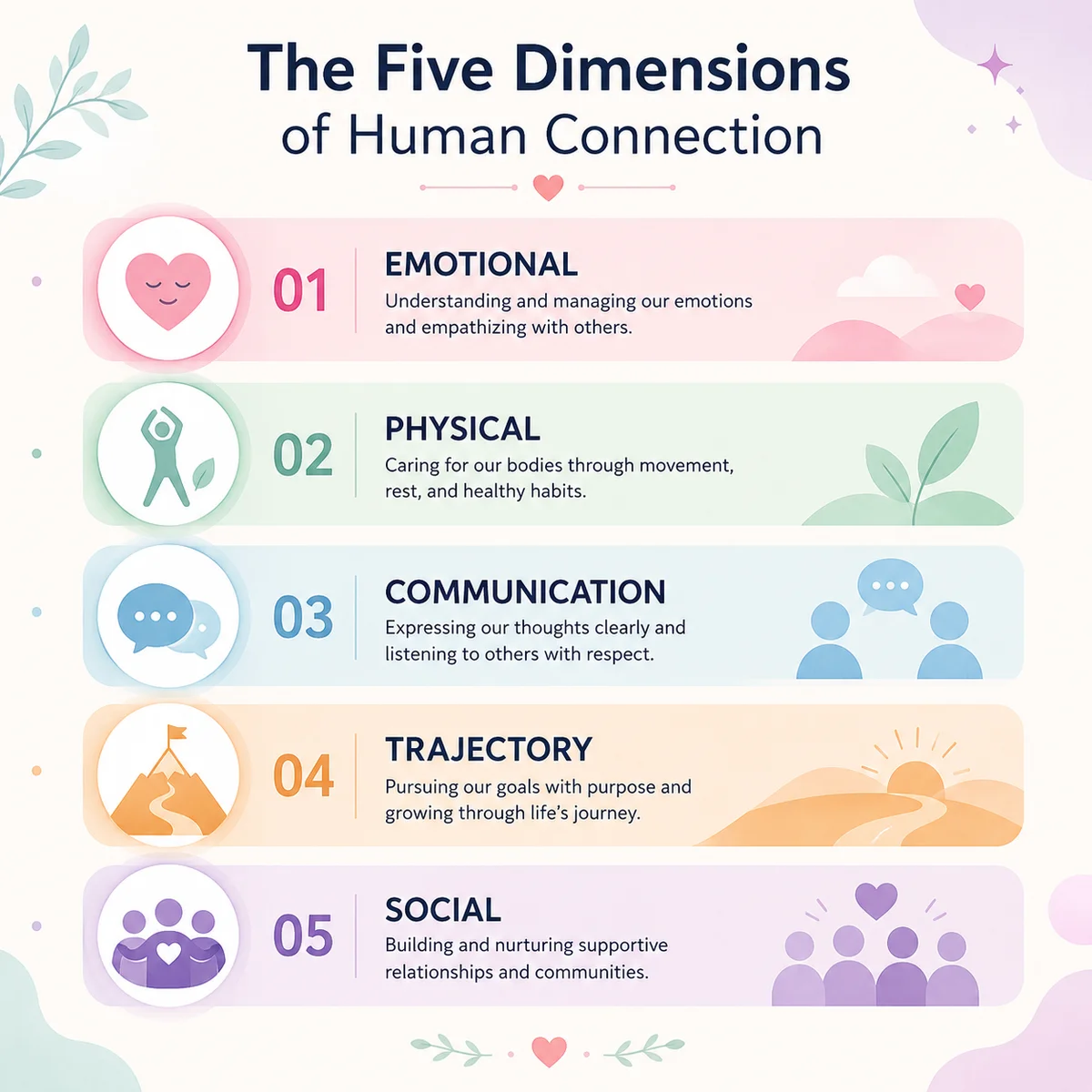
Most people think about threesome expectations in one dimension: “are we all on the same page?” But alignment actually breaks down across five separate dimensions — and you can be aligned on three while completely mismatched on the other two.
1. Emotional involvement. Is this a one-time experience? Ongoing but casual? Or is there room for feelings to develop? People rarely state this explicitly, and it’s usually the dimension where the biggest mismatches live. Someone looking for ongoing connection paired with someone who wants a one-time encounter is a recipe for hurt feelings — but only if nobody names it first.
2. Physical boundaries. Not just “what acts are on the table,” but the subtler stuff: who initiates, how attention gets distributed, what happens if someone needs a break. These are the details that feel too awkward to discuss but become painfully obvious when they’re missing.
3. Communication style. Some people want check-ins during the experience. Others find that disruptive. Some want a full debrief the next day. Others prefer to process privately. These preferences don’t always match — and when they don’t, one person feels smothered while another feels ignored.
4. Relationship trajectory. Where does this go after tonight? Does everyone go home separately? Is there a next time? Are you building toward something regular, or is this a contained experience? These are questions people rarely discuss until they’re standing in the doorway saying goodbye.
5. Outside-the-bedroom dynamics. Do you hang out as friends? Are you public about the arrangement? What happens when you run into each other at a bar or on a dating app? These dimensions deserve their own conversation — not crammed into a single breath before meeting up.
How to Run an Expectation Alignment Conversation
Here’s the uncomfortable truth: most pre-threesome conversations sound like job interviews. “What are you into?” “What are your limits?” “Cool, see you Friday.” Nobody wants to be interrogated, and that format doesn’t actually surface real expectations. A better approach follows threesome negotiation principles but goes deeper into the expectation layer.
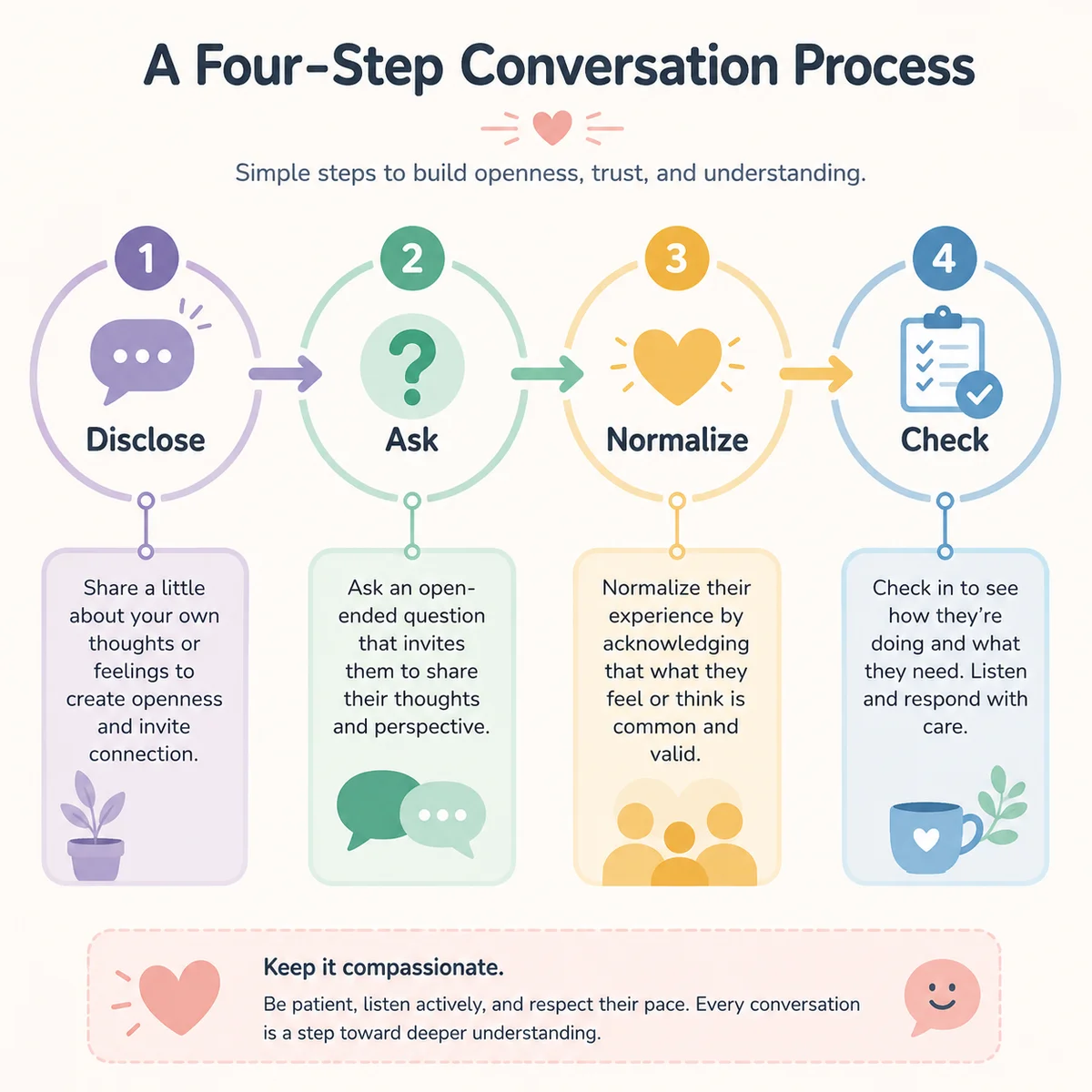
Start with your own expectations first. Not as a demand, but as disclosure. “Here’s what I’m hoping for, here’s where I’m flexible, and here’s what I know I don’t want.” Leading with your own cards on the table makes it safer for others to do the same.
Ask dimensional questions, not yes/no questions. Instead of “are you okay with everything?” try “when you picture how this goes, what’s the first thing that comes to mind?” The gap between that mental image and your own is exactly what you need to discuss.
Normalize disagreement. Explicitly say “it’s fine if we want different things — that’s literally why we’re talking.” When people feel like they’re supposed to agree, they nod along and keep their actual preferences to themselves. This is the core of a solid threesome boundaries checklist approach: disagreement isn’t failure, it’s information.
Check for silence, not just answers. If one person hasn’t said much during the alignment chat, that’s a flag. Not necessarily a red one — some people need time to process — but worth following up individually: “I noticed you were quieter earlier. Any thoughts you’re still turning over?”
The goal isn’t to produce a flawless contract. It’s to surface enough information that everyone can make an informed decision about participation — with the understanding that they can say no at any point if things don’t align.
Common Expectation Mismatches and Solutions
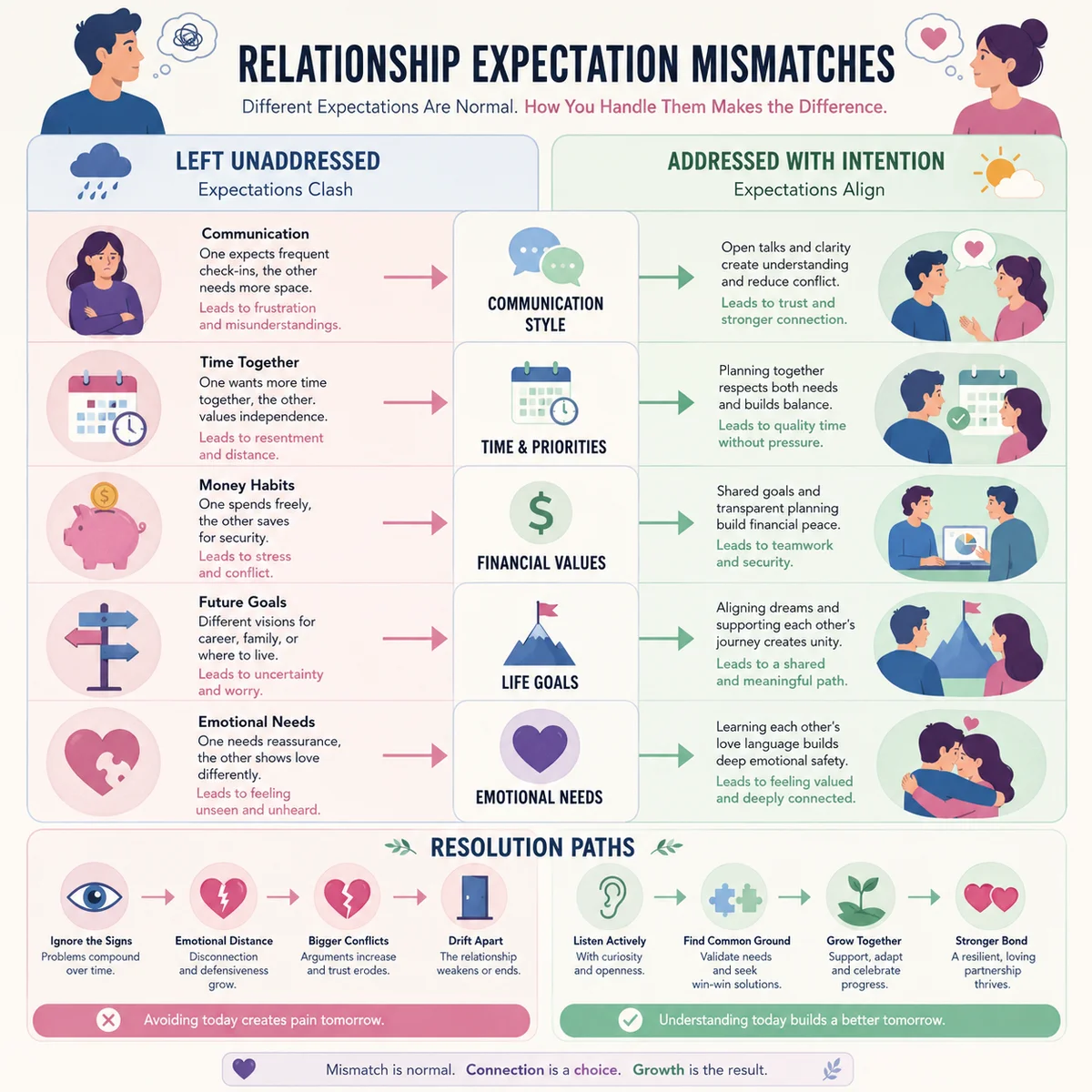
Some mismatches show up again and again across threesome dating experiences. Here’s how to spot and handle them before they become wounds.
Emotional vs. physical mismatch. One person wants emotional connection, another wants purely physical. The person wanting connection feels used; the physical-only person feels pressured. The solution: name the gap explicitly. Sometimes both needs can coexist — if everyone knows what’s happening and consents to the dynamic.
Frequency assumptions. One person assumes this is a one-time thing; another expects it to become regular. Clarify before the first experience: “Are we thinking one time, or see how it goes?” Five words that prevent weeks of mismatched expectations.
Outside-the-bedroom comfort gap. Someone wants to grab coffee as friends; someone else finds that blurry. Agree on the container: are you co-creating a friendship, or is this strictly in-scene? Both are valid, but the assumption mismatch hurts.
Debrief style mismatch. One person needs to talk it through the next day; another processes alone. Set debrief expectations upfront: “I’d like to check in the next morning, even just a quick message. Sound okay?”
The pattern across all these mismatches: every one is solvable if you name it before it becomes a wound. Unnamed, these gaps feel like rejection. Named, they’re just differences in preference.
When Expectations Shift Mid-Experience
Even with perfect alignment upfront, things change in real time. Someone gets more into it than they expected. Someone realizes mid-way that a boundary they thought was firm actually feels negotiable — or vice versa. A dynamic that looked great on paper feels different in practice.
The critical skill here isn’t predicting every shift. It’s creating permission to name a shift while it’s happening. A check-in doesn’t have to kill the mood. It can be as simple as a pause and eye contact: “Still good?” or “Want to adjust anything?” Three words, genuine tone, and the understanding that any answer is acceptable.
If someone’s expectations have shifted in a way that changes what they’re available for, that needs to be said — even if it’s awkward. “I thought I’d be into X, but right now I’m feeling more like Y” is hard to say but much easier to hear than silent discomfort that turns into resentment later. This is where having pre-established safewords and check-in signals makes all the difference.
The people who handle expectation shifts well share one trait: they treat it as information, not betrayal. Your partner discovering a new preference in real time isn’t a breach of the original agreement — it’s a human response to a real experience. The question isn’t “did you break the plan?” but “can we adjust the plan together?”
Building Flexible Agreements That Actually Work
Rigid agreements break under pressure. Flexible ones bend and get stronger. The difference is in how you design them — and the most overlooked aspect is finding a third safely who shares your communication values from the start.
Agree on process, not just outcomes. Instead of locking in “we will do XYZ,” build agreement around “we’ll check in before, during brief pauses, and the next morning.” When the process for adjusting is clear, the specific outcomes can evolve naturally.
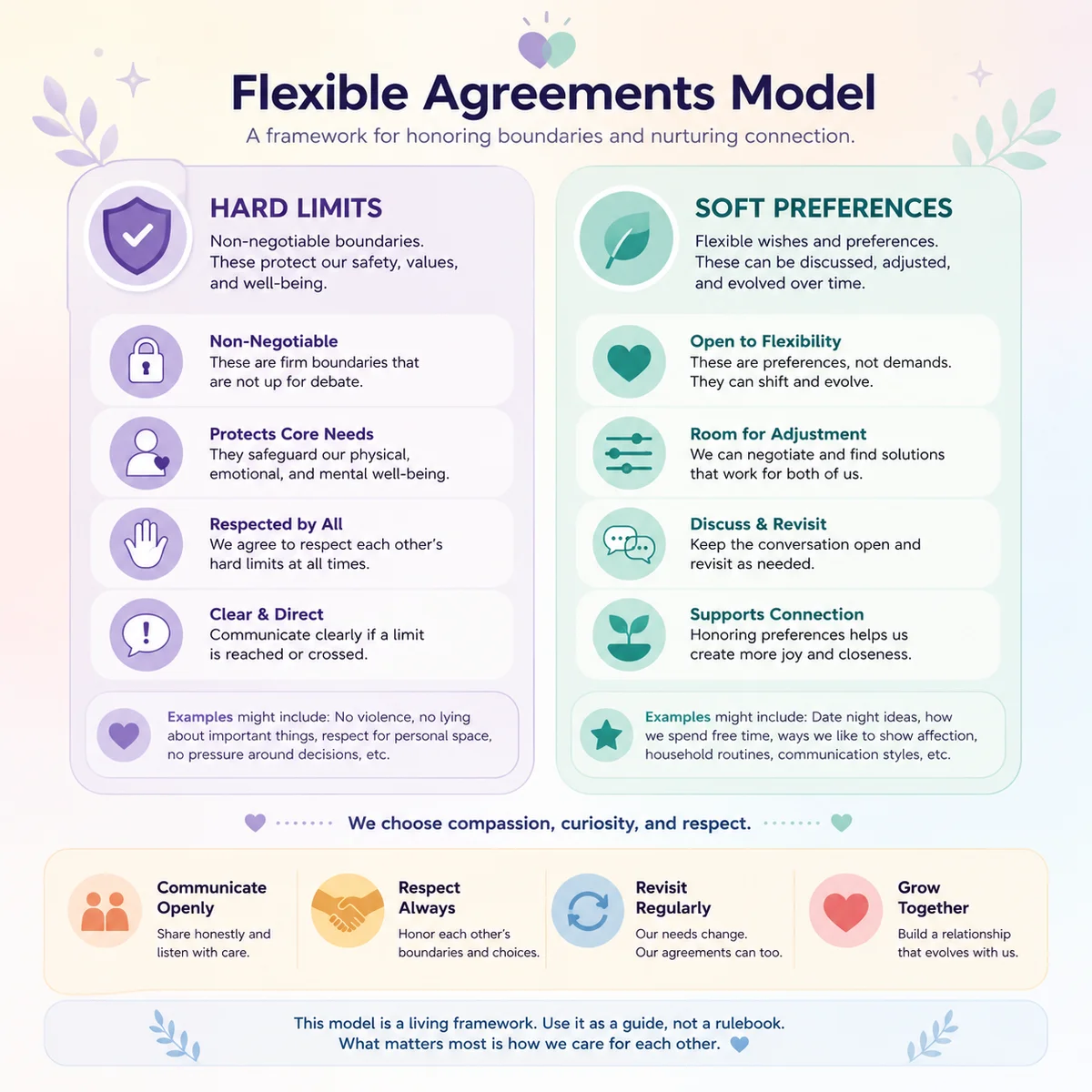
Distinguish hard limits from soft preferences. A hard limit is “I do not want X, period.” A soft preference is “I’m not sure about Y — let’s see how it feels.” Both are valid, but confusing them causes problems. Someone treating a soft preference as a hard limit feels unnecessarily restricted. Someone treating a hard limit as negotiable feels pressured. Label them clearly.
Build in exit ramps. Every threesome agreement should include how someone can gracefully step back — not just physically, but emotionally. “If at any point I’m not feeling it, I’ll say ‘pause’ and we’ll stop and regroup.” Knowing the exit is available makes people more willing to enter.
Revisit between experiences. The alignment conversation isn’t a one-and-done checkpoint. After each experience, take five minutes: “Did anything surprise you about what you wanted? Anything you’d adjust for next time?” The couples and singles who sustain this long-term aren’t the ones with the most detailed rulebooks — they’re the ones who got comfortable saying “that didn’t work for me, let’s try something different.”
Expectation Alignment Checklist
Before your next threesome encounter, run through this checklist — ideally with all three people present, either in person or through separate messages that everyone can process at their own pace.
- Emotional expectations: One-time? Ongoing casual? Open to feelings developing? State yours first, then ask.
- Physical boundaries: What’s a “yes,” what’s a “maybe,” what’s a “no”? Who initiates? How is attention distributed?
- Communication preferences: Check-ins during? Debrief after? How soon? Group chat or one-on-one?
- Trajectory clarity: Is there a next time? Are you building toward something regular or keeping it contained?
- Outside dynamics: Friends outside the bedroom? Public or private? What happens if you cross paths socially?
- Exit and pause signals: What word or phrase means “pause and regroup”? What means “I’m done for tonight”?
- Revisit plan: When will you check back in about how the alignment is holding up?
When Alignment Isn’t Possible
Sometimes, after all the conversations and checklists, the expectations genuinely don’t match. One person wants ongoing emotional depth, another wants strictly casual. One person wants weekly frequency, another can only manage monthly. These aren’t failures of communication — they’re genuine incompatibilities that no amount of discussion will resolve.
When alignment isn’t possible, the kindest move is acknowledging it directly rather than hoping it resolves itself. “I think we want different things here, and I don’t want either of us to compromise on something this important” is a sentence that stings in the moment but prevents months of confusion and hurt.
Walking away from a mismatch isn’t rejection. It’s recognition that forcing alignment where it doesn’t naturally exist is worse for everyone involved than waiting for a connection where expectations genuinely overlap.
Threesome expectation alignment isn’t about finding someone who wants exactly what you want. It’s about building enough trust that you can say what you want without fear of judgment — and hear what others want without taking it personally. That’s a skill you build across experiences, with people who earn the right to hear your honest answers. When you’re ready to connect with people who value clarity as much as chemistry, 3Cupid is where those conversations start.
Editor’s note: This article is part of our ongoing series on communication and relationship dynamics in ethical non-monogamy. For more guidance on navigating threesome dating with clarity and care, explore our blog.