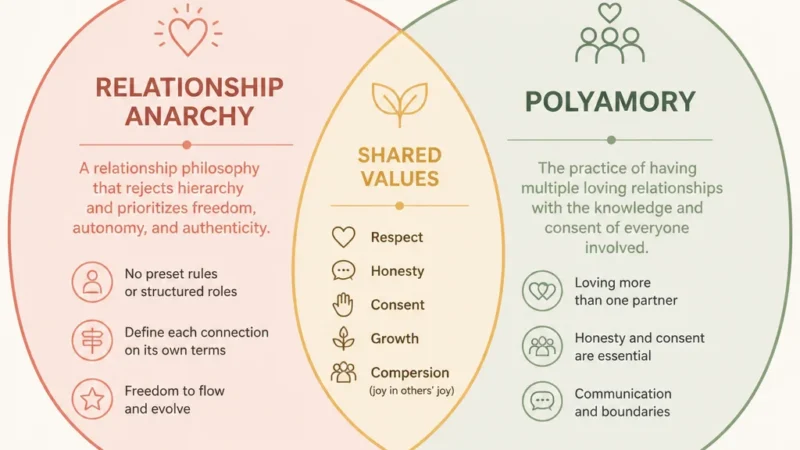
If you’ve spent any time in dating spaces, you’ve probably heard things about unicorn dating that made you pause. “It’s just about sex.” “The couple always runs the show.” “Unicorns don’t want anything serious.” These ideas float around so persistently that they start to feel like facts — but most of them are wrong, and holding onto them keeps both couples and singles trapped in dynamics that don’t serve anyone. Let’s pull apart five of the most stubborn unicorn dating myths and look at what’s actually going on.
Myth #1: “Unicorns Are Just Looking for Casual Fun”
Busting myths starts with one simple question: what if everything you’ve heard about unicorn dating is wrong?
This myth reduces unicorns to a single dimension: someone who shows up, has a good time, and disappears without wanting anything more. The reality is far more varied. Some third partners do prefer casual, no-strings arrangements — and that’s perfectly valid. But many are open to emotional connection, ongoing relationships, or even building toward a triad. Assuming every unicorn wants the same thing is like assuming every single person on a dating app wants the same thing. It’s lazy, and it leads to mismatched expectations.
What’s actually true: unicorns have the same spectrum of relationship desires as anyone else. Some want casual. Some want connection. Some don’t know yet and want space to figure it out. The only way to know is to ask — and to create space where the answer can be anything. For a fuller picture of what unicorn dating actually involves, start with our unicorn dating 101 guide.
Myth #2: “Couples Always Have the Upper Hand”
The power balance in unicorn dating shifts the moment a third partner recognizes their own worth — and isn’t afraid to act on it.

This one has a grain of truth to it: couples do often hold structural advantages. They share a home, a history, and a decision-making rhythm that the third person isn’t part of. But the myth lies in the word “always.” A unicorn who walks in with clear boundaries, self-knowledge, and the willingness to walk away holds significant power — maybe more than the couple realizes.
In practice, couples seeking a third often report that finding a compatible, reliable, and emotionally mature unicorn is genuinely difficult. When a unicorn shows up who communicates well, respects their own needs, and engages thoughtfully, the couple is just as invested in making it work. Power in relationships isn’t fixed — it shifts based on who’s willing to advocate for themselves. Read more about this in our deep dive on couple privilege in threesome dating.
Myth #3: “It’s Just About Sex — Emotions Don’t Belong”
Emotions aren’t a design flaw in human connection. They’re the whole point — and the best dynamics make room for them.

This myth causes more damage than almost any other. It trains couples to treat the third person as an experience rather than a person — and it trains unicorns to suppress their own emotional responses as if having feelings means they’ve broken the rules.
Here’s what actually happens: three human beings spending intimate time together will develop feelings. That’s not a bug — it’s a feature of being human. The question isn’t whether emotions will show up. It’s whether everyone involved has the skills to acknowledge them, talk about them, and navigate them with care. A dynamic that claims to be “no feelings allowed” is a dynamic that hasn’t done its emotional homework. Psychology Today has written extensively about how emotional intelligence in relationships applies regardless of the relationship structure.
Myth #4: “Any Single Bisexual Person Would Be Into This”
Attraction is personal, not categorical. No one’s identity is an open invitation — and respect means never assuming otherwise.

Being bisexual or pansexual doesn’t mean someone wants to date couples. It doesn’t mean someone is automatically interested in group dynamics. And it certainly doesn’t mean someone is open to being approached by every couple with a joint profile. This myth treats someone’s sexual orientation as an invitation — and that’s not how attraction or consent work.
Bisexual and pansexual people face this assumption constantly in dating spaces. The reality is that wanting to date a couple is a specific preference — separate from who you’re attracted to. Plenty of bi and pan people are monogamous. Plenty have zero interest in group dating. Assuming otherwise isn’t just inaccurate — it’s the kind of thinking that makes many bi and pan singles feel reduced to a checkbox on a couple’s fantasy list.
Myth #5: “If the Couple Breaks Up, the Unicorn Is Out”
Individual connections between people can outlast the structures they started in. That’s not chaos — it’s just humanity.

This myth assumes that the couple’s bond is the only one that matters — that the unicorn is a satellite orbiting a central relationship rather than a person in their own right who might form independent connections with each partner.
In ethical triads and ongoing unicorn dynamics, individual relationships develop: Person A and the unicorn have their own thing. Person B and the unicorn have their own thing. Sometimes those bonds become strong enough that even if the original couple separates, one or both maintain a connection with the third partner. This isn’t theoretical — it’s how equal triads actually function. For a practical look at building this kind of structure, see our guide on how to build an equal triad from unicorn dating.
Myth vs. Reality: At a Glance
Knowledge is the best antidote to myth. When you know what’s actually true, you can build connections on solid ground.

Here’s the full comparison in one place:
- Myth: Unicorns only want casual fun. Reality: Unicorns have diverse relationship goals — ask, don’t assume.
- Myth: Couples always hold the power. Reality: A unicorn with clear boundaries and self-respect holds more negotiating power than most people think.
- Myth: Emotions don’t belong in unicorn dating. Reality: Feelings happen. The skill is in handling them, not pretending they won’t appear.
- Myth: Any bisexual person would be into unicorn dating. Reality: Sexual orientation and relationship preferences are different things entirely.
- Myth: If the couple splits, the unicorn is gone. Reality: Individual bonds can outlast the original couple structure in ethical dynamics.
The Pattern Behind These Myths
Look at all five myths together and a pattern emerges: every single one of them centers the couple’s experience while reducing the unicorn to a supporting character. The unicorn’s desires are assumed. Their autonomy is minimized. Their emotional depth is denied. This isn’t an accident — it’s the cultural residue of treating non-monogamous dynamics as “a couple plus someone” rather than “three people figuring it out together.”
Breaking these myths isn’t just about being factually correct. It’s about changing the way couples approach third partners and the way third partners see their own position in the dynamic. When you stop believing these myths, you also stop recreating the unhealthy patterns they enable.
How to Approach Unicorn Dating With a Clearer Lens
If you’re a couple reading this: approach every unicorn as a whole person with their own history, needs, and preferences — not as a role you’re trying to fill. Ask questions. Listen to the answers. Be prepared for the answer to be “no” — and respect it fully when it is.
If you’re a single considering unicorn dating: know that you have more power than these myths suggest. Your boundaries matter. Your feelings belong. And there are couples out there who understand this — couples who have done the work to approach third partners ethically and respectfully. Our guide on being a good third partner covers what to look for, and 7 boundaries every unicorn should set before the first date gives you the practical toolkit to protect yourself from the start.
At 3Cupid, we’re building a space where unicorn dating operates on honesty, not assumptions — and where every person, whether couple or single, gets a real say in what their connections look like. If that sounds like the kind of dating space you’ve been looking for, come see what we’re building.
Editor’s note: This article is for informational purposes only and reflects general relationship observations. It does not constitute professional psychological or therapeutic advice.