Table of Contents
- Defining a Threesome: A Shared Experience
- Defining a Throuple: A Three-Way Relationship
- Structural Differences: Event vs Relationship
- The Emotional Landscape of Each
- Which Path First? Sequencing Your Exploration
- Can a Threesome Become a Throuple?
- Choosing With Clarity
Defining a Threesome: A Shared Experience
A threesome is exactly what it sounds like: three people sharing a sexual experience together. It is an event, not a relationship structure. Threesomes can be a one-time exploration, an occasional adventure, or a recurring arrangement — but the defining feature is that they exist as moments in time rather than ongoing partnerships. The people involved may be strangers, friends, a couple with a third, or three singles — the configuration varies, but the container is the same: a shared experience with a clear beginning, middle, and end.
The threesome vs throuple distinction starts here: a threesome does not require anyone to build a life together. It does not ask you to merge calendars, meet parents, or figure out whose turn it is to do the dishes. It is a contained experience — and for many people, that containment is exactly the appeal. You get to explore group dynamics without restructuring your entire relationship architecture. According to research discussed by Psychology Today, threesomes are one of the most commonly fantasized-about sexual experiences, and for most people the fantasy is specifically about the event, not about forming a triad relationship.
Threesomes come in several configurations — MFM (two men, one woman), FMF (two women, one man), FFF or MMM — and each dynamic feels different. The experience is shaped by existing relationships between participants, power dynamics, attraction patterns, and whether everyone is equally into each other or whether two people are primarily focused on the third. A well-planned threesome requires clear communication about boundaries, desires, and what happens after — but it does not require a relationship framework to sustain it long-term.

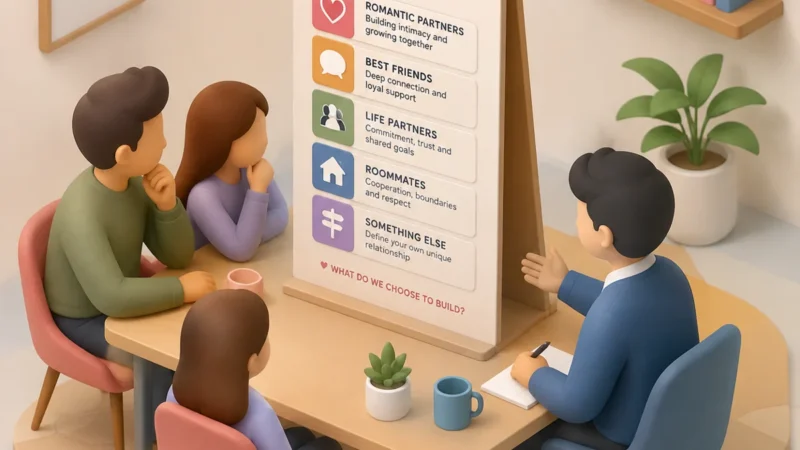
This visual illustration accompanies the concepts explored in this section of our threesome vs throuple discussion.
Defining a Throuple: A Three-Way Relationship
A throuple is a committed romantic relationship between three people. It is not an event — it is a relationship architecture with all the complexity, negotiation, and depth that any romantic relationship entails, multiplied by the number of connections involved. In a throuple, all three people are romantically involved with each other (a closed triad), or at minimum each person has relationships with the other two (which may include different dynamics between each pair).
Throuples face the same challenges any couple faces — communication, finances, household logistics, emotional needs, conflict resolution — but with an extra person adding an extra layer of complexity to every decision. Who sits in the front seat? Whose family do you visit for the holidays? What happens if two people want to move cities and the third does not? These are real questions that throuples navigate daily, and they require the same level of commitment and emotional labor as any long-term partnership.
Throuples can form in different ways. Sometimes a couple opens their relationship, meets someone, and all three develop feelings that deepen into a committed triad. Sometimes three singles find each other and build from scratch. Sometimes what starts as a threesome arrangement keeps growing until everyone realizes they have accidentally built a relationship. The key difference from a threesome is the presence of ongoing romantic commitment — shared goals, mutual obligations, emotional entanglement, and a sense of “we” that includes all three people equally. For guidance on making this transition thoughtfully, our article on building an equal triad provides a roadmap.

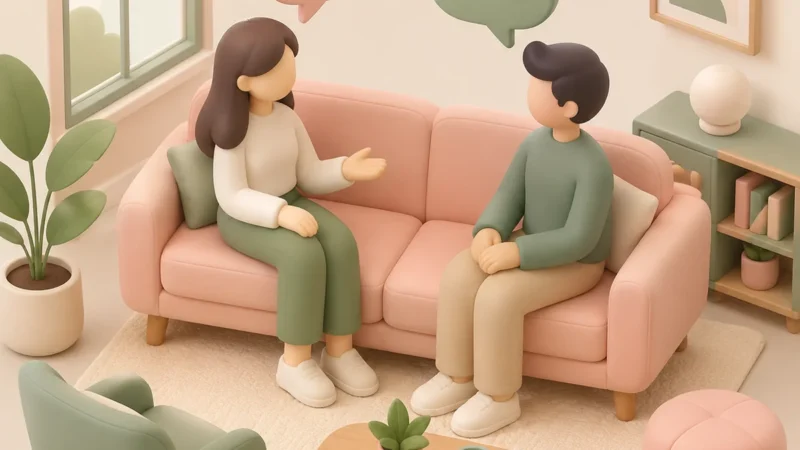
This visual illustration accompanies the concepts explored in this section of our threesome vs throuple discussion.
Structural Differences: Event vs Relationship
Let us get concrete about the threesome vs throuple distinction. The structural differences affect everything from how you spend your Tuesday evenings to how you introduce people at parties.
| Aspect | Threesome | Throuple |
|---|---|---|
| Duration | Hours to a weekend | Ongoing — months to years |
| Commitment Level | Low — bounded by the event | High — romantic partnership |
| Daily Life Integration | None — back to normal after | Full — shared routines, logistics |
| Emotional Investment | Casual to moderate | Deep, sustained, multilayered |
| Jealousy Management | Short-term; process-and-move-on | Ongoing skill that must be maintained |
| Breakup Complexity | Minimal — it ends when the event ends | Significant — involves real grief and logistics |
| Social Visibility | Private — rarely disclosed publicly | May be visible — introduces partners to friends/family |
| Legal/Financial Entanglement | None | Potentially significant — shared housing, finances |
The table captures the architecture, but what it does not show is how these differences feel in practice. A threesome is something you can mostly plan for — set the date, agree on boundaries, debrief after. A throuple is something you live inside, and the challenges are not events to prepare for but patterns to navigate continuously. The emotional skills required overlap — communication, honesty, emotional regulation — but the volume and frequency at which you need those skills is vastly higher in a throuple.
One underappreciated difference is how each structure handles the third person’s role. In a threesome, the third is a guest — welcome, valued, but not a permanent resident of the emotional architecture. In a throuple, all three people are co-owners of the relationship. This means decisions that affect the relationship need input from everyone, not just the original couple making choices on behalf of the group. Couples who slide from threesomes into throuple territory without explicitly renegotiating this shift often run into the same problem: the third person feels like a permanent guest rather than a true partner.

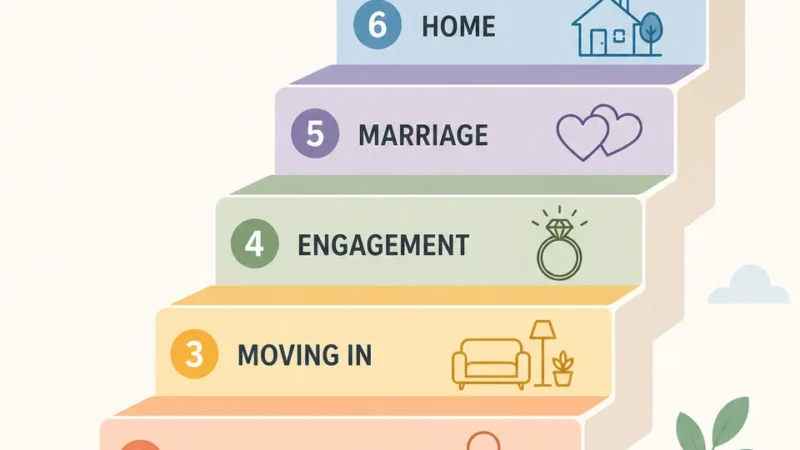
This visual illustration accompanies the concepts explored in this section of our threesome vs throuple discussion.
The Emotional Landscape of Each
The emotional experience of a threesome and a throuple are so different that comparing them is almost misleading — but understanding both helps you know what you are signing up for. A threesome typically involves a compressed emotional arc: anticipation, excitement, the experience itself, and then the afterglow or emotional processing that follows. Feelings can be intense, but they are bounded by the event. Jealousy might surface, but it is something you process after rather than something you live with daily.
Threesomes also bring a specific kind of emotional vulnerability. You are being physically intimate with multiple people simultaneously, which can surface body image concerns, performance anxiety, and fears about comparison. These feelings are normal, and preparing for them — including planning for emotional aftercare after a threesome — makes a significant difference in how people feel afterward. Our guide on post-threesome emotions goes deeper into what to expect and how to navigate the feelings that follow.
A throuple, by contrast, involves a sustained emotional landscape. You are not processing a single event — you are living inside a relationship system where three people’s moods, needs, triggers, and growth edges are all interacting continuously. Compersion — the joy of seeing your partner happy with someone else — becomes a daily practice rather than a one-time achievement. NRE (new relationship energy) does not just affect one pair but can ripple through the entire triad. When two people are deep in NRE and the third feels left out, the emotional work required is significant and ongoing.
Throuples also face a unique challenge that does not exist in threesomes: triangulation. When conflict arises between two people, the third person often gets pulled in — as mediator, confidant, or unwitting participant. Healthy throuples develop explicit agreements about how to handle conflict without triangulating, but it is a skill that takes time and intention to build.

This visual illustration accompanies the concepts explored in this section of our threesome vs throuple discussion.
Which Path First? Sequencing Your Exploration
For most people, the natural sequence is: explore a threesome first, and only consider throuple territory later if the dynamics feel right. A threesome is a lower-stakes way to test how you feel about sharing intimacy with a third person. It gives you real data — not hypothetical fears — about how you react, what jealousy feels like in your body, and whether the reality matches the fantasy.
That said, approaching a threesome with the explicit goal of “finding our third” for a throuple is problematic. It turns the third person into an audition rather than a full participant in their own right. If you want a throuple, be upfront about that — but also be prepared for the possibility that the person who is great in bed might not be someone you want to share a lease with, and vice versa. The path from threesome to throuple works best when it happens organically and unexpectedly, not when it is a recruitment mission.
A Self-Assessment Checklist
- Are you looking for a shared experience (threesome) or a shared life (throuple)? Be honest with yourself about what you actually want.
- How do you each handle jealousy — as an occasional visitor or an ongoing roommate? If jealousy tends to linger, a throuple will be harder.
- Do you have the time and emotional bandwidth for multiple romantic relationships? Look at your actual calendar, not your aspirational one.
- Are you prepared for the social implications — explaining to friends, family, possibly employers — that come with a visible three-way relationship?
- If the third person wanted equal say in relationship decisions, how would you feel? If your answer is “uncomfortable,” you are not ready for a throuple.
- Have you read about the challenges of transitioning from couple-plus-third to a genuinely balanced three-way partnership?

This visual illustration accompanies the concepts explored in this section of our threesome vs throuple discussion.
Can a Threesome Become a Throuple?
Yes — and it happens more often than you might think. But the threesome vs throuple transition is not automatic, and treating it as inevitable is how people get hurt. When a threesome evolves into something more, it usually follows a recognizable pattern: what started as a one-time experience feels good enough to repeat, then the repeat becomes regular, then someone notices they are texting between meetups, then someone else realizes they are making future plans that include all three of them — and suddenly everyone looks up and realizes they are in a relationship.
The healthiest transitions share a few things in common. They are acknowledged explicitly — no one is pretending it is “just casual” when it clearly is not. They involve renegotiation of agreements — the original couple’s rules about “no feelings” or “no overnights” get revisited. And they center the third person’s voice equally — not as someone being invited into an existing relationship, but as a co-creator of something new. For a deeper look at this process, our guide on transitioning from unicorn dating to a throuple walks through the steps in detail.
The transition also fails in predictable ways. The most common failure mode is couple-privilege inertia — the original couple keeps making decisions unilaterally while telling the third person they are “equal.” Another is unspoken asymmetry — one person in the couple is deeply invested while the other is going along to avoid conflict, and the imbalance eventually collapses. The antidote to both is the same: radical honesty, regular check-ins, and a willingness to acknowledge when the structure is not working for everyone.
Choosing With Clarity
The threesome vs throuple question is not about which one is superior — it is about which one fits where you are right now. A threesome can be a beautiful, connecting, even transformative experience without ever becoming anything more. A throuple can be one of the most fulfilling relationship structures imaginable for people who genuinely want it. The problems arise when people pursue one while telling themselves (and others) they are pursuing the other.
If you are curious about either path, the best next step is education. Read about the differences between swinging and polyamory to understand where threesomes and throuples fit in the broader ENM landscape. Talk to your partner (or partners) about what you each actually want — not what you think you should want. And if you are ready to explore, platforms like 3Cupid connect you with people who are open about their intentions, whether that is a shared experience, an ongoing connection, or something in between.
Whatever you choose, choose it with clarity — because the people you are involving deserve to know what they are saying yes to. The best experiences, whether a single evening or a multi-year throuple, start with exactly the same thing: a conversation where everyone tells the truth.
This article was written by the 3Cupid editorial team to help readers distinguish between different types of three-person dynamics within consensual non-monogamy. Our content draws from community experience and relationship research, but is not a substitute for professional relationship counseling.