Table of Contents
- Why Money Conversations Matter in Polyamory
- Different Financial Models for Poly Relationships
- Budgeting Across Multiple Relationships
- Shared Expenses: Who Pays for What?
- Planning for the Future Together (and Apart)
- When Financial Priorities Conflict
- Practical Tools and Systems
Why Money Conversations Matter in Polyamory
Money is one of the last taboos in relationships, and polyamory does not get a free pass. When you are managing multiple partnerships, polyamory financial planning is not just a nice-to-have — it is what keeps resentment from quietly building in the background while everyone pretends everything is fine.
Here is what most polyamory guides skip: dating multiple people costs more than dating one. Not dramatically more in every case, but the math adds up. Dinner dates, event tickets, travel to see partners in different cities, gifts for multiple birthdays and holidays, shared subscriptions, and the occasional weekend getaway — across two or three relationships, these expenses multiply. Without a plan, what starts as generosity can slide into financial strain that affects every relationship in your network.
The conversation is also about power. Money imbalances between partners — whether one person earns significantly more, or one couple has shared finances that a third partner cannot access — create dynamics that need to be named and managed. Ignoring them does not make them disappear; it just makes them operate invisibly.
Different Financial Models for Poly Relationships
There is no single “right” way to handle money in polyamory, but there are proven models that different relationship structures tend to gravitate toward. Understanding the options helps you choose — or combine — what fits your specific situation.
- Fully Separate. Every person manages their own finances independently. Dates are split, gifts are individual decisions, and no one has access to anyone else’s accounts. This works well for solo poly folks and relationships without cohabitation.
- Primary Partnership Pool. A married or nesting couple maintains shared finances for household expenses while keeping individual discretionary funds for dating, hobbies, and personal spending. This is common but requires transparency about what counts as “shared” versus “personal.”
- Proportional Contribution. In a triad, quad, or larger polycule that shares living expenses, each person contributes based on their income rather than splitting everything equally. Someone earning $80,000 pays a larger share of rent than someone earning $40,000.
- Full Integration. Rare and requires extraordinary trust, but some established polycules fully merge finances across three or more people. This typically involves legal agreements and a high degree of communication.
Most people land somewhere between these models, and the arrangement often shifts over time. The key is that everyone involved has explicitly agreed to the structure rather than drifting into it by default.

Budgeting Across Multiple Relationships
Budgeting for polyamory is different from budgeting for a single relationship because the variables multiply. You are not just tracking one set of date nights and one anniversary — you are tracking multiple calendars, multiple gift-giving occasions, and multiple sets of shared experiences that each carry a price tag.
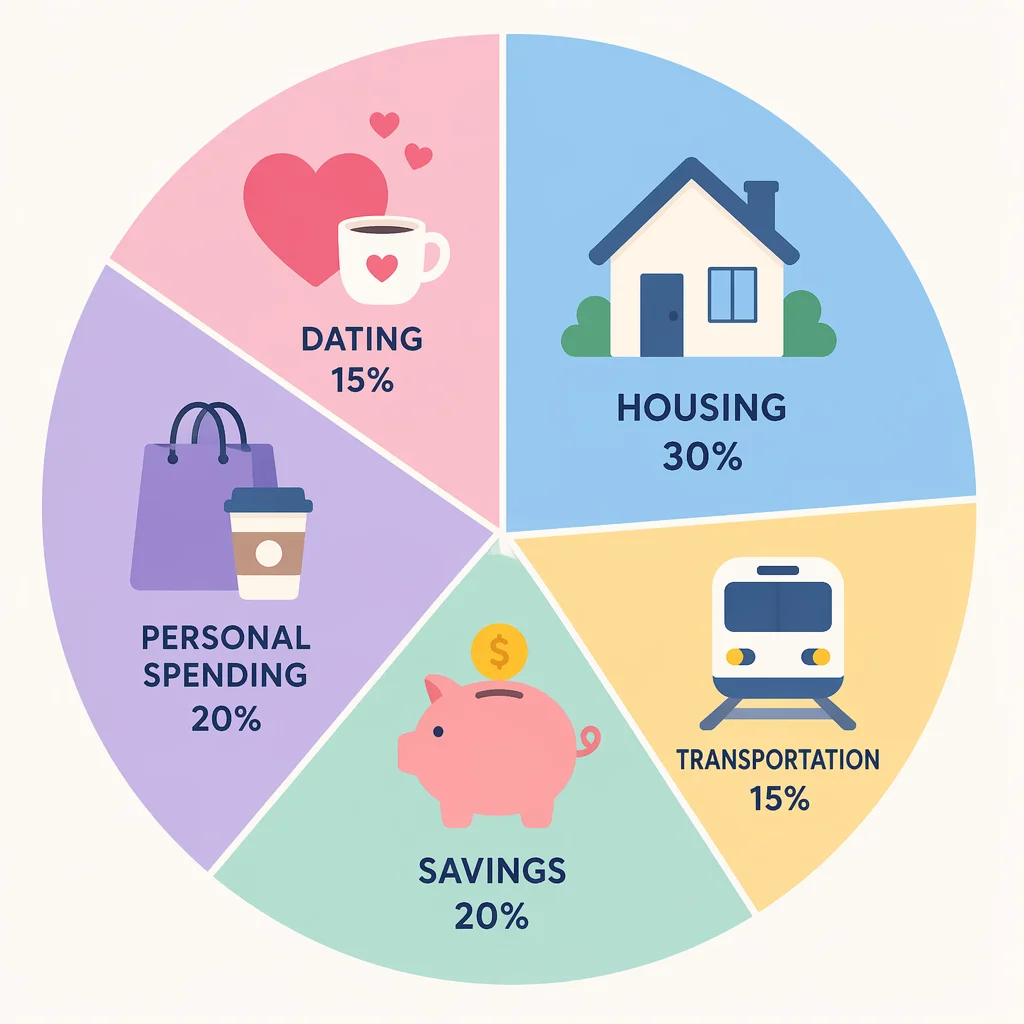
A practical approach that works for many people in the polyamory community is the three-bucket method: one bucket for shared household expenses (if you cohabitate), one bucket for relationship-specific spending (dates, gifts, experiences with each partner), and one bucket for personal spending that is entirely yours. This gives you visibility into whether you are accidentally shortchanging one relationship or overextending yourself across all of them.
Another useful practice is relationship expense tracking. For one month, note every dollar spent that is tied to a specific relationship — not to micromanage or compare, but to understand your actual patterns. You might discover that you spend three times as much on one partner simply because they live farther away and travel costs add up. That is not inherently unfair, but it is worth being aware of.

Shared Expenses: Who Pays for What?
This is where things get real. When three people go to dinner, who picks up the check? When a triad takes a vacation together, how are flights and accommodations divided? When one partner in a V-shaped relationship wants to attend an event that involves all three people, who covers whose ticket?
There is no universal answer, but there are principles that make these decisions easier. The first is clarity before the event. Decide how expenses will be split before the bill arrives — not after. Awkwardness in the moment is far worse than a brief conversation beforehand. The second is equity over equality. Splitting everything down the middle sounds fair, but if one person earns half what the others do, a proportional split is actually fairer.
Here is a simple framework for shared expenses in poly dating:
| Situation | Common Approach |
|---|---|
| One-on-one date with your partner | Split or take turns treating, based on your existing dynamic |
| Group date with your partner and metamour | Each person covers their own, or the inviting couple treats the third |
| Triad dinner out | Rotate who pays, or split three ways proportionally |
| Polycule vacation | Agree on a shared budget upfront; split major costs (flights, lodging) and handle personal spending individually |
| Gifts across relationships | Set personal spending limits per occasion rather than trying to make every gift equal in value |

Planning for the Future Together (and Apart)
Long-term polyamory financial planning goes beyond monthly budgeting. It involves questions that monogamous couples often take for granted: Who is on your emergency contact list? Who has access to your savings if something happens to you? If you live with one partner and have another partner of ten years who lives separately, how do you account for both in your estate planning?
These are not hypothetical questions. Polyamorous people face real legal and financial gaps because most systems — marriage, taxes, inheritance, health insurance, hospital visitation — are built for exactly two people. Filling those gaps requires intentional planning.
Practical steps to consider include naming multiple beneficiaries on accounts where it is allowed, setting up durable power of attorney documents for non-married partners, and being explicit in your will about how assets should be distributed across partners. Some polycules create shared emergency funds that any member can access in a crisis, with clear guidelines about what qualifies and how the fund gets replenished.
These conversations can feel heavy, but they are also an act of care. Making sure your partners are protected if something happens to you is one of the most concrete ways to demonstrate commitment in a relationship structure that does not always have legal recognition.

When Financial Priorities Conflict
Conflict over money in polyamory often masks deeper issues. When one partner wants to spend more on dates than another is comfortable with, the surface conversation is about dollars — but underneath, it may be about differing values, security anxieties, or unspoken assumptions about what each relationship “deserves.”
The skill that makes the biggest difference here is the same one that powers time management in poly relationships: separating the practical from the emotional. Before you can solve a money disagreement, you need to identify whether it is a logistics problem (we need a better tracking system), a values problem (we disagree about what is worth spending on), or a security problem (one person feels financially vulnerable and needs reassurance).
When conflicts arise, avoid comparing relationships directly. “You spent $200 on Partner B’s birthday but only $50 on Partner C’s” is rarely about the money — it is about feeling less valued. Address the feeling first, then work out the practical adjustment.

Practical Tools and Systems
You do not need complex software to manage polyamory financial planning, but a few simple systems can prevent most common problems. Here is what works for many polyamorous people:
- A shared budgeting app. Apps like Splitwise, YNAB, or even a shared Google Sheet can track who paid for what across multiple relationships. The key is that everyone involved agrees on the tool and actually uses it.
- A “poly money date.” Schedule a recurring check-in — maybe quarterly — specifically for financial conversations. This keeps money from being the thing you only discuss when something has already gone wrong.
- Personal discretionary funds. Each person should have some money that is entirely their own, no questions asked. This preserves autonomy and prevents every small purchase from becoming a group discussion.
- Clear category definitions. Before tracking expenses, agree on what counts as a “relationship expense” versus a “personal expense.” Is a gym membership you use with one partner a relationship cost? What about the gas money to visit a long-distance partner?
- Annual review. Once a year, look at the big picture together. Has anyone’s income changed significantly? Are there new financial goals — a house, a child, a career shift — that affect everyone? Adjust the plan accordingly.
Setting clear financial boundaries early in any multi-partner dynamic prevents misunderstandings later. The goal is not to turn every coffee date into an accounting exercise — it is to create enough structure that you can relax and enjoy your relationships without money stress humming in the background.
Polyamory financial planning is not the most romantic topic, but it is one of the most practical ways to protect the relationships you care about. Money stress erodes connection faster than almost anything else, and polyamory — with its multiple relationships, varied living situations, and complex logistics — benefits from financial clarity more than most relationship structures. Start the conversation early, revisit it regularly, and remember: talking about money with your partners is not unromantic. It is one of the ways you say, “I am serious about building something that lasts.”
For those navigating additional complexities, such as managing ENM with chronic illness or disability, the intersection of health, finances, and multiple relationships adds another layer — and the same principles of clarity, communication, and compassion apply across all of it.
This article is part of our practical guides series for polyamorous and ethically non-monogamous relationships. Financial situations vary widely, and nothing here constitutes professional financial or legal advice. For major decisions, consult a qualified professional who understands non-traditional relationship structures.