Table of Contents
- Why Anxiety Shows Up in ENM
- Recognizing Your Anxiety Triggers
- Communication Strategies When Anxiety Hits
- Building Your Emotional Regulation Toolkit
- When Anxiety Points to a Real Issue
- Supporting a Partner Who’s Anxious
- Knowing When to Seek Professional Help
If you have been practicing ethical non-monogamy for any length of time, you already know the open secret: anxiety comes with the territory. It shows up when your partner leaves for a date. It whispers doubts during a quiet moment. It can turn what should be an exciting experience into an emotionally draining one. But here is what matters — anxiety in ENM is not a sign that you are doing it wrong. It is a signal, not a verdict. ENM anxiety management is a skill you build, not a personality trait you are stuck with. This article walks you through what actually works, drawn from both research and the lived experience of people in non-monogamous relationships.
Why Anxiety Shows Up in ENM
Anxiety in non-monogamous relationships is not fundamentally different from anxiety anywhere else in life — but ENM does provide more surface area for it to land. When you add more people, more schedules, and more emotional dynamics to a relationship structure, the number of variables your brain tries to track multiplies quickly.
Attachment theory offers a useful lens here. Most of us carry some degree of anxious attachment — a sensitivity to perceived threats to connection. In monogamous relationships, those threats are relatively contained. In ENM, they multiply: your partner’s new relationship energy with someone else, a metamour who seems to get more time, the uncertainty of a fluid schedule. None of these are relationship failures. They are simply inputs your nervous system was not necessarily socialized to handle without distress.
What makes this trickier is the cultural messaging. We grow up absorbing the idea that love is a finite resource and that security comes from exclusivity. Even when you consciously reject those ideas — as most people in ENM do — your limbic system did not get the memo. It still reacts. That gap between what you believe and what you feel is where a lot of ENM anxiety management work happens.
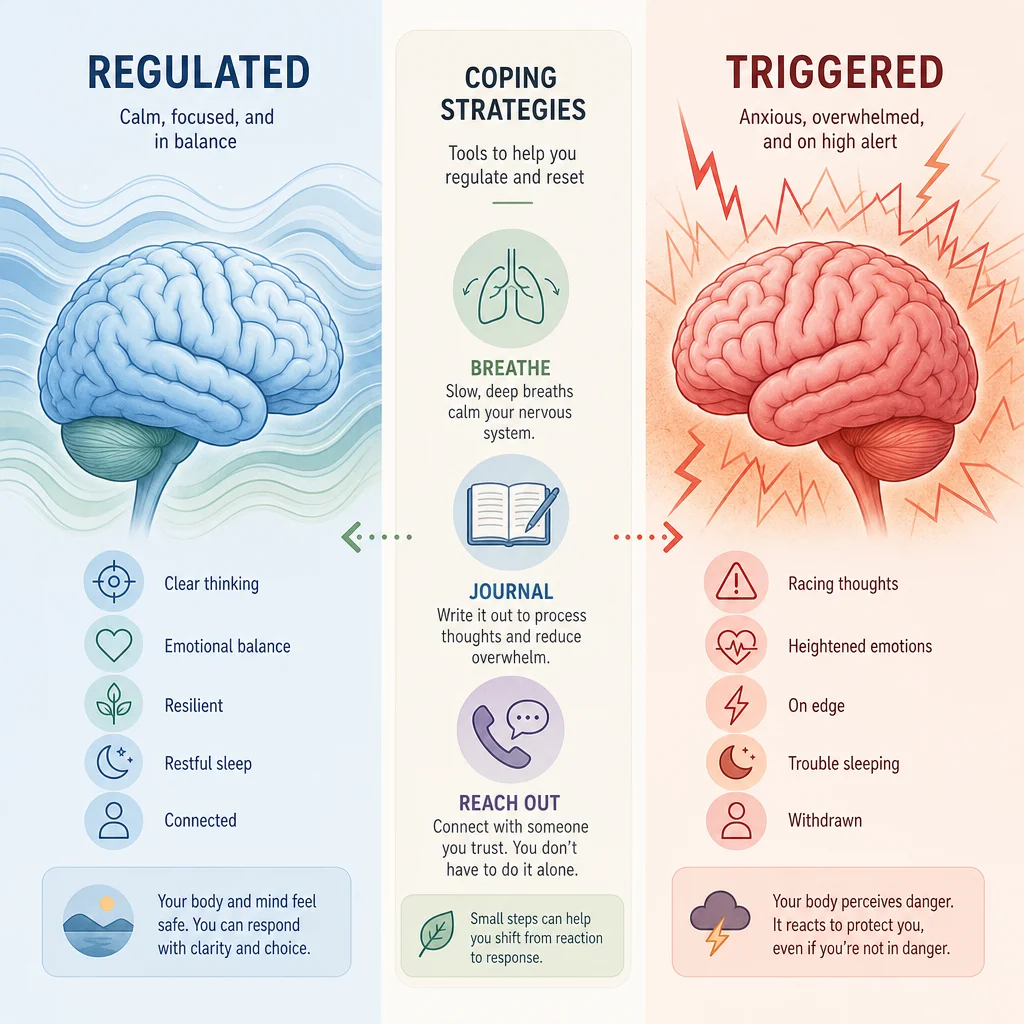
Understanding this context matters because it shifts the frame from “something is wrong with me” to “my brain is doing exactly what it was conditioned to do.” That reframe alone can reduce the secondary layer of anxiety — the anxiety about being anxious — which often makes the original feeling worse.
Recognizing Your Anxiety Triggers
Before you can manage anxiety, you need to know what sets it off. Triggers in ENM tend to cluster around a few predictable themes, and the first step of ENM anxiety management is simply mapping yours.
Some common patterns include: the hour before your partner leaves for a date (anticipatory anxiety); seeing your partner’s phone light up with a notification from someone else (comparison trigger); realizing your calendar has more partner dates than quality time with you (scarcity trigger); hearing your partner use a term of endearment with someone else that you thought was “yours” (uniqueness threat); and feeling left out of decisions that affect your shared life (autonomy anxiety).
A practical exercise: keep a simple note on your phone for one week. Each time you feel a spike of anxiety, jot down three things: what just happened, what thought followed, and how intense it felt on a 1-10 scale. Patterns will emerge faster than you expect. Recognizing them transforms anxiety from a diffuse fog into something specific and addressable.
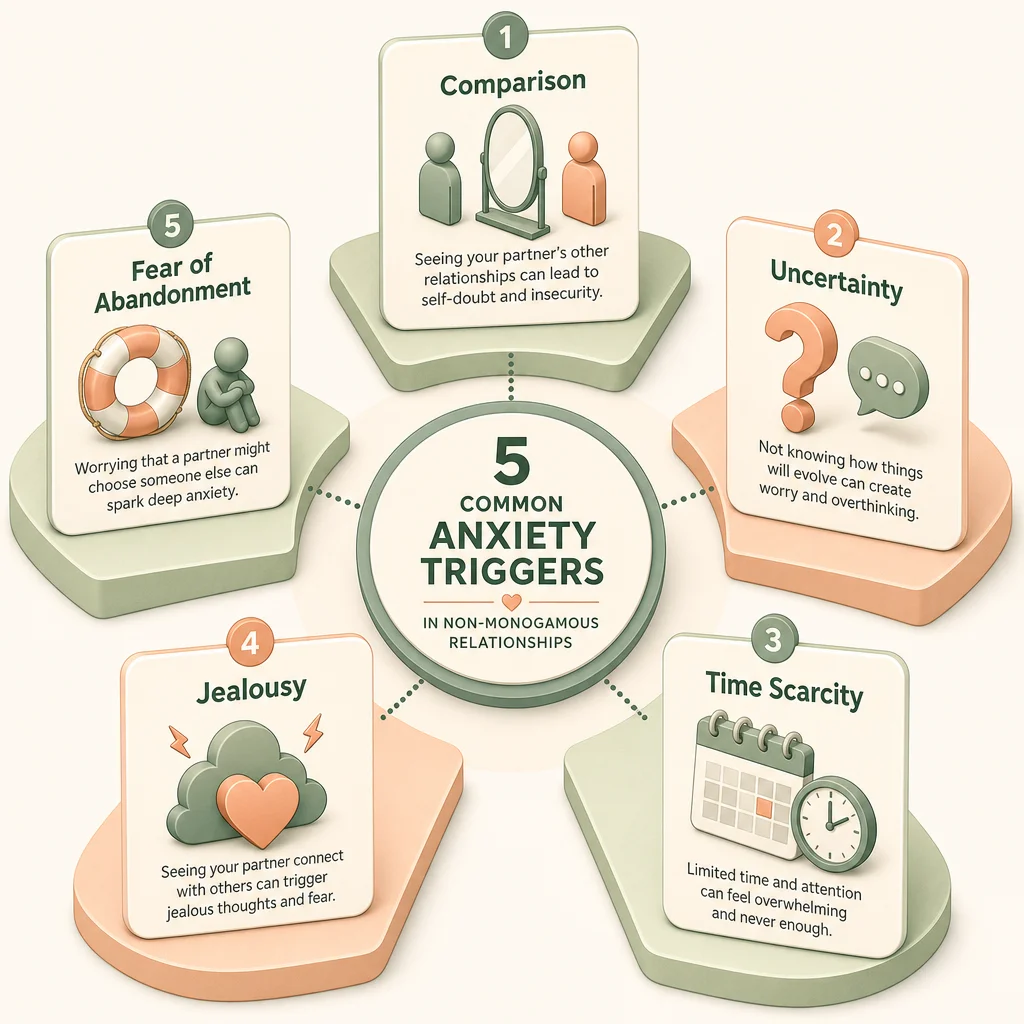
This kind of tracking also helps separate real relationship problems from old wiring. Sometimes your anxiety is pointing at a genuine issue — a partner who is not showing up, a boundary that got fuzzy, a conversation that needs to happen. Other times, anxiety is just noise from an old attachment pattern firing in a new context. You cannot tell the difference until you write it down and look at it clearly.
Communication Strategies When Anxiety Hits
The most common mistake people make with ENM anxiety is either suppressing it entirely or dumping it all on their partner without a filter. Neither works. The goal is regulated communication — sharing what you are feeling in a way your partner can actually hear and respond to.
A simple formula that works across ENM dynamics: “I am feeling [emotion] because [specific trigger]. I am not asking you to [fix/stop/cancel], but it would help me if [specific actionable request].” For example: “I am feeling anxious because you have three dates this week and we have not had dedicated time. I am not asking you to cancel anything, but it would help me if we could put a date night on the calendar first.”
This structure does three things at once: it owns the emotion without blaming, it names the trigger specifically, and it makes a request that is actionable rather than vague. It also signals to your partner that you are managing your own ENM anxiety management rather than outsourcing it to them — which paradoxically makes them more likely to want to help.
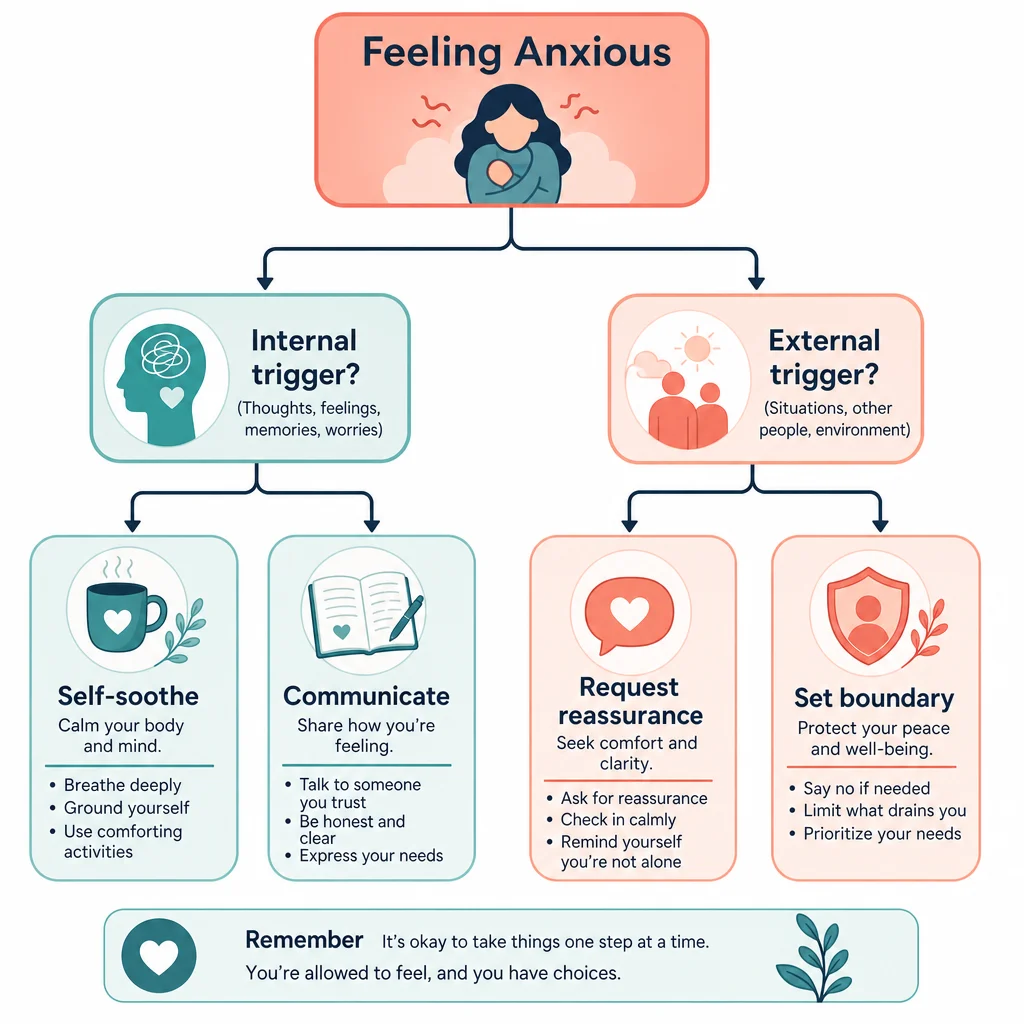
Timing also matters. Bringing up anxiety right before your partner walks out the door for a date is a recipe for both of you to feel terrible. Agree on a check-in rhythm that works for your dynamic — maybe a brief text when they arrive safely, and a longer debrief the next day. Anxiety is easier to navigate when you both know when and how it will be discussed.
Building Your Emotional Regulation Toolkit
Waiting until you are flooded with anxiety to figure out what helps is like waiting until you are drowning to learn to swim. ENM anxiety management works best when you build your toolkit during calm moments so those tools are available during hard ones.
Some evidence-backed practices that translate well to ENM contexts: physiological sigh (two quick inhales through the nose followed by a long exhale through the mouth — this activates the parasympathetic nervous system in about 30 seconds); temperature change (splashing cold water on your face or holding ice cubes triggers the mammalian dive reflex and slows heart rate); bilateral stimulation (walking, tapping alternating knees, or any rhythmic left-right movement helps your brain process emotional material); and cognitive defusion (say “I am noticing the thought that…” before the anxious thought — it creates just enough distance to breathe).
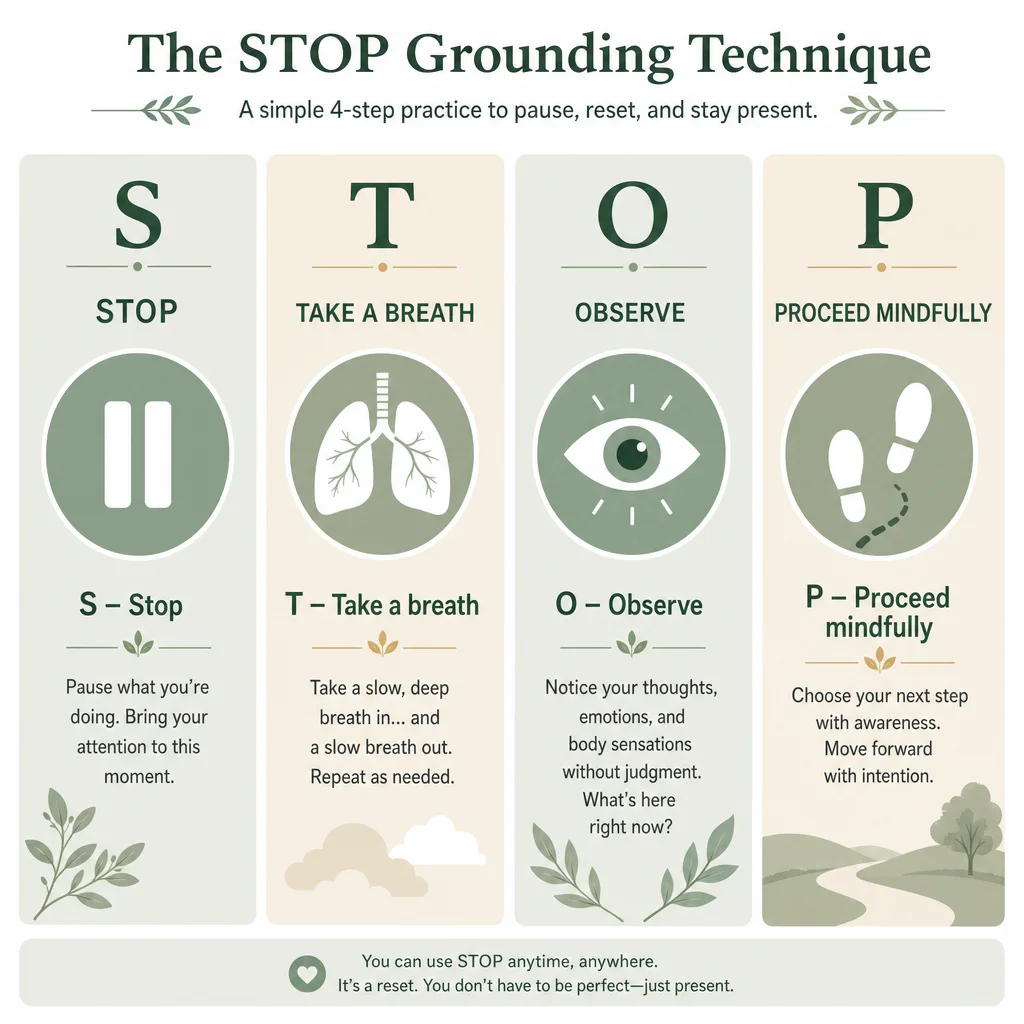
Beyond in-the-moment techniques, build structure around your anxiety. If you know certain situations are consistently hard — your partner’s overnight dates, for example — plan them in advance. Schedule something you genuinely look forward to during that time. Line up a friend who knows your situation and is available for a call. Structure is not avoidance; it is working with your nervous system instead of against it.
For deeper work on the beliefs driving your anxiety, our article on handling internalized shame in ENM dating walks through how to identify and reframe the cultural conditioning that feeds anxiety at its root.
When Anxiety Points to a Real Issue
Not all anxiety is irrational. Sometimes it is your internal compass detecting something genuinely off. The skill is learning to tell the difference, and that distinction is at the heart of effective ENM anxiety management.
Signs your anxiety might be signaling a real problem: it persists at the same intensity for weeks rather than spiking and settling; it is attached to a specific, observable pattern in your partner’s behavior rather than a general fear; it decreases when you have an honest conversation about it rather than staying stuck regardless of reassurance; multiple people in your life independently express concern about the same dynamic; or the anxiety is mixed with other emotions like resentment, relief when your partner cancels a date, or dread rather than just fear.
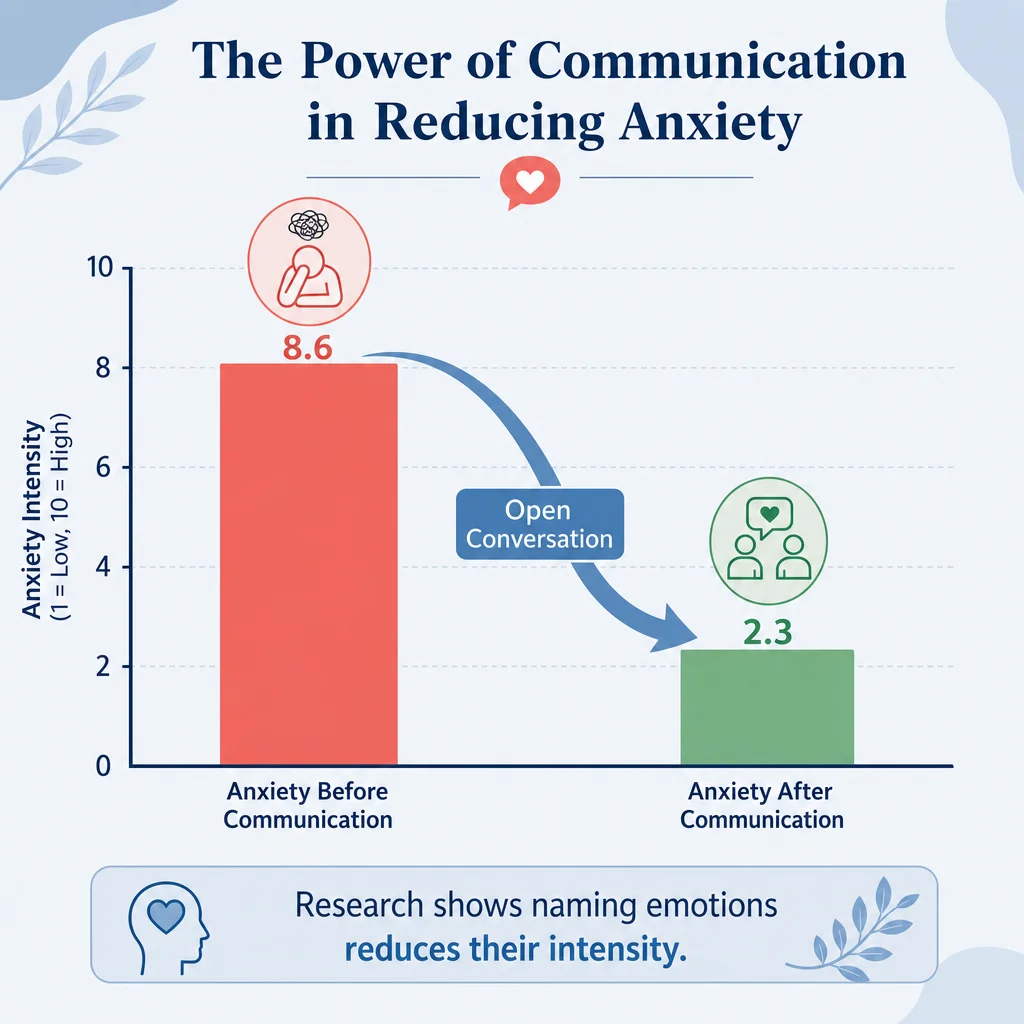
When anxiety does point to a real issue, the response is not to self-soothe harder — it is to address the issue. That might mean renegotiating a relationship agreement, asking for more transparency, or in some cases, recognizing that a particular dynamic is not sustainable for you. Anxiety can be a loyal messenger, even when you wish it used a quieter delivery method.
For more on how jealousy and anxiety overlap — and how to distinguish between the two — our guide on understanding jealousy in non-monogamous relationships offers a deeper dive into that specific territory.
Supporting a Partner Who’s Anxious
If you are the partner of someone dealing with ENM anxiety, your role matters enormously — but it is also easy to get wrong. The most common mistake is trying to fix or rescue, which can leave you feeling responsible for an emotion you did not cause and cannot control.
What actually helps: validate without agreeing (“I hear that this feels really hard right now” rather than “You are right, this is terrible”); ask what support looks like to them rather than assuming; offer specific reassurance about your commitment while maintaining your autonomy; and resist the urge to cancel plans or change boundaries in response to acute anxiety — that pattern creates a cycle where anxiety gets reinforced by accommodation.
The healthiest dynamic is one where you are warm and present without taking ownership of your partner’s emotional regulation. You can be a safe harbor without being the entire coastline. That distinction preserves both your relationship and your own emotional bandwidth.
Knowing When to Seek Professional Help
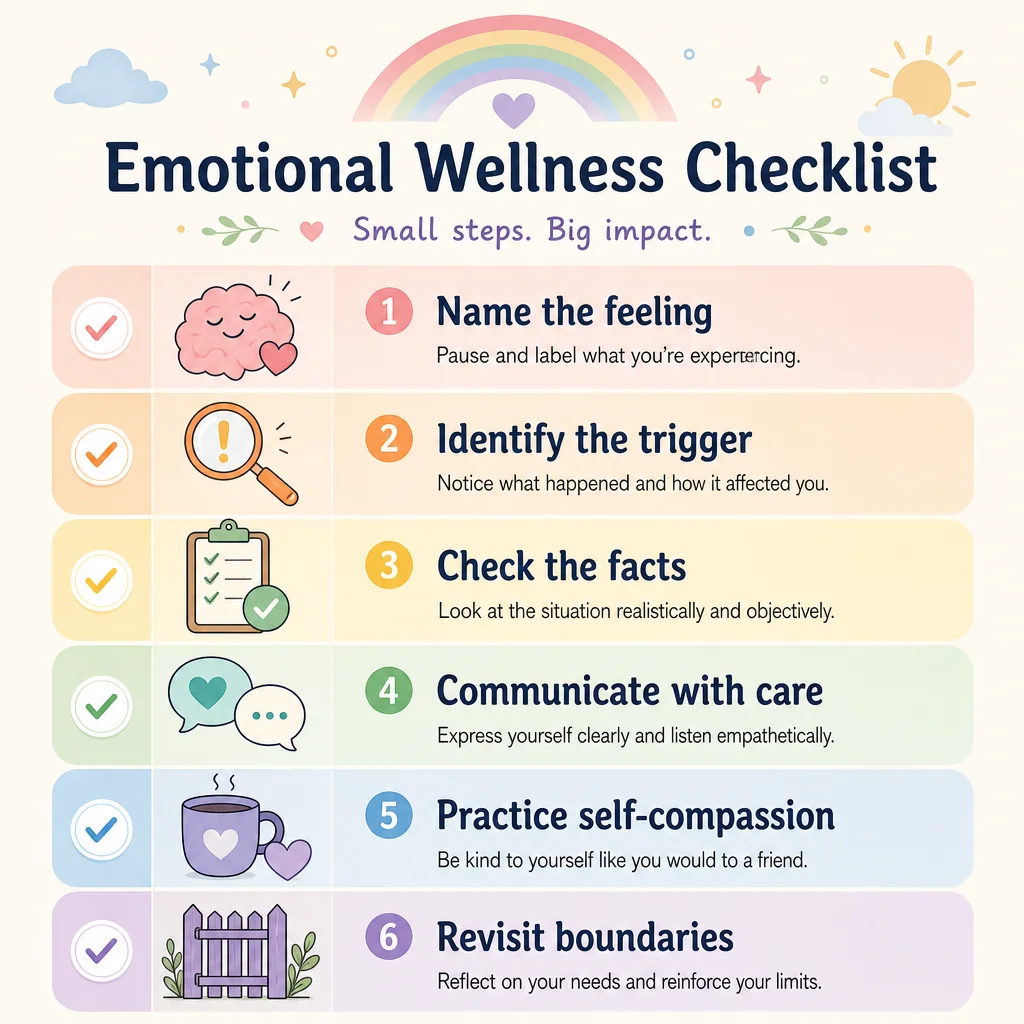
Self-management tools and communication strategies go a long way, but there are times when anxiety needs professional support. This is not a failure — it is a recognition that some patterns run deeper than what you can untangle through conversation and grounding techniques alone.
Consider working with a therapist if: your anxiety is interfering with your sleep, appetite, or ability to function at work; you find yourself avoiding situations or relationships entirely to prevent anxiety rather than managing it when it comes; the same patterns replay across multiple relationships and partners despite your best efforts; or your relationship is suffering because anxiety consumes most of your shared emotional space.
Finding a therapist who actually understands non-monogamy — rather than one who treats it as the problem — makes a significant difference. Standard couple’s therapy frameworks often assume monogamy as the baseline, and a therapist who is not ENM-informed may pathologize dynamics that are perfectly workable with the right tools. For guidance on finding the right professional support, read our companion piece on How to Find a Therapist Who Understands Non-Monogamy.
Anxiety in ENM is not a character flaw or a sign that you are not cut out for non-monogamy. It is a manageable, predictable aspect of relating to multiple people in a culture that did not teach you how. With the right ENM anxiety management strategies — self-awareness, communication skills, a regulation toolkit, and support when you need it — anxiety becomes navigable rather than overwhelming. You do not need to eliminate it. You just need to stop letting it drive.
This article is part of the ENM Mental Health & Wellness series at 3Cupid. For related guidance, read our article on building emotional resilience in ENM, our guide to finding an ENM-affirming therapist, and our deep dive into understanding jealousy in non-monogamous relationships.