Table of Contents
- What Emotional Resilience Actually Means in ENM
- The Self-Awareness Foundation
- Building Your Regulation Repertoire
- The Role of Secure Attachment
- Creating a Resilience Support System
- Recovering from Setbacks
- Making Resilience a Daily Practice
People sometimes talk about emotional resilience as if it is a fixed trait — you either have it or you do not. That framing is not just wrong; it is unhelpful. ENM emotional resilience is a collection of learnable skills, practiced behaviors, and intentional choices that compound over time. In non-monogamous relationships, resilience is what lets you feel jealousy without being consumed by it, navigate a difficult conversation without shutting down, and experience a disappointment without questioning your entire relationship structure. This article breaks down what resilience looks like in practice and how to build it deliberately.
What Emotional Resilience Actually Means in ENM
Emotional resilience is not about being tough or unaffected. It is not about suppressing feelings or powering through. In the context of ENM, resilience means you can experience a full emotional range — including the difficult parts — and recover your equilibrium without abandoning your relationships, violating your agreements, or losing yourself in the process.
Think of it less like a shield and more like a gyroscope. The point is not to block outside forces. The point is to have an internal mechanism that keeps you oriented when the ground tilts. For people in non-monogamous relationships, that tilt can come from many directions: a partner’s new connection, a schedule that suddenly feels unbalanced, a metamour dynamic that triggers old wounds, or simply the accumulated fatigue of processing more emotional data than most relationship models require.
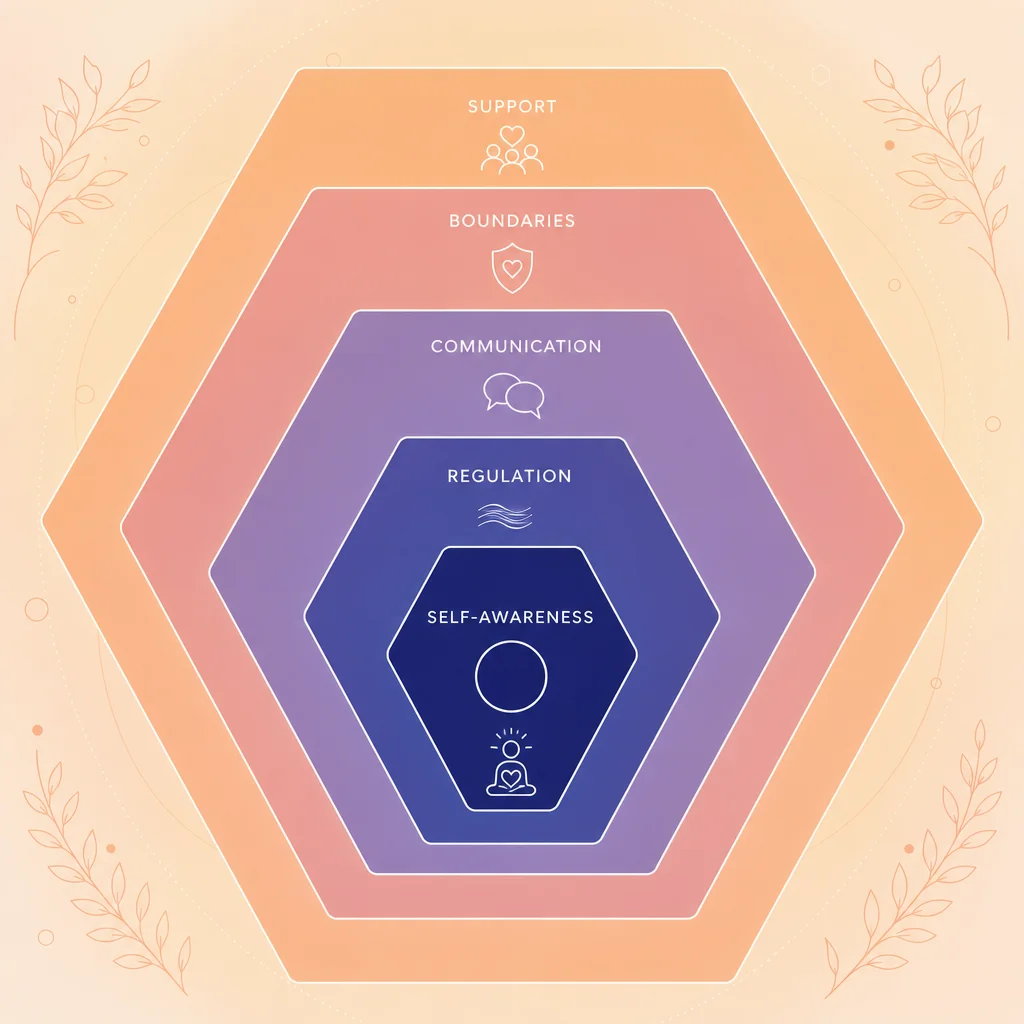
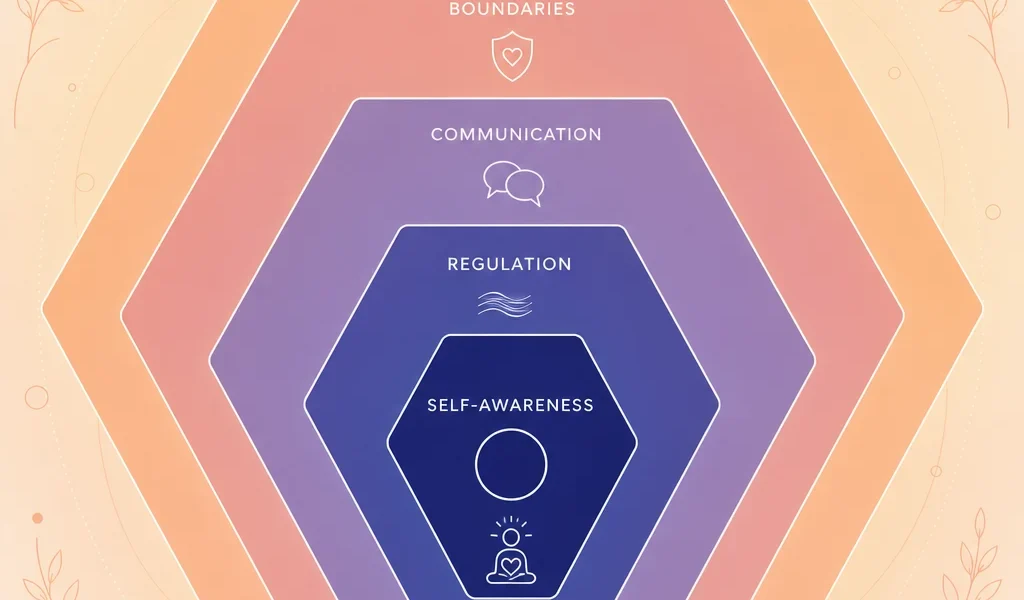
ENM emotional resilience is built in layers. The outermost layer is your moment-to-moment regulation skills — what you do when anxiety spikes at 11 PM and your partner is not home. The middle layer is your self-awareness and narrative — how you make sense of what you are feeling. The innermost layer is your support system and values — what holds you steady when your own coping resources are depleted. Most people focus only on the outer layer. The people who thrive in ENM long-term attend to all three.
The Self-Awareness Foundation
You cannot build resilience on a foundation of self-deception. The first and most underrated skill in ENM emotional resilience is accurate self-awareness — knowing what you actually feel, what triggers those feelings, and what you genuinely need versus what your anxiety is demanding.
This is harder than it sounds because ENM often creates incentive structures that work against honesty. You might downplay discomfort to seem like the “cool” partner who does not get jealous. You might suppress needs because you do not want to be perceived as high-maintenance. You might convince yourself you are fine with something because your partner wants it and you want to want it. All of these are self-awareness gaps dressed up as adaptability.
A practical starting point: once a week, sit down with a notebook and answer three questions honestly. What did I feel this week that I did not fully express to my partner(s)? What triggered those feelings? If I removed the fear of my partner’s reaction from the equation, what would I actually want to ask for? This exercise is not about acting on every answer. It is about closing the gap between what you feel and what you acknowledge. That gap is where resilience leaks out.

Self-awareness also means recognizing your patterns across relationships. Do you tend to feel anxious when a partner has a first overnight? Does a particular type of metamour dynamic reliably trigger insecurity? Mapping your emotional patterns is not about avoiding triggers — it is about knowing them well enough that they do not catch you off guard. Predictable is manageable.
Building Your Regulation Repertoire
Self-awareness tells you what you are feeling. Regulation is what you do with it. The goal of regulation in ENM emotional resilience is not to stop feeling difficult emotions — it is to expand the gap between feeling and reacting, so you can choose your response instead of being driven by impulse.
Different regulation strategies work for different nervous system states. When you are in high arousal — heart racing, thoughts spinning, fight-or-flight activated — physiological interventions work fastest: cold water on your face, bilateral walking, paced breathing with longer exhales than inhales. When you are in a lower but persistent state of distress — the slow-burn anxiety that lasts for hours — cognitive strategies become more accessible: labeling the emotion precisely, examining the thought underneath it, asking “what is the evidence for and against this belief?”
The key insight that many people miss: regulation is not a one-size-fits-all skill. What works when you are at a 3 out of 10 on the distress scale will not work when you are at an 8. Building a regulation repertoire means collecting strategies across the intensity spectrum so you have tools available regardless of how activated you are. If you wait until you are flooded to figure out what helps, you are already behind.

Regulation also includes the skill of knowing when to pause. Not every feeling needs to be processed in real time with a partner. Sometimes the most resilient thing you can do is say, “I am having a strong reaction to this and I need some time to sort through it before we discuss it.” That sentence alone demonstrates more emotional maturity than a hour of unfiltered processing.
The Role of Secure Attachment
Attachment theory is not destiny, but it is relevant. People with more anxious attachment patterns tend to experience more emotional volatility in ENM — not because ENM is wrong for them, but because ENM surfaces attachment fears that monogamous structures keep dormant. The good news: attachment styles can shift. Security is something you can build, and ENM emotional resilience benefits enormously from doing so.
Secure attachment in ENM does not mean never feeling anxious. It means having an internal working model that says, “My partner’s connection with someone else does not inherently threaten my connection with my partner.” It means being able to receive reassurance when it is offered without needing it constantly. It means trusting that difficult feelings are survivable and that you can work through them without the relationship collapsing.
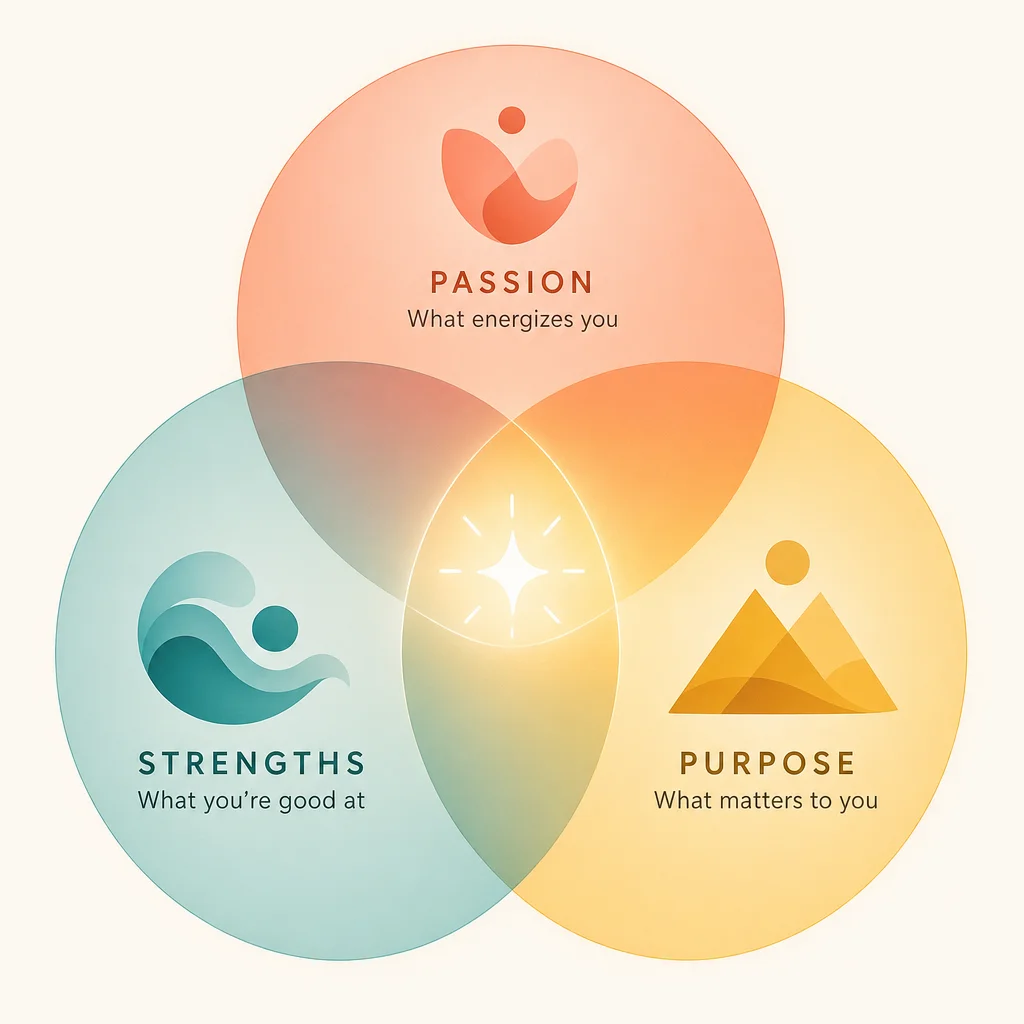
Building security involves both internal and relational work. Internally, you challenge the core beliefs that drive anxious attachment — beliefs like “love is finite” or “if someone truly loved me, they would not want anyone else.” Relationationally, you build relationships where reassurance is available but not demanded, where consistency is prioritized, and where repair after rupture becomes a practiced skill rather than a crisis. Our guide on Managing Anxiety in Non-Monogamous Relationships offers tools for managing the anxiety that attachment fears generate while you do this deeper work.
Creating a Resilience Support System
Resilience is not purely an individual project. The people around you — partners, friends, community — are part of your emotional infrastructure. One of the most practical ways to strengthen ENM emotional resilience is to diversify your support so that no single person carries all of your emotional weight.
This means cultivating relationships outside your romantic partnerships where you can be honest about what you are navigating. It means having at least one friend who understands ENM well enough that you do not have to explain the basics before you can talk about what is actually bothering you. It might mean joining a local polyamory discussion group, participating in online ENM communities where people share their experiences, or working with a therapist who is competent in non-monogamous dynamics.
It also means being intentional about what kind of support you ask for from whom. Your partner is not your therapist. Your best friend is not your partner. Each person in your support system has a role, and keeping those roles distinct protects your relationships from emotional overload. When you know you have multiple places to turn, any single difficulty feels less catastrophic because your entire emotional world does not depend on one conversation going well.
Recovering from Setbacks
Setbacks in ENM are inevitable. A date goes badly. A partner crosses a boundary you thought was clear. You discover a feeling you did not know you had. A relationship you were invested in ends. Resilience is not about avoiding these moments — it is about what you do after they happen.

Effective recovery has a sequence. First, stabilize — do whatever regulation technique works for your current intensity level. Second, make sense — journal, talk to a trusted friend, or sit with the feeling long enough to understand what specifically hurts and why. Third, communicate — when you are regulated enough to be constructive, share what you learned with the relevant person. Fourth, adjust — make the small changes in your agreements, boundaries, or self-care routines that the experience revealed as necessary.
People who recover well from ENM setbacks share a common trait: they treat setbacks as data rather than verdicts. A bad experience does not mean “ENM is not for me” unless that is what the pattern of data consistently shows. More often, a setback reveals one specific thing that needs adjustment — more clarity in a particular agreement, more attention to a specific trigger, more support during a certain kind of transition. When you treat setbacks as information rather than identity statements, resilience compounds.
For related guidance on processing the emotional aftermath of difficult experiences, our article on understanding jealousy in non-monogamous relationships addresses how to work with one of the most common emotional challenges ENM surfaces.
Making Resilience a Daily Practice
The biggest mistake people make with resilience is treating it as an emergency response system — something you deploy when things get hard. The most effective ENM emotional resilience is built in the calm moments, so it is available in the hard ones.
This means creating small daily practices that strengthen your emotional baseline over time. It could be a five-minute morning check-in with yourself: How am I actually feeling today? What is sitting in the background that I have not acknowledged? It could be a weekly relationship check-in with partners where you review what is working and what needs attention — before problems accumulate. It could be a monthly reflection on your patterns: What triggered me this month? What helped? What do I want to do differently next month?

None of these practices are complicated. Their power is in their consistency. Resilience is not built through dramatic breakthroughs or crisis-level interventions. It is built through hundreds of small moments where you pause, notice, and choose a response rather than a reaction. Over time, those moments compound into something that feels less like effort and more like instinct. That is when ENM stops feeling like something you are surviving and starts feeling like something you are simply living.
This article is part of the ENM Mental Health & Wellness series at 3Cupid. For practical strategies on the other side of the emotional coin, read our guide to Managing Anxiety in Non-Monogamous Relationships and our deep dive into understanding jealousy in non-monogamous relationships.