Hosting a dinner with multiple partners sounds like a lovely idea right up until 6:40pm, when two people who have never met are standing in your kitchen and one of them has just texted so what are we exactly? The food is rarely the hard part. The hard part is that a dinner table compresses every unresolved question in your relationship into ninety minutes, in front of witnesses.
Table of Contents
- Why Hosting a Dinner With Multiple Partners Is Different
- First, Check This Is the Dinner You Want
- Who Comes, and Who Already Knows Whom
- The Two-Hour Rule and a Built-In Exit
- Food Safety You Cannot Improvise
- Seating, Names and the First Ten Minutes
- When Someone Asks What All of You Are
- FAQ: Hosting a Group Dinner in Non-Monogamy
Why Hosting a Dinner With Multiple Partners Is Different
A dinner party among friends has a shared script. Everyone knows their role, the conversation has guard rails, and nobody’s presence needs explaining. A first group dinner in a non-monogamous constellation has none of that. You are asking several people to perform ease in a situation where the ground rules have not been written yet.
That is not a reason to avoid it. It is a reason to do a bit of preparation that most hosts never think they need. The good news is that the preparation is small: a shorter evening, clearer expectations, one honest sentence at the door, and an exit route for anyone who needs one.
The American Psychological Association’s material on healthy relationships makes the same point in plainer language — respect, clear communication and agreed expectations do most of the work. A dinner is just a place to practise them.

First, Check This Is the Dinner You Want
Before you send anything, ask yourself why this dinner is happening. There is a version of this evening that is generous — you want people you care about to know each other. There is also a version that is a performance: hosting to prove something to a sceptical partner, to a family member, or to yourself.
- Green light: everyone coming knows, in general terms, that other partners exist. Nobody is being asked to keep a secret they did not agree to keep.
- Green light: you would be content if the evening were pleasant and unremarkable. You are not depending on it to settle anything.
- Hold: one partner has said they are unsure and you are hoping the evening will change their mind. It usually does the opposite.
- Hold: someone at the table would be outed by being there. That is not an invitation, that is exposure — and the damage of being outed does not undo itself afterwards.
- Hold: you are mid-conflict with one of the people invited. Dinner is not a repair tool.
If you land on hold for any of those, the kindest move is to postpone rather than push. Nobody at the table will thank you for being hosted at the wrong moment, and a dinner that goes badly is much harder to undo than one that simply has not happened yet.
Who Comes, and Who Already Knows Whom
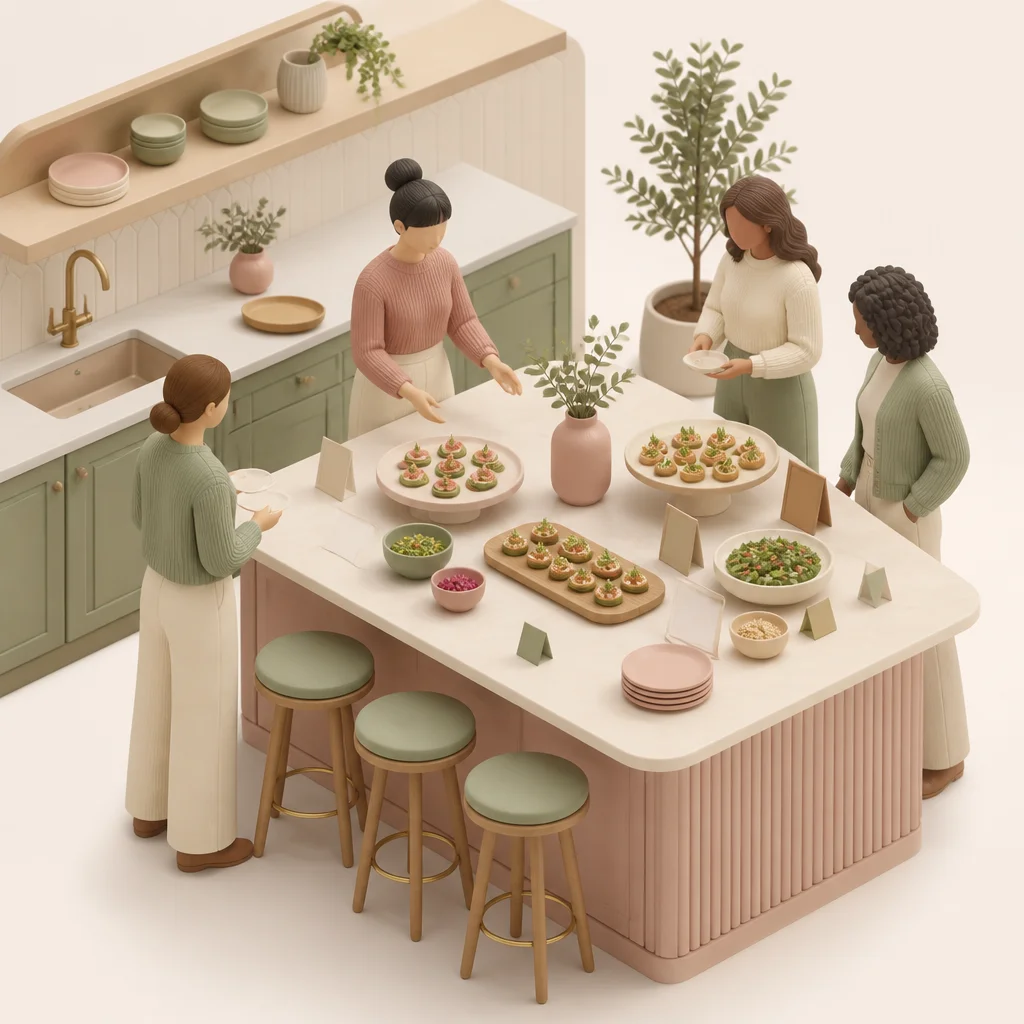
Work out the existing relationships between your guests before you decide the seating. Two people who already know each other will naturally form a unit, and a third person will feel it even if nobody says anything. Knowing where the existing links are lets you balance the table instead of hoping.
This is also where a messy list earns its keep. If two of your partners have agreed not to be in the same room yet, or want notice before meeting, a group invitation is exactly the kind of casual collision the messy list exists to prevent. Check it before you send anything, not after. If you have not built one yet, creating a messy list with your partner takes an evening and pays for itself the first time it stops an awkward invitation.
Keep the first one small. Three guests is a dinner. Seven is an event, and events need a host who is free to host rather than one who is stuck in the kitchen pretending everything is fine. If this is closer to a first meeting than a dinner party, the safety side of a first meetup applies just as much around your own table as it does anywhere else.
The Two-Hour Rule and a Built-In Exit
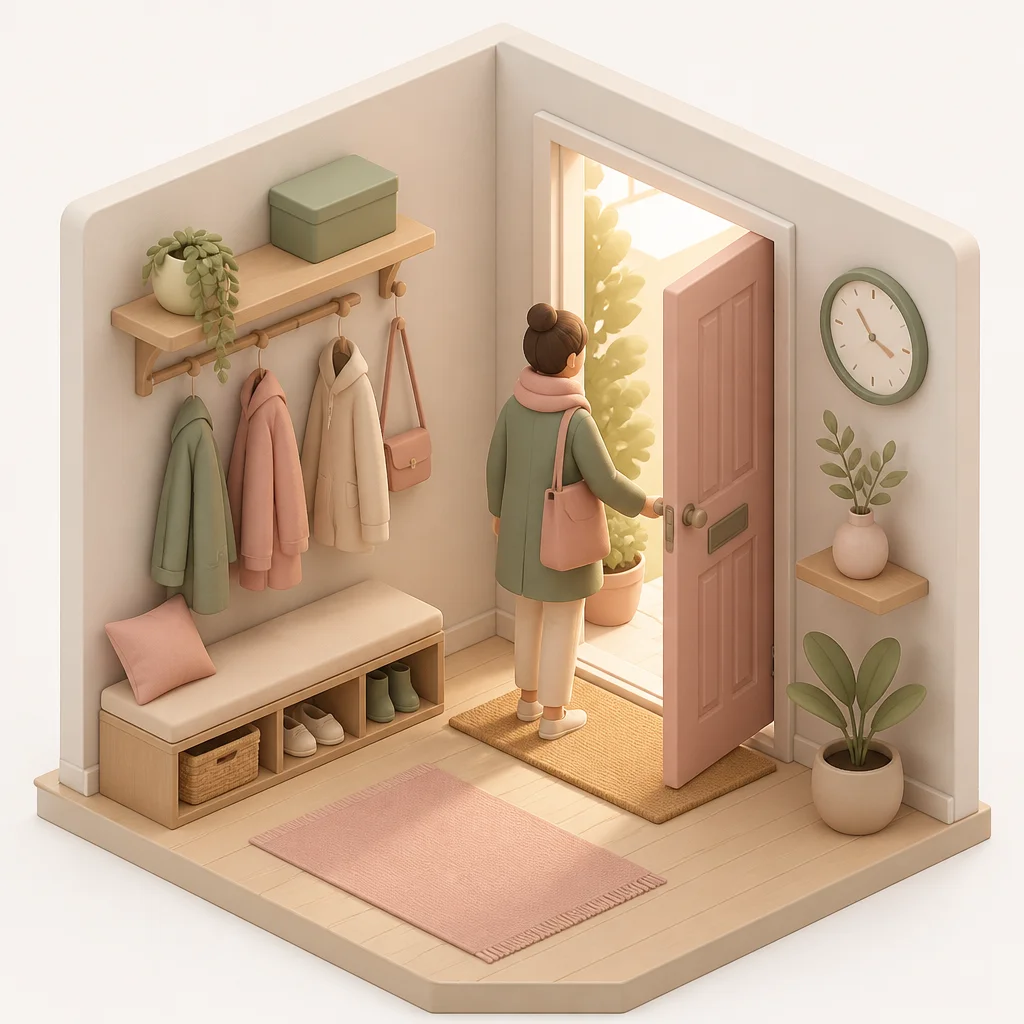
Give the evening a stated shape. “Drinks from seven, food around half past, I have to be up early so I will start winding down about nine” — that one sentence does an enormous amount of work. It tells people how long they are committing to, and it gives everyone a graceful way out without anyone having to announce discomfort.
- Serve within forty minutes of the first arrival. Long gaps before food are when conversations go somewhere nobody wanted.
- Keep the first dinner to two hours. You can always extend it if it is going well. You cannot un-extend a four-hour evening that went badly.
- Make sure everyone has their own transport or a clear route home. Relying on one lift means nobody can leave until everybody does.
- Have one room that is not the table. Somebody will need two minutes alone, and a bedroom or a balcony makes that normal rather than dramatic.
Food Safety You Cannot Improvise
This is the one part of the evening that is genuinely non-negotiable. If somebody has a food allergy, you need to know before you shop, not when they are standing in your kitchen reading the back of a packet. Ask directly, in writing, a few days ahead: what must be avoided, how strict the avoidance is, and whether they would rather bring their own dish.
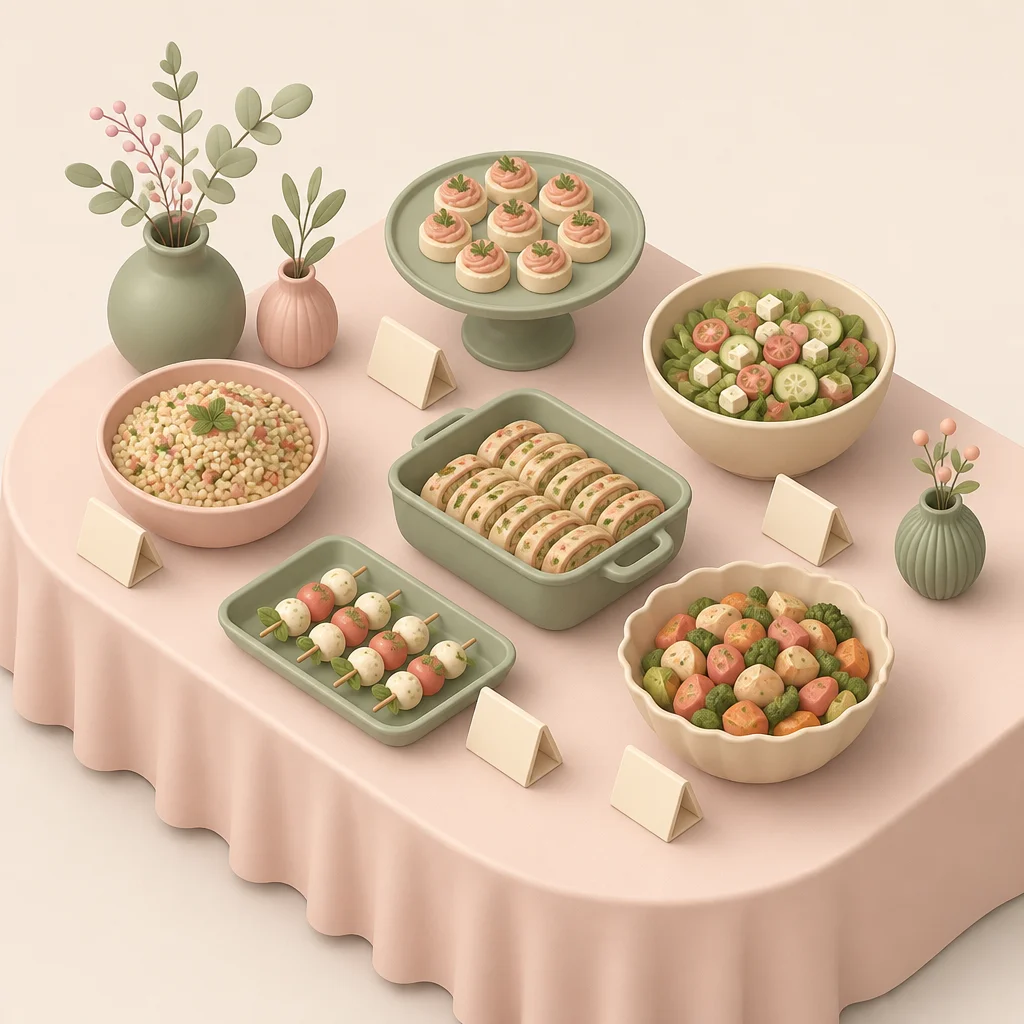
Then cook accordingly. Separate boards and pans, label-reading rather than guessing, and serving dishes with the main ingredients written on a card in front of them. That last habit is small and it does two jobs at once — it keeps someone safe and it stops three separate people asking you what is in the sauce. Guidance from FARE on living with food allergies is a good baseline if you have never cooked for an allergy before.
If you are assembling the meal from several people’s contributions, the same principle applies. Ask what is in each dish and write it down. “I think it is fine” is not an ingredient list. The dietary map we describe in cooking for multiple partners is worth keeping even if you only host twice a year — it is the same information, used less often.
Seating, Names and the First Ten Minutes
The first ten minutes set the temperature for the whole evening. Have something ready that gives people’s hands and mouths something to do — a drink to carry, bread to tear, a bowl of olives to pass. Idle hands at a strange table are when people start over-performing.
- Do proper introductions with names and one human detail each, not just names. “This is Sam, who is restoring a motorbike” gives everyone somewhere to start.
- Avoid seating partners who are sizing each other up directly opposite one another. Side by side, or at a corner, is gentler.
- Sit where you can see the whole table, and be willing to be boring. Your job in the first ten minutes is traffic, not charm.
- Say one sentence at the start that names the shape of the evening: how long it runs, and that people can step out if they need to.
If you are used to one-on-one hosting, the adjustment is mostly about attention. In a group, silence from one guest while two others talk is not necessarily a problem — but it is worth one small check-in, the same way you would check that someone’s glass is empty.

When Someone Asks What All of You Are
Someone will ask. It may be a partner asking a metamour, or a friend you invited as a buffer asking the table. Prepare one sentence you are comfortable saying out loud, and use roughly the same words with everyone — inconsistency here is what people actually notice.
Keep it short and non-defensive. “We are all seeing each other, with everyone’s knowledge. It is not a hierarchy and it is not a trial run” covers most of it. What you want to avoid is answering in a way that ranks the people at the table, or that implies the arrangement is provisional on somebody else’s approval.
If the question comes from a place of genuine curiosity, it is fine to answer briefly and move on. If it comes with an edge, you are allowed to say “I would rather not get into it over dinner” and change the subject. You are the host, not a panel. If you want a lighter version of this conversation beforehand, working through a set of polyamory first date questions with each person separately is a good warm-up.
One more thing worth watching: if somebody at the table is quiet in a way that is not just shyness, that is information, not a failure. Understanding jealousy in non-monogamous relationships helps you tell the difference between a hard feeling someone can sit with and a hard feeling that means the evening should end early.

FAQ: Hosting a Group Dinner in Non-Monogamy
Should I tell guests in advance who else is coming?
Yes, always. Nobody should walk into a room and discover the shape of it. A short message three days ahead — who is coming, roughly how long, what is being served — gives people the chance to say no gracefully, which is the whole point.
What if two of my partners do not want to meet each other?
Then you host two dinners, and that is a completely normal outcome. Parallel arrangements work perfectly well, and forcing a meeting because it feels tidier tends to cost more than it saves.
How much alcohol is sensible at a first group dinner?
Less than you think. A drink loosens a room, but it also erodes the judgement that a first meeting depends on. Keep it available, keep it unpressured, and keep water and soft options visible so nobody has to announce that they are not drinking.
One of my partners is not out to their family and might be photographed. What then?
Ask before, not after. A no-phones evening is easy to state at the start and protects everyone at the table, including guests who have reasons you do not know about. Our guide to social media privacy in non-monogamy covers the wider picture, including what happens when somebody else posts first.
The dinner went badly. Is that a sign the relationships are wrong?
Usually it means the dinner was early, long or overloaded with meaning. Debrief with each partner separately, find out what specifically felt hard, and treat it as information about the format rather than a verdict on anyone. Bring it to a regular check-in rather than letting it sit.
The measure of a good first group dinner is not that everyone becomes friends. It is that nobody leaves feeling used as a prop. Keep it short, keep the food safe, tell people what they are walking into, and let the evening be ordinary — ordinary is the goal. Hosting a dinner with multiple partners gets much easier the second time, and our walkthrough on creating a comfortable space at home covers the room itself. There is plenty more like this right here at 3Cupid.
Editorial note: this article is general information for adults and is not medical, nutrition or legal advice. Food safety decisions involving allergies should follow guidance from a qualified clinician.