Table of Contents
- What a First Message on an ENM Dating App Is For
- Read the Profile Before You Write Anything
- A Three-Part Shape That Works: Reference, Signal, Question
- Openers That Get Ignored, and Why
- Writing as Two People Instead of One
- Slow Replies, and What to Say Before You Meet
- Frequently Asked Questions
Almost everyone decides about a first message on an ENM dating app within a few seconds of opening it, and the decision rests on two things only: did this person read my profile, and do they sound like somebody I would enjoy answering. That is the whole test. It is not about being clever or being the most interesting person in the inbox, and how much gets lost when the whole first impression is text is set out plainly by the American Psychological Association’s social media topic page.
This guide is for anyone writing rather than waiting: singles opening a conversation with a couple, couples writing to a third, and people who have simply had enough of sending “hi” into a void. We will cover what the opener is actually for, a simple shape that works, the lines people delete without replying, and how to handle the part nobody writes about — the slow answer, the short answer, and the silence.
What a First Message on an ENM Dating App Is For
The opener has one job, and it is not to impress anybody. Its job is to make replying easy. When someone is reading with one thumb while the kettle boils, the best message you can send is the one that hands them something obvious to answer.
That means your first line is doing three small tasks at once. It shows you read their profile. It signals that the two of you are plausibly looking for the same thing. And it leaves a question or an opening they can respond to in one sentence without having to be charming themselves. Miss any of those and the thread usually dies where it started.
The practical consequence is that sending twenty near-identical openers performs worse than writing three real ones. Volume is not a strategy here. In non-monogamous spaces especially, people talk to each other, and a copy-paste line has a way of turning up in two inboxes at once. If you want more on choosing where to write at all, start with ENM-friendly apps and sites and then app safety and privacy basics.
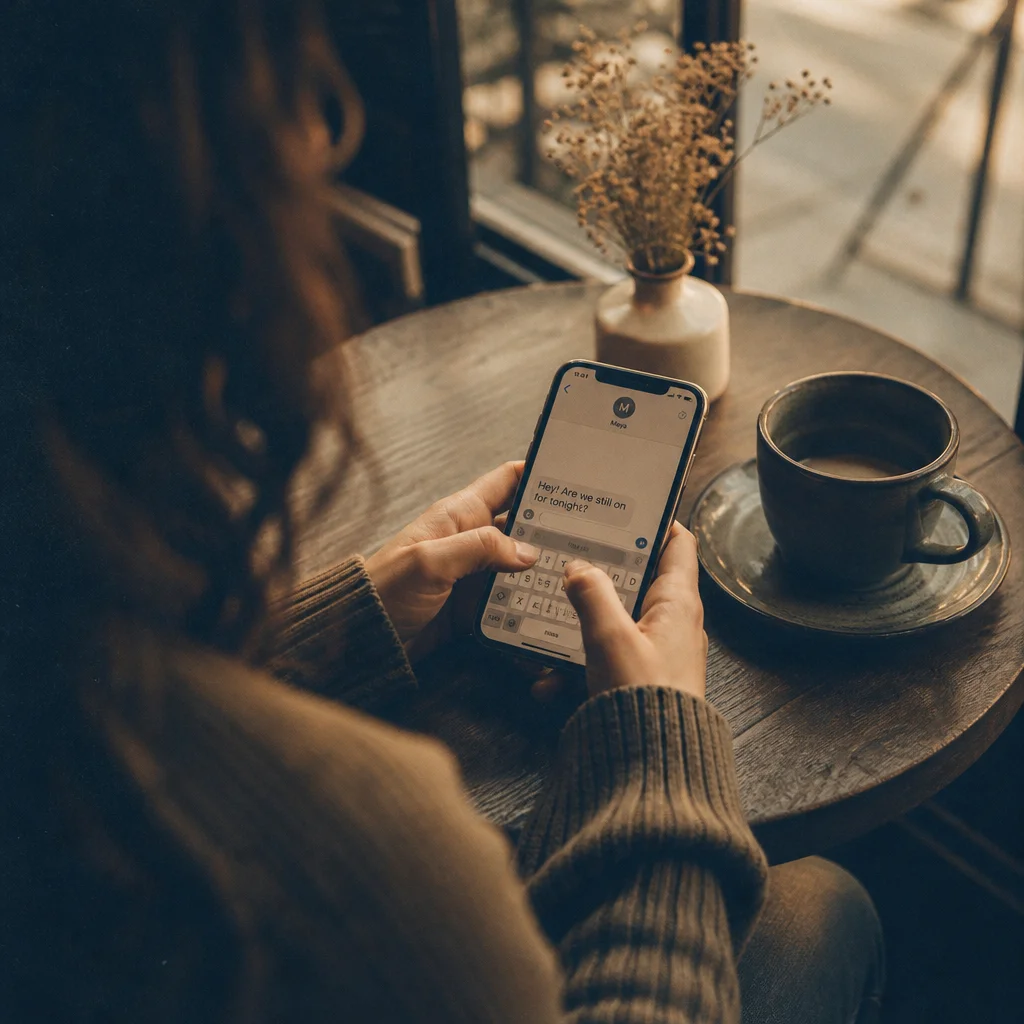
There is a second, quieter job too. Your first message sets the pace. If it opens with intensity, you have just told someone what the next three days will feel like. If it opens calm and specific, you have given them room to be calm back. Most people who say they want “good communication” are describing exactly this.
Read the Profile Before You Write Anything
Profiles in this space carry logistics that people in monogamous dating never have to state out loud. Whether they date as a pair. Whether their other partner knows they are on the app. How much time they genuinely have this month. What they are and are not open to. All of that is usually sitting right there, and ignoring it is the fastest way to be filtered out.
Read it once for the facts and once for the hooks. The facts tell you whether writing is worth it. The hooks give you your first line. If you cannot find a single thing to reference, that is information too — a profile that says almost nothing often belongs to a person who has not yet worked out what they want, and your message will land on that confusion.
| Detail you find in their profile | What it quietly tells you | Line you can write back |
|---|---|---|
| “We date together, always” | You are writing to two people, not one, and both need to be comfortable. | “Your profile says you date together — happy to be messaged by both of you, if that works.” |
| “Nesting partner knows” | There is an established arrangement and probably a limited schedule. | “Good that your nesting partner knows. What does a week actually look like for you?” |
| “Slow is fine, no rush” | They have been rushed before and did not enjoy it. | “Slow sounds good. What pace do you usually find comfortable?” |
| A hobby, a book, a place | The easiest possible first line is already written for you. | “You mentioned cold water swimming — where do you get in, and how cold is too cold for you?” |
| Nothing specific at all | Either new, cautious, or not invested in being found. | Ask for something concrete, and be ready for no answer. |
One thing worth naming: do not treat the profile as a puzzle you are meant to solve in one message. You are not auditioning. You are saying hello to somebody who may or may not have the bandwidth this week. If you are building some kind of longer template for yourself, writing a polyamory dating profile and unicorn dating profile guidance cover the other side of that exchange in detail.
A Three-Part Shape That Works: Reference, Signal, Question
If you want a structure you can reuse without sounding scripted, use three moves in order: reference something specific, signal what you are actually looking for, then ask one question that only that profile could have prompted. Three or four sentences is plenty. You are not writing a cover letter.
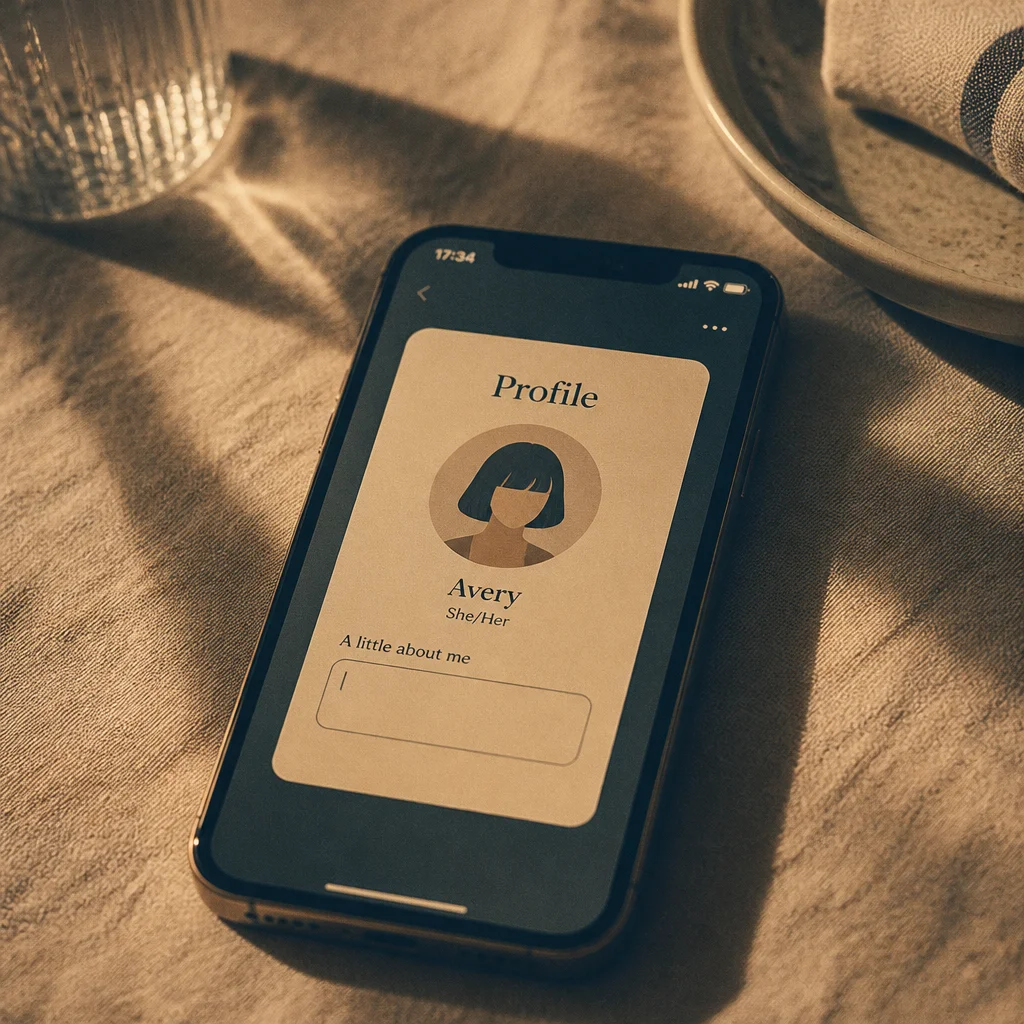
The reference proves you are not working from a template. The signal saves you both from three days of discovering you wanted different things. The question — singular — gives them the low-effort reply that gets a conversation moving. Two questions is a questionnaire. Zero questions is a monologue they have nothing to hold onto.
| Part | What it does | Example |
|---|---|---|
| Reference | Shows you read the profile rather than the photos. | “You said you climb at the wall on Tuesdays —” |
| Signal | States your own shape early so nobody builds a fantasy. | “I date solo, and I’m looking for something that stays small and regular.” |
| Question | Hands them a reply they can write in ten seconds. | “Is that the sort of thing you’re after too, or are you browsing?” |
Notice that the signal section is honest rather than impressive. “I have one partner, two kids, Thursday evenings free, and I am not looking to build a house with anyone” is a far better message than a paragraph about how open-minded you are. Clarity is attractive to people who are tired.
also have clear answers elsewhere in places like Psychology Today’s relationship basics. If English is not your first language, or writing does not come easily to you, short beats polished. Nobody has ever been rejected for being brief and clear. Plenty of people have been rejected for a wall of text that reads like it was written for its own sake.
Openers That Get Ignored, and Why
Some lines get deleted before the second sentence is read. Usually it is not because they are rude — it is because they put invisible work on the recipient. Here are the common shapes and what they actually communicate.
| Opener | How it tends to land | Try instead |
|---|---|---|
| “Hi” / “Hey there” | No reference, no question, all the work transferred to them. | “Hi — I read that you run a board game night. Who wins?” |
| A compliment on appearance alone | Fine later; as a first line it often reads as a bulk send. | Open on something they wrote, then compliment if it fits. |
| A long life story | Too much, too soon, no clear ask at the end. | Two sentences of context, then one question. |
| Instant logistics (“free tonight?”) | Reads as urgency rather than interest. | “No pressure at all, but would you like to meet for coffee this week?” |
| A graphic description of what you want | Unasked-for intimacy before any rapport exists. | Save it. Ask what they are comfortable discussing first. |
That last row matters more than politeness suggests. Sending explicit content to someone who did not ask for it is not boldness, and in many jurisdictions it is more than a social mistake. Guidance on consent and pressure is easy to read at WomensHealth.gov and it is worth five minutes before you ever hit send. If you are on the receiving end of it, what to do with unwanted messages walks through the options.

One more that belongs on the list: the opener that apologises for existing. “Sorry to bother you, I know you probably get loads of these” tells someone you expect to be rejected, and people tend to agree with the frame you hand them. Write it without the apology and see how much better it reads.
Writing as Two People Instead of One
A joint account changes the etiquette. When two people share one profile, the person on the other end cannot tell who is typing, whether both partners actually agreed to this conversation, or whether they are talking to somebody they will ever meet. Dating that ambiguity is not their job to solve.
- Say who is writing. “This is Sam, messaging from mine and Rae’s account” does more work than any icebreaker.
- Do not use “we” for everything. Joint language hides individual interest, and most people want to know which of you actually wants this.
- State what happens next. If a second person joins after a few days, say so in advance rather than mid-thread.
- Do not make one partner the screenwriter. If the same person always types both halves, say why.
From the other direction, if you are writing to a couple, it is entirely reasonable to ask who you are talking to and whether everybody involved knows the conversation is happening. A pair who finds that question threatening has told you something useful and free. Background on why that imbalance shows up so often is in couple privilege in threesome dating and navigating it as the third.
Joint or not, the practical rule is the same: name the humans. Even one real name turns a grey box into a person. People reply to people.

Slow Replies, and What to Say Before You Meet
Non-monogamous adults are often busy in ways that have nothing to do with you — other relationships, children, shift work, a partner having a hard week, a job that eats the evening. A slow reply is mostly just that. The default reading should be neutral.
You get one gentle follow-up if enough time has passed, and then you let it go. Two is a nudge. Three is pressure, and pressure at this stage usually ends things before they begin. If the silence was a no, there is decent writing on that too: [[reject2|handling rejection in ENM dating]] and third-partner ghosting both cover it without pretending it feels good.

Before you move from the app to a coffee shop, three things need to have been said. Not necessarily at length — said. What you are available for, who knows that you are dating, and how you handle sexual health with new partners. That last one has its own vocabulary and it is worth learning before the conversation rather than during it; the safer-sex conversation and building a sexual health agreement both go into detail.
Before you send anything
- Name something specific from their profile.
- State your own shape honestly — solo, partnered, how much time you actually have.
- Ask exactly one question they can answer quickly.
- Leave out anything they did not ask to read.
- Re-read it and delete the apology sentence.
There’s a version of all this where the thread never becomes a meeting and that’s genuinely fine. Conversations that go nowhere are not failures; they are how filtering works. What you want to avoid is carrying ambiguity forward into a real-life room where it costs more to unwind. If expectations need aligning first, this walkthrough on expectation alignment is the short version.

Frequently Asked Questions
How long should a first message be?
Three or four sentences. Long enough to show you read the profile, short enough to be answered on a phone while standing in a queue. If it takes two scrolls, cut it.
Is it fine to message both partners on a joint account?
Yes, and advisable — that way nobody has to guess who is actually reading. Just say which profile you are writing from and be clear about who you are hoping to hear back from.
What if they never reply?
One follow-up after a reasonable gap, then nothing. Silence is an answer even when it does not feel like one, and the polite move is to accept it without commentary.
Should I tell them in the first message that I have other partners?
Usually yes, briefly. It is a fact they need and it costs you one clause. Hiding it until the third week does far more damage than an early sentence ever would.
Write fewer messages, write them after reading, and let the shape be boring. That is the whole craft of a decent first message on an ENM dating app — nothing more exotic than attention. Everything after that is just two people finding out whether the conversation is worth having, and there is more on exactly that around here.
Editor’s note: this article is general information for adults, not legal, medical or therapeutic advice. Nobody here owes anybody a reply, a date, or a relationship.