If you’ve spent any time in ENM or polyamory communities, you’ve likely heard the term “unicorn hunting” — and it’s almost never used as a compliment. But what separates ethical unicorn dating from the hunting that gets called out? The line isn’t just about language. It’s about intent, power, and whether the third person is treated as a full participant or a temporary addition to someone else’s relationship.
This piece breaks down the distinction clearly — not to shame anyone who’s new to this, but to help couples and singles understand what respectful unicorn dating actually looks like in practice. If you’re completely new to the concept, start with our Unicorn Dating 101 guide for the foundational overview.
Table of Contents
- What Ethical Unicorn Dating Actually Means
- What Unicorn Hunting Looks Like (and Why It’s a Problem)
- Couple Privilege: The Unspoken Factor
- Key Differences: Ethical vs Hunting at a Glance
- The Third Person’s Perspective: What Unicorns Actually Want
- How Couples Can Approach Unicorn Dating Ethically
What Ethical Unicorn Dating Actually Means
Ethical unicorn dating starts from a simple premise: the third partner — often a bisexual or pansexual woman joining an existing couple — is a person, not a relationship accessory. She has her own desires, boundaries, emotional needs, and the right to walk away at any point without being made to feel like she ruined something.
In practice, this means the couple does work on themselves first. They discuss why they want to bring someone into their dynamic. They acknowledge that they hold couple privilege — the built-in advantages that come from shared history, emotional investment, and often living together — and they actively work to minimize how that privilege affects the third person’s experience.
Ethical unicorn dating also means the third has a genuine voice. She can set boundaries without being called “difficult.” She can express when something isn’t working without being told she’s being “too sensitive.” She can have needs of her own — emotional, logistical, physical — and expect them to be taken seriously. As noted by More Than Two, a respected voice in the ENM space, the difference between ethical and predatory approaches to finding a third lies in whether the couple sees the unicorn as a person joining a relationship or as a fantasy being fulfilled.
What Unicorn Hunting Looks Like (and Why It’s a Problem)
Unicorn hunting describes a specific pattern: a heterosexual couple seeking a bisexual woman to join them exclusively, usually on their terms, with their rules, and with the expectation that she’ll only be with them as a unit — no separate relationships allowed. If she develops stronger feelings for one partner over the other, she’s often discarded. If the couple has relationship problems, she’s the first thing to go.
The harm isn’t always intentional. Many couples new to ENM simply don’t realize that their approach — the shared profile, the “looking for our third” language, the list of rules she needs to follow without reciprocal consideration — replicates patterns that have hurt a lot of unicorns before them. But impact matters more than intent. A unicorn who’s been burned by three previous couples isn’t going to give you the benefit of the doubt just because you mean well.
Common unicorn hunting red flags include: requiring the third to be exclusive to the couple while the couple remains each other’s primary, veto power that one partner can exercise unilaterally, and framing the third as a “gift” or “experience” for the couple rather than a person seeking genuine connection. For a deeper breakdown, our 10 Signs of Ethical Unicorn Dating vs Red-Flag Hunting list goes into each warning sign in detail.
Couple Privilege: The Unspoken Factor
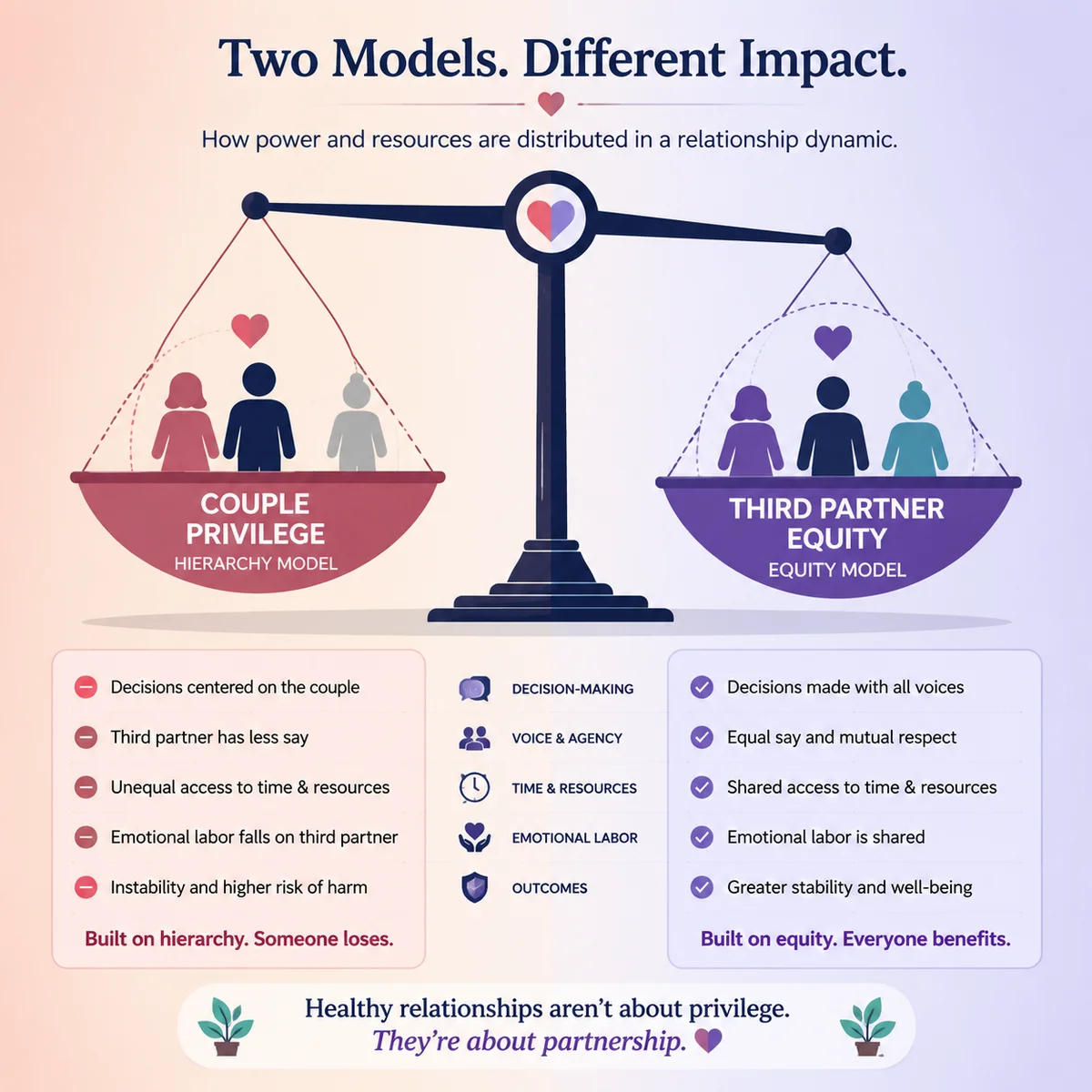
Couple privilege is the collection of unearned advantages an existing couple holds in any dating dynamic with a third person. It’s not something you necessarily choose — but it is something you can choose to acknowledge and address.
Some examples: The couple shares a home, so dates happen at their place by default. The couple shares finances, so decisions about spending on dates flow through their budget. The couple has years of history and inside jokes that the third is forever outside of. None of these are malicious — but left unexamined, they create a dynamic where the third is perpetually the guest in someone else’s life rather than an equal participant.
Ethical couples address this by naming it. They say things like: “We know we have advantages here. What can we do to make sure you feel equally at home?” They offer the third space to voice when she feels like an outsider. They don’t get defensive when she points out patterns they didn’t notice.
They also make room for the third’s autonomy in ways that might feel uncomfortable at first. Can she date other people outside the couple? Can she spend one-on-one time with each partner individually? Does she have the same power to end the dynamic as either member of the couple? These questions don’t have one right answer — but they need to be asked. If you’re a couple preparing for this conversation, our ethical unicorn dating checklist provides a structured way to work through each of these questions together.

Key Differences: Ethical vs Hunting at a Glance
| Dimension | ✅ Ethical Unicorn Dating | ❌ Unicorn Hunting |
|---|---|---|
| Language | “We’re looking to connect with a compatible third” | “We’re looking for a third to join us” |
| Third’s autonomy | Third sets her own boundaries, can see others, can leave freely | Third must follow couple’s rules, exclusivity expected, veto power held by couple |
| Relationship structure | All three can develop individual connections; one-on-one time encouraged | Third only interacts with the couple as a unit; separate connections discouraged |
| Problem resolution | Issues discussed openly among all three; third’s concerns carry equal weight | Couple discusses privately and presents decisions to third; couple’s needs prioritized |
| Ending the dynamic | Third can end things at any point; couple respects decision without blame | Couple can unilaterally end things; third often discarded when “things get complicated” |
| Emotional labor | Shared across all three; couple does their own emotional processing | Third expected to manage couple’s jealousy and insecurities |
The Third Person’s Perspective: What Unicorns Actually Want
If you’re a couple seeking a third, one of the most useful things you can do is listen to what unicorns themselves consistently say they want — and what drives them away.
What unicorns want, in their own words: to be seen as a whole person, not a fantasy fulfillment service. To have their boundaries treated as non-negotiable rather than obstacles to overcome. To develop individual relationships with each partner rather than being expected to feel the same way about both at the same pace. To know that their place in the dynamic isn’t contingent on the couple never having a disagreement.
What drives unicorns away: couples who use the same shared profile to message dozens of people with copy-paste messages. Couples who get defensive when asked about their approach to STI safety. Couples who promise equality but structure every interaction around the couple’s comfort. Couples who treat the unicorn as a relationship experiment — something to “try out” — rather than a person they’re building something with.
Our guide for third partners offers the flip side of this conversation — practical advice for unicorns on setting boundaries, spotting red flags early, and advocating for their own needs. But the responsibility for creating an ethical dynamic doesn’t rest on the unicorn alone.
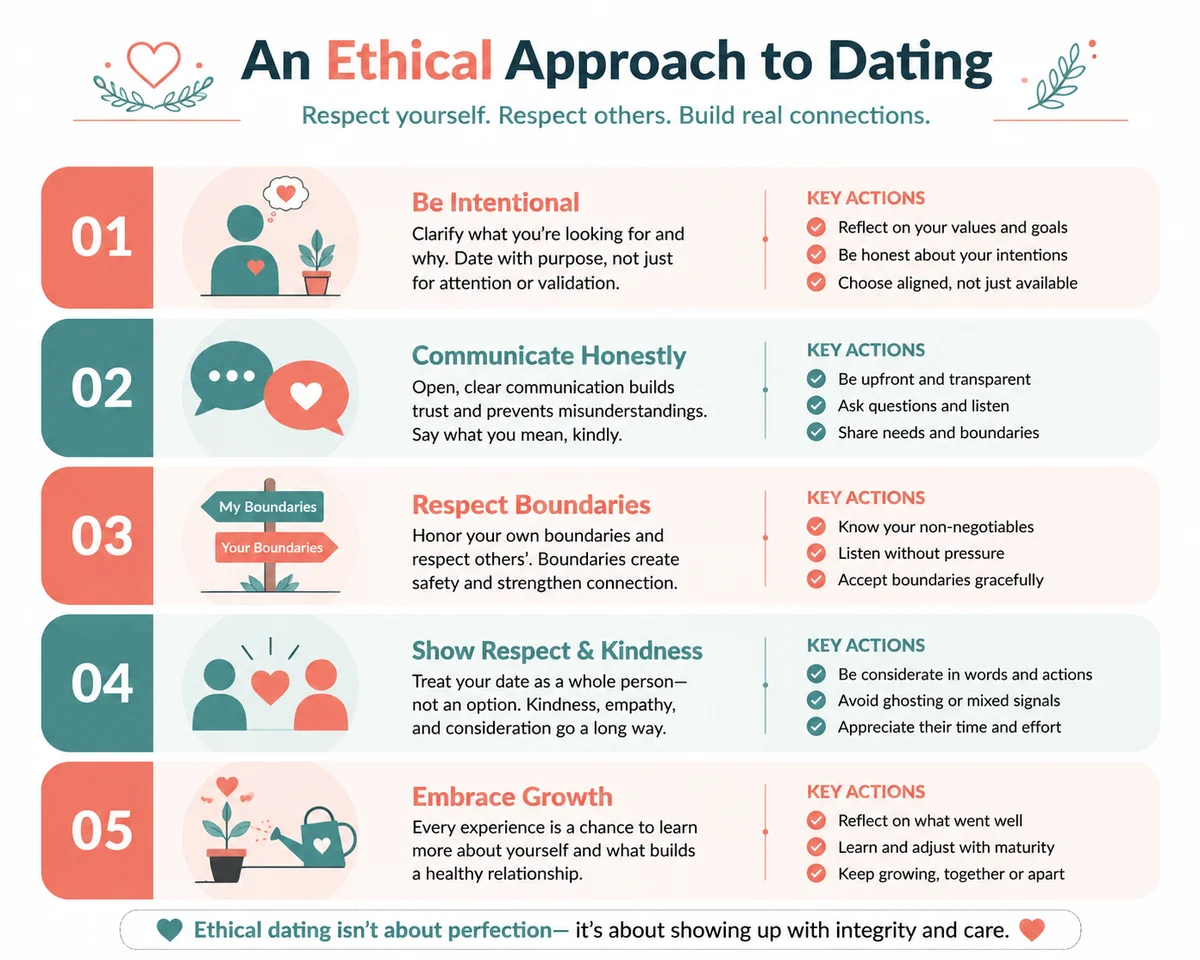
How Couples Can Approach Unicorn Dating Ethically
Moving from awareness to action requires more than good intentions. Here’s what ethical unicorn dating looks like in practice:
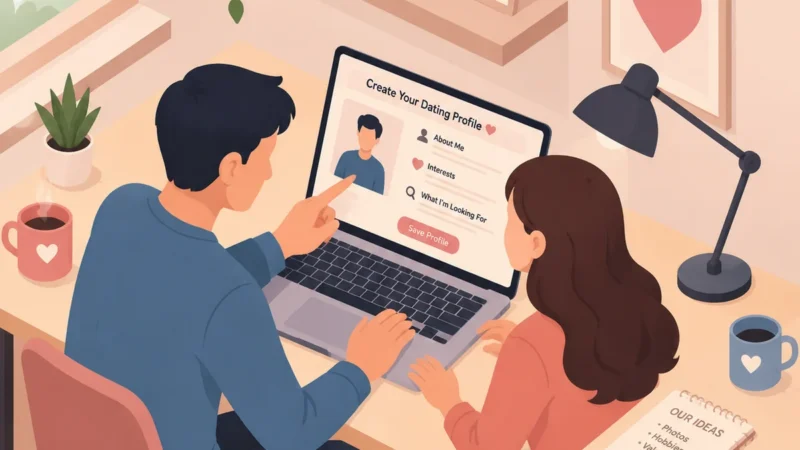
- Have separate profiles. Each partner should be visible as an individual, not just half of a package deal. This alone signals that you see yourselves as distinct people, not a fused unit.
- State your dynamic clearly. “We’re a couple exploring together” with details about what you’re looking for. Not “We’re looking for our unicorn.”
- Offer one-on-one time from the start. Building individual connections with each partner is essential. Insisting on always meeting as a trio signals that the couple’s comfort trumps the third’s need for real connection.
- Discuss what happens if feelings develop unevenly. It’s normal for a third to feel closer to one partner than the other, especially early on. If your dynamic can’t survive that, you’re not ready for ethical unicorn dating.
- Let the third set the pace. She’s entering an established dynamic. Rushing her or pressuring her to “catch up” emotionally or physically is a fast track to making her feel unsafe.
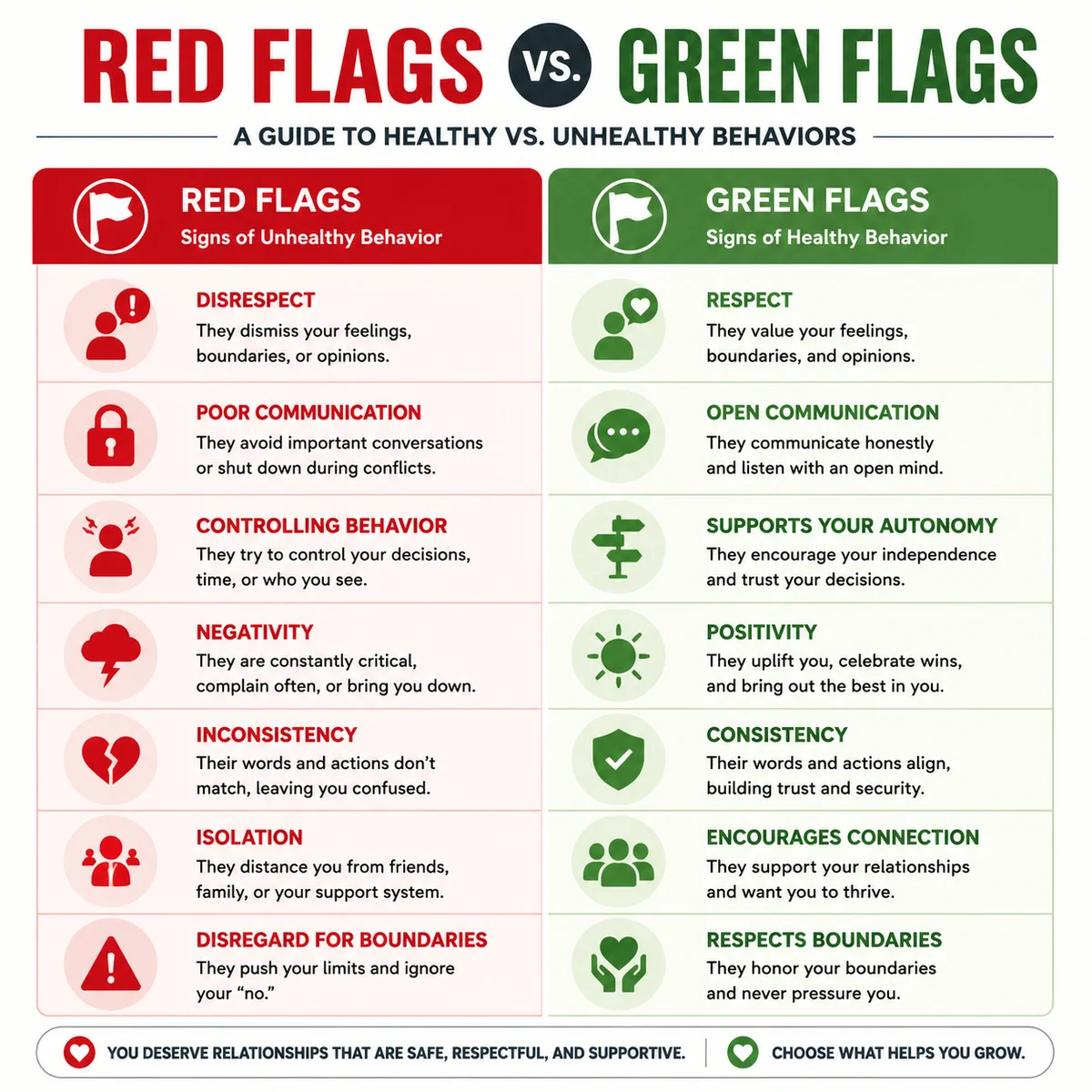
Red Flags vs Green Flags: For Couples and Unicorns
| 🚩 Red Flag | ✅ Green Flag |
|---|---|
| “We come as a package — you date both of us or neither” | “We’d love for you to get to know each of us individually at your own pace” |
| “We have some rules you’ll need to follow” (presented as non-negotiable) | “These are the boundaries we’ve discussed — what are yours?” |
| “Discretion is important — please don’t tell anyone about us” | “We’re open about our dynamic with close friends — how do you handle privacy?” |
| “We’ve never done this before but we know what we want” | “We’re new to this and still learning — we’d love your honest feedback” |
| Vague about STI testing or defensive when asked | Proactive about sharing recent test results and asking about your protocols |
| One partner seems enthusiastic, the other seems reluctant or silent | Both partners are equally engaged in conversation and comfortable speaking for themselves |
The distinction between ethical unicorn dating and unicorn hunting ultimately comes down to whether you’re building something with someone or around someone. The former requires patience, self-awareness, and a willingness to share power. The latter is easier in the short term but almost guarantees the kind of experiences that give ENM a bad name.
The couples who do this well aren’t the ones with the best photos or the smoothest opening messages. They’re the ones who’ve done the uncomfortable work of examining their own assumptions, privileges, and blind spots before inviting someone else into their lives. If you’re both ready to take that step, 3Cupid provides a space where you can connect with singles who understand the dynamic — and where transparency and respect are the baseline, not the exception.
Editorial note: This guide draws on community knowledge from ENM and polyamory spaces, including perspectives shared by unicorns, couples, and relationship educators. The framework presented here reflects widely discussed ethical standards within non-monogamous communities, not a single authoritative source. Couples and singles are encouraged to continue learning through multiple channels.