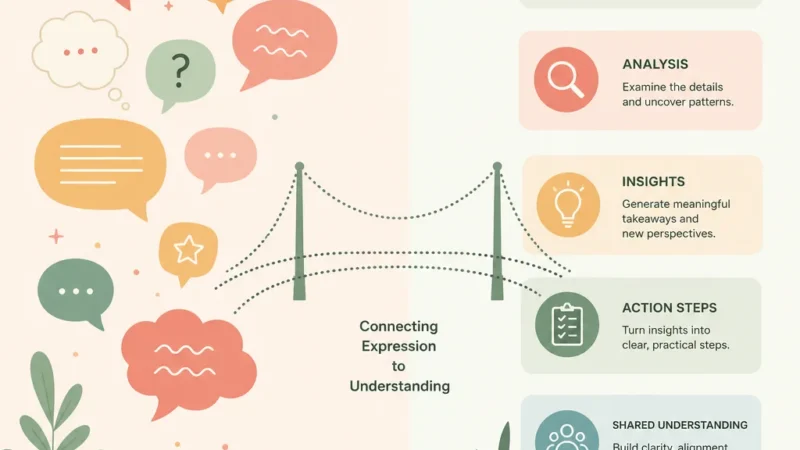
Here is a scenario virtually every swinging couple knows: you walk into an event or a meet-up, and within twenty minutes, one of you lights up. You are clicking with another couple — the conversation flows, the energy is right, the attraction is there. The problem? Your partner feels none of it. They are standing beside you, polite but unmoved, and you can feel the imbalance settling into the space between you like a third person neither of you invited.
Uneven attraction in swinging is not a sign that something is wrong with your relationship. It is not evidence that you are incompatible as lifestyle partners. It is a completely normal, predictable, and near-universal experience that happens when two people with different personalities, preferences, and moods enter a social environment designed around mutual chemistry. What determines whether it strengthens or strains your relationship is what you do next.
This article walks you through exactly that — from the psychology behind why uneven attraction happens, to the practical moves you can make before, during, and after an event, to the conversations that turn a potentially awkward moment into a deeper understanding of each other.
Table of Contents
- Why Uneven Attraction Happens (and Why It’s Normal)
- Before the Event — Setting Expectations Together
- In the Moment — What to Do When Attraction Feels Lopsided
- Communication Moves That Keep Both Partners Secure
- The “Two Yes, One No” Principle in Practice
- Practical Guide: Do’s and Don’ts for Uneven Attraction
- When Uneven Attraction Becomes a Pattern
Why Uneven Attraction Happens (and Why It’s Normal)
Attraction is not a democratic process. It does not check in with both members of a couple and wait for a consensus before showing up. It is shaped by a tangle of factors — past experiences, physical chemistry, conversational style, the mood you walked in with, even what you ate for dinner. Expecting two people to feel the same spark toward the same person or couple at the same time is like expecting two radios to land on the same station without touching the dial.
Psychological research on the psychology of interpersonal attraction consistently shows that chemistry is shaped by subconscious cues — familiarity, timing, perceived similarity, and even non-verbal micro-signals that we register without conscious awareness. None of these factors operate identically for two different people, even two people who share a deep romantic bond. In swinging contexts specifically, one partner may be drawn to outgoing energy while the other gravitates toward quiet confidence. One may prioritize physical attraction while the other needs conversational rapport to feel that spark. Neither preference is wrong.
What matters is recognizing that uneven attraction is not a relationship problem. It is a coordination problem. And coordination problems have solutions.

Before the Event — Setting Expectations Together
The single most useful thing you can do to handle uneven attraction well is to talk about it before it ever happens. Not in a rushed “what if” conversation in the car on the way to the club, but in a calm, clothes-on, no-pressure moment days or weeks beforehand. This conversation is not about predicting every scenario. It is about agreeing on a shared framework for how you will respond when — not if — chemistry lands differently for each of you.
Start with a simple opening: “At some point one of us is going to feel a spark the other doesn’t. When that happens, what do we want the default move to be?” Some couples agree that the less-interested partner makes the call — if one person is not feeling it, the couple steps back together, no questions asked. Others prefer a “graceful exit” protocol where the interested partner wraps up the conversation naturally within a few minutes so nobody feels yanked away mid-sentence. There is no universal right answer, but there is a universal wrong one: having no plan at all and hoping it just works out.
Also worth discussing: what does “not feeling it” actually look like for each of you? For some, it means active disinterest — they would rather be anywhere else. For others, it is a softer neutral — they could take it or leave it, and would prefer to leave it if their partner is not equally enthusiastic. Name this distinction explicitly. A partner who says “I’m neutral, but I’m good to stay if you want to chat more” is in a very different place from a partner who is silently uncomfortable counting the minutes. Both partners need to know which version they are looking at, and the only way to know is to have words for it ahead of time.

In the Moment — What to Do When Attraction Feels Lopsided
You are at the event. You are chatting with a couple, and you can tell your partner is checked out — polite smile, minimal eye contact, answers getting shorter. Or the reverse: your partner is deep in animated conversation while you stand there feeling like a plus-one at your own date. Either way, the imbalance is real and it is happening right now.
The first rule: do not override your partner’s experience by pretending everything is fine. If you are the interested one, resist the temptation to “sell” the other couple to your partner through overenthusiasm. Comments like “aren’t they great?” or “we should definitely get their number” put your partner in an impossible position — agree and be dishonest, or disagree and look like the person who killed the vibe. Neither option builds trust.
Instead, use a pre-arranged check-in signal. This can be as simple as a hand squeeze that means “how are you doing?” with a return squeeze for “all good” or a tap for “let’s wrap this up.” Some couples use a code word — something innocuous like “refill” that means “I need to step away and talk privately.” The goal is not to create a secret language that excludes others. It is to create a private channel that includes each other, even when the social energy is pulling you in different directions.
If you are the less-interested partner, give your partner a clear signal rather than suffering in silence. Silent discomfort reads as disengagement or coldness to the people you are talking to, and it leaves your partner guessing. A simple “Hey, can we grab a drink?” spoken directly to your partner is all it takes. It is a normal thing to say at any social event, and it gives both of you an exit without making anyone else feel rejected.

Communication Moves That Keep Both Partners Secure
The conversation after the moment of uneven attraction is where most couples either deepen their trust or start accumulating small resentments. The way you debrief can make the difference between “that was a little awkward but we handled it well” and “I don’t want to go to another event.”
Start by acknowledging what happened without assigning blame. “I noticed you weren’t really feeling that couple — want to talk about what was off?” is worlds apart from “You seemed so checked out back there.” The first approach invites your partner’s perspective without judgment. The second frames their experience as a performance failure. When you are the one who felt the attraction while your partner didn’t, lead with appreciation rather than disappointment: “Thanks for being honest about not feeling it. I’d rather know than push forward and have it feel weird for you.”
If the dynamic was reversed and you were the one who didn’t click, describe your experience in terms of your own feelings rather than a critique of the other couple. “They seemed nice, I just didn’t feel a connection” lands differently than “I didn’t find them attractive” or “they weren’t my type.” The first is about your subjective experience — which your partner can understand and respect. The second can sound like a judgment that your partner might feel defensive about, especially if they did feel the chemistry.
This is also the moment to reinforce that your primary connection is not in competition with anyone else in the room. For more on maintaining that foundation, read our guide on nurturing your primary connection outside the lifestyle.

The “Two Yes, One No” Principle in Practice
In the swinging community, “two yes, one no” is one of the most widely cited rules — and for good reason. It means that any sexual or intimate activity requires an enthusiastic yes from both partners, and a single no from either partner stops everything. But applying this principle to uneven attraction requires nuance that the slogan alone does not capture.
The principle works cleanly when the question is binary: “Should we play with this couple tonight?” But uneven attraction rarely presents itself as a binary. More often, it arrives as a gradient — one partner is at an eight on the interest scale while the other is at a three. The three is not a hard no. It is closer to “I could, but I’m not excited about it.” This is where “two yes, one no” needs an upgrade: two enthusiastic yeses, or it’s a no. Enthusiasm is the key word. A reluctant yes is not the same as genuine desire, and swinging built on reluctant yeses eventually erodes the trust that makes the lifestyle sustainable.
Before heading to your next event, have this concrete conversation: “If your interest level is below a five out of ten, what do we do?” Some couples draw the line at a five — anything below that, they pass as a couple. Others are comfortable with one person socializing while the other steps back, as long as there is no expectation of play. The boundary is less important than the fact that it exists and both of you agreed to it. For a deeper dive into building this foundation together, see our article on negotiating boundaries before any swinging experience.
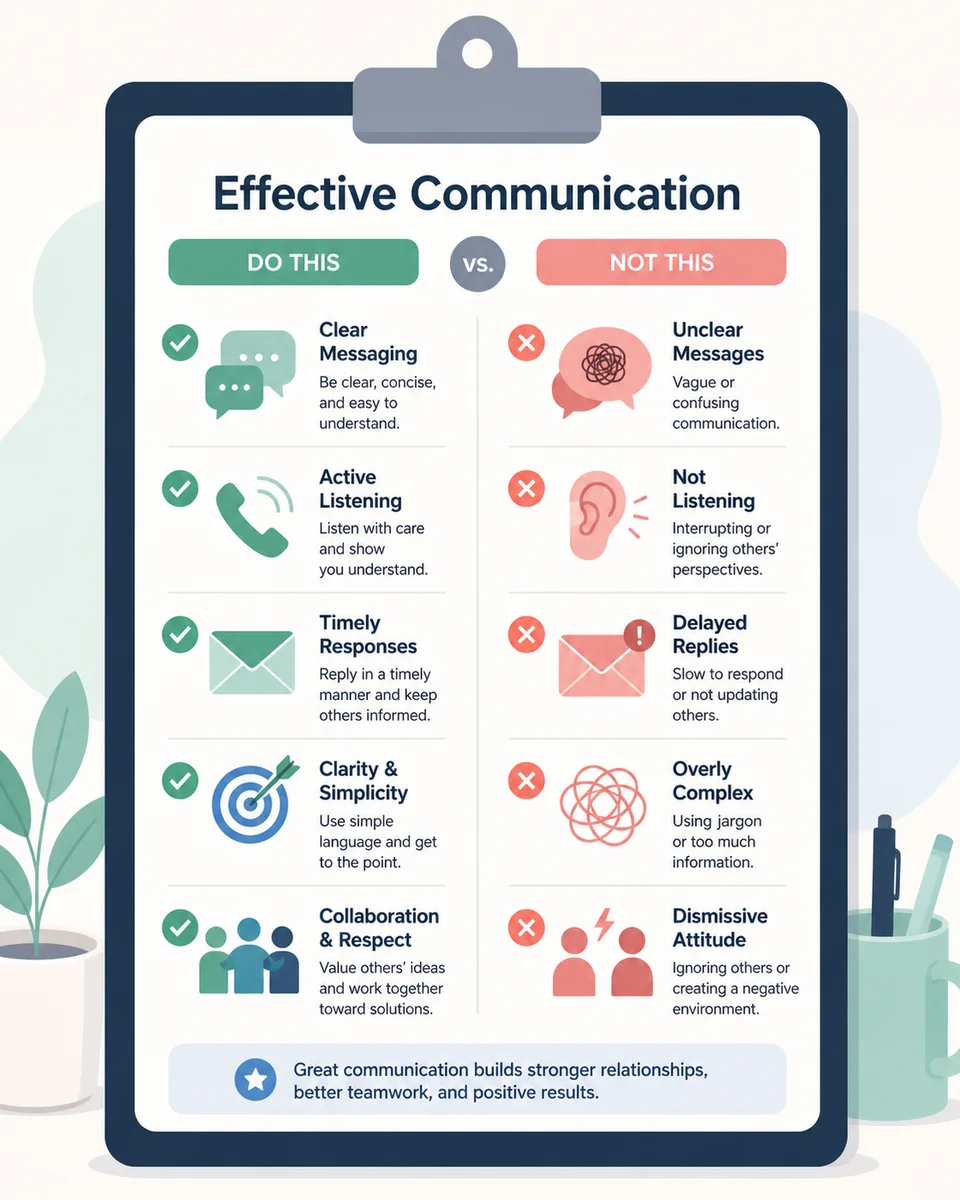
Practical Guide: Do’s and Don’ts for Uneven Attraction
When you are standing in the middle of a social event and the chemistry gap opens up, abstract principles can feel miles away. Here is a framework you can actually use in real time.
- DO have a pre-arranged signal — a hand squeeze, a code word, a specific phrase — that lets you check in discreetly without derailing the conversation.
- DO prioritize your partner’s comfort over politeness to strangers. You owe the other couple basic courtesy, not an evening of pretending.
- DO debrief afterward with curiosity, not accusation. Ask what your partner experienced rather than telling them how they seemed.
- DO treat every instance of uneven attraction as data — what patterns are emerging in who each of you tends to click with?
- DO take breaks together during events. Step outside, grab a drink, check in. Even five minutes of reconnection resets the dynamic.
- DON’T try to convince your partner to feel attraction they do not feel. Chemistry cannot be argued into existence.
- DON’T make comparisons between your partner and the person you were attracted to. “I wish you were more outgoing like them” is a wound that does not heal quickly.
- DON’T let one evening’s mismatch become a story about your entire swinging journey. One off night is just one off night.
- DON’T push through for the sake of not “wasting” the evening. A night where you protect your connection is never wasted.
- DON’T skip the post-event conversation. Unprocessed moments become unresolved tensions faster than most couples expect.

When Uneven Attraction Becomes a Pattern
One night of mismatched chemistry is a blip. A pattern of mismatched chemistry is a signal worth paying attention to. If you find that one of you consistently feels attraction in swinging environments while the other consistently does not — or connects only rarely — it is time to step back and examine what is happening beneath the surface.
Sometimes the pattern reveals a basic compatibility question: are you both actually interested in the same types of people or experiences? A couple where one partner is drawn to high-energy club environments while the other prefers intimate dinner meet-ups will face uneven attraction more frequently, not because anything is wrong with either preference, but because the settings themselves filter for different kinds of chemistry. The fix here is not to force alignment but to diversify where and how you meet people — alternating between environments that suit each partner’s style of connecting.
Other times, the pattern points to something deeper: one partner may be going through the motions of swinging without genuine desire, motivated more by not wanting to disappoint their partner than by their own interest. This is harder to surface but essential to address. The conversation might start with: “I’ve noticed that at the last few events, you haven’t really connected with anyone. Is swinging still something you want for yourself, or has it started feeling more like something you do for me?” The goal is not to corner your partner into an answer. It is to make it safe for them to be honest — even if the honest answer is complicated. Learning to handle rejection with resilience applies not just to interactions with others, but to the internal process of accepting where your partner genuinely stands.
Uneven attraction is not a sign that you are doing swinging wrong. It is a sign that you are two distinct people navigating a shared adventure, and that is exactly what the lifestyle is supposed to be. The couples who thrive are not the ones who never feel the gap. They are the ones who have learned to close it — not by erasing their individual preferences, but by building a response system that honors both of them equally.
Whether you are brand new to the lifestyle or years into it, having a community where couples share real experiences and honest advice makes every step easier. At 3Cupid, you will find people who understand that the strongest swinging journeys are the ones where both partners feel seen, heard, and genuinely excited — together.
This article was written by the 3Cupid editorial team to help couples navigate the real, everyday dynamics of the swinging lifestyle with communication, mutual respect, and practical tools.