You show up to a lifestyle event. You chat with a couple you have been messaging. The conversation flows. There is laughter. And then — they politely excuse themselves, and you watch them connect with someone else across the room. Or maybe it happens online: a promising exchange goes silent, a profile that seemed like a perfect match swipes left. Rejection in the swinging lifestyle hits differently than rejection in conventional dating. It involves your partner, your self-image, and a community where everything can feel personal. Learning how to handle rejection in swinging is not optional — it is a core skill for anyone who wants to stay in the lifestyle long-term without burning out.
The good news? Most rejection in swinging has almost nothing to do with you. Understanding why — and building a framework for processing it — transforms rejection from a painful experience into a manageable one.
Table of Contents
- Why Rejection Feels Different in the Swinging World
- Common Reasons for Rejection That Have Nothing to Do With You
- How to Process Rejection Without Taking It Personally
- Supporting Your Partner Through Rejection
- Turning Rejection Into a Growth Opportunity
- When Rejection Patterns Signal Something Deeper
Why Rejection Feels Different in the Swinging World
In conventional dating, rejection is a solo experience. You feel it by yourself, process it by yourself, and move on by yourself. In swinging, rejection is a shared experience — and that sharing can either soften the blow or amplify it, depending on how you handle it together.
There is also an extra layer of vulnerability. When you put yourselves out there as a couple, rejection can feel like a judgment on your relationship itself — not just on you as individuals. “Were we not attractive enough as a pair?” “Did we seem inexperienced?” “Did they only want one of us?” These questions are natural, but they often lead down unproductive paths.
Add to this the fact that the swinging community, while generally warm and inclusive, is still a social environment with its own unspoken dynamics. Rejection can feel like exclusion from a group you have worked hard to feel part of — making it sting in ways that a dating app swipe never would.
Common Reasons for Rejection That Have Nothing to Do With You
If you could see behind the curtain of every “no thanks” you receive in the lifestyle, you would discover something liberating: most rejections are not about you at all. Here are the real reasons couples and singles pass on connections that, from the outside, look perfectly good.
Timing and logistics. They are interested but traveling next week. They just had a full swap experience and are taking a break. Their schedule does not align with yours for the next month. The number of rejections driven by pure logistics would surprise most newcomers. The swingers who stay in the lifestyle long-term learn not to take calendar conflicts personally.
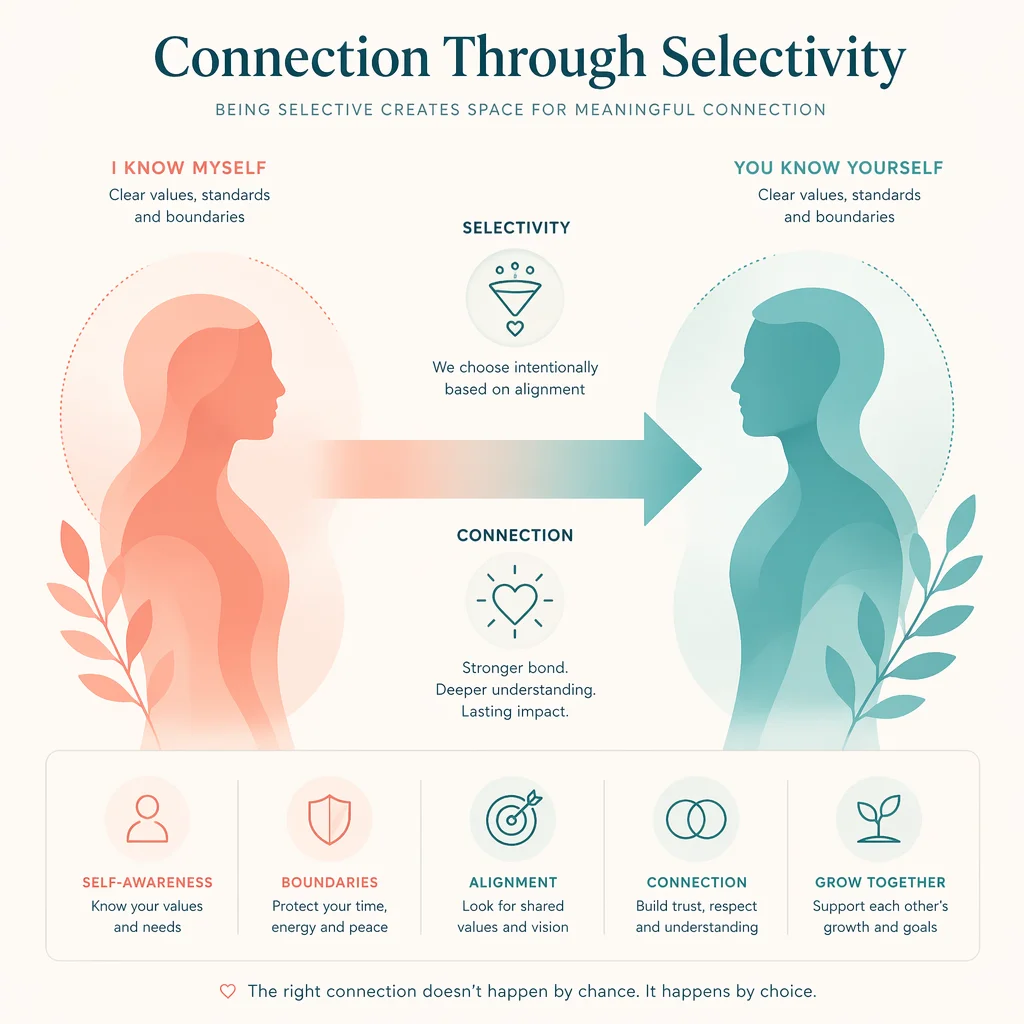
Four-way chemistry is genuinely hard. Think about how rare it is for two people to click. Now multiply that by two. Finding a situation where all four people feel mutual attraction, comfort, and interest is genuinely difficult — and that is not a reflection on any individual. It is just math. Experienced swingers often say they connect with maybe one in ten couples they meet, and that is considered a good ratio.
Unspoken preferences. Maybe one person in the other couple has a very specific type, and you simply are not it. Maybe they are looking for a particular age range, body type, or experience level that they did not advertise. These preferences are personal and often arbitrary — they say nothing about your objective attractiveness or worth.
Their own insecurities. This one is easy to overlook but remarkably common. One partner in the other couple might feel intimidated or insecure, and their discomfort leads them to pull back — not because of anything you did, but because of their own internal state. If you have ever declined a connection because you were simply not in the right headspace that night, you already understand this dynamic from the other side.
How to Process Rejection Without Taking It Personally
Knowing that rejection is usually not about you is one thing. Feeling it is another. Here is a practical framework for processing rejection in the lifestyle without letting it erode your confidence or your enjoyment of the community.
Step 1: Name the feeling. Before you try to rationalize anything away, just notice what you are feeling. Disappointment? Embarrassment? Insecurity about a specific trait? Jealousy that your partner seemed more interested than you were? Getting specific about the emotion makes it manageable. Vague hurt is harder to process than “I felt unattractive when they chose the other couple.”
Step 2: Separate facts from stories. The fact: they said they were not interested in moving forward. The story your brain might spin: “We are not attractive enough for this lifestyle” or “Everyone here is out of our league.” Write down the facts — the actual, observable events — and then write down the stories you are telling yourself about those facts. The gap between the two columns is where you will find room to breathe.
Step 3: Talk to your partner — but do not dump. There is a difference between sharing feelings and demanding your partner fix them. “I am feeling a little bruised after that interaction. Can we just acknowledge it together?” is a bonding invitation. “I cannot believe they rejected us — what is wrong with us?” puts your partner in the position of having to manage your emotions. When both partners can voice their feelings without expecting the other to solve them, rejection becomes something you weather together rather than something that drives a wedge between you.
Step 4: Zoom out. One rejection is a data point, not a verdict. If you have had ten positive interactions and one rejection, your brain will naturally fixate on the one. Consciously remind yourself of the positive connections you have made. This is not toxic positivity — it is accuracy. Your experience in the lifestyle as a whole is what matters, not any single interaction.
Step 5: Reconnect with why you are here. You did not enter the lifestyle to be universally desired. You entered it to explore, connect, and share experiences with your partner. Rejection does not take any of that away from you. Refocusing on your core reasons for swinging — rather than on the external validation it provides — puts rejection in its proper context: a minor inconvenience, not a crisis.
Supporting Your Partner Through Rejection
Rejection in swinging is rarely symmetric. One partner might brush it off while the other spirals. How you handle that asymmetry determines whether rejection brings you closer or creates resentment.
Avoid the impulse to minimize. “It is not a big deal” or “Just forget about it” — even when well-intentioned — tells your partner their feelings are invalid. Instead, acknowledge what they are feeling: “I can see that stung. Want to talk about what specifically bothered you?”
Do not rush to find someone else to prove the rejecting couple wrong. The “their loss, let us find someone cuter” approach might feel like support, but it skips over the emotional processing your partner needs. Let them sit with the feeling before you pivot to action.
Check your own response. If your partner is upset about a rejection and you are secretly relieved — because you were not really into that couple either, or because you felt competitive — be honest about that. Mixed feelings are normal, and acknowledging them builds trust more than hiding them ever could.
This dynamic is one reason why having a solid foundation of swinging rules that include emotional check-in protocols makes such a difference. When you have already agreed on how you will handle difficult feelings, neither partner has to improvise in the moment.
Turning Rejection Into a Growth Opportunity
Once the initial sting fades, rejection can actually be useful. Not in a trite “everything happens for a reason” way — but because rejection, when examined honestly, often contains information.
Ask yourself: was there anything in the interaction that you would do differently? Not to win approval from people who were not interested, but because it would feel more authentically like you. Maybe you were nervous and came across as guarded. Maybe you talked over your partner. Maybe you simply realized that you are more comfortable in smaller, quieter settings than large club events. These insights are genuinely valuable, and rejection is often the catalyst that brings them to the surface.
Rejection can also clarify what you are actually looking for. If being passed over by a particular type of couple stings more than others, ask why. Are you chasing a dynamic that does not really fit you? Are you prioritizing a certain aesthetic over genuine connection? The couples that rejection hurts the most are sometimes the ones you would not have been happy with anyway — and realizing that is a form of growth.
Finally, rejection builds resilience — but only if you let yourself feel it first. The couples who have been in the lifestyle for years are not the ones who never got rejected. They are the ones who got rejected, processed it, and kept showing up. Each rejection you move through makes the next one easier, because you have proof that you can survive it. As research on self-esteem and social rejection consistently shows, resilience is built through exposure and processing, not avoidance.
When Rejection Patterns Signal Something Deeper
Most rejection in swinging is noise — random, situational, and not worth overanalyzing. But when rejection forms a pattern, it is worth paying attention. Not because something is wrong with you, but because patterns contain information you can use.
If you are consistently being rejected by couples at a certain experience level, it might mean you are aiming outside your current comfort zone — not a problem, but worth noticing. If one partner is consistently the reason connections do not progress (“they were interested in me but not you” or vice versa), that asymmetry deserves a gentle, honest conversation between the two of you, not a blame session.
If rejection is happening primarily in one setting — clubs versus online, for example — that is useful data about where you are most likely to connect. Some couples thrive in the high-energy environment of a club; others do much better with the slower pace of online connections that lead to one-on-one meetings. Neither is superior, but knowing your environment matters.
If rejection is triggering disproportionately strong emotional reactions — tears, anger that lasts for days, feelings of worthlessness — that may be a signal that something from outside the lifestyle is being activated. Unresolved insecurities, body image struggles, or relationship tensions will surface in the swinging context with surprising intensity. That is not a reason to quit — but it is a reason to address those underlying issues, possibly with professional support.
Remember that finding your swinging community is not just about finding any community — it is about finding your community. The right group will make rejection feel less personal because you will understand the context. The wrong group will make every “no” feel like exile. If you are in an environment where rejection is frequent and painful, the environment might be the problem, not you.
A useful rule of thumb: occasional rejection is part of the lifestyle. Constant rejection — especially when paired with feeling unwelcome — is a sign that something needs to shift. That shift could be in your approach, your expectations, your communication as a couple, or simply the spaces you are choosing to occupy.
Rejection in Swinging: The Do’s and Don’ts
Here is a practical reference for handling rejection in the lifestyle — whether you are the one receiving it or observing your partner go through it.
| Do | Don’t |
|---|---|
| Acknowledge the feeling without judgment | Dismiss your partner’s hurt as overreacting |
| Separate facts from the stories your brain tells | Assume rejection means you are not attractive enough |
| Debrief together as a team, not adversaries | Blame your partner for the rejection |
| Look for patterns over multiple interactions | Overanalyze a single rejection |
| Use rejection as information about fit and environment | Use rejection as a reason to quit the lifestyle entirely |
| Take a break if emotions are running high | Rush to find someone else to prove your desirability |
| Remember that four-way chemistry is genuinely rare | Compare your rejection rate to other couples |
Rejection in swinging is not a sign that you do not belong. It is a sign that you are putting yourselves out there — and that is exactly what the lifestyle asks of you. The couples who thrive are not the ones who never hear “no.” They are the ones who hear it, process it together, and keep showing up because the connections that do happen make the vulnerability worthwhile.
If you are navigating the ups and downs of the lifestyle — including the inevitable moments of rejection — you will find people who understand at 3Cupid. The community includes couples and singles at every stage, from first-timers to veterans, and the shared understanding that this journey includes both “yes” and “no” is part of what makes it real.
Editorial note: This article draws on community experiences and psychological research on social rejection. Every person processes rejection differently, and what works for one couple may not work for another. If rejection in the lifestyle is triggering significant emotional distress, consider speaking with a lifestyle-aware therapist.