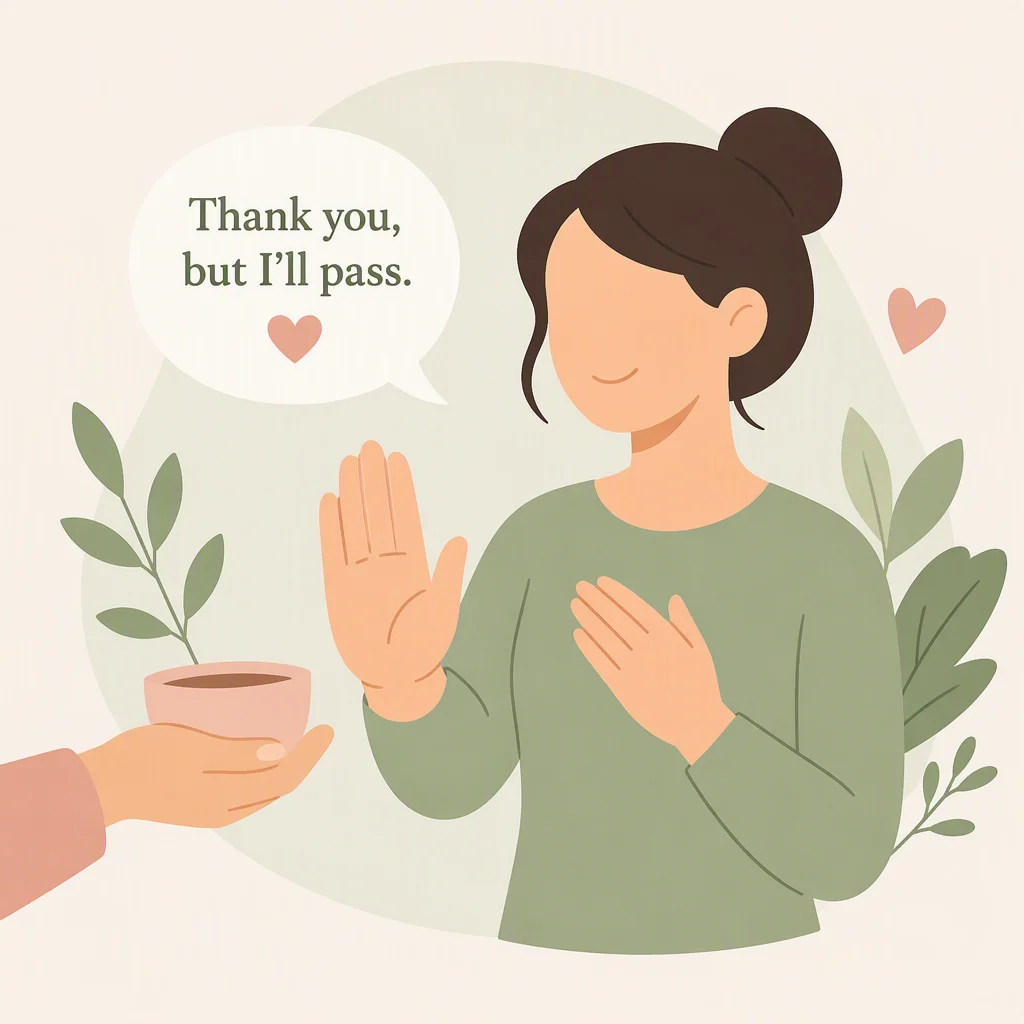
Saying no might be the single most underrated skill in polyamory. We spend so much energy learning how to open up, how to communicate, and how to make room for more love — but almost no one teaches us how to close the door gently. When a new person reaches out and you simply do not have the bandwidth, knowing how to say no with warmth, and without guilt, changes everything.
This guide is for the moment a promising conversation turns into a request you cannot honorably accept. Maybe you are already at capacity. Maybe the timing is wrong. Maybe something about the dynamic just does not feel right. Whatever the reason, here is how to decline a new connection kindly, honestly, and without spending the rest of the week feeling terrible about it.
Table of Contents
- Why Saying No Feels Hard in Polyamory
- Reframe “No” as a Full Answer
- Scripts You Can Use Right Now
- What to Do When the Other Person Feels Hurt
- The Guilt Traps to Watch For
- A Quick Do / Don’t Guide
Why Saying No Feels Hard in Polyamory
Non-monogamy carries an unspoken pressure to be endlessly open — to love freely, to make room, to never be the one who closes a door. So when you do need to say no, it can feel like you are failing at the very thing you chose this relationship style for. Add the fear of hurting someone’s feelings, and “no” gets stuck in your throat.
There is also the fear of scarcity. If I turn this person down, what if no one else comes along? That fear is real, but it usually overestimates the cost. The truth is, a kind “no” protects your time and your existing relationships — and it respects the other person far more than a slow fade ever would.
It also helps to separate two very different situations. Declining a brand-new connection that has not really started is one thing; de-escalating a relationship that already exists is a much bigger conversation. This guide is mostly about the first case — the early, low-stakes moment when a simple, honest “no” is all that is required.

Reframe “No” as a Full Answer
Here is a shift that makes declining much easier: “no” is not a rejection of a person. It is a statement about your capacity, your timing, or your fit. Those are three very different things. When you say no because you are at capacity, you are not saying the other person is not wonderful — you are saying you could not show up for them the way they deserve right now.
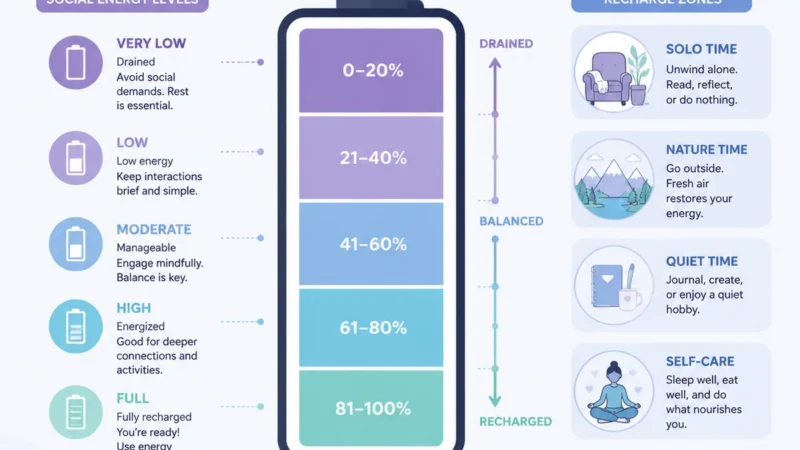
You do not owe anyone an exhaustive explanation, and you do not need the other person to agree with your reasoning. A short, warm, honest decline is a complete answer. If you are someone who keeps saying yes out of obligation, our guide to what polysaturation feels like can help you recognize when you are already full before the next request even arrives.
This framing is widely shared in the polyamory community. As More Than Two’s writing on polyamory emphasizes, honest boundaries are not a rejection of love — they are the structure that lets love function without harm. A clear “no” is part of that structure, not a failure of it.

Scripts You Can Use Right Now
Sometimes you just need the words. Here are a few ready-to-use ways to say no kindly. Adapt the tone to match how well you know the person.
- “I have really enjoyed talking with you, and I need to be honest that I am at capacity right now and cannot take on a new connection.”
- “This is not a fit I can pursue, but I genuinely wish you the best — you deserve someone who can show up fully.”
- “The timing is not right for me to start anything new. I would rather be upfront than disappear.”
- “I have realized I do not have the bandwidth to date anyone new right now. Thank you for being kind about it.”
The goal is not to soften the message into vagueness, but to be warm while staying unambiguous. Match your word count to the depth of the connection: a near-stranger gets a short line; someone you have chatted with for weeks deserves a little more care.

What to Do When the Other Person Feels Hurt
You can say no beautifully and the other person can still feel disappointed — and that is okay. Their feelings are not your responsibility to fix, and they are not proof you did anything wrong. What you can do is stay warm, stay brief, and resist the urge to over-explain or leave the door half-open to soften the blow.
A half-open door — “maybe in a few months,” “let’s see how things go” — often feels kinder in the moment but actually strings the other person along. If you genuinely might revisit it later, say so clearly and without promising. If you will not, do not imply you might. Clarity is its own form of kindness.
The Guilt Traps to Watch For
Guilt usually comes from one of these three traps. Naming them helps you climb out.
- The people-pleaser trap: You feel guilty for not managing someone else’s feelings. Reminder — you are responsible for your honesty, not their reaction.
- The scarcity trap: You fear this was your only chance. Reminder — turning down one connection does not erase future ones.
- The “good poly person” trap: You feel like a hypocrite for having limits. Reminder — healthy non-monogamy is built on honest limits, not endless openness.

A Quick Do / Don’t Guide
Do: be honest and brief. Say no as soon as you know. Thank them for their interest. Wish them well genuinely.
Don’t: ghost or fade. Over-explain until it becomes a negotiation. Leave the door half-open unless you mean it. Apologize excessively for having boundaries.
One more tip that makes the whole skill stick: practice saying no in low-stakes places first. Decline the extra meeting, the party you do not want to attend, the favor you cannot spare. The more you exercise the muscle in safe contexts, the more natural it feels when a romantic connection is on the line. Boundaries, like any habit, get stronger with repetition.
Saying no is a skill, and like any skill it gets easier with practice. Each time you decline a connection with honesty and warmth, you are not being less polyamorous — you are being more honest, more sustainable, and more respectful of both your time and theirs. And if you are still figuring out what shape of polyamory fits you, from non-hierarchical to solo polyamory, knowing your own limits makes every choice easier.
If you are looking for a space where clear communication and healthy boundaries are the norm, you will find people who get it right here at 3Cupid. And if you are trying to figure out how much room you actually have before the next conversation starts, start with our guide to polysaturation.
Editor’s note: This article is for adults 18+ and reflects 3Cupid’s focus on ethical, consensual non-monogamy. Saying no kindly is part of treating every connection with respect.