Table of Contents
- Why “Equal Time” Is the Wrong Goal
- Start With Needs, Not Hours
- Build a Scheduling Rhythm That Works
- Handling Last-Minute Changes Without Resentment
- When Your Partner’s Other Partner Wants More Time
- The Calendar Check-In: A Monthly Practice
- A Fair Scheduling Menu

You have two partners who both want weekend time. Your calendar looks like a game of Tetris played by someone who’s given up. You’ve tried a spreadsheet, a shared Google Calendar, and a whiteboard in the kitchen — and somehow someone still feels shortchanged every week.
Scheduling is the unglamorous engine room of polyamory. It’s where good intentions meet logistical reality, and where a surprising amount of relationship tension gets generated. When scheduling feels unfair, the relationship feels unfair — even when everyone involved genuinely wants things to work.
But “fair” in polyamory doesn’t mean equal hours. It means everyone’s needs are genuinely considered and nobody consistently feels like an afterthought. Here’s how to build a scheduling approach that works without turning your relationships into a timesheet.
Why “Equal Time” Is the Wrong Goal
The instinct when juggling multiple relationships is to divide time equally. Fifty-fifty. Or thirty-three-thirty-three-thirty-three. Nice, clean fractions.
The problem is that people don’t need equal amounts of time — they need enough time of the right kind. A partner who lives with you might be fine with less dedicated date time because you already share morning coffee, dinner prep, and the quiet moments of daily life. A partner you see once a week might treasure those four hours more than a nesting partner treasures an entire weekend of ambient togetherness.
When you optimize for equal hours, you end up optimizing for the wrong thing. You give a partner who’s satisfied an extra evening they didn’t need, while another partner who’s starving for connection still isn’t getting what would actually help — maybe it’s not more time but more focused, undistracted time.
Equality is easy to measure. Fairness requires conversation. And conversation is what makes scheduling work in the long run. VeryWell Mind’s research on throuple dynamics highlights how intentional scheduling and regular check-ins are consistently cited as cornerstones of successful multi-partner relationships.
If you’re also navigating a dating imbalance in polyamory, scheduling fairness is especially important — the partner with fewer outside connections may need more intentional quality time, not just default cohabitation hours.
Start With Needs, Not Hours

Before you open a calendar, open a conversation. Ask each partner — and yourself — a few specific questions:
What actually makes you feel connected to me? For one person, it’s a dedicated date night with no phones. For another, it’s waking up together on a weekend morning. For someone else, it’s a mid-week check-in call. The activity matters more than the duration.
What’s the minimum frequency that keeps you feeling secure? Not the ideal — the floor. If you go below this, the relationship starts to feel strained. Knowing each partner’s floor helps you make triage decisions when schedules get tight.
What kind of time are we already getting that we don’t count? The fifteen-minute coffee in the morning. The grocery run together. The text thread that stays warm all day. These “uncounted” interactions matter and should factor into how you think about the overall picture.
This approach connects directly to polyamory time management — the goal isn’t a perfectly balanced spreadsheet, it’s a life where each relationship gets enough of the right kind of attention.
Build a Scheduling Rhythm That Works
Most scheduling tension comes not from how much time people get, but from how uncertain the schedule feels. When nobody knows what next week looks like until Sunday night, anxiety builds.
A reliable rhythm — even an imperfect one — lowers stress for everyone. Here’s what a workable rhythm often looks like:
Anchor certain days. Maybe Tuesday is always your night with Partner A. Saturday morning through Sunday afternoon is with Partner B. These anchors create predictability that everyone can plan around.
Leave flex space. Not every day needs to be anchored. Leave one or two evenings a week unscheduled for spontaneity, solo time, or handling the unexpected. A completely locked-down calendar is as stressful as a chaotic one — it leaves no room to breathe.

Batch your planning. Instead of negotiating day by day, sit down once a week (or every other week) and rough out the upcoming period. A Sunday evening calendar check-in that takes fifteen minutes prevents fifty texts throughout the week trying to figure out who’s where when.
And protect your own solo time as seriously as you protect date time. If you don’t put yourself on the calendar, nobody else will. Maintaining your sense of self in polyamory requires unstructured time that belongs only to you — not to any partner.
Handling Last-Minute Changes Without Resentment
Life happens. A partner gets sick. A work deadline appears. A metamour has a crisis and needs support. Last-minute schedule changes are inevitable — what matters is how you handle them.
The first rule: the person who needs the change should be the one to communicate it, as early as possible. Don’t make your partner deliver the news that you won’t be seeing your other partner this week. Own your scheduling decisions.
The second rule: acknowledge what’s being given up. “I know we were supposed to have Friday together, and I’m sorry I need to reschedule. Can we lock in a replacement night right now so it doesn’t slip?” This takes a vague loss and immediately replaces it with a concrete plan, which prevents the “I keep getting bumped and nothing gets rescheduled” spiral.
The third rule: watch for patterns. An occasional reschedule is life. A pattern where one relationship consistently gets bumped for another is a problem. If you notice it happening, name it. “I’ve noticed our Thursday plans have been canceled three out of the last five weeks. Can we talk about what’s going on?”

One practical tool that helps: a shared digital calendar where everyone can see the schedule in real time. When changes happen, they’re visible — no surprises, no “I didn’t know you were free that night,” no ambiguity about who’s where.
When Your Partner’s Other Partner Wants More Time
Sometimes the scheduling pressure doesn’t come from you or your partner — it comes from a metamour who wants more of your partner’s time than the current schedule allows.
This is delicate territory. Your partner is in the middle, trying to meet competing needs. Your metamour’s request is legitimate — they’re advocating for their relationship, which is what they should do. And your need for consistent, reliable time with your partner is equally legitimate.
The way through this is to keep the conversation between you and your partner — not a three-way negotiation where you and your metamour are competing for calendar slots. Your partner needs to hear what you need, hear what their other partner needs, and make choices about how to allocate their time. You’re not responsible for solving your metamour’s scheduling needs.
A useful boundary: “I need our anchor days to stay consistent. If you want to give additional time to your other relationship, I’m open to discussing how that works, but I need our foundation to feel stable.”
This preserves what you need without controlling what your partner does with their remaining time. It’s specific, actionable, and doesn’t require you to weigh in on the other relationship.
The Calendar Check-In: A Monthly Practice
Once a month, set aside thirty minutes for a calendar check-in — not a negotiation, not a conflict resolution session, just a temperature check on how the scheduling is working for everyone.
Use a simple framework:

- What’s working? Celebrate the rhythms that feel good. The Tuesday dinner tradition that’s become a highlight. The way you’ve protected Sunday mornings for slow coffee together.
- What’s pinching? Name the friction points without blame. “I notice I feel rushed between seeing you and seeing my other partner on Wednesdays.” “I miss having a full weekend together sometimes.”
- What’s one adjustment we can try? Keep it small. One change, not a complete overhaul. Try it for a month and reassess.
- How’s our non-scheduled connection? Are we staying in touch between dates in ways that feel good? Do we need more check-in texts, fewer texts, different kinds of communication?
This check-in, done consistently, prevents small scheduling frustrations from hardening into big relationship resentments. It also normalizes talking about time allocation — which, in polyamory, is a skill as important as talking about feelings.
A Fair Scheduling Menu
Not every relationship needs the same scheduling structure. Here are several formats to consider — pick what fits each relationship rather than forcing everyone into the same mold.
The Anchor Model. Two or three fixed, recurring time slots per week that don’t change unless there’s an emergency. Everything else is flexible. Best for: relationships that need predictability to feel secure.
The Weekly Negotiation. Sit down every Sunday and plan the week ahead together. No fixed anchors — everything is discussed week by week. Best for: relationships where schedules vary dramatically and both people are comfortable with ambiguity.
The Quality-over-Quantity Model. Fewer total hours but every meeting is intentional and undivided. No phones, no multitasking, no “I have to leave in forty-five minutes.” Best for: relationships where time is genuinely scarce and every hour counts.
The Co-Living Rhythm. For nesting partners, the challenge isn’t getting enough time — it’s making sure some of that time is quality time rather than default cohabitation. This model requires explicitly scheduling date nights even though you live together. Best for: nesting partners who’ve noticed they share a home but not necessarily a connection.
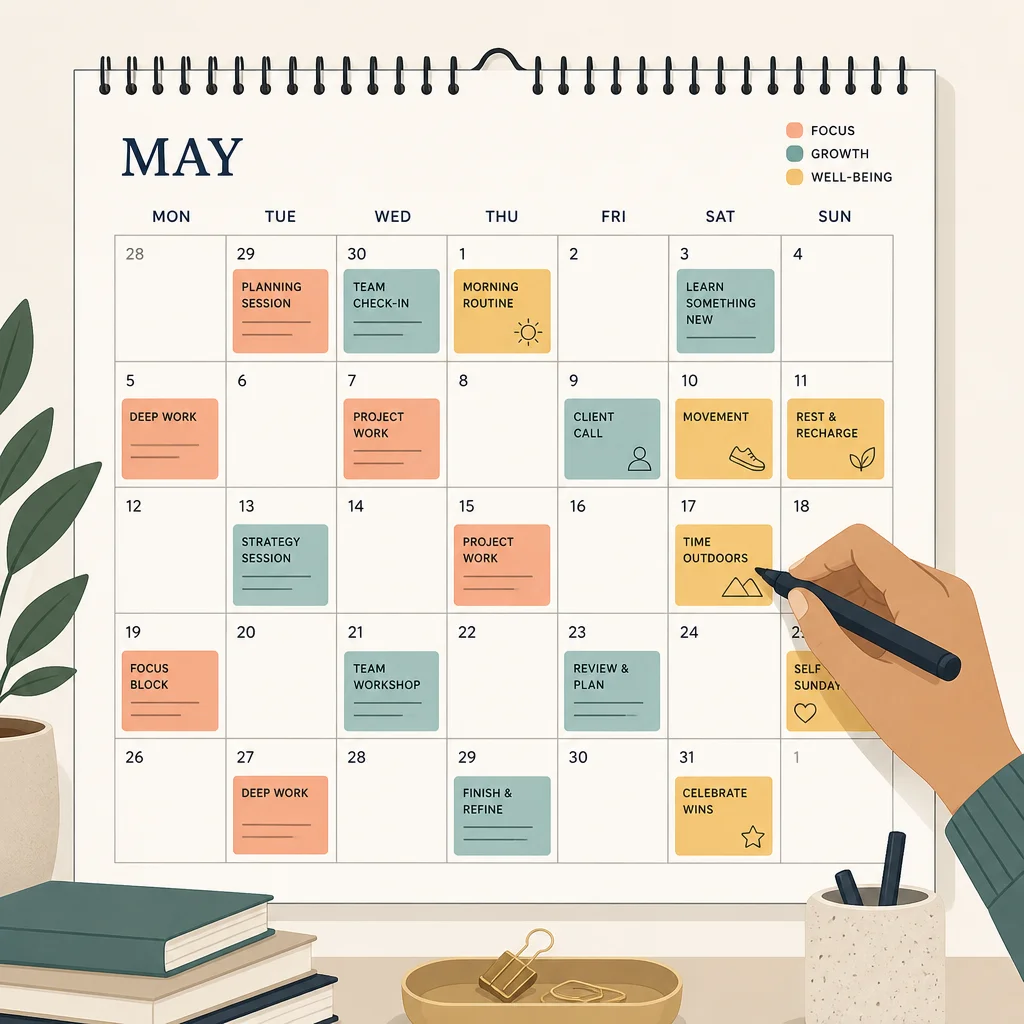
The Shared Calendar Plus. Everyone uses the same calendar tool, colors are assigned per relationship, and “me time” gets its own color. The simple act of seeing your name in blue on Tuesday and Thursday is psychologically grounding. Best for: polycules of three or more where visual clarity reduces confusion.
Pick a model, try it for a month, check in, adjust. The right structure is the one that makes everyone feel considered — not the one that looks most elegant on paper.
Editor’s note: This article is part of 3Cupid’s series on building sustainable, healthy polyamorous relationships. For more on communication, emotional skills, and practical polyamory tools, explore our blog’s polyamory and ENM section. Ready to meet people who understand your relationship style? Join 3Cupid to connect with a community that shares your values.