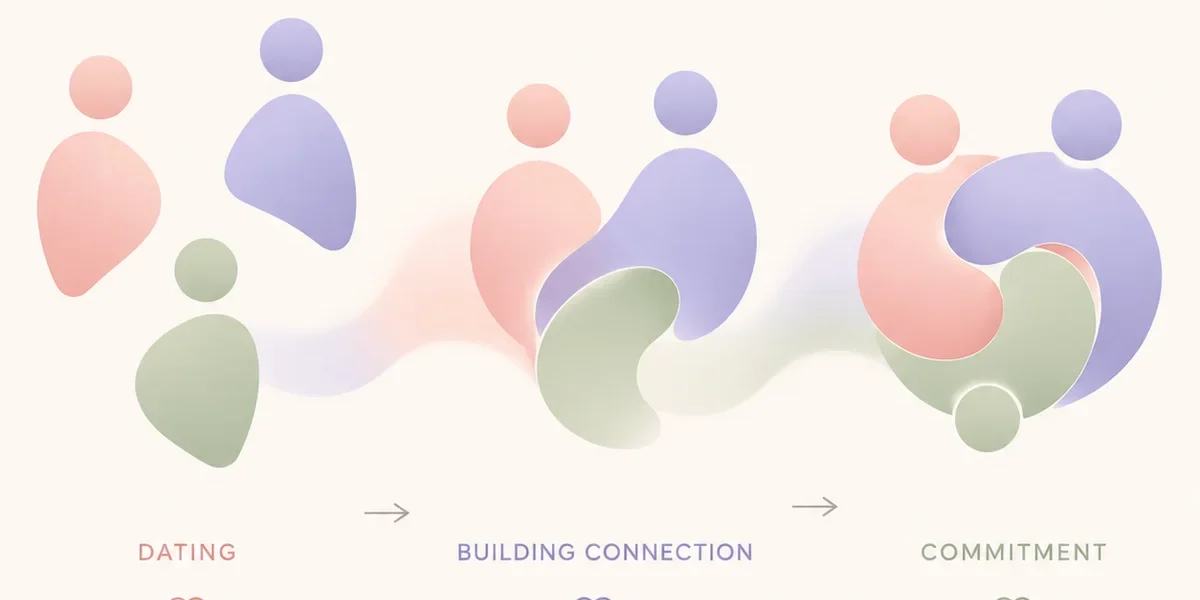
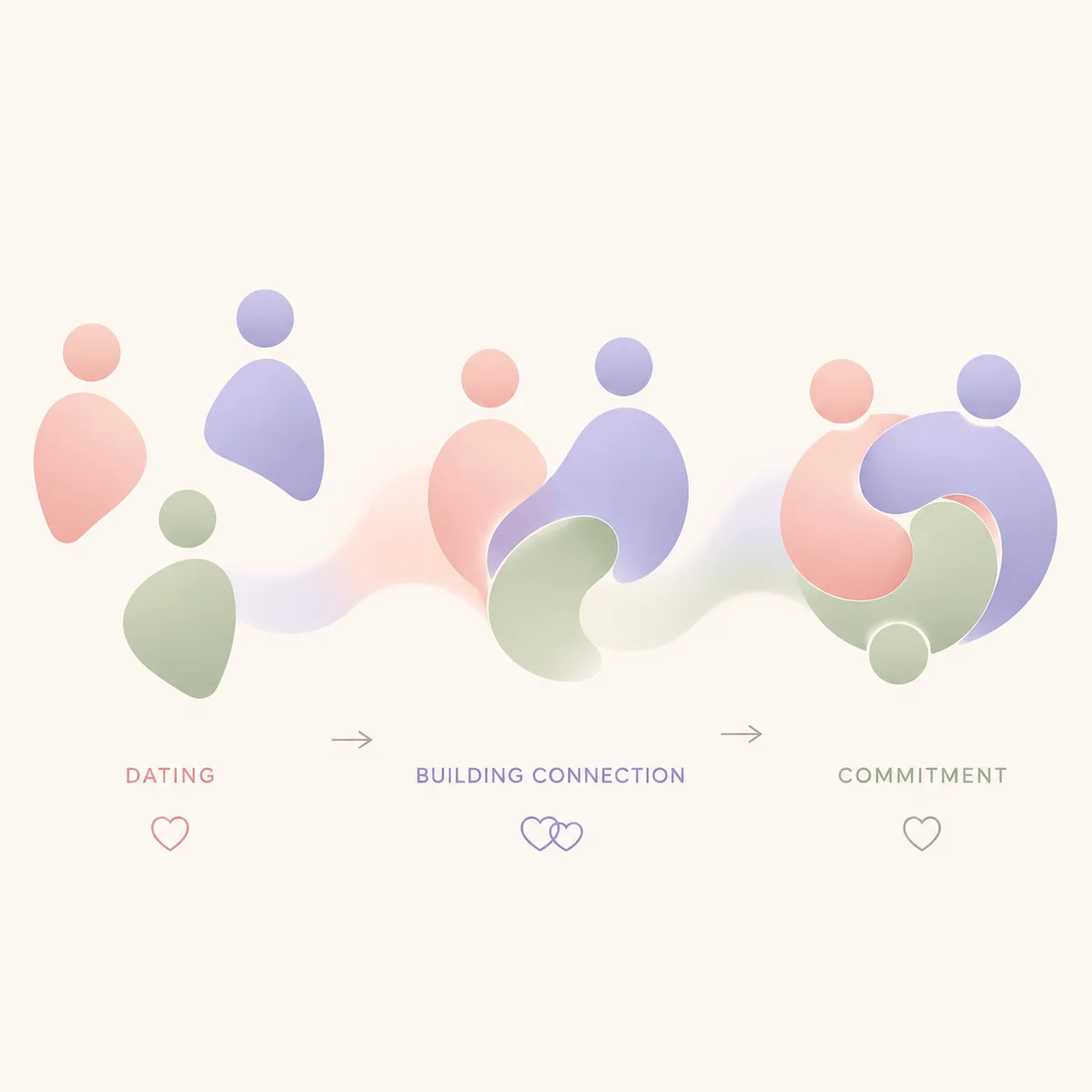
You met through unicorn dating. Maybe it started casually — dinner dates, weekend hangouts, shared experiences that felt easy and good. But somewhere along the way, things shifted. The connection deepened. What was once a “couple plus our third” started feeling more like three people who actually belong together. Now you’re wondering: how do we actually make this official? How do you transition from unicorn dating to a real throuple without losing what made it work in the first place?
This isn’t a rare question. Plenty of triads start exactly this way — casual unicorn dating that organically grows into something more committed. The transition is possible, but it requires clarity, patience, and a shared willingness to reshape the relationship from the ground up. Here’s how to do it thoughtfully.
Table of Contents
- How to Know When You’re Actually Ready
- The Conversation: How to Bring It Up Without Pressure
- From “Couple + Third” to “Three Equal Partners”
- The Practical Transitions Nobody Talks About
- Common Pitfalls and How to Avoid Them
- Discussion Prompts for Your Triad
How to Know When You’re Actually Ready
Not every great unicorn dating experience should become a throuple. Some connections are genuinely wonderful as they are — casual, warm, meaningful without needing to be permanent. Before you start talking about commitment, check whether the foundation is actually there.
Here are the signals that suggest you might be ready:
- You’ve weathered a conflict together. Not just minor disagreements — a real conflict where someone was upset, and you worked through it as three people, not as a couple managing a third party’s emotions.
- Each dyad has its own relationship. Partner A and the third have inside jokes and conversations that Partner B isn’t part of — and Partner B is genuinely fine with that. Same goes for every other pair.
- You’ve spent ordinary time together. Not just dates and special occasions. Grocery shopping. Lazy Sunday mornings. Watching bad TV. The mundane stuff reveals whether you actually enjoy each other’s company when nothing exciting is happening.
- Jealousy has shown up — and been handled well. Someone felt left out. Someone felt insecure. And instead of it becoming a crisis, it became a conversation that left everyone feeling closer, not more precarious.
- All three people want the same thing. Not two people who want a throuple and a third person who’s going along because they’re afraid of losing what they have.
If you can check most of these boxes, you’re working with a real foundation. If not, that doesn’t mean it’ll never happen — but it might mean slowing down and building more of that foundation first. For a grounding in what ethical unicorn dating looks like from the start, see Unicorn Dating 101, which covers the principles that make transitions like this possible in the first place.
The Conversation: How to Bring It Up Without Pressure
This is the moment where things can go sideways if you’re not careful. The third partner needs to feel like they’re being invited into something, not being presented with a decision that’s already been made by the couple behind closed doors. If the couple has already decided “we want this to be a throuple” before talking to the third partner, you’ve already violated the equality you’re supposedly trying to build.
Here’s a better approach:
Start with curiosity, not a proposal. Instead of “we want you to be our girlfriend,” try something like: “We’ve noticed that things between the three of us feel different lately — in a really good way. We’ve been thinking about what it might look like if this became something more committed, and we wanted to hear how that lands with you. No pressure, no timeline. Just opening the conversation.”
Make space for the third partner to lead. They might be thrilled. They might be terrified. They might be somewhere in between and need time to sit with it. All of those are valid. The couple’s job here is to create enough safety that the third partner can be honest — even if that honesty is “I’m not sure yet.”
Don’t do this in bed. Seriously. Have the conversation somewhere neutral — a walk, a quiet coffee shop, a living room with no distractions. This is a life conversation, not pillow talk. The setting should reflect the weight of what you’re discussing.
Acknowledge the asymmetry. Say out loud what everyone knows: “We realize that as the couple, we’ve had more time to process this possibility. You might need time to catch up to where our thinking is, and that’s completely fair. Take the time you need.” Naming the power dynamic doesn’t erase it, but it does signal that you’re aware of it — and that’s the starting point for any honest conversation about transitioning to a throuple. For more on navigating these power dynamics, read How to Navigate Couple Privilege When Dating as a Third.

From “Couple + Third” to “Three Equal Partners”
This is the core shift, and it’s harder than most people expect. Moving from unicorn dating to a throuple isn’t just about changing what you call each other. It’s about fundamentally reorganizing how decisions get made, how conflicts get resolved, and how emotional safety gets distributed.
If you’re serious about building an equal triad — not a couple with a permanent third — start by reading our detailed guide on building an equal triad from unicorn dating. The short version: you need to rewrite your relationship agreements with all three people at the table. The couple’s old rules — the ones designed to protect the primary relationship — need to be replaced with rules designed to protect all three relationships equally.
Some specific shifts to make:
| In Unicorn Dating | In a Throuple |
|---|---|
| The couple sets the boundaries | All three people negotiate boundaries together |
| The couple’s relationship is the priority | All three dyads receive equal investment |
| The third partner fits into the couple’s life | All three people build a shared life together |
| Veto power belongs to the couple | No one person or dyad has veto power over another |
| Decisions about “us” happen between two people | Decisions about “us” include all three |
| The third partner may feel like a guest | The third partner is a co-owner of the relationship |
This transition can be disorienting for the couple, especially if they’ve been together for years. But it’s also disorienting for the third partner, who suddenly has more power and responsibility than they might be used to. Give everyone grace during this adjustment period. It’s normal for it to feel awkward at first.

The Practical Transitions Nobody Talks About
Relationship structure changes are one thing. But the day-to-day logistics of becoming a throuple are where the real friction lives. Here are the practical transitions that catch people off guard:
Social disclosure. At some point, you’ll need to figure out who knows what. Do you come out as a throuple to your families? Your coworkers? Your friend group? There’s no single right answer — but there is a wrong way to do it, which is for the couple to decide unilaterally what the third partner’s level of visibility will be. This is a three-person decision that affects all three people’s lives.
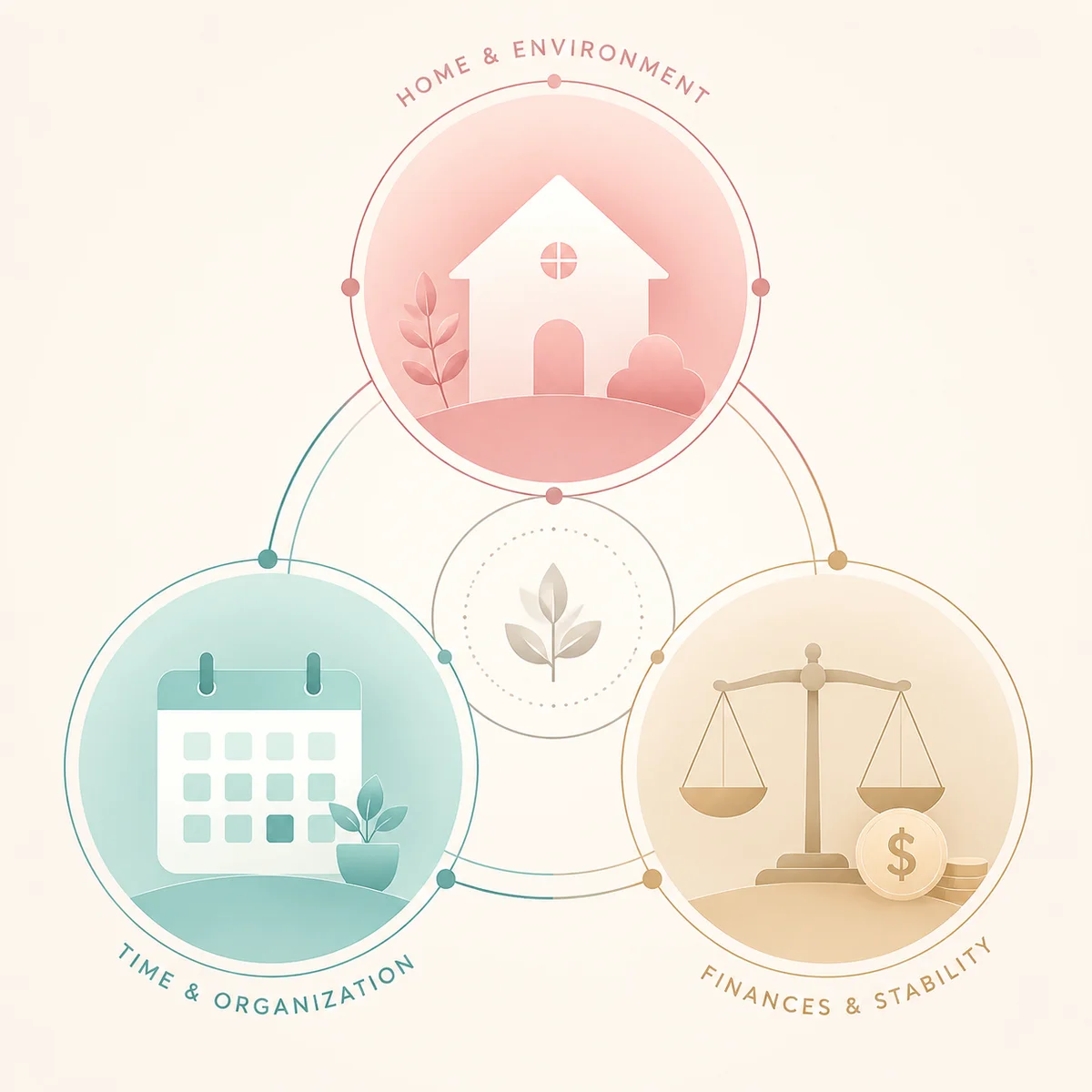
Living arrangements. If you don’t already live together, when does that conversation start? If you do, does the third partner move in, or do all three of you find a new place that belongs to everyone equally? Moving into “the couple’s home” can feel like moving into someone else’s territory. A fresh start — even in the same city — can be symbolically powerful.
Money. Finances get complicated fast in a throuple. Are expenses split three ways? Does the third partner contribute to a mortgage they’re not on? What about shared savings goals? These conversations are awkward but essential — and avoiding them doesn’t make them go away.
Emergencies and medical decisions. If your third partner is hospitalized, can either of you visit? Make decisions? In most places, legal rights default to biological family or legally married spouses. Throuples often need to create legal documents — medical power of attorney, wills, domestic partnership agreements — to protect each other in ways that married couples take for granted.
Holidays and traditions. Whose family do you spend holidays with? Do you rotate? Combine everyone? These are the moments where a throuple’s equality — or lack of it — becomes painfully visible. If the couple always defaults to their existing family traditions while the third partner gets squeezed in where there’s room, resentment builds quietly.
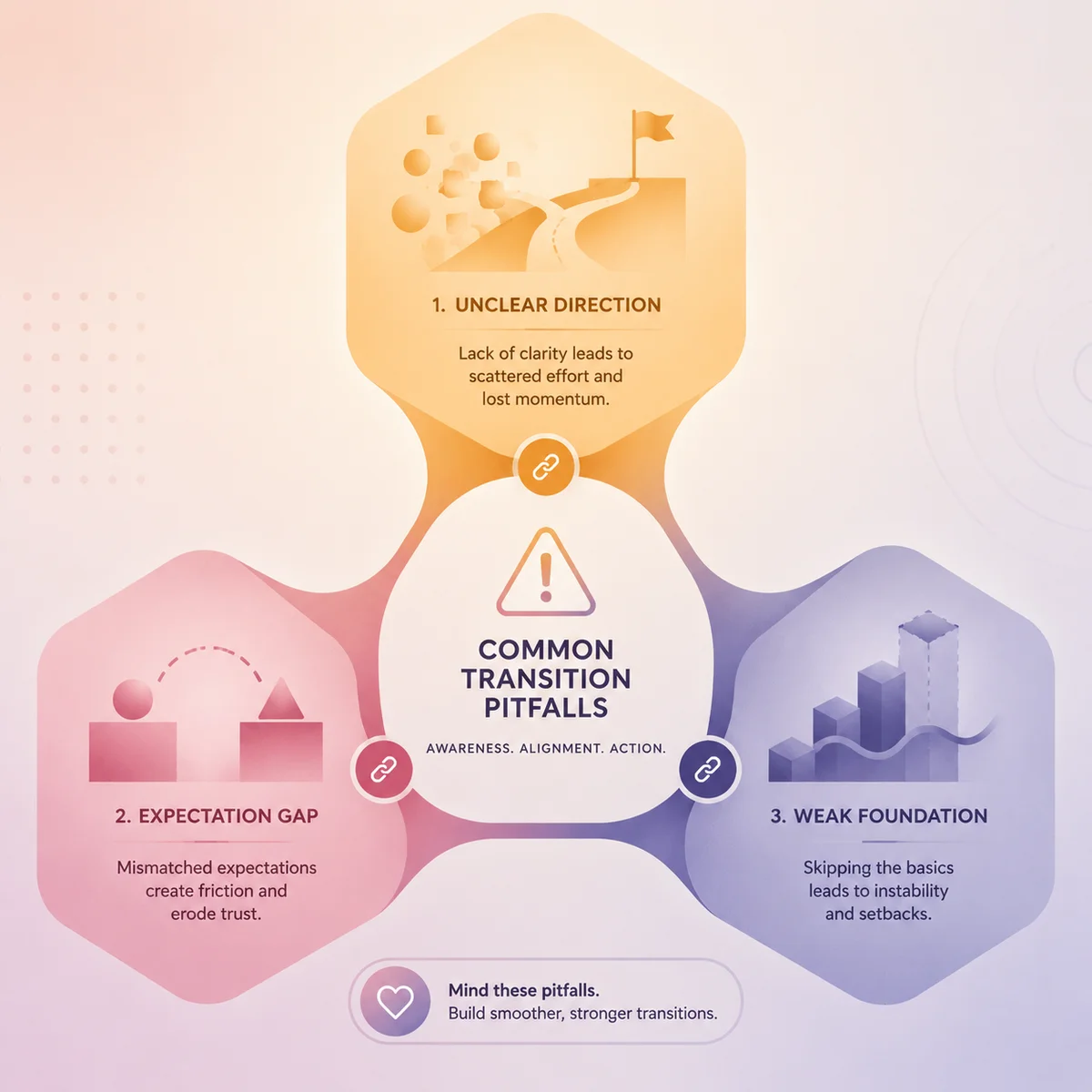
Common Pitfalls and How to Avoid Them
Even with the best intentions, certain patterns tend to emerge during the unicorn-dating-to-throuple transition. Knowing what they are can help you catch them early.
Pitfall 1: Rushing the label before the structure changes. Calling yourselves a throuple while still operating as a couple-plus-third creates a painful gap between what you say and what the third partner actually experiences. The label should describe the reality, not disguise the lack of it.
Pitfall 2: The couple still processes everything privately first. Old habits die hard. When something comes up, the couple naturally talks to each other first — they’ve done it for years. But in a throuple, that pattern needs to be interrupted. If a topic affects all three people, the third partner should be part of the first conversation, not briefed after decisions are already forming.
Pitfall 3: Expecting the third partner to be grateful. Some couples unconsciously expect the third partner to feel “lucky” to be included — and that expectation poisons equality. A throuple isn’t a gift the couple gives to a lucky third. It’s a mutual relationship that all three people choose equally.
Pitfall 4: Avoiding conflict to “protect the newness.” New throuples sometimes tiptoe around disagreements because they’re afraid of breaking something fragile. But a relationship that can’t survive honest disagreement isn’t actually stable — it’s just conflict debt accumulating interest. Address issues as they come up. The foundation you build by working through difficult moments is stronger than the one you protect by never testing it.
Pitfall 5: No exit plan. It feels counterintuitive to talk about endings when you’re building a beginning, but it’s actually one of the healthiest things a new throuple can do. What happens if one dyad wants to end while the other two want to continue? What happens if the whole triad dissolves? Having these conversations early means nobody is blindsided later — and paradoxically, knowing there’s a fair exit can make everyone feel safer about committing fully.
Discussion Prompts for Your Triad
Here are ten conversation starters designed to help all three of you explore what a throuple transition would actually look like. Use these during a dedicated conversation — maybe over dinner, maybe during a walk — where the only goal is understanding each other better, not reaching a decision.
- When you imagine “us” a year from now, what do you see? Be as specific as you can.
- What’s one thing about the current arrangement you’d be afraid to lose if we became a throuple?
- What does “commitment” mean to you in a three-person relationship? How is it different from commitment in a two-person relationship?
- If we decide to do this, what’s one practical change you’d want to see in the first month?
- What’s your biggest fear about transitioning to a throuple — and can you name it without anyone trying to fix it?
- How do you want to handle it if one dyad needs more attention or goes through a rough patch?
- What would make you feel secure enough to be fully yourself in this relationship?
- How do we want to handle disagreements about big life decisions — where to live, major purchases, career changes?
- If this doesn’t work out as a throuple, what would a kind and respectful ending look like?
- What’s one thing you need from the other two people that you haven’t asked for yet?
Don’t try to answer all of these in one sitting. Pick two or three per conversation. Let them breathe. The goal isn’t to complete a worksheet — it’s to surface the things that are usually left unsaid until they become problems.

Transitioning from unicorn dating to a throuple is one of the more emotionally complex moves in non-monogamous relationships. It asks the couple to loosen their grip on being the “primary” unit. It asks the third partner to step into more visibility and responsibility than they may have signed up for originally. And it asks all three people to believe that a relationship structure most of the world doesn’t understand is worth building anyway.
Research on polyamorous relationships suggests that triads can be deeply fulfilling when they’re built on genuine equality — but that equality doesn’t happen by accident. It’s built through the conversations you’re willing to have, the power you’re willing to share, and the discomfort you’re willing to sit with along the way, according to relationship researchers featured on VeryWell Mind.
If the three of you are ready to start that conversation — or if you’re a couple or single person looking for people who are open to something more than casual — the community at 3Cupid is built for exactly this kind of connection. Real people, real relationships, real conversations about what it means to build something that actually works for everyone involved.
This article is part of the 3Cupid Unicorn Triad & Throuple Transition series. We believe throuples work best when every person at the table has an equal voice — and we write accordingly.