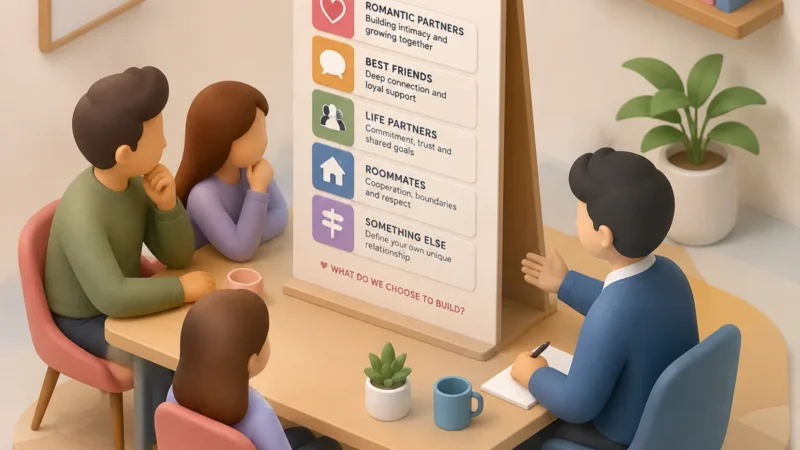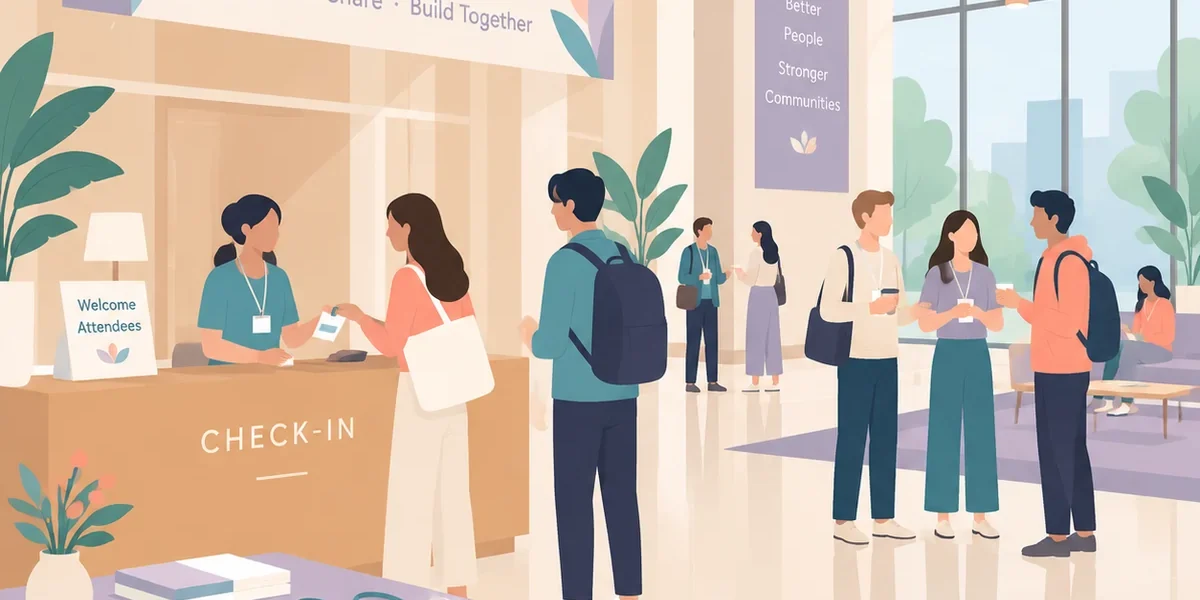
A non-monogamy conference is a weekend-long gathering where people who practice ethical non-monogamy, polyamory, swinging, relationship anarchy and everything in between show up in the same building to talk about it out loud. Workshops in the day, socials at night, and a lot of corridor conversation in between. If your only experience of ENM community so far is swiping, the difference is bigger than you expect.
Here is the short answer before we get into the details: pick a small or mid-sized non-monogamy conference close to home, go with one clear intention rather than five, budget for rest as deliberately as you budget for tickets, and treat every workshop as opt-in. Most first-timer regret comes from over-scheduling, not from under-participating.
This guide is general relationship information for adults, not therapy or medical advice. Take what fits your situation and leave the rest.
Table of Contents
- What a Non-Monogamy Conference Actually Feels Like
- How to Choose the Right Event for You
- Before You Go: Logistics, Budget, and Privacy
- Your First Hour: A Simple Onboarding Plan
- Consent Culture Is the Whole Point
- Managing Energy, Overwhelm, and the Sunday Crash
- Turning Conference Connections Into Real Community
- Frequently Asked Questions
What a Non-Monogamy Conference Actually Feels Like
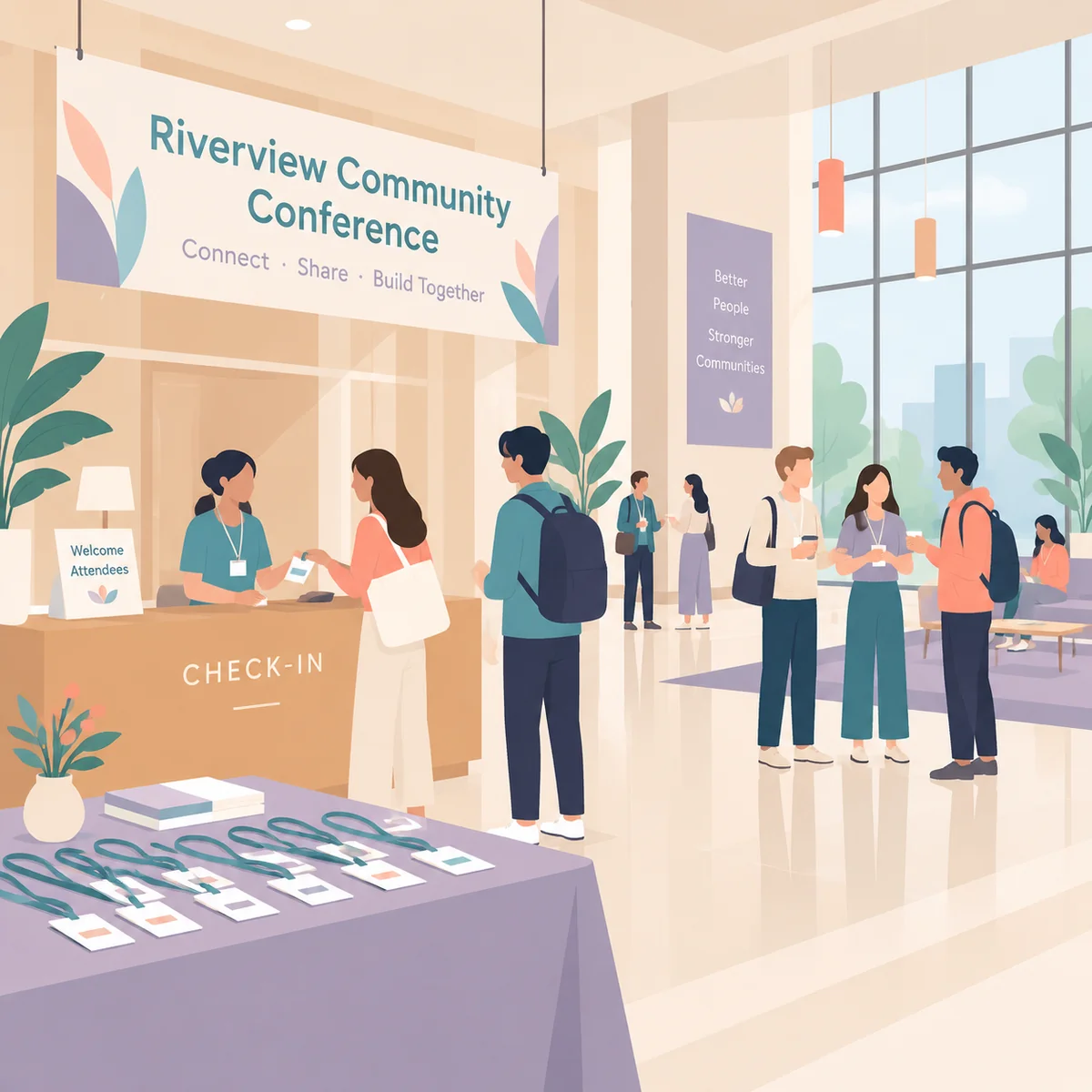
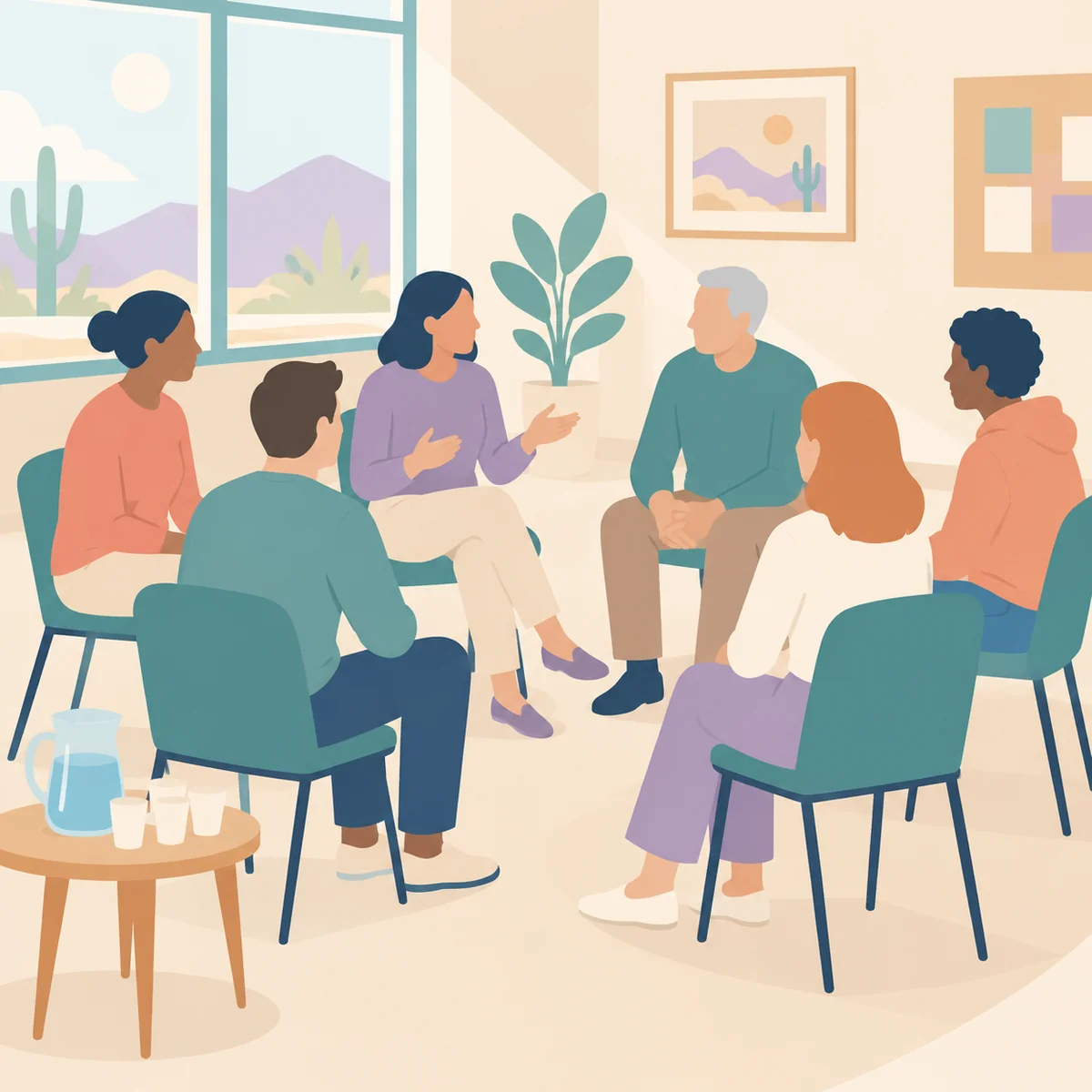
The first thing most people notice is how ordinary it is. There is a registration desk, a bad coffee station, someone asking whether the workshop on jealousy is in Room B or Room C. The second thing they notice is the absence of the low-grade vigilance they carry everywhere else. Nobody has to translate. You can say “my metamour” or “we opened up last year” and watch six people nod instead of recoil.
That relief is genuinely pleasant and also genuinely disorienting. After months or years of being the only openly non-monogamous person in most rooms, being surrounded by several hundred people who get it can flip a switch. Some people get talkative. Some go quiet. Some feel an unexpected surge of attraction to strangers who are, simply, fluent. All three are normal and none of them are obligations.
It also helps to know what the weekend is not. A conference is not a hookup event with a schedule attached, even at gatherings where play parties are on the programme. It is a learning and community event where a minority of attendees are single, a large share are couples who are not looking for anyone, and plenty of people have come alone purely for the workshops. Going in with that framing protects you from reading normal friendliness as an invitation.
How to Choose the Right Event for You
Scale matters more than most first-timers expect. A 40-person regional gathering and a 900-person international one are different sports. Small events give you depth: you will recognise faces by the second session and leave with five people you could actually text. Large events give you range: more workshop tracks, more niche interests represented, more chances to find your specific people – and a much higher chance of spending the weekend as a face in the crowd.
Read the schedule before you buy, not after. Look at the ratio of skills workshops to social time, whether there is a dedicated newcomers session, and whether the presenter list includes anyone whose writing or podcast you already know. An event built mostly around party nights is a different product from one built around facilitated discussions, and both are legitimate – but only one of them is what you are looking for.
- A named newcomers orientation or welcome circle on the first day
- At least one track on communication, jealousy, or agreements rather than only social events
- A published code of conduct you can read before you pay
- Clear policy on photography and phones in social spaces
- A price you can afford without quietly resenting it for the next three months
- Travel time short enough that you arrive with energy left over
If you are still unsure between two events, choose the one closer to home. Your first conference should be low-stakes enough that leaving early on Sunday is an option you could actually take. If you are moving to a new area anyway, our guide to finding ENM community in a new city pairs well with this one.
Before You Go: Logistics, Budget, and Privacy
Budget for the whole weekend, not just the ticket. Registration, travel, hotel or share-house, food, and the social events that cost extra add up quickly, and the people who enjoy themselves least are usually the ones quietly calculating every drink. Decide your ceiling before you go and tell your partner or partners what it is. Money is one of the most common sources of tension after the fact, and it is almost entirely preventable upfront.
Privacy deserves a specific conversation, because a conference is the one place where you might be photographed in a context you cannot fully control. Plenty of events enforce no-photo rules in social spaces and still end up with group pictures floating around afterwards. Talk to your partners about what is acceptable: are you comfortable being tagged? Are you comfortable being in the background of someone else’s photo? Does your workplace situation change the answer?
If any part of your life depends on discretion – a custody arrangement, an employer, family you are not ready to tell – treat that as a design constraint rather than an afterthought. Use a first name if the event allows it, skip the photos entirely, and check the attendee list policy before you register. The practical steps in our guide to social media privacy in non-monogamy apply doubly at events where everyone has a camera.
One more pre-trip item: agree with your partners what you will report back. Some people want a full debrief, some want a headline, some want nothing until Monday. Deciding this on the drive there prevents the weird moment where you are dying to talk about your weekend and your partner is braced for a download they did not ask for.
Your First Hour: A Simple Onboarding Plan
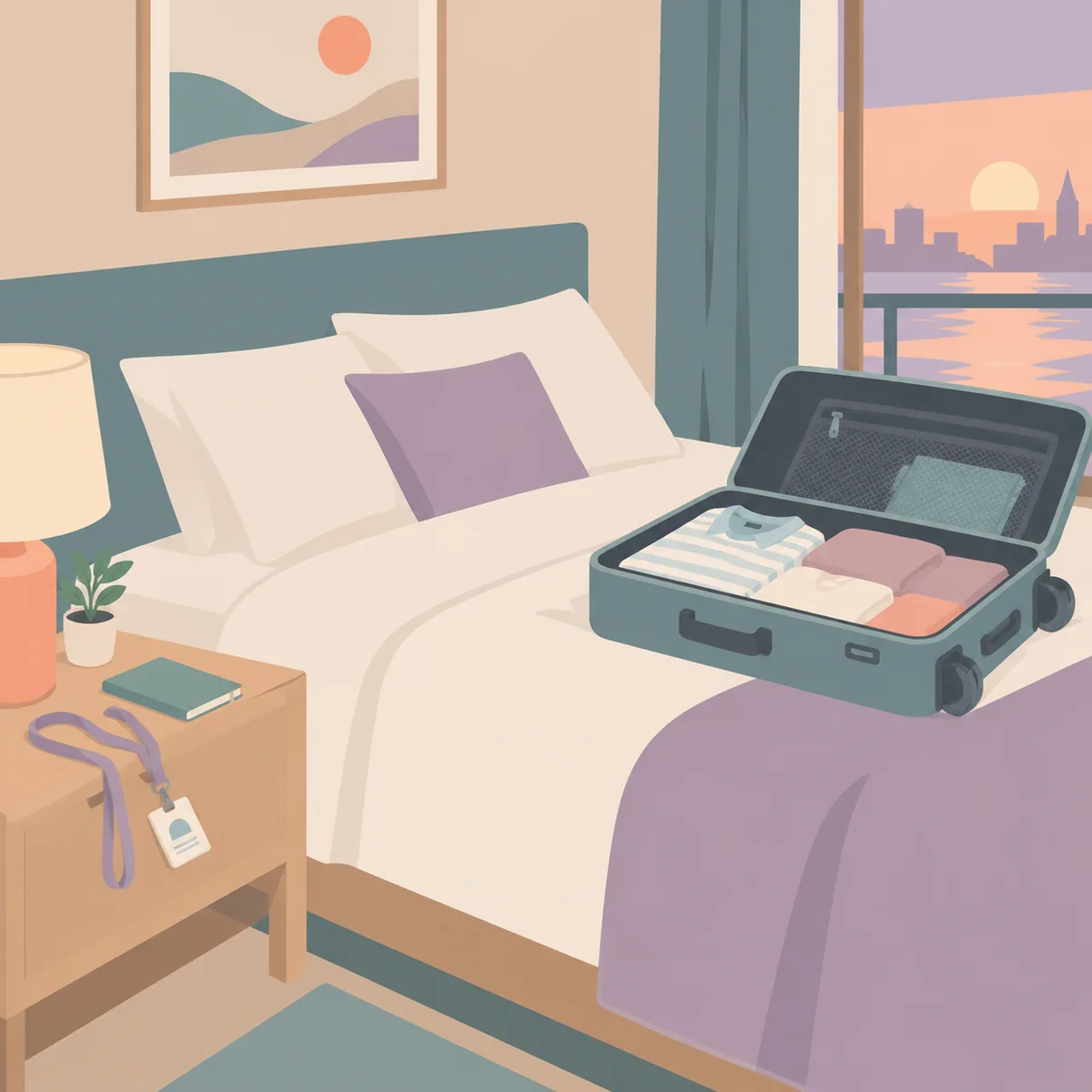
The first hour sets the tone for everything after it. Arrive, register, get the badge, and then do one small thing that anchors you: find the coffee, locate the quiet room, or sit in on the newcomers circle. Do not spend the first hour scanning the room for people to impress. You are not auditioning.
- Register and read the code of conduct on paper, not on your phone. It takes ninety seconds and it tells you exactly what this community considers normal.
- Find the two physical rooms you will need most: the bathroom and the quiet space. Knowing where to retreat makes the loud parts survivable.
- Introduce yourself to one person who also looks like they are alone. It is the lowest-pressure conversation available and it usually turns into a lunch buddy.
- Pick your sessions for the whole day now, including a deliberate empty slot. Decide while you are calm, not while you are overstimulated at 4pm.
- Text your partner or a friend a single sentence about how you are doing. Not a report – just a check-in that keeps your outside life real.
If you are introverted, none of this requires you to become extroverted. The approach that works is scheduling recovery rather than hoping for it: one session on, one break, one meal alone in a corner with a book. Attendees who do this end up with better conversations than the ones who push through, because they are actually present when they are in the room. There is more on this in our guide for introverts and in the lifestyle introvert’s guide.

Consent Culture Is the Whole Point
Consent at a conference is not only about physical intimacy – it is the operating system for the whole weekend. It shows up as asking before you join a conversation, asking before you take a photo, asking before you hug, and accepting a no without negotiating. The events that do this well make it visible: coloured lanyards, explicit photography rules, facilitators who model asking rather than assuming.
Practically, that means a few habits worth adopting from the first morning. Ask before you join a group that is clearly mid-conversation. Ask before you bring up someone’s partner or relationship structure in front of other people. Ask before you touch – shoulders, hands, hugs, all of it. And when someone declines, let it be small. “No worries” and a change of subject is a complete response; explaining why they should reconsider is not.
The other half of consent culture is knowing you can withdraw. If you said yes to a workshop, a party, or a conversation two hours ago and it no longer feels right, you are allowed to leave. Nobody at a well-run event will chase you for it. If the language for this is new to you, our piece on enthusiastic consent and how to withdraw consent both go deeper than we can here.
Managing Energy, Overwhelm, and the Sunday Crash
Overwhelm at a conference rarely announces itself. It arrives as irritability at a workshop you were looking forward to, or as a sudden urge to leave a conversation you were enjoying ten minutes ago. Treat those signals as information. The single most reliable fix is stepping outside for fifteen minutes – genuinely outside, not the lobby.
Then there is the Sunday crash, which is well known enough in conference circles to have a name. Three days of unusual closeness, novelty and validation ends, and you go back to a workplace where nobody knows what polyamory is. The drop can feel like grief. Plan for it: keep Monday light if you can, do not make any relationship decisions in the 48 hours after you get home, and expect your existing partners to need a little reassurance that the weekend did not replace them.
| Signal | What it usually means | What actually helps |
|---|---|---|
| Irritability in a session you chose | Under-slept or over-socialised, not bored | Skip the next slot, eat something, go outside |
| Sudden urge to leave mid-conversation | Your social battery is genuinely empty | Leave kindly. No explanation required beyond a smile |
| Intense pull toward one new person | Novelty plus a room full of fluent people | Write it down, do not act on it before you sleep |
| Flatness on the drive home | Normal post-event drop, not a verdict on your life | Keep Monday light, reconnect with existing partners first |
| Guilt about enjoying it without a partner | Something to talk about, not to hide | Name it out loud within a day of getting back |
Turning Conference Connections Into Real Community
The weekend produces contacts; the follow-up produces community. Within a week, send five messages to the people you actually want to know better. Keep them specific – reference the session you were both in or the thing they said at lunch – because “great to meet you” disappears into the void and “you mentioned you run a local discussion group” starts something.
Be equally clear with yourself about which connections were context-dependent. Some conversation chemistry is real and some is a product of a hotel, a badge, and three days without email. Both are fine. What matters is not over-investing in a connection that only exists inside a conference bubble – and not dismissing a genuine one because the setting was unusual.
Then do the thing that actually compounds: bring the conference home. Share one idea from a workshop with your local group, or start one. If there is nothing near you, organizing a small ENM meetup in your city is a shorter project than you think and it is the natural next step after your first conference. And when the new connections bring up envy or comparison back home, jealousy versus envy in non-monogamy is a useful frame.
For outside reading on why community belonging matters as much as relationship skills, Psychology Today’s overview of polyamory is a reasonable starting point, and the American Psychological Association’s healthy relationships hub covers the communication side.
Frequently Asked Questions
Do I need to bring a partner to a non-monogamy conference?
No. A large share of attendees come alone, and most events run newcomers circles specifically so solo attendees have an entry point. Going with a partner is nice; going alone is completely normal and often produces more conversations.
Is it weird to attend one if I am not currently dating anyone?
Not at all. Plenty of people attend while single, between relationships, or simply curious about whether non-monogamy suits them. The workshops are about skills and self-knowledge, not about who you are currently seeing.
How much does a non-monogamy conference usually cost?
It varies enormously by size and city – small regional gatherings can be a fraction of a large international event, before travel and lodging. Set a total ceiling that includes travel, food and social add-ons rather than comparing ticket prices alone.
What should I tell my workplace?
Nothing you do not want to. Many attendees use a first name, skip photographs, and treat the event as personal time. If discretion matters in your situation, check the event’s photography and attendee-list policy before you register.
What if I feel out of place the whole time?
Tell a volunteer or facilitator. Well-run events expect first-timer wobble and will usually point you toward a smaller session or a quieter space. If the feeling lasts the full weekend, it may simply be the wrong event rather than a verdict on you.

Editorial note: this article offers general relationship information for adults. It is not therapy, medical, or legal advice. Event policies differ widely – always read the specific code of conduct for the gathering you plan to attend.