Table of Contents
- Start the Group Hike With the Route, Not the Guest List
- Decide Who Is Invited Without Outing Anyone
- Set a Pace That Has a Slowest Walker, Not a Fastest
- Write Down Where the Group Regroups
- Sort the Ride Home Before You Sort the Playlist
- Tell Your Other Partners Enough, and No More
- A Short Checklist for the Morning of the Group Hike
Writing the invitation is the hard part of a group hike in non-monogamy, not the walking. Somebody has to settle who is coming, whether those people know about one another, what to do when one pair climbs faster than the rest, and how everyone reaches home again. None of those questions are really about the trail. They are about not leaving a person to guess at a decision that was already made for them. This is a guide for whoever volunteered to send that message, and it treats the job as a list of small administrative choices with a bit of care attached.
The view from the middle of the walk belongs to a different article: what happens when one of the walkers decides to turn back. Here we stay in the hours before the cars are even loaded – route, names, pace, meeting points, lifts. It helps to keep the two separate, because a question about a guest list and a question about a tired person at a junction are answered in completely different ways.
Two limits on what follows. First, this is written for adults as general information; it is not medical, legal, or outdoor-safety advice. Grading, access rules, permits and weather come from the people who manage the land and from the forecast on the day. Second, nothing here offers numbers, borrowed anecdotes, or a guarantee that a day out will go smoothly. If a body-related question comes up, the person concerned and a qualified clinician are the ones to answer it, not a blog post.
Start the Group Hike With the Route, Not the Guest List
Begin with the walk itself, because the route quietly decides almost everything else. A two-hour loop on a marked path and a full day over exposed ridgelines make very different demands, and the difference should be visible in the invitation rather than discovered halfway up. Write down the distance, the total ascent, the expected time including stops, the surface underfoot, and the point at which the route stops being easy to shorten. Those five facts let each person judge for themselves, without you having to guess at anyone’s fitness.
Grading is also the kindest way to handle the fact that people in one group rarely walk at one speed. Choose a loop with an honest shorter option and a clear halfway point, and say where they are. Public land agencies publish grading systems for exactly this reason, and Recreation.gov collects the wording they use for difficulty, access and permits. NHS exercise guidance covers the plainer question of how someone matches effort to their own body. Both stop where the local trail notice on the day begins. Managing expectations here is simply a matter of putting the numbers in front of everyone at once.
| Field | What to write down | Why it matters |
|---|---|---|
| Distance and ascent | Figures rather than words like ‘easy’ or ‘a good stretch’ | Two people can check a figure; nobody can check an adjective |
| Time including stops | A realistic window with the longest estimate named | People plan their day around the honest figure |
| Surface and exposure | Path, gravel, open ground, shade, steep sections | Lets someone decide about footwear and sun |
| Short option | Where the loop can be cut, and how far from the cars | Makes leaving early an ordinary choice, not a scene |
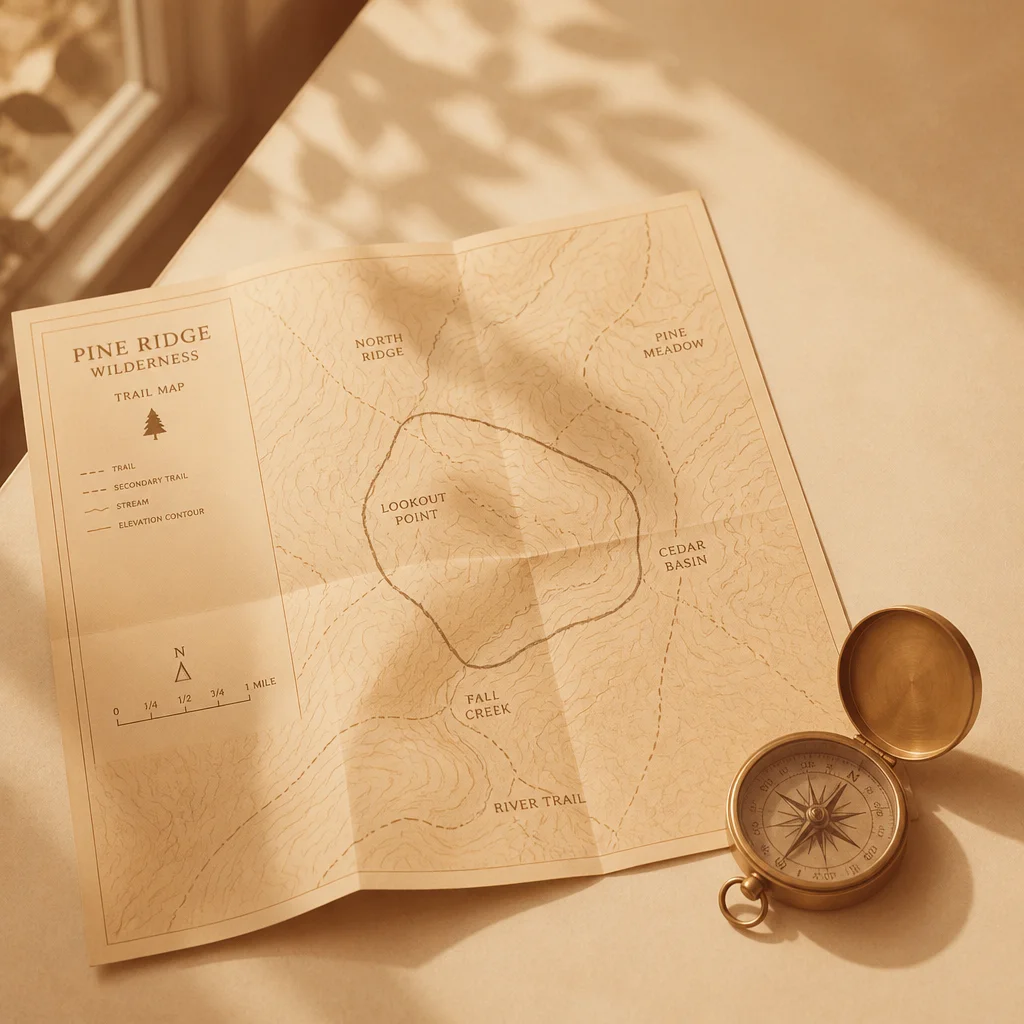
Publish the same facts to everyone at the same time. A route description sent to six people in six slightly different versions is how someone ends up at a car park the rest of the group has already left. One message, one set of numbers, and a note that questions are welcome is enough. Aligning expectations before the day means fewer careful conversations on the path itself.
Decide Who Is Invited Without Outing Anyone
The guest list is where an organiser most often discloses something by accident. A message that says ‘bring your partners’ assumes you know who those partners are, and a group chat with six names on it can tell several people about a connection they were not meant to know about yet. Two small questions, asked of every person, avoid all of that: the name they want used in the plan, and a headcount that includes themselves. Ask the same two of the people whose arrangements you know nothing about and of the ones you do.
How much anyone says about a connection stays their decision, which is the subject of disclosing ENM status and of don’t-ask-don’t-tell versus full disclosure. A name dropped into a group chat can reveal more than the sender meant, and what to do if someone is outed sets out why that lands badly even with kind intentions. Coming out to friends and family is worth reading to understand why a simple question about names may get a careful, slower answer. Privacy in threesome dating makes the general point: writing a name down is already a form of telling. Leave it out of the chat until you have been told to put it there.
- ‘What name should I use for you in the plan?’ – it settles a spelling, not a status.
- ‘How many places, counting yourself?’ – arithmetic that never asks who those places are for.
- ‘Is there anything about the day you would rather I keep to just us?’ – one open door, offered to everyone.

Collect the replies in one document and keep it with the two or three people actually running the day. Social media privacy and phone privacy deal with where such a list can leak; the underlying rule is older than either of them. Being named is something a person agrees to, and a mumbled or reluctant reply is a decline. Enthusiastic consent carries that standard into closer settings, but a group chat needs the same minimum: a clear yes before a name appears.
Set a Pace That Has a Slowest Walker, Not a Fastest
Most awkward days on a trail come from one unspoken assumption: that the group moves at the speed of whoever is leading. If you plan for the front of the line, somebody at the back spends hours managing a gap they did not choose, and the gap starts to feel like a statement about where they belong. Plan for the slowest comfortable walker instead, and name two loose pace groups in the invitation so that splitting up is a normal option rather than a quiet failure.
This is where relationship structure can leak into logistics unnoticed. An established couple may fall into step together at the front while a newer person ends up walking behind with a stranger, and that arrangement reads as a ranking whether or not anyone meant it. Couple privilege and relationship hierarchy are worth a read before you assume a pace split will be neutral, and practising non-hierarchical polyamory is the wider frame. On a path the fix is mundane: say who is happy to walk at each pace, and let people choose rather than be sorted.
| Do | Don’t | Why |
|---|---|---|
| Name two pace groups before the day | Let one fast group form and hope others catch up | A planned split is logistics; an accidental one feels personal |
| Put a lead and a back marker in each group | Assume the front will wait at every bend | Nobody should have to ask the group to slow down |
| Say that switching groups is fine | Treat a mid-day switch as a problem to solve | People read a fixed grouping as a fixed place in the pecking order |
| Set the pace by the slowest comfortable walker | Set it by the keenest walker’s usual speed | The route was graded for the whole group, not one person |
If the walker at the back is also the person who felt least included, advocating for yourself as a secondary partner and self-worth in non-monogamy go into that feeling properly. The organiser’s task stays small and physical: make the split unremarkable, put a named person at the back of each group, and stop treating speed as something to be earned. Rules versus agreements matters the moment the invitation starts sounding like a set of orders rather than two options to pick between.
Write Down Where the Group Regroups
A group that spreads out needs somewhere to come back together, and a vague promise to meet up later is not a plan. Pick two or three unmistakable spots – a junction, a bridge, a bench, the car park itself – and put them on the same map you sent with the route. Give each one a plain name and a rough time, and say what happens if somebody is not there. Ambiguity at a junction is the single most common way a relaxed afternoon turns into a series of worried messages.
Regular check-ins and the RADAR format are ready-made structures if you like a shape for this, though a group hike needs nothing so formal. Four short lines in one message will do most of the work.
- Name each regroup point with the word everybody will see on the sign or the map, not a nickname you invented.
- Attach a rough time to each one, and add a note that the times are estimates rather than deadlines.
- Say who carries the map and who has the group contact list, so a question has somewhere to go.
- State the simple rule for anyone who misses a point: stay put, send one message, and wait rather than pushing on alone.

A written plan removes most of the need for difficult conversations later. People also answer planning messages in their own way: one sends a paragraph, another sends a single word, and different communication styles explains why neither is a problem once the facts have landed. APA on communication is a broad outside source on keeping a shared message short enough to be read.
Sort the Ride Home Before You Sort the Playlist
The day does not end at the last regroup point. It ends when everybody is back at their own front door, and the ride home is where a good plan most often comes apart. Count seats before anyone sets off, decide who is driving, and make sure every person has a way back that does not depend on a partner they would rather not be alone with after a long day. Two cars with a spare seat between them is a small fix that removes a genuinely awkward dependency.
Fuel, parking and a meal afterwards are where an unspoken arrangement tends to sour a whole group, so financial boundaries has a place here too. Name who pays, once, and move on; the APA overview of personal finance is a decent broad source on why an openly stated limit lands better than six private deals. The same habit that makes a dinner with several partners end well works at a car park: settle the small print before anyone is hungry and tired.
- Count seats against the final headcount, with one spare, before the day rather than at the cars.
- Ask each person privately which car they would like to be in, and do not ask them to justify it.
- Name one meeting time and place for the end of the walk, and put it in the same message as the regroup points.
- Say plainly who pays for parking or fuel, or agree to sort it afterwards with no running tally.

A late change of plan should cost the person changing it one message, not a reshuffle of everybody else. Withdrawing consent is the fuller treatment of that idea, and it applies to a lift as much as to anything else: nobody owes the car pool a reason good enough for a vote. Going out in public as a three looks at the same small courtesies from the other end, where a spare seat or a plain sentence tells someone they were expected.
Tell Your Other Partners Enough, and No More
One question stays after the logistics are settled: what do your other partners need to know about the day? The honest answer is usually less than people fear and more than people bother to say. A partner who is not coming may still want to know roughly when you will be back, that you are safe, and whether the plan includes anyone they have a complicated history with. They do not need a running commentary, and they certainly do not need a list of everyone else’s names.
Agreeing how you two handle check-ins is the cleanest place to set this, and writing a relationship agreement is the wider version for people who want it written down. The point is not permission; it is predictability. The APA material on healthy relationships and Psychology Today on relationships are gentle general outside reads on why a small, reliable piece of information is easier to live with than a surprise.
- Share the shape of the day – where, roughly how long, and when you expect to be reachable again.
- Say whether anyone they know will be there, if that would reasonably matter to them, without naming people they have no connection to.
- Agree one check-in, not a stream of updates, and keep it even if the day runs late.
- Do not pass along details about the other walkers that were told to you in confidence.

Uncertainty tends to weigh more than an ordinary plan, which is the general point behind the APA material on stress. If a partner felt shut out, handling disagreement without taking sides and a specific, small repair are the two things worth reaching for. One dull message before the walk removes most of the need for either.
A Short Checklist for the Morning of the Group Hike
By the night before, everything above should have collapsed into one short message: the route facts, the two pace groups, the regroup points, the ride home, and a line saying that changing your mind is fine. On the morning itself, there is very little left to do beyond checking the conditions and confirming nobody has dropped out. A checklist is useful precisely because it is dull.
- Re-read the local trail notice and the forecast, and shorten the route if either has changed.
- Confirm the headcount against the seats, and confirm the back markers are still coming.
- Ask once about food and allergies for anything being shared, and let people answer privately – FARE and the Academy of Nutrition and Dietetics are sensible outside references.
- Have water, a spare layer, and a charged phone, and say where the group will be if signal is poor – rural health information is a useful wider note for remote areas.
- Send the one-line plan again, unchanged, so nobody is working from an older version.
Anyone wanting a broad, non-prescriptive read on preparing for a longer walk can start with the National Institute on Aging page on physical activity, while the APA material on families is a reminder that a group of close people rarely fits one shape. Both stop well short of the conditions under your own feet. If somebody is new to days like this, put first-timer etiquette and the general etiquette guide in the message rather than assuming they will find them.
Do I have to invite every partner of everyone who is coming?
No fixed rule says you must, and you can answer well without knowing who counts as anyone’s partner. Two questions – the name to use and the number of places – asked identically of every person will do it. The walker’s side of the same day picks things up once everyone is on the path. General information for adults, not advice.
What if people walk at very different speeds?
Write two pace groups into the invitation, give each a lead and a back marker, and let people move between them. Managing expectations is the broader version. A split you planned reads as arithmetic; one that just happened reads as a pecking order.
Should I ask about health or fitness before choosing a route?
Put the grade in writing and leave the decision to each walker. Nobody should have to describe a condition to be included. Health questions go to the person and, where needed, a clinician; NHS exercise guidance is a plain starting point. General information, not medical advice.
What if the weather or a closure changes the plan on the morning?
Tell the whole group at once, offer a shorter loop or a clean cancellation, and do not make anyone plead for it. Handling disagreement without taking sides helps if people read the change differently. Announced early it is scheduling; sprung on everyone at the cars it stings. A narrow, factual apology covers the rest.
An organiser needs no insight into anybody’s private life to do this well. Five route figures, two questions about names and places, a pair of pace groups, a handful of meeting spots, and one spare seat in a car: that is the entire job. The walk people remember is the one where none of it had to be thought about again.
A good group hike is mostly a tidy message sent a day early. Publish the same facts to everyone, make slowing down an unremarkable option, and let a no stay a no. Do that and the group hike is simply a walk, with the view doing the talking. You can find more plain-language guides on shared plans right here at 3Cupid.
Editor’s note: written for adults as general information; this is not medical, legal, or outdoor-safety advice. Difficulty ratings, access rules, permits and weather belong to the land manager and to the forecast on the day – read both, and take health questions to a qualified professional. No figures, borrowed anecdotes or promises about how a group hike will turn out appear here. Nobody organising a walk should ask a guest to justify a relationship or a medical detail, and nobody should add a name to a group without that person saying yes. Where a constraint is genuine, name it early and name it to everyone at once.