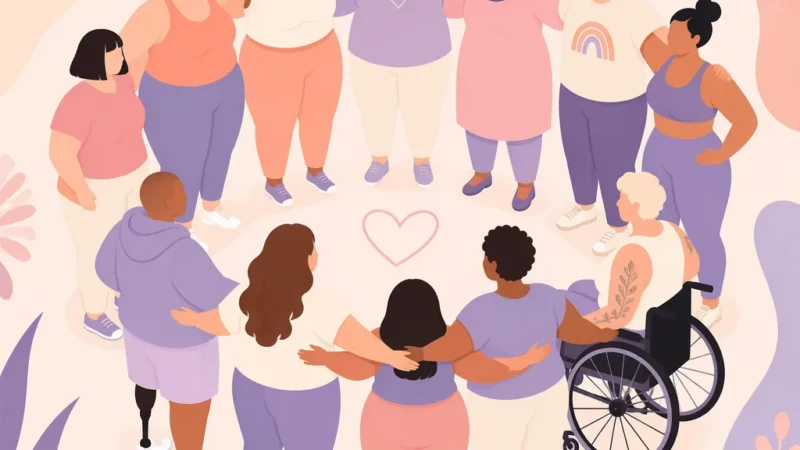
Cuddling in non-monogamy is its own subject: separate from sex, and separate from whatever label sits on the relationship. Some people want a great deal of it, some want almost none, and most discover that their answer shifts with the week they have had. This piece covers how to ask for closeness, how to decline it without damage, and how to arrange beds and sofas so that three people can all be comfortable in the same room.
The short version is this: closeness is a request, not an entitlement, and not a down payment on anything else. A cuddle can be a complete event that ends with everybody getting up and making tea. When that is genuinely true in your group — when nobody is quietly keeping a ledger — people ask more often rather than less, because the cost of asking has gone down.
Table of Contents
- Why Cuddling in Non-Monogamy Deserves a Talk
- Not Everyone Cuddles, and That Is Not a Verdict
- How to Ask for Cuddles Without Pressure
- When One Person Wants More Closeness Than the Other
- Sleep, Beds and Cuddle Setups With More Than Two
- Touch Aversion, Sensory Needs and Chronic Pain
- Cuddling Metamours, Friends and Chosen Family
- Ending a Cuddle Without Anything Owed
Why Cuddling in Non-Monogamy Deserves a Talk
Under a monogamous default, cuddling is assumed. It sits underneath everything else and nobody negotiates it. In non-monogamy the assumption disappears, and what usually replaces it is silence, because asking about cuddling feels more exposing than asking about sex. That is backwards: sex has a script and cuddling does not.
The exposure is real, though. Asking for a cuddle can feel like asking for a relationship, and declining one can feel like ending one. Separating the two out loud — “I would like to be close and I am not asking for anything more” — is most of the work, and it is the same skill as building closeness with a new partner without quietly overpromising.
It also matters because this is where a large part of the actual care in these relationships happens. People remember who sat with them through a bad week long after they have forgotten the rest of an evening. Treating closeness as a subject worth discussing, rather than as an accident that either happens or does not, is what makes it reliable instead of lucky.
If you want to read about the wider emotional picture, emotional intimacy in non-monogamous relationships is the natural companion piece, and attachment styles explains why the same invitation lands so differently on different people.
Not Everyone Cuddles, and That Is Not a Verdict
Some people simply do not like being held. Not because of anything that happened to them, not because they are distant, and not because they do not like you. They find sustained contact uncomfortable, warm, restrictive or dull. This is far more common than the silence around it suggests.
The opposite end deserves the same respect. Some people need a lot of physical closeness and feel its absence sharply, and that is not neediness either. Both ends are ordinary, and the interesting question is always the practical one: how do two people sitting at different points share an evening well?
- A person who dislikes cuddling is not rejecting the person doing the asking.
- A person who wants frequent cuddles is not automatically asking for a commitment.
- Both answers move with tiredness, pain, temperature and mood, and that is not inconsistency.
- Nobody has to justify a preference for it to count as a real one.
Where the difference sits in the body rather than in preference — pain, temperature regulation, sensory processing, a condition that makes pressure uncomfortable — the same principle applies: state it early and let people plan around it. Non-monogamy with chronic illness or disability covers the wider version of this in more depth, and dating without alcohol is relevant too, because drink changes how much contact people want and how well they read a refusal.
How to Ask for Cuddles Without Pressure
The cleanest ask has three parts: it names what you want, it sets a length, and it leaves an obvious way out. “I’d love to cuddle for a bit while the film is on — say if you’d rather not” manages all three in one breath.
- Name the duration. “For twenty minutes” is far easier to accept than an open-ended invitation.
- Name the shape. “Can I put my head on your shoulder?” is smaller and more answerable than “can we cuddle?”
- Ask at a calm moment, not in the middle of a charged one.
- Accept a no at face value, out loud, in one sentence. Then carry on normally — this is what makes the next ask cheap.
- If you want closeness but not contact, say that instead: “I’d like to sit next to you” is a real request and often exactly what is wanted.
One pattern is worth avoiding. “You never cuddle me any more” is a complaint dressed as a request, and it puts the other person in the position of defending a record instead of answering a question. “I’d love more closeness this week” is the same need offered in a form somebody can actually say yes to. If the wider pattern is the problem, raise it in a regular relationship check-in rather than at eleven at night.
On the consent side of all this, the womenshealth.gov relationships and safety section is a clear and plain reference, and enthusiastic consent in practice is the framing that makes every script on this page work.

When One Person Wants More Closeness Than the Other
A mismatched appetite for closeness is the single most common reason people end up reading about this, and it is almost never about affection. It is about two different nervous systems, two different upbringings, or two very different amounts of sleep. Treating it as a problem of love is precisely what turns it into one.
| If you want more closeness | If you want less closeness | What both of you can agree |
|---|---|---|
| Ask for a specific, bounded thing — “twenty minutes on the sofa” | Offer the version you can give — “I’ll sit with you, I just don’t want to be held” | Name the smallest unit of closeness you both enjoy |
| Say what the closeness is for: comfort, warmth, grounding | Say what makes contact hard right now: heat, pain, tiredness | Keep the reason short and do not debate it |
| Look for other sources of physical comfort: friends, family, a pet, a weighted blanket | Offer contact you do enjoy — a hand squeeze, sitting shoulder to shoulder | Do not make one person the only supplier of physical comfort |
| Take a no as information, not as a verdict on the relationship | Do not keep apologising for the no; it makes the other person manage your guilt | Revisit when circumstances change, not in the moment |
The third row is the one that saves relationships. If one person is the only source of physical comfort in your life, every no they give lands much harder than it should. Widening the circle — friends, family, a pet, a heavy blanket, a wheat bag in winter — takes the pressure off a difference that was never going to close completely.
It is also worth checking whether the mismatch is really about closeness at all. Sometimes what is being asked for is attention, reassurance or a sign that the relationship is steady, and a cuddle is simply the nearest available symbol. Working through jealousy and the jealousy-versus-compersion distinction both help separate the two, and what to do when feelings deepen covers the case where the closeness really is carrying more meaning than anybody has said out loud.
Sleep, Beds and Cuddle Setups With More Than Two
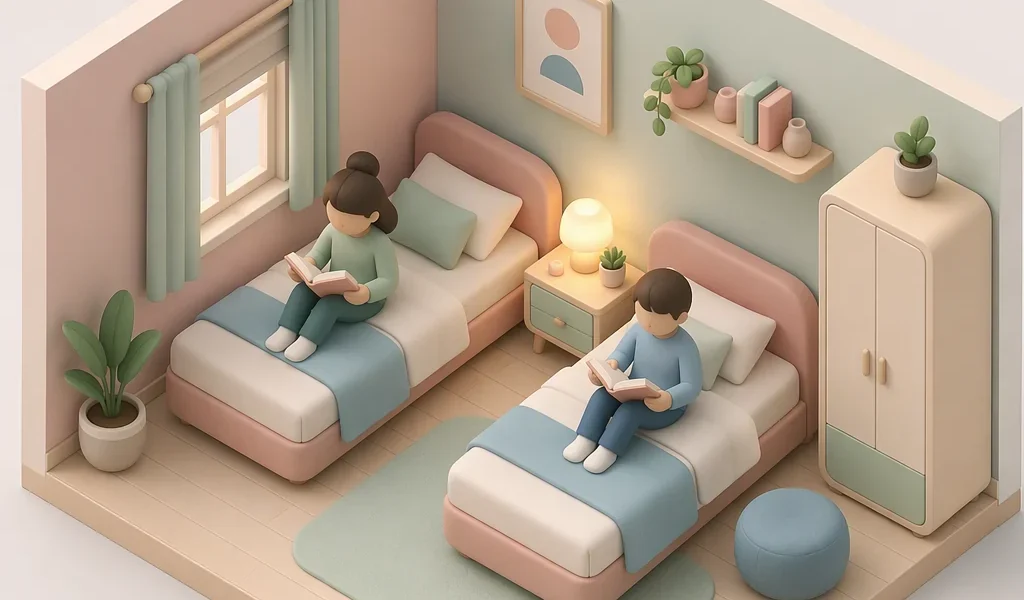
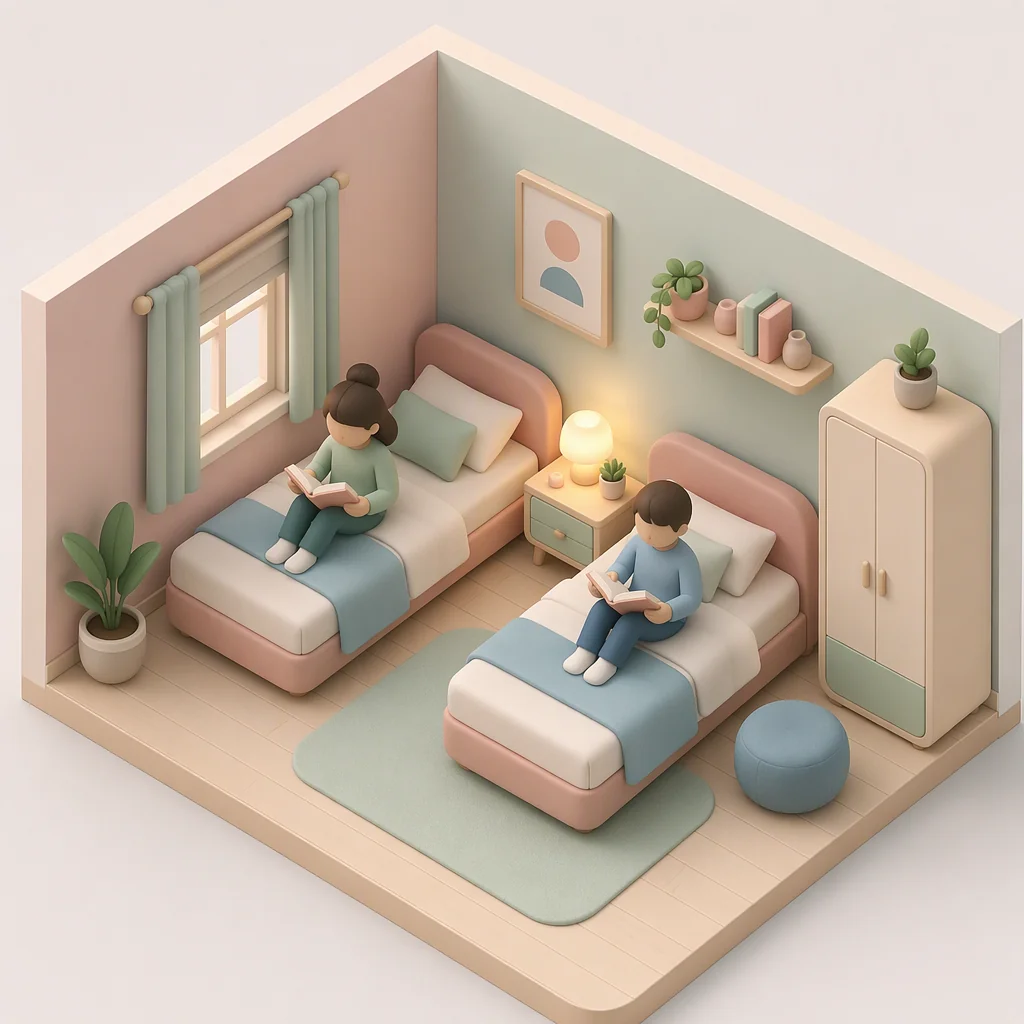
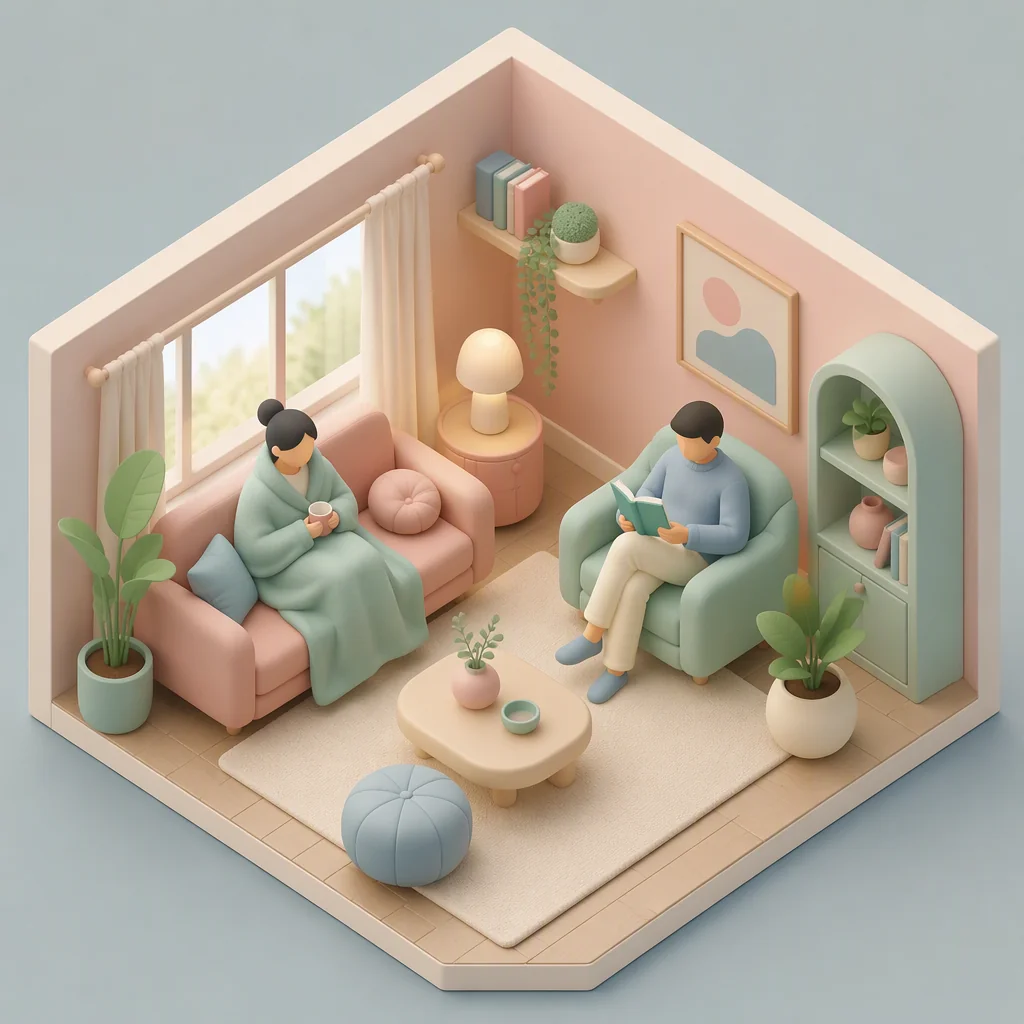
Sleep is where the theory meets the furniture. Three people, one bed, and a set of preferences that only surfaces at midnight is a reliable way to spoil a good evening, and it is almost entirely avoidable with a decision made in daylight.
- Decide before the night, not during it. A plan made at eleven in the evening is a plan made by whoever happens to be least tired.
- Two single beds pushed together, with a gap, beats one bed plus a negotiation — and nobody has to sleep at an angle.
- Agree that the middle position is not a prize. Whoever sleeps in the middle gets the least sleep and the most heat.
- Have a spare room, sofa or air mattress genuinely available, not theoretically available.
- Say goodnight explicitly. “I’m going to sleep now” gives everyone permission to stop performing.
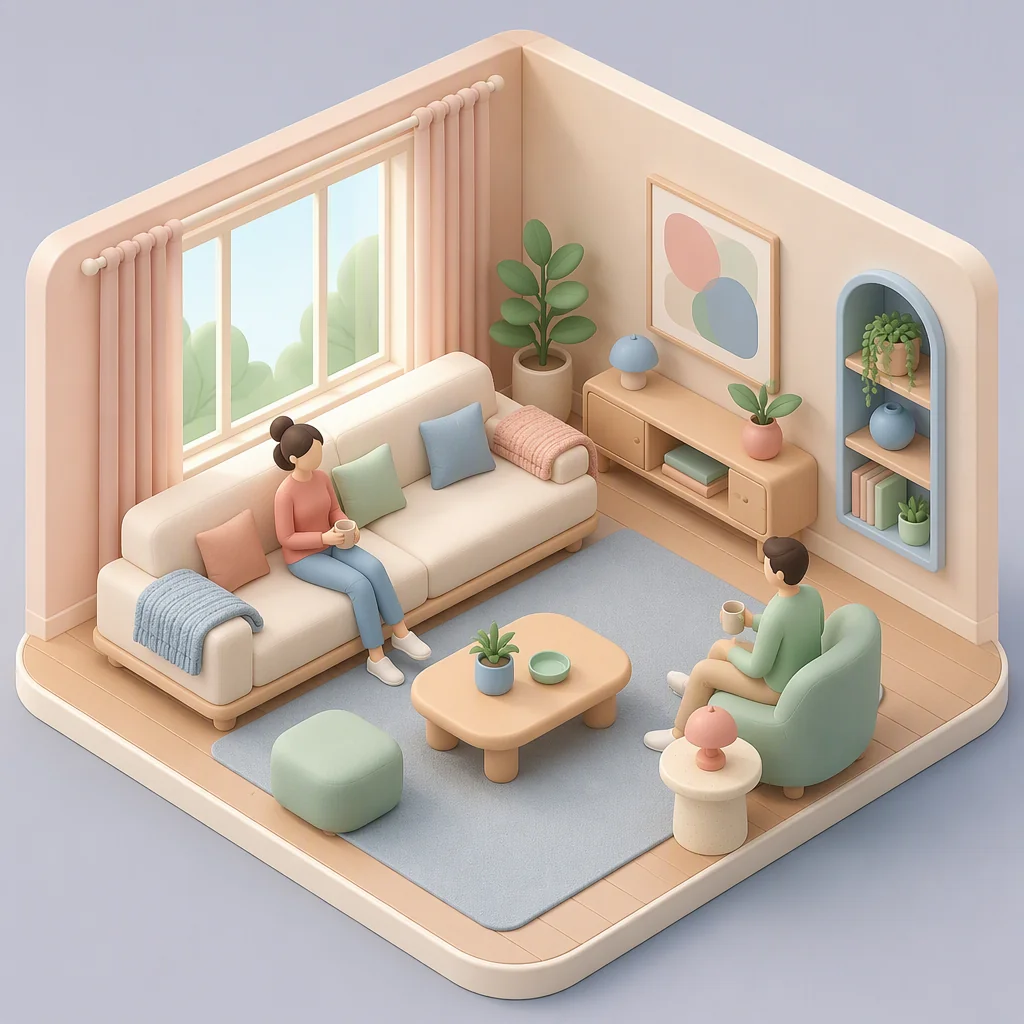
The same logic applies to sofas and film nights. A room with one sofa and three people forces a closeness decision on everybody at once. Two chairs, a footstool and a couple of spare blankets give people somewhere to go without having to announce that they are going there. Creating a comfortable space at home covers the room side of this in more detail, and the sleepover logistics guide handles the longer version.
If the group is larger than three, or if people come and go, the principles in sharing space with several partners transfer almost directly: more options, stated defaults, and somewhere to retreat to.

Touch Aversion, Sensory Needs and Chronic Pain
For some people, sustained contact is not a preference question at all. Pressure, warmth, the feel of certain fabrics, or being held in one position for a long stretch can be actively unpleasant or painful, and pushing through it does not build tolerance — it usually costs the following day.
The practical response is to reduce the input rather than endure it. Lighter contact, a shorter span, a different position, more air in the room, and a clear right to move without explaining yourself cover most of it. Where sensory processing is part of the picture, the approaches in handling sensory overload as it happens transfer well, and the NHS healthy body guidance is a reasonable wider reference on rest and sleep.
There is also an edge to this that is worth naming plainly. A sudden change in somebody’s appetite for touch can travel alongside stress, low mood or a difficult stretch of life, and it is worth noticing without diagnosing. If it is you, and the change has lasted more than a week or two, a clinician is the right person to talk to.
Two more pieces cover neighbouring ground: dating an autistic partner on sensory differences that are stable rather than temporary, and body image and closeness on the reasons people sometimes avoid contact that they would otherwise enjoy.

Cuddling Metamours, Friends and Chosen Family
Closeness with people you are not dating is a large part of how many non-monogamous people actually live, and it comes with its own etiquette. Platonic cuddling is common and completely ordinary, and the rule is the same one running through everything else here: ask, name the shape, accept the answer.
The extra wrinkle is that platonic closeness can be read as a signal by people standing outside it, partners included. Two things help. Be open about it rather than discreet — secrecy is what makes a harmless cuddle look like something else. And check in with the people who might reasonably be affected, not in order to get permission, but because nobody enjoys finding out by accident.
Chosen family and long-standing friends often have touch habits that predate anybody’s relationship structure, and those do not usually need renegotiating just because someone opened a relationship. Where a conversation genuinely is needed is at the boundary: what is comfortable in front of a partner, and what is comfortable in front of a metamour. Metamour relationships and what a metamour is are both useful here.
Ending a Cuddle Without Anything Owed
The part nobody writes about is how it stops. A cuddle that ends cleanly is the thing that makes the next one easy, and a cuddle that ends with an expectation hanging in the air is the reason people quietly stop asking.
- Say when you are done, out loud and without apology: “I’m going to get up and make tea.”
- Do not treat closeness as a down payment. If you want something more, that is a separate request with its own answer.
- If you are the one being left, let it be ordinary. A cheerful “thanks, that was lovely” closes it neatly.
- If you notice that you are always the one ending it, ask casually outside the moment whether you are getting what you want.
The same logic runs in the other direction. If you are the person who always waits to be released, say so once, in daylight: “I usually need someone else to end it, because I never quite know when it’s polite to move.” That single sentence removes a small negotiation from every future evening.
And if you want to talk about any of it afterwards, do it the next day rather than at the time. The emotional side of aftercare and debriefing as a couple both cover how to raise something kindly once everyone has slept on it.
Can you cuddle someone in non-monogamy without it meaning anything?
Yes, and it usually does. Closeness and commitment are separate things, and the way to keep them separate is to name the shape and the length when you ask — twenty minutes on the sofa, rather than a vague invitation with no edges.
What if my partner cuddles other people but not me?
That is worth a real conversation, because it usually points at something specific: tiredness, a rough patch, or a habit that formed without anyone noticing. Raise it as a request rather than an accusation, outside the moment, in a check-in.
How do I decline a cuddle without hurting somebody?
Be clear and warm in the same sentence. “I’d love to sit with you, I just don’t want to be held right now” gives the other person something to accept. Ambiguity is what hurts, because it leaves them guessing.
Is platonic cuddling between metamours okay?
It can be, provided everyone affected knows about it and the people involved genuinely want it. Some metamours are close and tactile; others prefer distance, and neither setting is the correct one.
Our needs are mismatched and it is not improving. What now?
Stop trying to close the gap and start arranging around it. Agree the version of closeness both people enjoy, widen your other sources of comfort, and revisit when life changes. A difference that is arranged around stops being a conflict.
Cuddling in non-monogamy is ordinary, and the more ordinary you can make it, the better it gets. Ask for a specific thing, accept the answer, and let it end. If you want the wider framework, the guide to touch boundaries covers the categories and defaults that make all of this easier to talk about in the first place.
Editor’s note: this article is general information for adults and is not medical advice. Bodies, sensory needs, pain and past experiences differ a great deal. For anything that concerns your own health, a qualified clinician is the right person to ask.