Table of Contents
- What Sauna and Spa Days in Non-Monogamy Are Actually For
- Heat, Bodies and the Medical Reality
- Clothing-Optional, Clothed, and Knowing Which You Booked
- Consent in a Room Where Nobody Wants to Be Talked At
- Phones, Cameras and the Changing Room
- Who Might See You, and What That Means
- Two Partners, Three People, or Meeting Someone There
- Leaving Early Without Ruining the Day
Sauna and spa days in non-monogamy work because the room does the social work for you. There is no music to talk over, no round to order, no requirement to be interesting on demand, and a built-in reason to sit in silence for twenty minutes without it being rude. For three people who are still finding out how they fit together, or a couple meeting someone new, that combination is harder to come by than it sounds. The setting is also less neutral than it looks. Heat changes how carefully people make decisions, clothing rules swing wildly between venues and between countries, phones are usually banned but not always enforced, and a quiet room runs on a different consent culture from a bar. Below: what these places are actually good for, what sustained heat does to judgement and to bodies, how to find out in advance what kind of venue you have booked, how consent works when nobody wants to be spoken to, photography, who might recognise you, going as three rather than two, and how to leave early without spoiling anybody’s afternoon.
Two scope notes, because the categories get blurred. This is about shared thermal facilities: sauna cabins, steam rooms, thermal bath complexes and the warm pools at a day spa. It is not about a night out, which the guide to bars and clubs covers properly, and it is not about being affectionate where strangers can see you, which the public-behaviour guide handles. A social dance floor and a board game night are both louder and both give you more ways to talk; if what you actually want is conversation, neither a sauna nor a steam room will give it to you.
Three sources worth opening before you book anything. The NHS page on heat exhaustion and heatstroke is the plainest account available of what prolonged heat does to the body and when to get out of it. The APA topic page on stress is a reasonable baseline for why a warm, quiet, low-demand hour tends to settle people rather than wind them up. And womenshealth.gov on relationships and safety is worth a read for the parts of this that are about pressure rather than temperature, because most of what goes wrong in a warm quiet room is pressure in a low voice.
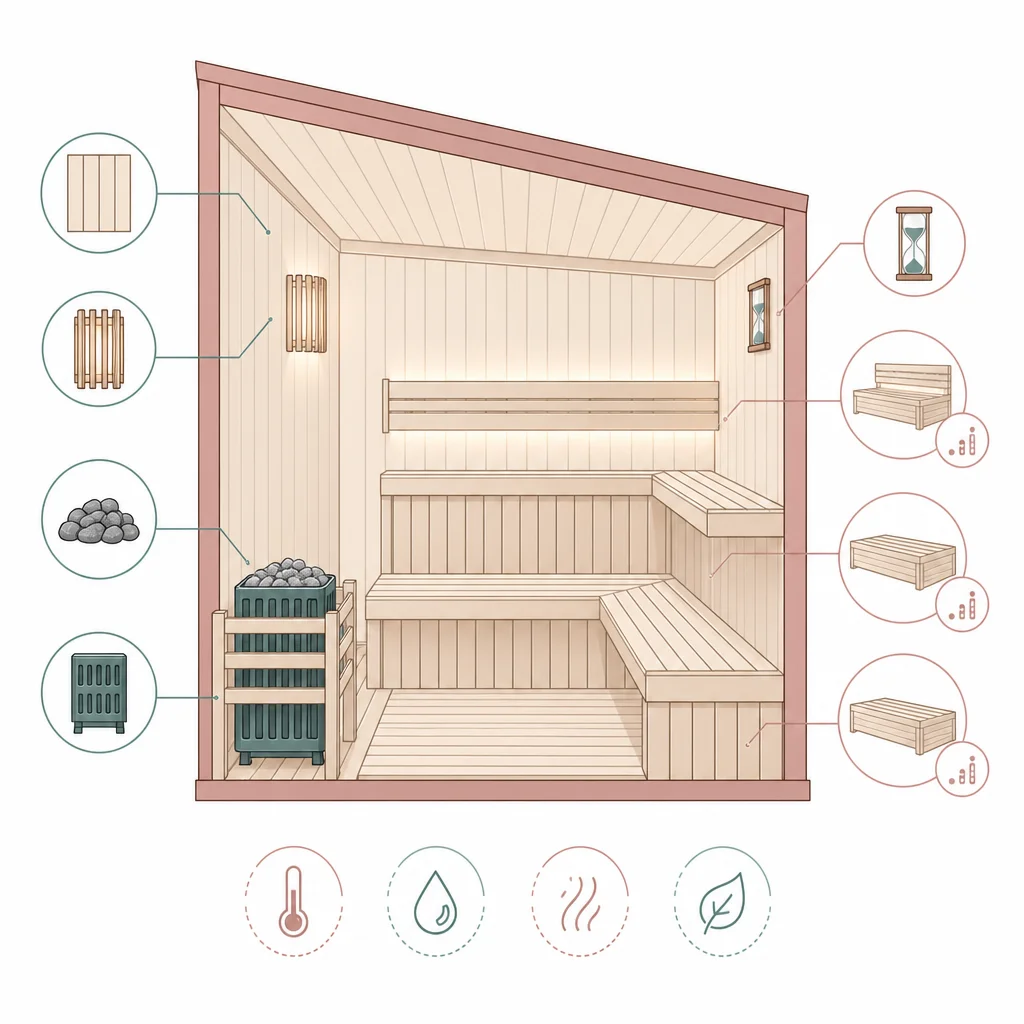
One idea to carry into the rest of this, because it explains most of the friction below. A thermal facility is a health and rest space that happens to be social. It is not a dating venue, and treating it as one is the fastest way to be asked to leave — usually by staff, occasionally by the other people in the room, and almost always without a conversation first.
That distinction matters more for non-monogamous people than for most, because the assumption runs the other way. Someone who books a sauna for three people is not automatically looking for anything to happen in it. Plenty of people in open relationships go to a thermal bath for the same reason anybody else does: their shoulders hurt, the weather is grim, and it is cheaper than a weekend away.
What Sauna and Spa Days in Non-Monogamy Are Actually For
The honest answer is that they are for low-bandwidth time together. A sauna asks nothing of you. You do not have to maintain eye contact, fill a silence, decide what to order, or pretend to be following a conversation in a room with bad acoustics. For a group of three, that removes roughly half the usual friction, because most of the difficulty in a three-person dynamic is turn-taking, and a warm room takes turns away from everyone equally.
It is also one of very few settings where nobody can be left out of a conversation by accident. Three people in a bar fall into pairs constantly; three people sitting on a bench at different heights mostly do not. If you have ever watched a new person get quiet because the two people who already know each other started talking about something only they understand, you already know why this is worth something.
- A reason to be somewhere together that is not a date and not somebody’s front room — useful early, when neither label fits yet.
- Silence that is not awkward, which makes it a genuinely good place for an introvert; the introvert guide goes into why this matters more than people expect.
- A clear end point. Most sessions are booked in slots, so nobody has to invent a graceful exit.
- No alcohol in the warm areas, which removes the single biggest source of blurred consent in social ENM settings; the piece on alcohol and limits is the longer version of that point.
- An activity that treats everybody the same regardless of who arrived with whom.
What it is not for is escalation. Public sexual behaviour in a thermal facility is not a grey area: it is against the rules essentially everywhere, it is a criminal offence in a lot of jurisdictions, and it makes the space worse for people who came to sit down. Any version of this that involves pressure toward something physical has already gone wrong before anyone reaches the changing room.
Heat, Bodies and the Medical Reality
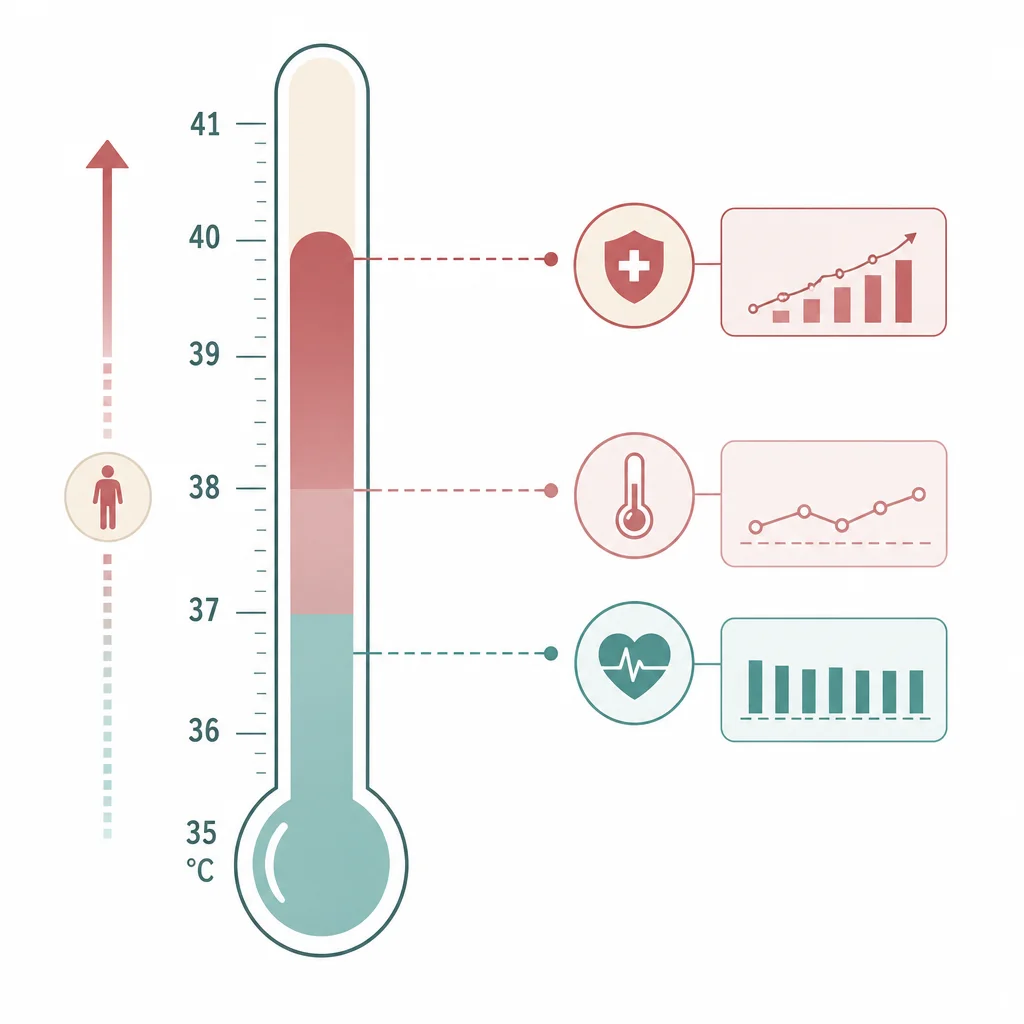
Sustained heat changes people before they notice it has. Judgement loosens, patience shortens, and the gap between what someone agreed to beforehand and what they feel like in the moment widens. That is not a character flaw; it is physiology. It is also the strongest argument for keeping sessions short, agreeing limits while everyone is still cool, and treating the first session as the only one where nobody gets to renegotiate anything.
The practical version: drink water before you go in rather than after, sit on a towel every time, take the cool-down seriously instead of treating it as optional, and leave the moment anyone feels light-headed, nauseous or oddly irritable. Two short sessions with a proper break beat one long one, and this is one of the few areas where the conservative choice is also the more pleasant one.
| If this applies to you or someone in your group | What usually helps |
|---|---|
| Alcohol in the hours beforehand | Move the session to another day. Heat and alcohol compound, and the combination is where most avoidable incidents happen — see setting limits around drinking. |
| Pregnancy, or trying to assess pregnancy risk | Ask a clinician first rather than a forum. Many venues post specific guidance and some decline entry. |
| Heart condition, blood pressure medication, diabetes | Get individual advice before booking. Several venues require a note or simply ask you not to use the hottest rooms. |
| Skin conditions, eczema, recent sunburn | Chlorine, salt and heat interact badly with compromised skin; the hygiene guide covers the parts that are within your own control. |
| Migraine, vertigo, or a recent illness | Pick the coolest room, keep the session short, and sit near a door. |
| Restricted mobility, chronic pain, fatigue conditions | Check step-free access, bench height and whether there is a hoist before you book; the chronic illness guide is worth reading alongside this. |
None of that is a substitute for individual advice. Bodies differ, medications differ, and a general article cannot tell you what your own safe limit is. The NHS guidance on heat exhaustion is the right place to read the warning signs properly, and it is worth two minutes before a first visit rather than after.
Clothing-Optional, Clothed, and Knowing Which You Booked
This is the single largest source of disaster, and it is entirely avoidable. Thermal facilities fall into several different categories, and two venues in the same city can be at opposite ends of it. Some are textile-free throughout. Some require swimwear in the pools and allow towels in the cabins. Some are single-sex. Some run mixed sessions on certain days and single-sex sessions on others. A few have quiet areas where photography is permitted and others where a phone in the room gets you removed.
For non-monogamous groups the rule is simple and non-negotiable: everyone needs to know which kind of venue they are walking into, before they are standing in the car park. Surprising someone with a clothing-optional policy is not a small miscommunication, it is the kind of thing that ends a new connection outright.
- Read the venue’s own rules page rather than a review site, and read it all the way down — photography and clothing policies usually sit in different sections.
- If it is not clear, telephone. Reception staff answer this question constantly and would far rather field it in advance than at the door.
- Say it out loud in the group chat, in one sentence, with the venue name attached. Do not assume somebody else has read it.
- If anyone is unsure, book the clothed venue. There is no version of this where pushing past hesitation is worth it.
- Ask about the mixed-versus-single-sex schedule explicitly, because it catches people out more often than clothing does.
Bodies are part of this conversation and it is worth being direct about it. A warm room where people are unclothed or nearly so is not an invitation to comment on anybody’s body, including your own partner’s, and including compliments. People who are already uneasy about being seen — which is most adults, and disproportionately people who have been on the receiving end of an unkind remark — will hear any comment as scrutiny. Body image in this context is worth reading before you go, not after.
Consent in a Room Where Nobody Wants to Be Talked At
Quiet rooms have their own etiquette, and it is stricter than most social settings rather than looser. People are there for silence. A long conversation, even a cheerful one, is an intrusion on everybody else in the room, and the people who use these facilities regularly will not thank you for it. That changes how consent has to work: you cannot negotiate at length, so you have to negotiate beforehand and keep the in-room version tiny.
- Agree the shape of the afternoon while everyone is still dressed and still cool. What is on offer, what is off, and what happens if somebody changes their mind — a boundaries checklist makes this faster than improvising it.
- Keep one short signal for I want to leave, and make sure all three people know it. A hand on the shoulder or standing up is enough; it does not need to be clever.
- Treat touch as something to be invited, not assumed. Everything in the guide to touch boundaries applies here with the volume turned down.
- Step into the corridor for anything longer than a sentence. It is the one space in the building designed for talking, and using it protects the silence everyone else came for.
- Remember that withdrawing agreement is not a negotiation. If somebody says stop, the answer is stop; how to withdraw consent covers why the follow-up conversation happens later, not in the moment.
The unusual risk in this setting is not pressure that looks like pressure. It is the slow, warm, low-light version where nobody says anything and everyone assumes someone else is comfortable. Naming things early — out loud, in normal lighting, while it still feels slightly awkward — is the whole defence. Awkward beforehand beats ambiguous afterwards, every time.
Phones, Cameras and the Changing Room
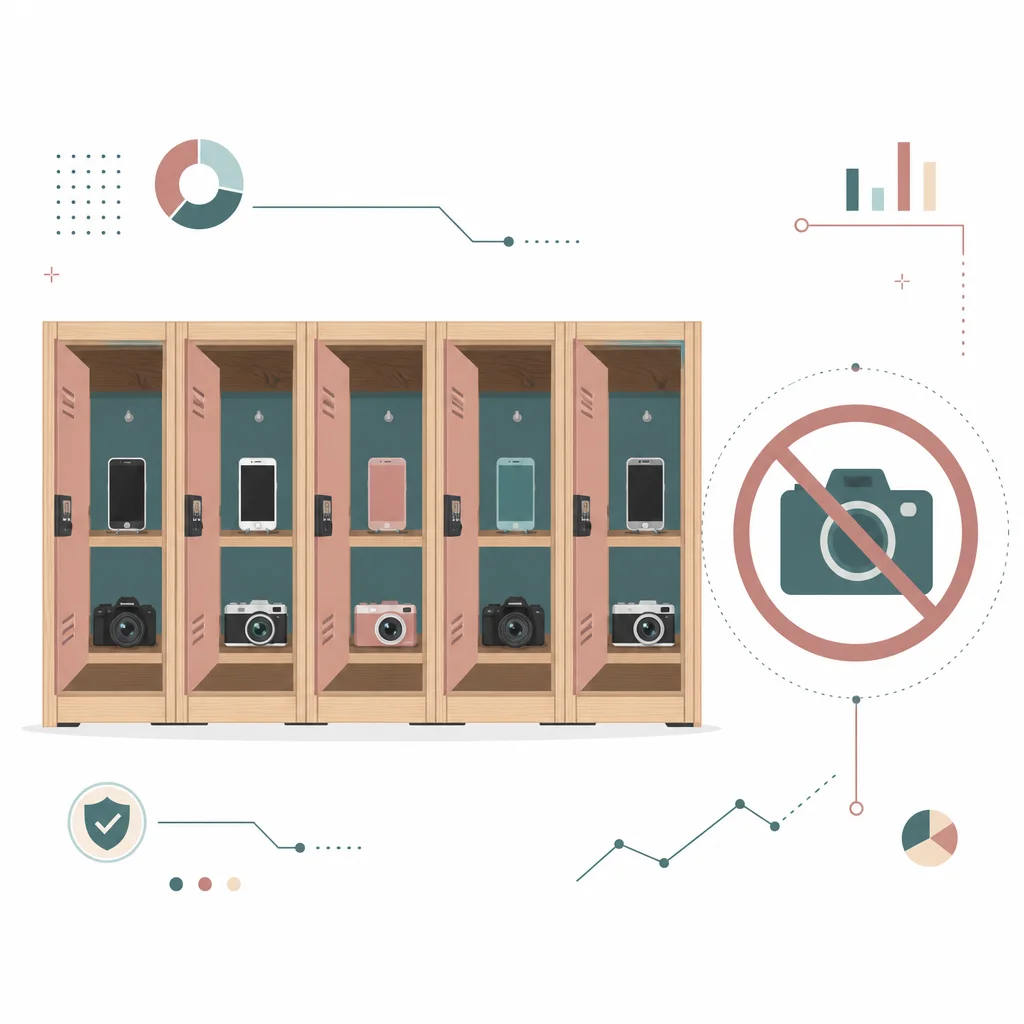
Most thermal facilities ban phones outright in the warm areas, and the ones that do not tend to rely on people using sense. Either way, the rule you should hold to is stricter than any venue’s: no cameras anywhere near a changing area, full stop. A thermal facility is a place where people are unclothed or nearly so, in a space they have been told is private. Taking a photograph there is not a lapse in judgement, it is a serious violation of the people in it, and in many places it is a criminal matter rather than a rude one.
For non-monogamous groups there is an extra layer. Photographs of three people together in a recognisable venue are identifying in a way that a photograph of two people is not, and the person who is least out — about their relationships, their body, or simply about being there — is the one who carries the most risk. Choosing profile photographs carefully and agreeing what gets sent to whom are both worth settling as standing practice rather than case by case.
If someone in the group wants a picture of the three of you, do it outside, in normal clothes, with everyone’s explicit agreement, and accept no as a complete answer. A photo taken on the way in, in the car park, is worth more than one taken inside anyway, because anyone can be in it.
Who Might See You, and What That Means
Thermal facilities are local. That is their appeal and their risk. The people in the next cabin may be your neighbours, a colleague from a job you have not mentioned this at, or the parent of a child in your kid’s class. Three adults arriving together is not evidence of anything, but in a small community it is a thing people notice and talk about, and the person with the most to lose is rarely the person who wanted to go.
The practical version is unglamorous: pick a venue far enough from home that bumping into somebody is unlikely, or go at an off-peak time, or both. Talk about it beforehand rather than in the car park. And be honest about who is actually exposed — a person who is out to everyone and a person who is out to nobody are not taking the same risk in the same room. Handling social stigma and being out in public as three are both worth reading if you have not already.
The same logic applies inside the building. Other users are not an audience for your dynamic, and staff are not there to be charmed into bending a rule. If anything about your group needs explaining to a stranger in a towel, it probably does not belong in the venue.
And if what you actually want is open sky rather than a warm room, that is a different set of problems. The companion piece on beach and pool days takes the same questions outside: photographs in a place full of families, six hours with no shade, and what three adults on one towel look like to everybody else.
Two Partners, Three People, or Meeting Someone There
Going as three established people is the easy case: one booking, one arrival time, one shared understanding of what the afternoon is. The logistics still matter, though. Decide in advance who pays and how, who sits where if the group splits between a warm room and a cool pool, and what happens if one person wants a second session and the other two do not. Small agreements made early prevent the specific resentment of being the person who waited around.
Going as a couple plus someone new is the case that needs more care, because the asymmetry is real. Two people who share a home, a history and a shorthand sit on one side; one person sits on the other. In a quiet warm room that asymmetry does not disappear, it just gets quieter. The person joining should have equal say over the plan, equal right to leave, and no obligation to be grateful for the invitation.
- Let the person joining choose something about the plan — the time, the venue, the length — so it is not entirely pre-decided by two people who already agree with each other.
- Do not debrief in front of them. The car ride home is not the place, and the corridor outside is worse.
- Avoid the two-against-one shape physically: if the group splits, split differently each time rather than into couple plus individual.
- Check in privately, once, partway through — one sentence from either side, not a performance of concern.
- If you have not met before, everything in the first meet-up guide and screening someone first applies unchanged, quiet room or not.
And if the plan is to meet someone there rather than arrive with them, be honest that this is what is happening. Turning a relaxation venue into a first meeting without saying so puts someone in a position they did not agree to, and it is the kind of thing that gets around a local community quickly. Other date formats do this job better and with less risk attached.
Leaving Early Without Ruining the Day
Heat is the best exit excuse in social life. I have had enough is not just accepted in a thermal facility, it is the correct behaviour, and nobody will think less of anyone for acting on it. That makes this the easiest setting in the world to leave, provided the group has agreed that leaving is allowed.
- Say it before you go in: anybody can call it, no explanation needed, nobody takes it personally.
- If one person leaves and two stay, the two do not get to renegotiate the original agreement without the third person there.
- If the whole group leaves, that is also fine, and the rest of the day does not have to be salvaged.
- Do the check-in afterwards, not in the changing room. Warm, tired and half-dressed is a bad state for a relationship conversation.
- If something did go wrong, aftercare is the right frame rather than the drive home.
The quieter point is that a sauna day is rarely the thing that decides anything. It is a low-stakes afternoon with a clear end time, and that is exactly why it works so well early on. What it does is show you how a group handles boredom, discomfort and a small amount of waiting around — which, honestly, tells you more than a three-course dinner does.
Can three people share a sauna cabin in a public venue?
Usually yes, if the venue allows groups and there is space, but the rule is the venue’s to set and some cabins have a two-person limit for practical reasons. Ask at reception rather than assuming, and be prepared to split between two cabins and meet at the cool-down pool. Nobody at the desk needs a reason, and giving them one tends to make things worse rather than better.
Is a thermal bath a good first meeting place for a couple and someone new?
It is a good second or third meeting, and a poor first one. The quiet works in your favour only once people already know how each other talks. For a genuine first meeting, a public place with normal clothes, easy exits and the ability to actually hear each other is a better bet — the first meet-up guide covers what to look for.
What do we do if someone else in the facility makes an unwanted approach?
Leave the room and tell staff. These venues take it seriously because their licence and their regular users depend on it, and you do not owe the person a conversation first. If you are there as a group, name it to each other immediately rather than waiting until you are in the car, so nobody is left wondering whether they imagined it.
How long should a first session be?
Shorter than feels necessary. Fifteen to twenty minutes in the warm room with a proper cool-down, repeated once if everyone wants to, is a good first visit. It is much easier to add time on a second visit than to recover an afternoon where somebody pushed through and then felt unwell — the NHS guidance on heat lists the warning signs worth knowing.
Do we have to tell the venue anything about our relationships?
No. Staff need a booking, a name and a payment. Nothing about who is partnered with whom is any of their business, and volunteering it tends to make everyone less comfortable rather than more. Disclosure inside the group is the thing that matters, and agreeing what everyone is comfortable with beforehand is where to spend the effort.
The short version: sauna and spa days in non-monogamy are worth doing because they are quiet, cheap, bounded and easy to walk away from, and because a warm room asks less of three people than almost any other setting does. Check the clothing rules before you book, keep sessions short, leave the phones in the locker, and treat the silence as the point rather than as a gap to be filled. That is most of it. The rest is just being honest with each other about what the afternoon is for.
Editor’s note: this is general information for adults, not medical or professional advice. Thermal facilities set their own rules, and those rules differ sharply between countries, regions and individual venues — what is normal in one city is prohibited fifty kilometres away. Heat affects people differently, and anybody with a heart condition, blood pressure medication, diabetes, a pregnancy or a skin condition should check with a clinician before spending time in high heat. Read the venue’s own policy, follow its staff, and treat everything below as prompts for a conversation rather than as a rulebook that overrides either.