Table of Contents
- Asking for Space in Non-Monogamy Is a Practical Request
- Name What Kind of Quiet You Actually Mean
- Tell the People Whose Week Changes
- Say the Duration Out Loud
- Write the Message Before You Send It
- When More Than One Partner Is Involved
- What Not to Do With the Quiet
- A Short Checklist Before You Go Quiet
Thursday evening, and you have decided you want the next few days mostly to yourself. That is a perfectly ordinary thing to want. What makes it complicated is the sentence you have to write before you can have it, because in a multi-partner life one quiet week has several readers and each of them will notice your absence differently. Asking for space takes no effort at all; phrasing it does. This article is about the wording: what to say, to whom, for how long, and what to do when the date you named arrives. It assumes more than one relationship, because that is where the wording starts to matter.
Most of us learn to ask for quiet by apologising for it first. That habit makes sense in a two-person relationship, where one withdrawal has one audience. In a network, one quiet evening can be read by a partner, a metamour, a group thread and someone you were meant to see on Thursday, and each of them will fill the gap with a different story. A clear request is cheaper than four separate reassurance conversations later. It also protects the thing you actually want, which is an ordinary stretch of time that nobody has to manage.
A caveat belongs near the top rather than at the bottom. Everything below is general information for adults about communication, and it is not medical, legal, or therapeutic advice. Wanting time alone is not a condition to be diagnosed, and no paragraph here can tell you what a feeling means in your particular life; APA’s material on stress discusses pressure in broad terms, while a qualified professional is the right person for anything personal. The scope is deliberately narrow: wording, timing and the small logistics of one request. Where a change in contact is bound up with pressure or a safety concern, start with relationship safety guidance instead of a dating guide.
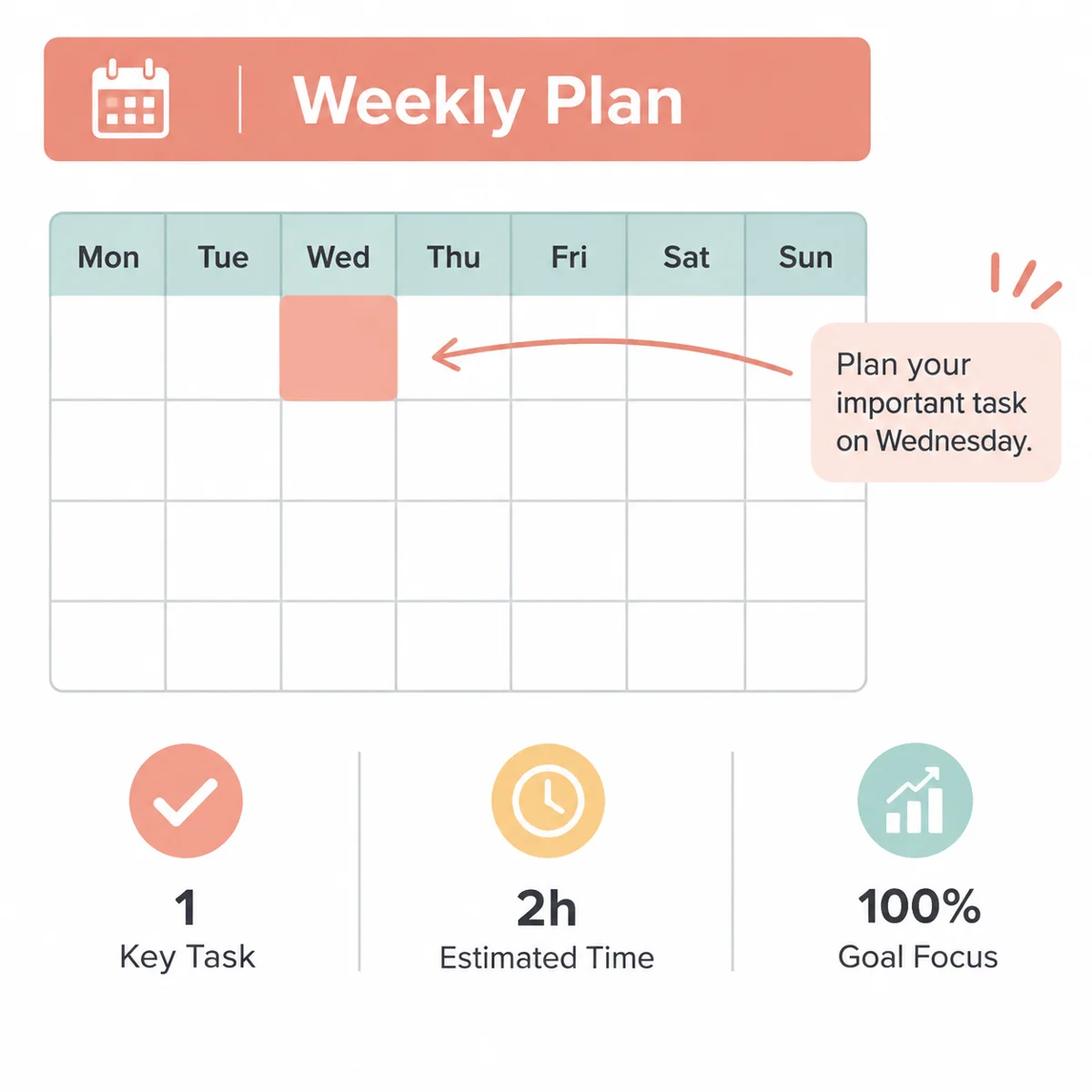
Two questions settle almost all of this. First, who will actually notice that you have stopped replying? Second, whose arrangements fall apart if you are unreachable for a few days? Anyone outside those two groups can hear about it later, when writing costs you nothing. A metamour you exchange three messages a month with belongs in the later group, and so does a partner with no plans on the calendar this week. Fairness has very little to do with it; you are distributing information according to effect, not according to affection. It also helps to keep rules, boundaries and agreements distinct in your head: a statement about your own availability is a boundary, and it does not become a rule just because other people are affected by it.
Asking for Space in Non-Monogamy Is a Practical Request
Treat the request as admin, not as a confession. You are not announcing a problem with a relationship. You are reporting a change in your capacity for a bounded stretch of time, the same way you would say you have a deadline or a late shift. Framed that way it needs far fewer words, and it gives the other person something concrete to respond to instead of a mood to interpret.
Vagueness is what creates the extra work. “I need a bit of space” can sound like an opening statement about us. “I am going to be offline most of this week and I will write on Sunday” is a schedule. The second version is kinder to everyone, including you, because it does not ask anyone to guess whether they did something wrong. APA’s overview of communication is useful here mostly because it treats clarity as a skill rather than a personality trait, and naming your different communication styles saves both of you from reading a tone into a two-line note.
Precision also protects your privacy. A note dropped into a shared chat is no longer yours once it lands; six people can spend an afternoon discussing whether you are all right, and there is no graceful way to gather the conversation back up. Send individual messages instead. Group chat etiquette and texting boundaries exist largely for this reason, and the practical version of both is short: choose your recipients yourself, one at a time, and never ask a thread to carry a private decision for you.
Name What Kind of Quiet You Actually Mean
Space is a bag word. Before you send anything, work out which of several different things you are asking for, because the wording changes a lot between them. You might want fewer messages, no new plans, an evening entirely alone in your own home, a pause on one specific topic, or simply the right not to be cheerful on demand. Those are five different requests and they deserve five different sentences.
A useful check is to finish this line in one breath: for the next blank, I would like blank, and I will blank. If you cannot fill the three blanks, the message is not ready yet. This is not about being polished. It is about not making someone else do the work of turning a feeling into a plan. Setting boundaries is a skill mostly made of exactly this kind of small, unglamorous precision, and a boundaries checklist can help if you are unsure where your own line sits.
Justification and logistics are different currencies, and only one of them is being asked for. Nobody is entitled to an account of why you are tired, what your temperament is like, or whether you have been feeling a particular way this month. A moved plan and a return date are the entire debt. Once you stop paying the other kind, the whole message gets shorter and the week gets quieter, which was the point all along.
Tell the People Whose Week Changes
Think about Thursday first, not about your feelings. A partner expecting you at seven needs a line about the plan before anything else. A housemate needs to know the flat will be still and your hours will be irregular. A partner whose calendar is empty this week can be told on Sunday, or not at all until you feel like writing. Working from the most concrete disruption towards the least concrete one is a faster method than trying to rank people by how much they care.
| Person | What they need | What they do not need |
|---|---|---|
| A housemate or live-in partner | That the flat will be still, your hours will be irregular, and what you need from the room | An hour-by-hour account of your mood |
| A partner with a fixed plan | One line saying the plan is moving, and a proposed new date | An explanation of why you need the time |
| A partner with no plans this week | Nothing yet, or one short note when you have the energy | A full briefing copied from another message |
| A metamour | Only what you agreed they would hear, usually through their own partner | A direct update you never consented to |
Disclosure has a way of widening without anyone deciding it should. A single line asking someone to pass the word along hands your private business to whichever person happens to be free, and you cannot choose how it gets paraphrased. Privacy in threesome dating and phone privacy both argue for the same narrow habit: pick each recipient yourself. Some networks have an agreed arrangement where a metamour hears news through a shared partner; that is fine, as long as it is an arrangement you chose earlier rather than a shortcut invented on a tired evening.

Say the Duration Out Loud
An open-ended quiet period is where most of the damage happens. Without an end point, the other person has no way to tell a few days from the beginning of the end, and the longer it runs the more they will feel they should not ask. Give the request edges. You do not need to know exactly how you will feel on Sunday; you only need to commit to a point where you will check in.
| Piece | A version that works | Why it helps |
|---|---|---|
| Length | “Until Sunday evening” rather than “for a while” | The other person can stop watching the calendar |
| Contact | “I will read messages but reply slowly” | Silence stops looking like a verdict |
| Return point | “I will write on Sunday even if nothing changes” | Trust rests on a date, not on a mood |
| Plans | “Thursday is moving; I will suggest a new day” | Nobody is left holding a plan you quietly dropped |
The return point is the part people forget. Put a date on it, then actually send the message on that date even if what you have to say is that nothing has changed and you will write again on Wednesday. A small on-time note does more for trust than a heartfelt paragraph three days late. Regular check-ins are a good place to keep that habit, and difficult topics are far easier to raise inside a standing slot than in the middle of an unexplained silence.
Write the Message Before You Send It
You do not need a speech. You need three or four plain sentences that do a specific job, and it helps to write them once and reuse them. The best versions are boring on purpose: they say what is changing, for how long, what you will still do, and when you will be back. Boring is a feature here, because drama is exactly what other people will add if you leave room for it.
- “I am going to be quiet for the next few days. I will write properly on Sunday.”
- “Nothing has gone wrong between us. I just have less room than usual this week.”
- “Thursday needs to move. Can we look at next week instead?”
- “I will read messages, but my replies will be slow until the weekend.”
- “Thank you for offering to come over. I would rather have the time to myself.”
Read the lines again before sending and cut anything that sounds like a verdict on the relationship. Saying you have felt suffocated may be honest, but it gives the other person a problem they cannot solve from their side of the screen. Feedback conversations have their place, and that place is a conversation, not the opening note of a quiet week. Reassurance belongs in its own conversation as well; folding two requests into one note tends to leave both of them unanswered.

When More Than One Partner Is Involved
With several partners, the risk is not that someone hears and someone does not. It is that two people hear two different versions and quietly compare notes. Send each person their own message, in the same window of time, with the same facts about duration and contact. The content can be personal, but the logistics should match.
- Write down the three fixed facts first: how long, what contact, and the return date.
- Send each message yourself, within the same hour, so nobody hears it second-hand first.
- Move or cancel any fixed plan in the same message, and propose an alternative day.
- Put the return date somewhere you will see it, then send something on that day.
Do not ask one partner to pass the message to another. It saves you four minutes and costs you control over the wording, and it puts that partner in the odd position of being your spokesperson while also being affected by the news. Balancing time across relationships and time management in polyamorous relationships already give you a shared vocabulary for availability; use it here instead of inventing a new one under pressure. When a partner needs space in ENM is the other half of this conversation, and it is worth reading before you send, because what lands well depends partly on what the other person has to do with it.
What Not to Do With the Quiet
A request for space is about contact, not leverage. It is not the moment to reopen an unrelated agreement, to see whether someone will chase you, or to find out who notices first. Those moves turn an ordinary boundary into a measuring exercise, and people tend to remember being measured. Repairing after a conflict is a different conversation with a different purpose; if what you actually need is to address something that went wrong, say that instead and use the right conversation for it.
- Do not attach a list of everything the other person has done wrong.
- Do not use the quiet to push a change to an agreement you never raised before.
- Do not post publicly about needing a break while the people closest to you are still reading a private note.
- Do not check who messages first and read the results as evidence about anyone.
- Do not leave a fixed plan in place and simply fail to arrive.
The same goes for disappearing entirely. Quiet with an agreed shape is rest. Quiet with no shape and no return date is something the other person has to absorb alone, and it is fair to name the difference. Withdrawing consent and saying no are both legitimate, and both are clearer than a silence that could mean anything. When a boundary has been crossed the right move is a direct conversation, not a week of absence that leaves someone guessing.
A Short Checklist Before You Go Quiet
Before you send, run down a short list. It takes a minute and it catches almost every avoidable problem: a vague reason, a missing end date, two different versions of the same message, or a plan you forgot to move. Getting these right is less about being considerate in the abstract and more about protecting your own week from follow-up questions.
- I have named what kind of quiet I mean, in one plain sentence.
- I have said how long it lasts and when I will check in.
- Everyone whose plans change has been told directly by me.
- The logistics match across every message I sent.
- I have moved or cancelled every fixed plan in the window.
- I am not using this week to raise a different problem.
One last thing. You are allowed to change your mind. If two days in you want company, say so; a boundary about your availability is yours to revise, and nobody earns a penalty for being asked back early. Emotional intimacy is not measured by how perfectly you hold a plan you made on a tired Tuesday. General guidance on rest and everyday wellbeing is a reasonable external reference if you want to read about downtime in non-clinical terms.
Do I have to give a reason when I ask for space?
No. You owe the practical effect on shared plans, not a justification of the feeling. A sentence about duration and contact is complete on its own. If you want to offer more context you can, but nobody should be able to require it, and enthusiastic consent applies to information about your own time as well.
Should I tell my metamours, or only my partners?
Tell the people whose week changes. A metamour with no shared plans this week usually needs nothing. If you and your partners have an agreed disclosure arrangement, follow it; if you do not, do not invent one in the middle of a tired week. Privacy guidance covers the wider principle.
What if someone keeps messaging anyway?
Restate the boundary once, plainly, without adding new detail: say you are still quiet until Sunday and will write then. Then stop replying for the window you named. Repeated contact after a clear boundary is a different issue from space, and a boundaries checklist or a direct conversation is the right tool.
Is asking for space the same as taking a break from dating?
No. A break from dating is about stepping back from meeting new people, and coming back after a breakup or a deliberate pause has its own decisions. This is about a short, bounded change in contact inside relationships that continue. Accountability after a mistake and rebuilding trust are separate conversations again. Conflating the four tends to make a small request sound much bigger than it is.
Asking for space is not a withdrawal from anyone, and it is not a test of how much they care. It is one plain sentence about a bounded stretch of time, sent to the people whose week it changes, with a date attached for when you will be back in touch. Done that way it takes almost nothing to maintain and gives everyone something solid to stand on while you are quiet. The rest of your relationships can carry a few days of ordinary rest without anyone having to solve it.
Editorial note: These are general notes for adults on how people talk to each other in consensual non-monogamous relationships; they are not medical, legal, or therapeutic advice. No arrangement is assumed here and no claim is made about what anybody ought to feel. When a change in contact comes with pressure, a safety worry, or the sense that saying no is not available, a local support service or a qualified professional is the right first call. 3Cupid publishes guides in this series, and you can find more of them right here at 3Cupid.