Table of Contents
- What Cycling Groups in Non-Monogamy Get Right
- Choose the Ride Before You Choose Anything Else
- Ride Leaders, Sweeps and Quiet Authority
- The Group Is a Public Room on Wheels
- Nobody Can Talk Properly at Speed
- When Two or Three of You Ride Together
- Mechanicals, Weather and the Boring Logistics
Cycling groups in non-monogamy work because the structure does the social labour for you. You get a recurring Saturday, a route somebody else already planned, a pace nobody has to negotiate out loud, and half an hour at the end where everyone stands around with a drink. Nobody has to be touched, nobody has to be interesting on demand, and you can take part fully without making eye contact with a stranger across a dark room. The complications are specific too: one person usually decides the route, a line of matching kit on an open road is more visible than people expect, and a ride is one of the few social settings where you routinely cannot simply stop and talk. This guide covers pace bands, the quiet authority that comes with leading a ride, what the road makes public, how to raise anything at all while moving, and how to keep showing up when things get complicated.
One boundary note, because the categories overlap. This is about club and community rides: the Saturday group, the shop ride, the informal chain of people who text each other when the forecast is decent. It is not about travelling with partners, which the road trip guide and the camping guide already cover, and it is not about a gym or a league. A recreational sports league wants your weekend and a scoreline; a ride wants your Saturday morning and a spare tube, and that difference changes what kind of group forms around it.
Three sources worth a look before you commit to a season. The APA topic page on exercise and fitness is a good baseline for why a standing physical habit tends to do more for most people than an occasional burst of effort, and the NHS exercise guidance is the practical version, including what counts as moderate activity and how to build up without hurting yourself. The APA page on friendship explains why the same faces every week turn into something that actually supports you, rather than a crowd you happen to recognise.
Hold on to one idea before the specifics, because it explains nearly every problem below. A cycling group is a friendship group with a route attached. It survives on people being glad to see each other at nine in the morning, and it closes ranks quietly when somebody treats it as a marketplace — usually by leaving them out of the text thread rather than by saying anything to their face.
What Cycling Groups in Non-Monogamy Get Right
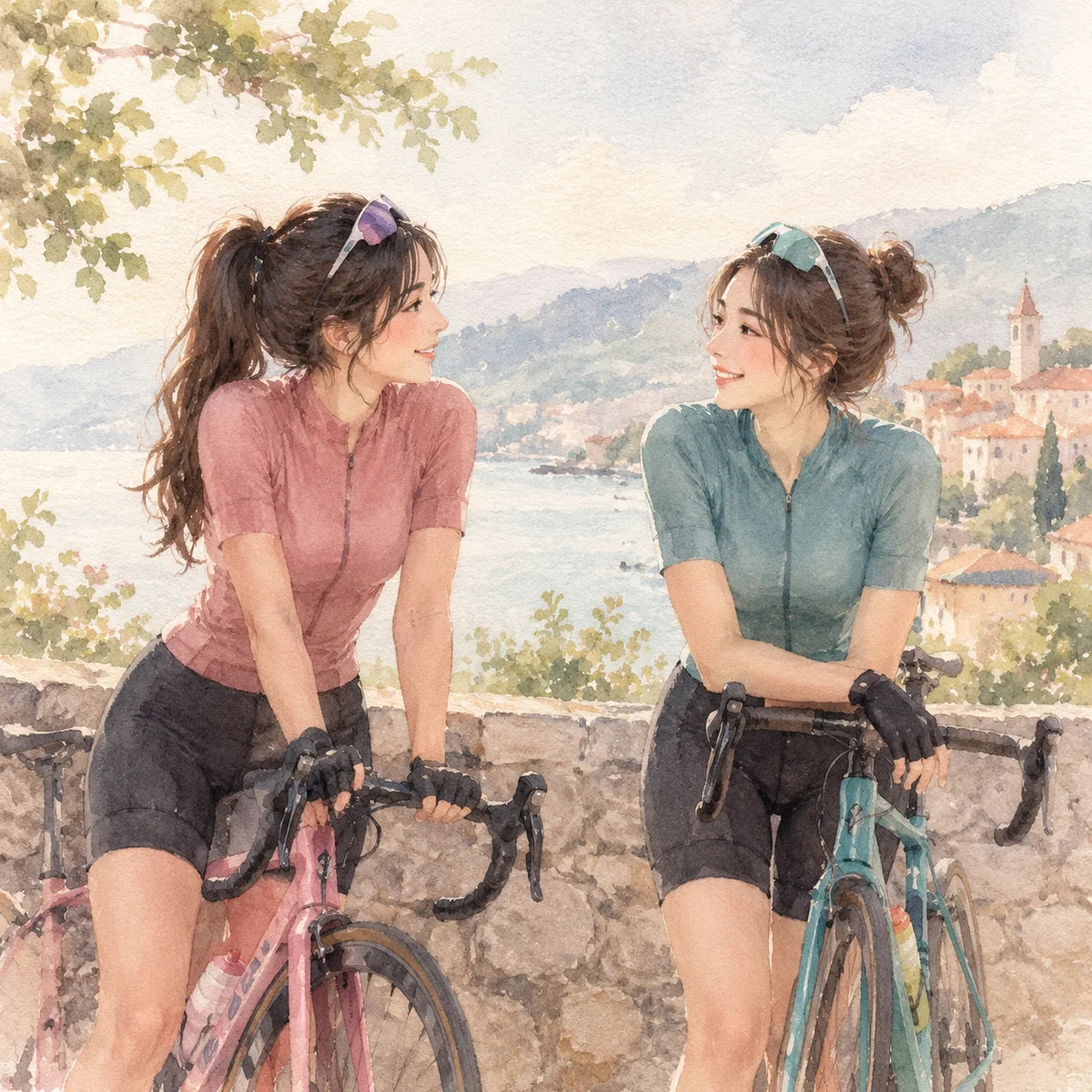
Four things make a riding club unusually easy to belong to. It rolls out whether you are there or not, so turning up never has to be negotiated. There is a job to be getting on with, which spares you the small talk. You travel shoulder to shoulder rather than across a table, so nobody is studying anybody’s expression. And the morning has a fixed shape — out, round, back, stop — so there is nothing to decide at the end of it.
That third one is the one non-monogamous riders notice fastest. Most social settings in this space are built around face-to-face intensity: a bar, a dance floor, a dinner table where everyone can see who is looking at whom. On a bike you are side by side looking at the road, and conversation happens sideways, in short bursts, with nobody watching anybody’s face. For anyone who finds that intensity tiring — and plenty of people do — it is a genuinely different kind of room. The guide to sensory overload is relevant here for the opposite reason: wind noise, traffic and physical effort are a lot of input, and a hard ride can leave you with less capacity for a delicate conversation, not more.
Worth adding a fifth. Partners get absorbed into the group without anybody arranging an introduction. Ride four Saturdays alongside someone and they know your people; none of it has to be announced. That is the same mechanism behind organising an ENM meetup in your city — repetition does the explaining, so nobody has to.
Set against the alternatives, the trade is clearer. Social dancing means being touched by people you met this evening — ideal for some, impossible for others. A board game night means three hours in a chair learning rules. A karaoke night means getting up and performing in front of strangers. A gym is a building full of people pointedly not looking at one another. Riding asks for a spare tube and a willingness to wait at a junction.
Choose the Ride Before You Choose Anything Else
The single biggest mistake new riders make is joining the wrong ride and concluding they are not a cyclist. Pace, distance, terrain and whether anyone waits at the top of a hill are group decisions, not personal failings, and they vary more between two local groups than between a beginner and an experienced rider in the same group.
| Ride type | What it asks of you | What it gives you socially |
|---|---|---|
| Shop or beginner ride, 20 to 30 km, no-drop | A spare tube and a willingness to wait. | The widest mix of people and the slowest pace, so the most actual conversation. |
| Club chain gang or fast group ride | Real fitness, and the confidence to hold a wheel safely. | Very little talking. You are known by whether you turn up, not by what you say. |
| Gravel or mixed-surface ride | A bike that copes, and comfort with being a long way from help. | Long stops, small groups, and the most time standing around talking. |
| Cafe or social ride | Almost nothing. People ride to the coffee. | The sit-down at the end is where most of the social life happens. |
| Commuter or utility cycling group | Lights, a working lock, and a route you know. | Short repeated contact, which is how most low-pressure friendships start. |
Match the ride to the version of yourself that will actually be there at nine in the morning, not the version you imagine on a good day. A slower group you attend every week does more for your social life than a fast one you make twice a season and dread both times. If you are returning after injury, illness, a long gap or a period where your body simply did less, start below what you think you can manage: the first six weeks are about building the habit, and a group that regroups is worth more than a group that impresses anybody.
Ride Leaders, Sweeps and Quiet Authority
Every riding group has somebody who decides things. Sometimes it is a named ride leader or a club officer. Usually it is whoever knows the roads and quietly ends up at the front. That person sets the route, sets the pace, decides whether the group stops, decides whether anyone waits, and decides when the ride is over. Most hold it lightly and the group is better for it. The ones who hold it tightly turn a Saturday into a small fiefdom, and people drift away without ever saying why.
- Publish the route, the distance and the pace before anybody commits to coming.
- Say out loud at the start whether it is a no-drop ride. Ambiguity here is where most bad mornings begin.
- Name a sweep, and do not make it the same person every week.
- Regroup at stated points rather than when somebody happens to notice a gap.
- Never put anyone’s name down for anything without asking them first.
- Rotate who picks the route, at least once a season.
If you are the rider at the back of a group where the leader is not doing those things, the useful move is to ask for information rather than to demand a change. Are we regrouping at the top, or is everyone on their own after the climb? is a question that most people can answer without getting defensive, and it tells you what kind of group you have joined. If the answer is that nobody waits and nobody says so, that is the answer, and you are allowed to find another ride.
There is a specific reason this matters in non-monogamous groups. A ride leader who is also somebody’s date, somebody’s partner, or somebody’s ex is making decisions that affect people who cannot easily object, because objecting looks like complaining about the route. The fix is the same as it is anywhere else with a power gradient: write the things down, say them out loud at the start, and keep the decisions boring and visible.
The guide to enthusiastic consent in non-monogamy and the piece on withdrawing consent cleanly are written for other rooms, but they describe a skill that transfers directly: agreement is only worth much when declining it is genuinely available, and a choice nobody at the back can actually make is not a choice. A group where the slowest rider can say I am done, I am heading back without it turning into a discussion is a group that still exists in two years.
The Group Is a Public Room on Wheels
This is the part riders underestimate. Six people in matching kit on an open road are legible from a passing car in a way that six people in a pub are not. Add a club name on the jersey, a photo posted to a club page, a ride tracker with your start point on it, and a tag from somebody you have known for a decade, and a Saturday morning becomes a public record of who you spend time with.
None of that is a reason to stay home. It is a reason to decide, before the season starts, what you want to be visible. Does the club page post names? Do you check with people before tagging them? Are you happy with a ride tracker that shows where a ride began and ended? Those are ten-minute conversations and they are much easier to have in March than to argue about in July.
Disclosure sits inside all this rather than alongside it. Nobody is owed a speech, and a lay-by is a poor place to give one. What tends to work is one short sentence, timed to the moment it becomes relevant — when small talk starts requiring you to edit the truth, or when it is obvious you will be there all season. I should say, I have partners covers it, and the clause after it — happy to keep riding either way — makes clear the group is not conditional on how they take it. Disclosing ENM status while dating and coming out to friends and family go into the pacing, and if the concern is professional rather than personal, coming out at work is the harder version of the same calculation.
In a small town or a rural area this weighs differently again. There are fewer rides, everybody knows everybody, and the same faces appear at the shop, the school gate and the surgery. Non-monogamy in a rural area and threesome dating in small towns both describe the same trade: fewer options, more visibility, and a much longer memory. Decide deliberately what you want the ride to know, because if you do not, it will work it out anyway.
Two smaller practicalities. Read the guide to ENM profile photographs and sending photos to a new partner before you post anything from a ride — a group photo can tell a colleague, an ex or a family member something the person standing next to you never agreed to share. And if a photo of you goes up somewhere you did not agree to, asking for it to come down is a normal request, not a drama.
Nobody Can Talk Properly at Speed
Wind noise at thirty kilometres an hour is roughly the volume of a loud conversation. Two riders side by side can manage short exchanges. A line of riders cannot. This sounds trivial and it shapes the entire social texture of a ride: anything that needs a considered answer waits for a stop, and if you try to have it anyway, you will get an answer given half-heard and immediately regretted.
- Raise nothing important while moving. If it matters, it can wait twenty minutes to the cafe.
- Touch on a ride is functional and constant — a hand on a shoulder to signal, a push up a short rise. Ask before you add any that is not.
- Do not sit on someone’s back wheel for an hour without checking they are happy with it. Half a metre is close.
- Keep one ear free. Two earphones on an open road is a safety decision as much as a social one.
- If somebody is struggling, the kind response is company, not instruction.
- Assume you were not heard rather than that you were ignored.
That second item deserves the extra sentence. Riding involves a lot of casual physical contact between people who are not close, and most of it is genuinely about traffic and balance. The line is simple and worth stating: functional contact that you would do to any rider is fine, contact you would only do to this one is not, and if you are not sure which it is, ask. The guide to touch boundaries in non-monogamy is the long version, and it applies more than people expect to a setting where everyone is sweating and leaning on each other at junctions.
The other side of it is that a hard ride leaves you depleted. Staying present during group experiences is worth reading for exactly this reason: the ride is wonderful, and it is also two hours of adrenaline, noise and effort, which is a poor state in which to make a decision about anything at all. Do the deciding later.
When Two or Three of You Ride Together
Plenty of non-monogamous people ride with a partner, and plenty of groups end up containing a couple plus whoever else turns up. Two things reliably go wrong. The first is that the couple rides together every week and effectively forms a closed unit inside the group, which is comfortable for them and quietly excludes everyone else. The second is that a new rider joins two partners’ regular ride and discovers they are an accessory to somebody else’s morning rather than a participant in it.
| Moment | The sentence that works | Why it works |
|---|---|---|
| Somebody is a long way off the back | We will wait at the next junction. | Says the group is staying together without making the rider a problem. |
| Two partners have paired off all morning | Let’s mix it up after the next turn. | Names the pattern rather than the couple. |
| A rider joins a couple’s regular ride | You set the pace today, we will follow. | Hands the new person real agency instead of a courtesy. |
| An argument starts at speed | Save this for the stop. | Nothing important gets settled at thirty kilometres an hour. |
| Somebody needs to get back early | Take the shortcut at the lane, we will see you at the cafe. | Leaving is normal and needs no apology. |
The autonomy point is the one that gets missed, and it is the same one that comes up in every other part of this site. A person joining an established pair is joining on terms mostly set before they arrived: the route, the pace, the cafe, the in-jokes, the fact that the other two go home together. Naming that out loud costs nothing and changes everything. Navigating couple privilege as a third, emotional safety for third partners and dating couples as a single all describe versions of the same asymmetry, and the ride version is no different just because everyone is wearing lycra.
And if you are the pair: notice whether the group has quietly reorganised itself around you. If three people have stopped coming since you started riding as a unit, that is information, and it is more useful than any amount of good intent. Handling uneven attention as a couple is about a different setting, but the diagnostic is the same — look at who has gone quiet rather than at who is complaining.
One more, small and practical. Rides end. If a ride ends somewhere near a house and the plan involves going in, the hygiene conversation is better had before anyone arrives than in a hallway afterwards, and it is not an awkward thing to raise — it is a normal thing between people who have just spent two hours outside.
Mechanicals, Weather and the Boring Logistics
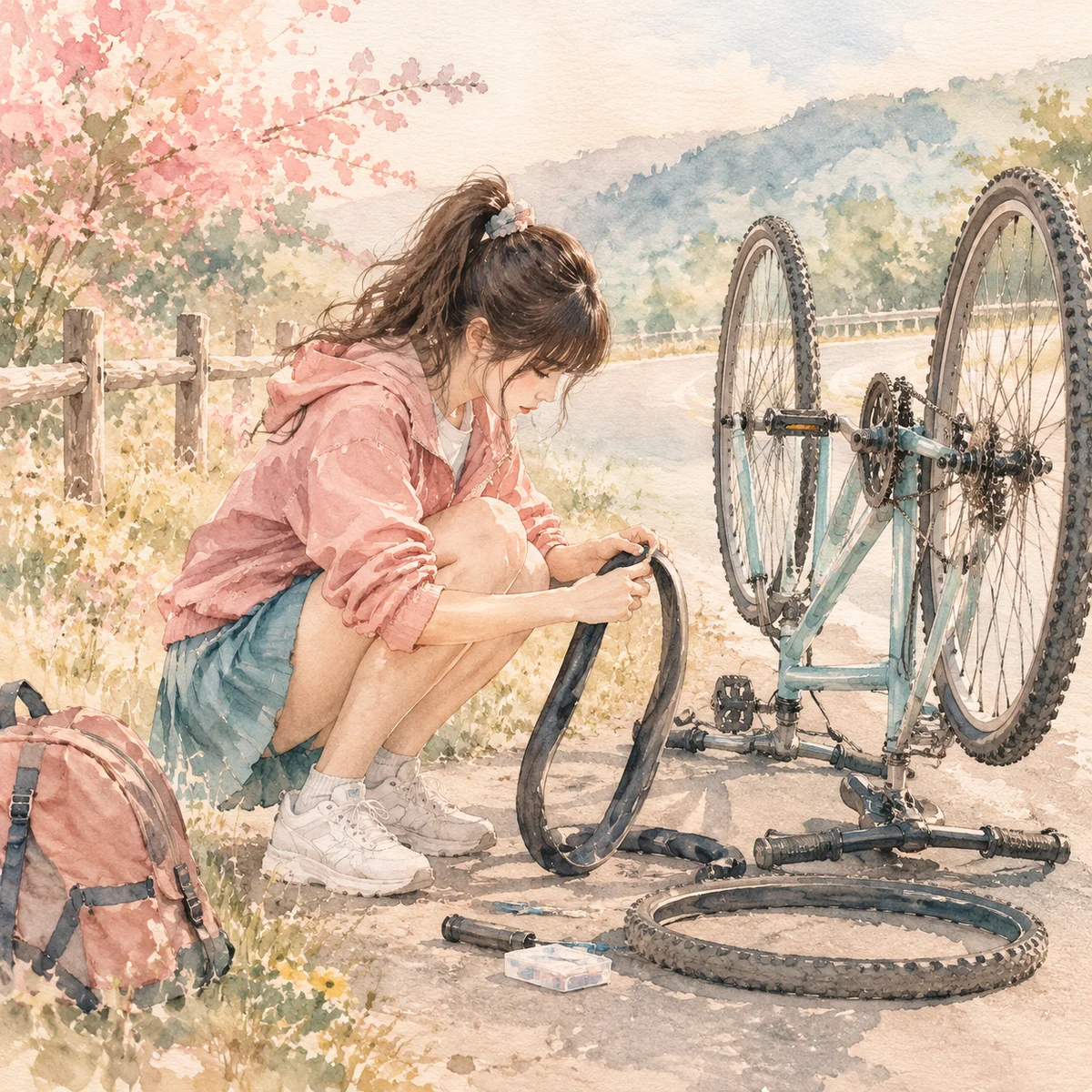
Nothing in this section is interesting and all of it decides whether a morning is good. A rider who can look after themselves is a pleasure to ride with; a rider who cannot becomes everybody else’s responsibility, and after the third time the group stops texting them.
- A spare tube that fits your valve, a pump or inflator that works, and the knowledge to use both.
- A multi-tool, a quick link, and a chain you know how to put back on.
- Lights that are charged, even on a ride you expect to finish in daylight.
- More water than you think, and food on anything over ninety minutes.
- A phone with enough charge to call somebody, and the number of one person who is not on the ride.
- A route you have seen, or a ride leader who has said it out loud.
Weather is the other half. Group rides get cancelled in conditions that would not bother a commuter, and the cancellation message is where a group’s culture actually lives: does somebody decide and tell everyone, or does everyone quietly hope someone else calls it? If you are the one who always makes the call, sharing that out is a kindness to yourself as much as to anyone else.
Last one, because it comes up more than people expect in this corner of the internet. Meeting somebody from a ride for the first time is still meeting somebody for the first time. Public place, your own transport, somebody who knows where you are, and no pressure to extend anything past where you want it. The first meetup safety guide, verifying someone online and screening before you meet are the longer versions, and none of them assume the other person is a threat — they just assume that everybody deserves an exit.
None of this covers the case most readers are actually holding: one rider you keep finding yourself beside on the climbs. That is a separate problem needing separate care, and the companion piece on dating someone from your cycling group takes it from here — what two hours of exercise does and does not reveal about somebody, where to ask, and how to keep the group intact if it goes badly.
Do I need to be fit to join a cycling group?
No, but you do need to join the right group. Pace, distance and whether anyone waits are group decisions, not personal fitness tests, and they differ enormously between two rides in the same town. Look for a ride that states its pace and says it regroups, start below what you think you can do, and give it six weeks before you judge anything.
How do I bring up being non-monogamous on a ride?
Not as an announcement, and ideally not while riding. Wait for the stop, keep it to one sentence at the point where it becomes relevant to the person in front of you, and make clear you are happy to keep riding either way. In a small or rural group, decide in advance what you want visible, because the same people will see you at the shop all year.
My partner and I ride in the same group. What usually goes wrong?
Two things. You pair off every week and quietly become a closed unit, and other riders drift away without saying why. Or a new rider joins your regular ride and discovers the terms were set before they arrived. Both are fixed by the same habits: mix up who rides with whom, hand the new person a real decision, and check who has stopped coming.
Is it safe to meet someone from a ride for the first time?
It is safer than most ways of meeting people, because you already have observed behaviour over weeks and a room full of people who know them. That is not the same as verification. Still meet in public, keep your own way home, tell one person where you are, and read the first meetup safety guide before you go.
Editor’s note: this is general information for adults, not legal, medical or professional advice. Cycling groups are run in very different ways — a registered club with a committee, a shop ride with a printed route sheet, or six people who text each other when the forecast is decent. Road rules, lighting requirements, helmet law and insurance vary by country and sometimes by region, so check what applies where you ride. Treat what follows as prompts for your own group’s conversation rather than as a code of conduct nobody asked for.
Whatever you are hoping to get out of cycling groups in non-monogamy, the method is unglamorous and it works: show up, do a turn on the front, stop at the junction, notice who has gone quiet at the back. A Saturday where people are pleased to see you beats most of what an app will offer you this month, and the entry fee is a spare inner tube. If nothing local rides the way you want to ride, the guide to finding a third safely and organising an ENM meetup both begin from the same premise — put one thing on the calendar, then keep putting it there.